
Clocks · Carriage clock
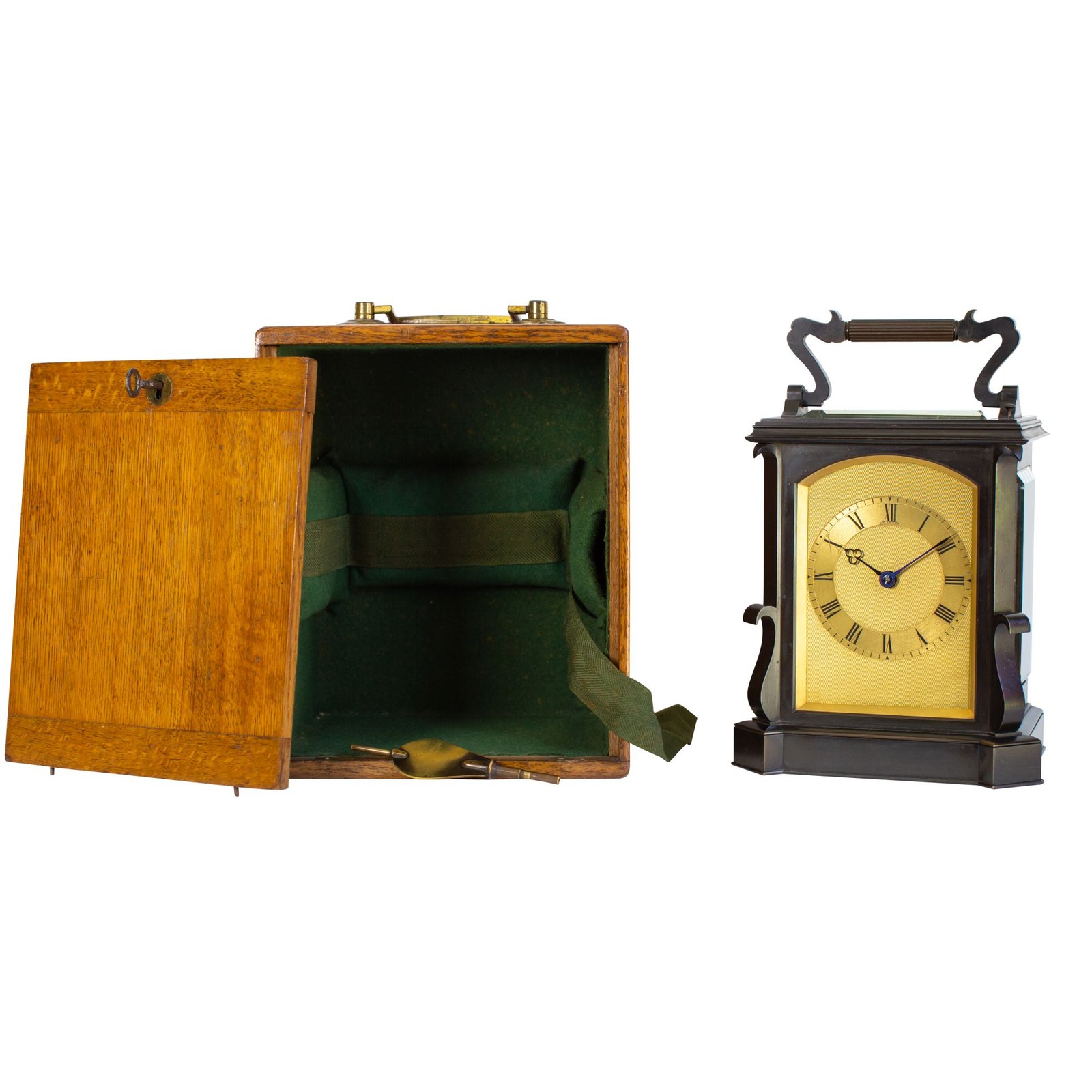
English giant repeating carriage clock by Desbois, London
- Maker / attribution
- Desbois (maker)
- Date
- c. 1850
- Historical period
- Industrial Revolution (1850 – 1900)
- Country of origin
- England
- Place
- London
- Object type
- Carriage clock
- Dimensions
- Height 19.5 cm
- Stock no.
- Product 1921
- Credit line
- Dealer listing, The Antique Clock Company (product 1921)
- Catalogue title (original)
- ENGLISH GIANT REPEATING CARRIAGE CLOCK BY DESBOIS OF LONDON (English)
View the source record (dealer listing) ↗ (opens another website in a new tab)Suggest a correction
Record summary
Catalogued by The Antique Clock Company (dealer), Dorset (stock number Product 1921), this is a carriage clock by Desbois, made in London, England, dated c. 1850. The Atlas places it in the Industrial Revolution period (1850 – 1900) of its Clocks collection. Recorded dimensions: Height 19.5 cm. The record is illustrated with 6 photographs.
Assembled from the source record's structured fields. Dates and attributions are given as the source states them; where a field is missing the Atlas leaves it blank rather than estimating.
Catalogue description
Dealer description — The Antique Clock Company
This fine giant repeating English carriage clock was once part of the prestigious Jack Henley collection (Inventory number 72). Jack Henley was renowned for collecting very fine carriage clocks and this particular clock certainly would have been right at home within the collection. What is really nice about the clock is that it still retains its original travel box and double ended winding key. Movement : A high quality English 8-day repeating clock movement featuring twin chained fusees and gilded escapement with solid rim balance to an underslung lever. The movement strikes and repeats on a gong and is provided with maintaining power. Case : The substantial case is bronze finished and the style is typical of McCabe with fluted columns to the front and top of carry handle with thick bevelled glass’ to both sides and top of movement with solid shutter back door. The repeat button situated just below the right hand side of the handle. Dial : The superb engine turned dial with the original mercurial gilded finish stands at 3 ¾” wide and 5 ½” to the arch and displays engraved Roman numerals for the hours, signed Desbois under XII with a pair of finely blued steel hands to show the time. Additional Feature : This clock still maintains the original travel box along with double ended wind key. Currently – Private collection, UK Purchased from a well established clock dealer Once part of the Jack Henley Collection – Inventory no. 72 HC Height : 7 ¾” or 19.5cm 10” or 25.5cm (with handle up) *This clock is delivered and set up for free within the UK. We regularly ship clocks all over the world with our approved and well-established Antiques and Fine Art Packers & Shippers. Please ask for a quote should you require this service.
Provenance
Provenance :
Historical context
Industrial Revolution (1850 – 1900)
American interchangeable-parts manufacture; railroad time standards; Swiss and German factory systems.
Factory production transformed the clock into an everyday object. American makers (Seth Thomas, Ansonia, Waterbury) and German factories (Junghans, Gustav Becker, Lenzkirch) sold millions of shelf, wall and alarm clocks worldwide; France produced standardised Paris movements and carriage clocks; electric time distribution began.
Read the period in the timelineMore clocks from this periodEarlier: Precision & Scientific Horology
Atlas type guide
Carriage and travel clocks
The carriage clock is a portable spring clock with a balance-wheel escapement and a brass case with glass panels and a carrying handle. Abraham-Louis Breguet made early examples around 1800, and from the 1830s Paul Garnier and other French makers industrialised production, with the small towns of Saint-Nicolas-d'Aliermont and the Franche-Comté supplying movements for retailers worldwide.
Typical features include a platform escapement mounted horizontally on top of the movement (usually a lever, sometimes cylinder or Garnier's chaff-cutter), striking or repeating work, and alarms. English carriage clocks, generally larger and with fusees, were made by firms such as Frodsham and Dent. Travel clocks in folding leather cases became popular in the twentieth century.
What to look for
- A platform escapement visible through the top glass.
- Case styles: corniche, gorge, anglaise, obis or engraved cases.
- Repeat buttons on top and strike/silent levers.
- Stamps of movement makers (e.g. Drocourt, Jacot, Margaine, Richard & Co.) on the backplate.
Dating clues
- Early carriage clocks with Breguet or Garnier features: c. 1800–1850.
- Mass-produced French carriage clocks: c. 1850–1914.
- Folding travel clocks and alarm travel clocks: mostly 1920–1970.
General guidance written by the Atlas editors about this kind of object. It is not a statement about this particular piece; for that, rely on the source record above and on physical examination.
Read next:Detached lever escapement
Related records
Clocks · 19th century
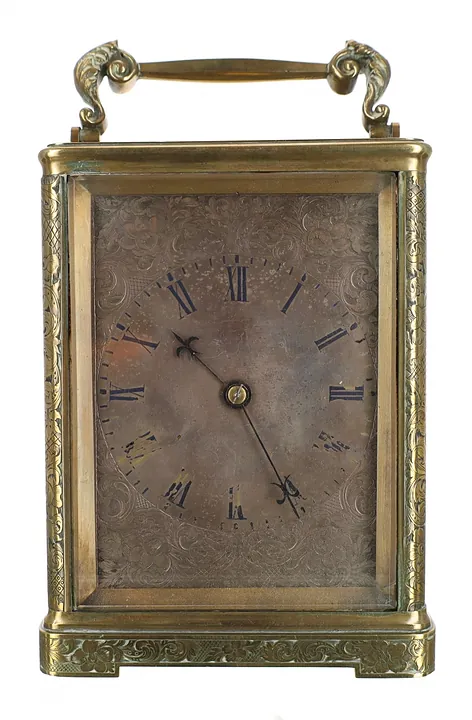
19th century English eight-day twin fusee striking carriage clock by Desbois
Gardiner Houlgate (auction house), Corsham
Clocks · 1830–1870
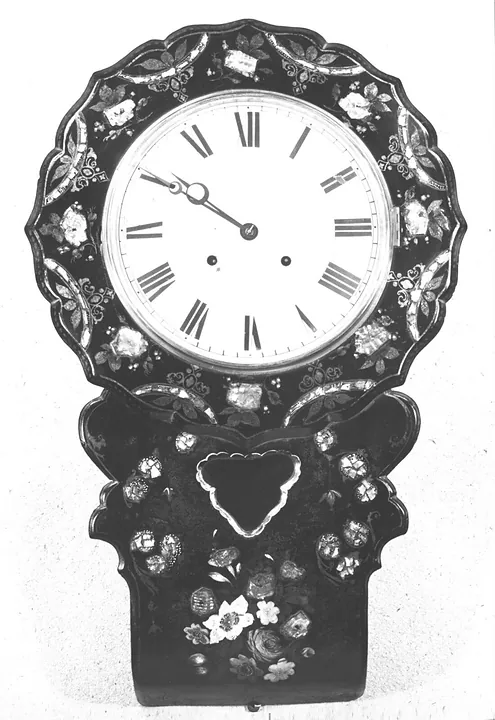
Wall clock in a papier mâché case with painted decoration. English, mid 19th century.
Victoria and Albert Museum, London
Clocks · 1840–1900
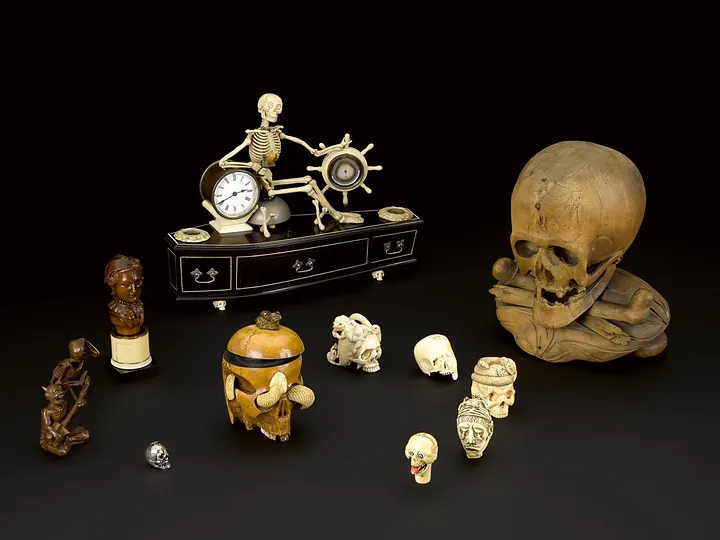
Alarm clock, mounted on model of coffin with skeleton, probably English, 1840–1900
Science Museum Group, London
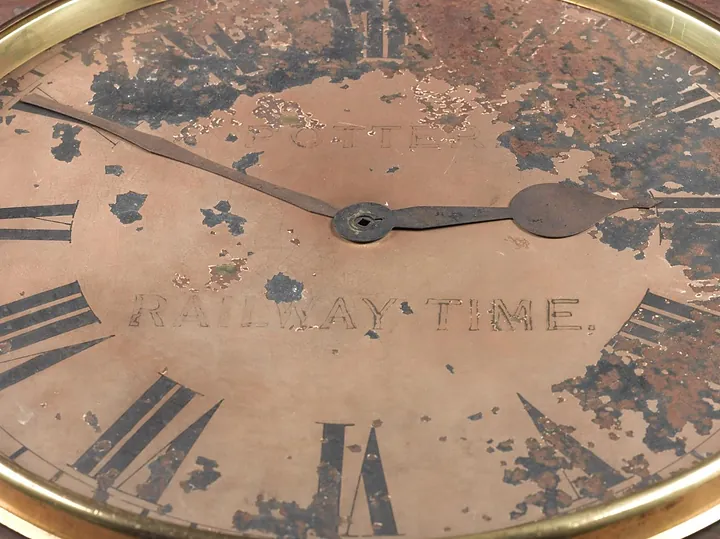
Clocks · 1840–1880
Clock dial marked "Potter, Railway Time" with two hands, unknown maker, British, 1840–1880
Science Museum Group, London
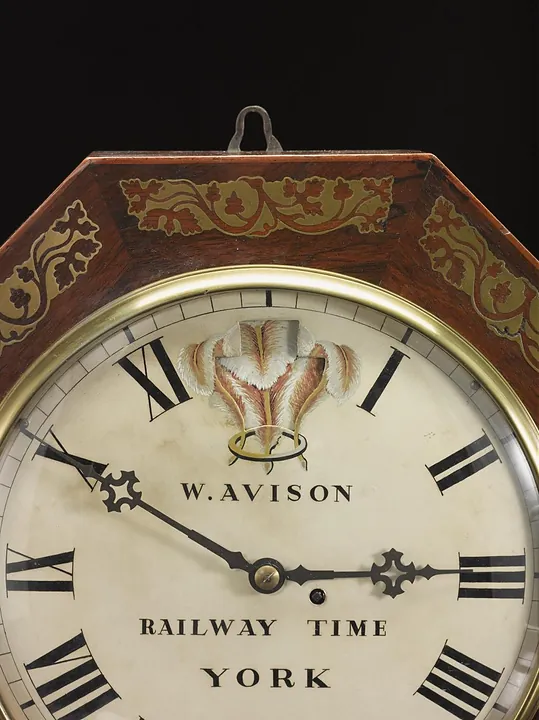
Clocks · 1840–1880
Wall Clock in octagonal case with Prince of Wales Feathers above makers name "W. Avison, Railway Time, York", made by William Avison, England, 1840–1880.
Science Museum Group, London
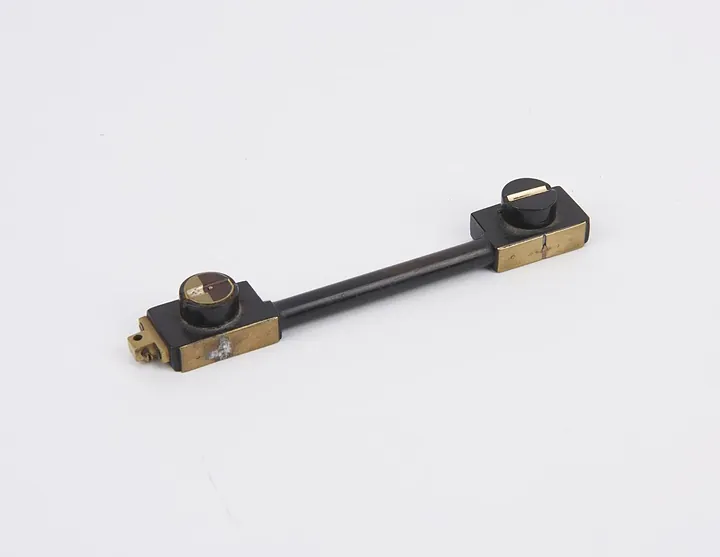
Clocks · 1841–1870
Contact bar from electric clock, unsigned, London, England, 1841–1870
Science Museum Group, London
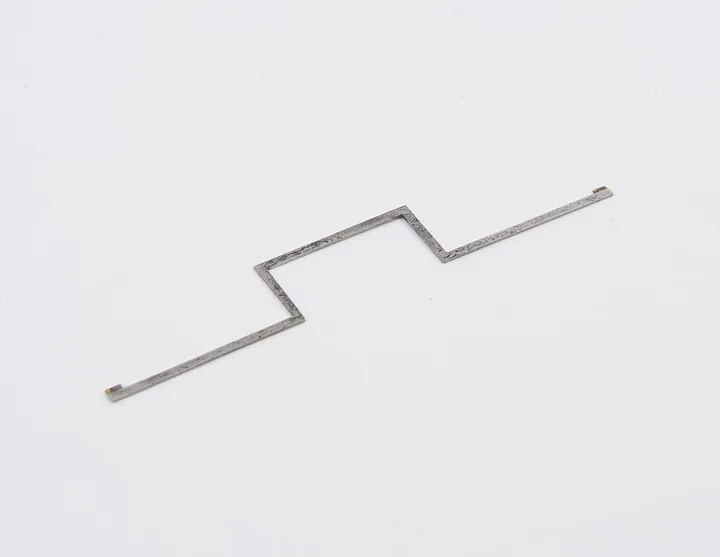
Clocks · 1841–1870
Contactor from electric clock, unsigned, London, England, 1841–1870
Science Museum Group, London
Clocks · 1843–1884
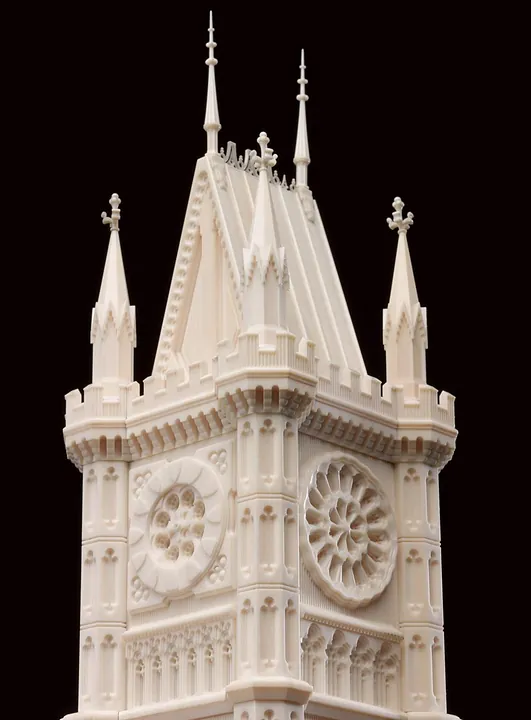
One ivory gothic clock tower & travelling case, by Holtzapffel and Company, London, England, 1843–1884
Science Museum Group, London