
Clocks · Lantern clock
English brass lantern clock
- Maker / attribution
- Unrecorded in source
- Date
- c. 1900
- Historical period
- Golden Age of Mechanical Watchmaking (1900 – 1945)
- Country of origin
- England
- Object type
- Lantern clock
- Dimensions
- 40 cm
- Holding institution
- Dutch Time Pieces
- Accession / object no.
- english-brass-lantern-clock-ba3159615c
- Credit line
- Dutch Time Pieces
- Catalogue title (original)
- English lantern clock (English)
View the source record ↗ (opens another website in a new tab)Suggest a correction
Record summary
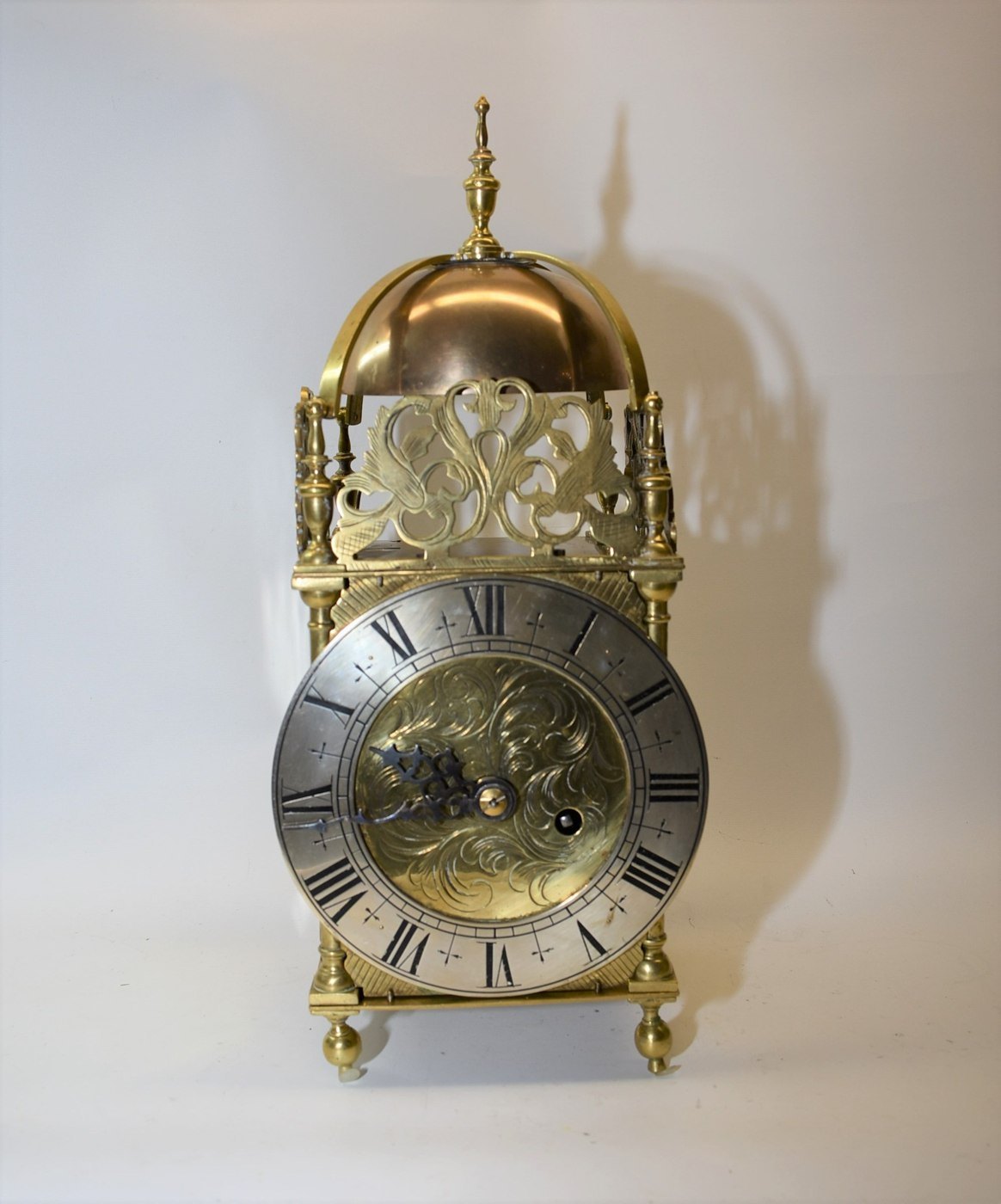
Held and catalogued by Dutch Time Pieces (object number english-brass-lantern-clock-ba3159615c), this is a lantern clock, made in England, dated c. 1900. The Atlas places it in the Golden Age of Mechanical Watchmaking period (1900 – 1945) of its Clocks collection. Recorded dimensions: 40 cm. The record is illustrated with 1 photograph.
Assembled from the source record's structured fields. Dates and attributions are given as the source states them; where a field is missing the Atlas leaves it blank rather than estimating.
Catalogue description
Original object description
Originating in England around 1900, this 40 cm brass lantern clock is raised on four ball feet. Four corner columns define the frame and carry a domed bell at the top, shielded by ornamental frets carved with foliate scrollwork. The brass dial is mounted with steel hands, a winding hole, an engraved central field of floral scrolls, and an outer chapter ring bearing Roman numerals and minute divisions. Internally, a fusee movement maintains steady spring tension, while a passing strike operates a hammer that impacts the overhead bell. Access to the movement plates and the pendulum is provided by hinged brass doors on the sides and back. The brass surface exhibits a natural aged patina. Historical maintenance and operational capability are unrecorded, and specific technical information concerning the striking levers, escapement, wheel trains, and fusee chain is not provided.
Historical context
Golden Age of Mechanical Watchmaking (1900 – 1945)
The wristwatch displaces the pocket watch; waterproof cases, self-winding and grand complications.
Between 1900 and 1945 clocks were electrified: master-clock systems ran factories and offices, synchronous mains clocks entered homes, and the Shortt free-pendulum clock set new standards of accuracy before the first quartz clocks (1927). Art Deco design reshaped mantel and table clocks.
Read the period in the timelineMore clocks from this periodEarlier: Industrial Revolution
Atlas type guide
Lantern, chamber and Gothic clocks
Domestic weight-driven clocks were made in southern Germany, Switzerland, Italy and Flanders from the fifteenth century. These 'Gothic' or chamber clocks have an open iron frame with corner posts, a verge escapement controlled by a foliot or balance wheel, and often an alarm or hour striking on a bell mounted above.
In England the lantern clock appeared around 1600: a brass posted-frame clock with a bell on top under decorative frets, hung on a hook or set on a wall bracket. After about 1658 many were converted to pendulum control, so originality of the escapement is a key question for any surviving example.
What to look for
- Iron (continental) or brass (English) posted frames with turned corner pillars and finials.
- A single hour hand — minute hands are rare before the pendulum era.
- Evidence of conversion: plugged holes, replaced escapement wheels or later pendulums.
- Fret designs and engraving on the dial centre, which help date English lantern clocks.
Dating clues
- Continental Gothic chamber clocks: c. 1450–1650.
- English lantern clocks: c. 1600–1720, with provincial examples later.
- Short 'bob' pendulum conversions after 1658; long pendulums with anchor escapement after c. 1670.
General guidance written by the Atlas editors about this kind of object. It is not a statement about this particular piece; for that, rely on the source record above and on physical examination.
Related records
Clocks · 1890–1930
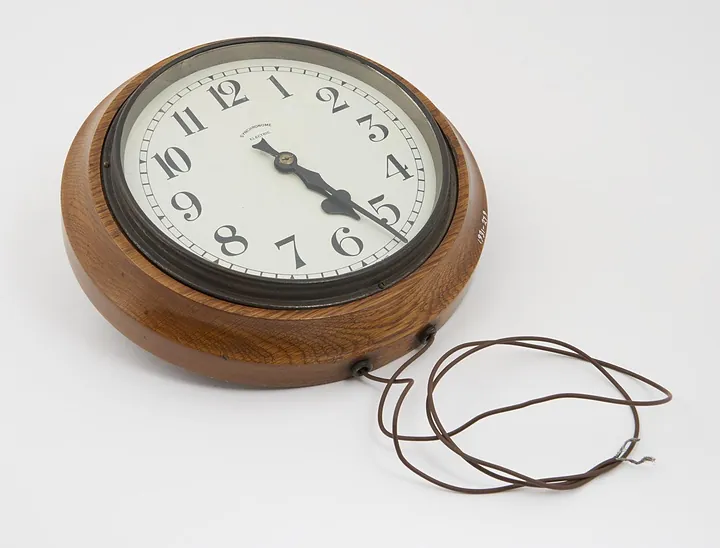
Clock with 8-inch impulse dial, by the Synchronome Company Limited, England, 1890–1930.
Science Museum Group, London
Clocks · c. 1900
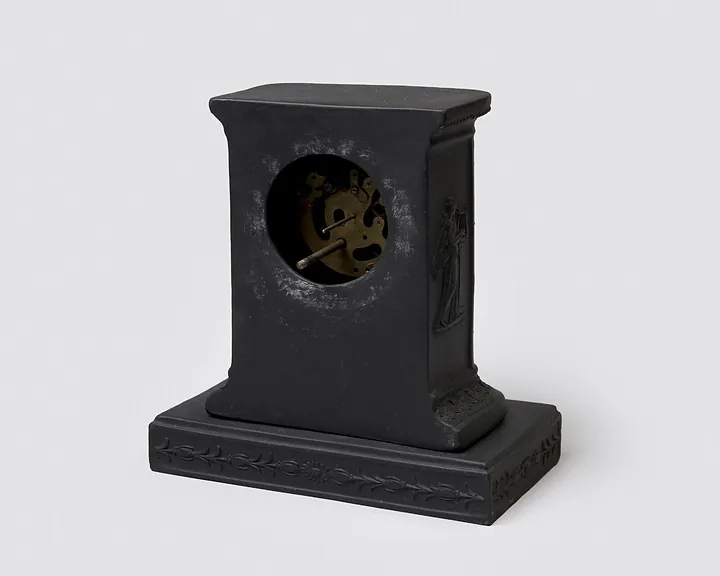
Clock, black basalt, brass, Josiah Wedgwood and Sons, Etruria, c. 1900
Victoria and Albert Museum, London
Clocks · c.1903-1904
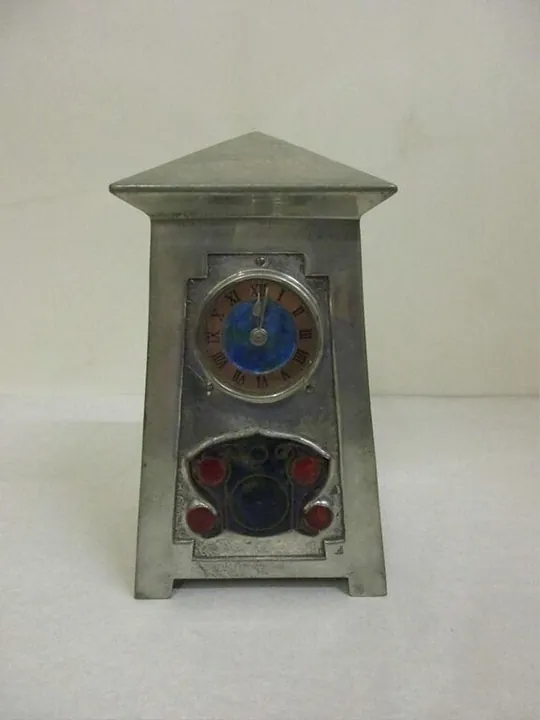
Clock, pewter, made for Liberty& Co., England. 1903-4.
Victoria and Albert Museum, London
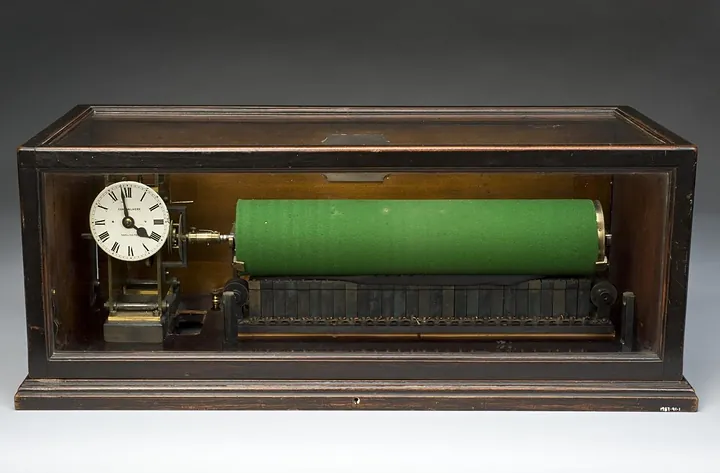
Clocks · 1900–1939
Clock by Cox-Walkers of Darlington, England, 1900–1939
Science Museum Group, London
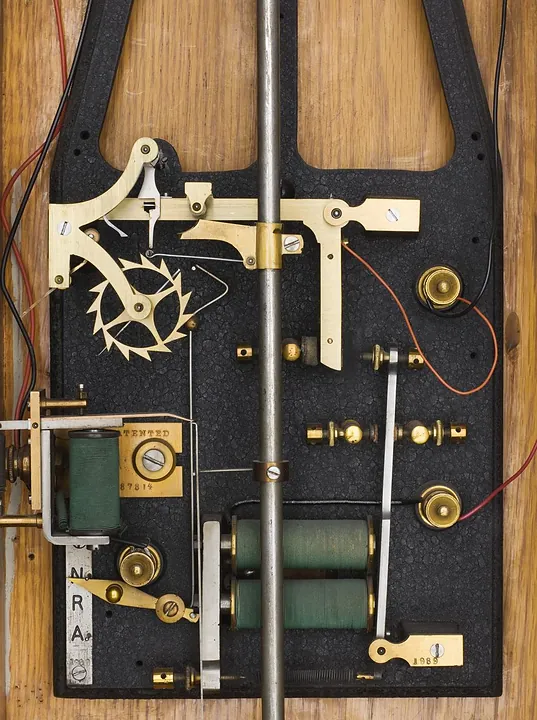
Clocks · 1900–1935
Clock by The Synchronome Company Limited, England, 1900–1935
Science Museum Group, London
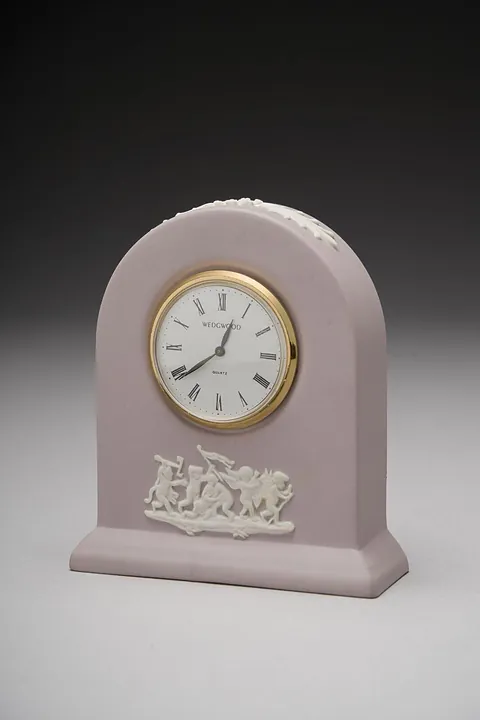
Clocks · 20th century
Clock, Jasperware with applied reliefs and metal and glass, Josiah Wedgwood and Sons, Stoke on Trent, 20th century (V&A WE.15628-2014)
Victoria and Albert Museum, London
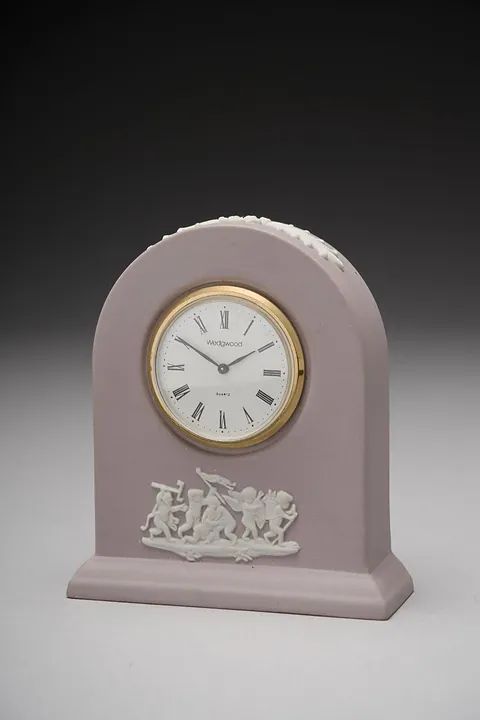
Clocks · 20th century
Clock, Jasperware with applied reliefs and metal and glass, Josiah Wedgwood and Sons, Stoke on Trent, 20th century (V&A WE.15629-2014)
Victoria and Albert Museum, London
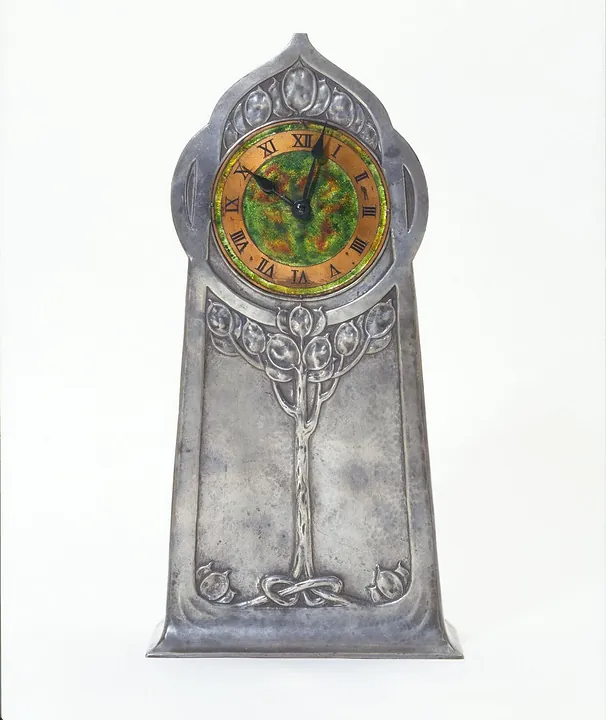
Clocks · c. 1905
Pewter and enamel, "Tudric range, Honesty design" Birmingham ca.1905, made by W.H. Haseler, designed by Archibald Knox.
Victoria and Albert Museum, London