
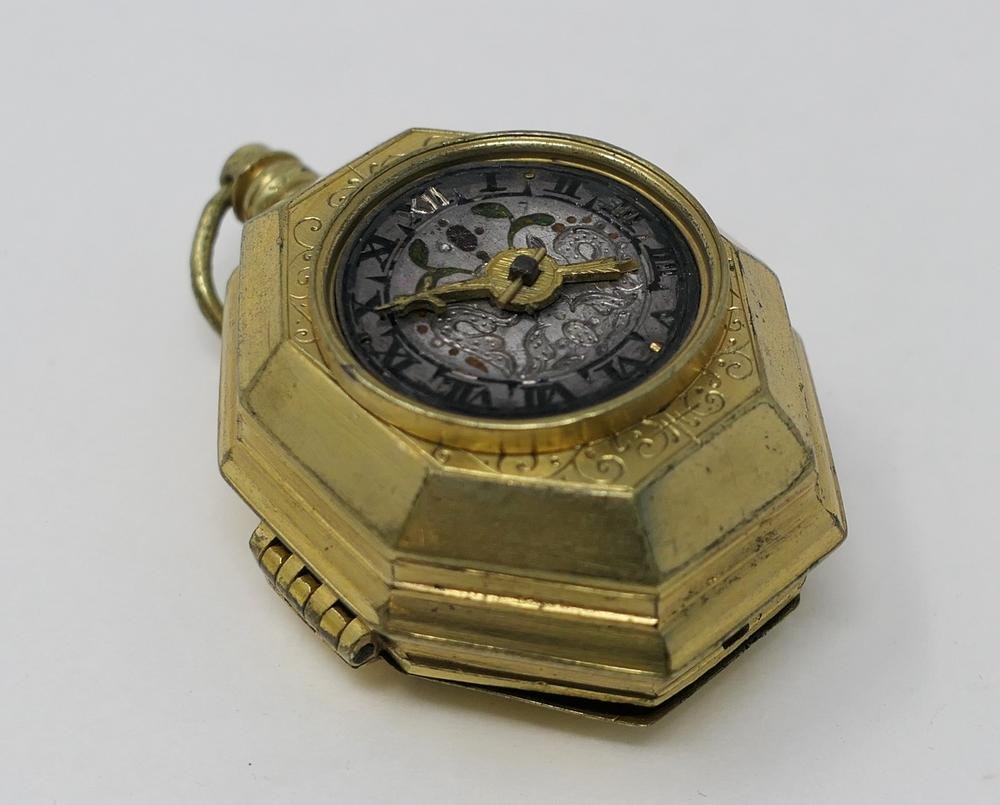
Pocket Watches · Stackfreed watch
Elongated octagonal cased verge watch with stackfreed
- Maker / attribution
- H S (Made by)
- Date
- 1640–1660
- Historical period
- Early Modern Horology (1600 – 1750)
- Country of origin
- Germany
- Place
- Nuremberg (?)
- Object type
- Stackfreed watch
- Materials / technique
- brass, gold, silver
- Dimensions
- Length: 43 millimetres (case) Width: 36 millimetres (case)
- Holding institution
- British Museum
- Accession / object no.
- 1888,1201.161
- Credit line
- British Museum, London
- Catalogue title (original)
- Elongated octagonal cased verge watch with stackfreed (English)
View the source record ↗ (opens another website in a new tab)Suggest a correction
Record summary
Held and catalogued by British Museum (object number 1888,1201.161), this is a stackfreed watch by H S, made in Nuremberg (?), Germany, dated 1640–1660. The Atlas places it in the Early Modern Horology period (1600 – 1750) of its Pocket Watches collection. Materials and techniques recorded by the source: brass, gold, silver. Recorded dimensions: Length: 43 millimetres (case) Width: 36 millimetres (case). The record is illustrated with 6 photographs.
Assembled from the source record's structured fields. Dates and attributions are given as the source states them; where a field is missing the Atlas leaves it blank rather than estimating.
Catalogue description
Description — British Museum
Elongated octagonal cased verge watch with stackfreed. Movement with elongated octagonal gilt-brass plates and plain pillars rivetted to the back-plate. Open mainspring with guard-posts. Train wheels of brass; verge escapement with balance and hog's bristle regulation. Steel stackfreed spring and roller; engraved brass cam. No dial plate; enamelled silver dial and protective rim applied to front of case. Faceted gilt-brass case with hinged back cover; moulded band; engraved foliate design around dial.
Curator's comments — British Museum
Comment from Hugh Tait, Catalogue of Watches in the British Museum. Vol. I (1987) Maker Unknown, initials HS; probably German, perhaps Nuremberg, mid-17th century Watch (Movement with Going-Train Only) Case: Back: solid, hinged on the right; plain except for the scribing of two concentric circles. Band: standard; at XII, a later turned pendant and ring added. Lid: none intended. Dial: dial-plate with eight sloping sides, left plain; in the flat centre, an applied circular dial of silver, with chapters I-XII in black enamel, and within the chapter-ring a foliated design executed in translucent enamels; a later (?) engraved brass hand; a low ring encircling the silver dial riveted to the dial-plate; in the spandrels above and below the ring, engraved scrollwork. Movement: Brass plates, pillars and wheels; stackfreed spring planted on the right; brass cam and wheel; surface of the cam decorated with engraved scrollwork; long cock with balance; simple regulator; mainspring missing. The maker's initials, HS, in a rectangular frame shaded on all four sides, are engraved on the right of the winding square. Around the edge of the pillar-plate is an engraved border similar to the design in the spandrels on the dial-plate. There are two minor variations in the movement: (a) two brackets are used for the crown-wheel; in this watch, the free end of the bracket is in the form of a ring through which the verge passes; the pivot hole for the crown-wheel is in the edge of the ring; (b) the bridge for the second- and third-wheels is extended sideways to carry the pivot for the hour-wheel; the bridge is held to the plate by three screws. Dimensions (of case): 43.0 x 36.0mm. Provenance: Octavius Morgan Bequest, 1888. Notes: 1. This form of bridge, extending to the centre, is to be found again in registration no. 1874,0718.6 and is similar to that in a striking watch (registration no. 1874,0718.12), where it is extended across the plate to accept, in addition, the pivots of wheels in the striking-train. 2. A similar form of bridge is found on a striking watch in the Gewerbemuseum, Nuremberg (inv. no. 567), which is in a case with moulded bands identical to those on this watch-case. The movement is signed CA SCH (punched on the pillar-plate using individual letters). The same mark is on a watch-movement (case lost) in the Germanisches Nationalmuseum, Nuremberg, which also has this form of bridge. G. H. Baillie, Watchmakers and Clockmakers of the World, 1929, 2nd edn, London, 1947, attributes this mark to (a) Caspar Schuster, Nuremberg, c. 1550, (b) Carl Schmidt or Carol Schmeid, c. 1600. It seems equally possible that it refers to Carl Schubart, Nuremberg, 1631-92; indeed, the dating makes this last attribution most probable. 3. The engraved border on the pillar-plate has been trimmed away slightly on all eight sides to fit snugly into the case. 4. For the use of a comparable watch as a miniature 'monstrance' clock mounted on a metal stand, see F. J. Britten, 'Old Clocks and Watches and their Makers', 3rd edn, London, 1911, p. 137, fig. 138.
Inscriptions & marks
maker's mark; HS [movement]
Provenance
Bequeathed by:, Octavius Morgan
Historical context
Early Modern Horology (1600 – 1750)
Huygens' pendulum and balance spring transform accuracy; English makers develop the anchor and deadbeat escapements.
The balance spring (c. 1675) improved watches dramatically and introduced the minute hand. English pair-cased verge watches with pierced balance cocks and French oignons were typical; enamel painting at Blois and Geneva, and the repeating watch (1680s), made watches objects of great refinement.
Read the period in the timelineMore pocket watches from this periodEarlier: Renaissance Horology
Atlas type guide
Verge and pair-cased watches
After Christiaan Huygens and Robert Hooke applied the balance spring around 1675, the verge watch became a reasonably reliable timekeeper and the minute hand became standard. Through the eighteenth century the typical English watch was a pair-cased verge: a fusee movement with a pierced, engraved balance cock, housed in an inner case and a separate protective outer case, often of repoussé gold, shagreen, tortoiseshell or enamel.
French watches of the same period were thicker 'oignons', later replaced by elegant thinner watches following Jean-Antoine Lépine's bar-bridge calibre of c. 1770. Dutch, Swiss and German makers supplied international markets, and verge watches were made until the mid-nineteenth century as cheaper alternatives to the cylinder and lever.
What to look for
- The pierced balance cock on the backplate: winged (continental) or with a foot (English); its style dates the watch.
- Fusee and chain visible through the movement; key winding through the dial (early) or case back.
- Hallmarks inside English silver or gold cases, which give a date letter.
- Maker's name and serial number engraved on the backplate; watch papers inside outer cases.
- Enamel dials (after c. 1720) versus earlier champlevé metal dials.
Dating clues
- Champlevé dials: c. 1680–1730; white enamel dials thereafter.
- English case hallmarks give the year of assay to within a year.
- Verge watches persisted in cheap production until c. 1850.
General guidance written by the Atlas editors about this kind of object. It is not a statement about this particular piece; for that, rely on the source record above and on physical examination.
Related records
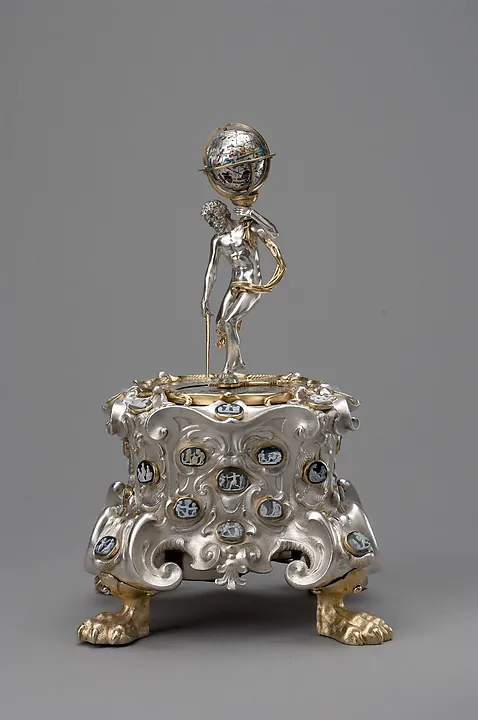
Pocket Watches · 1600–1699
Pocket watch by Georg Ernst, Germany, 1600–1699
Fine Arts Museum Vienna
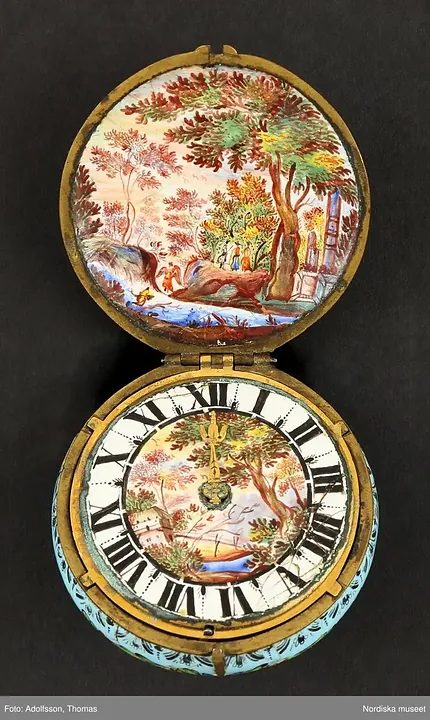
Pocket Watches · 1600–1699
Pocket watch by Johan Etmiller, Germany, 1600–1699
Nordic Museum Foundation
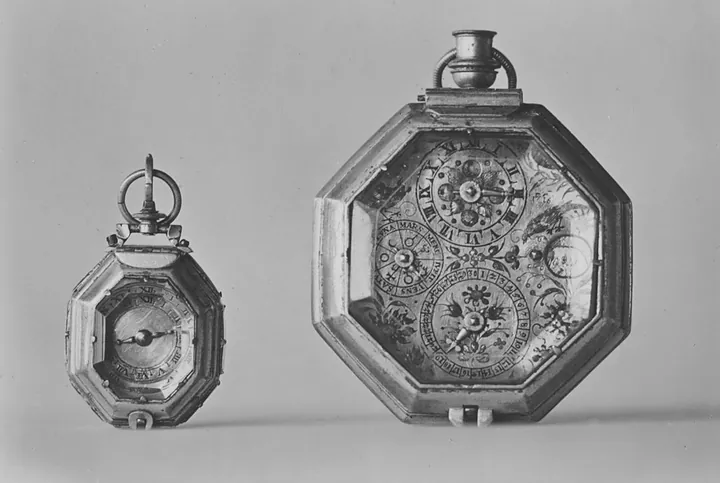
Pocket Watches · early 17th century
Watch with gilt brass case, crystal and blue glass panels signed 'Conradt Kreizer', Germany, early 17th century
Victoria and Albert Museum, London
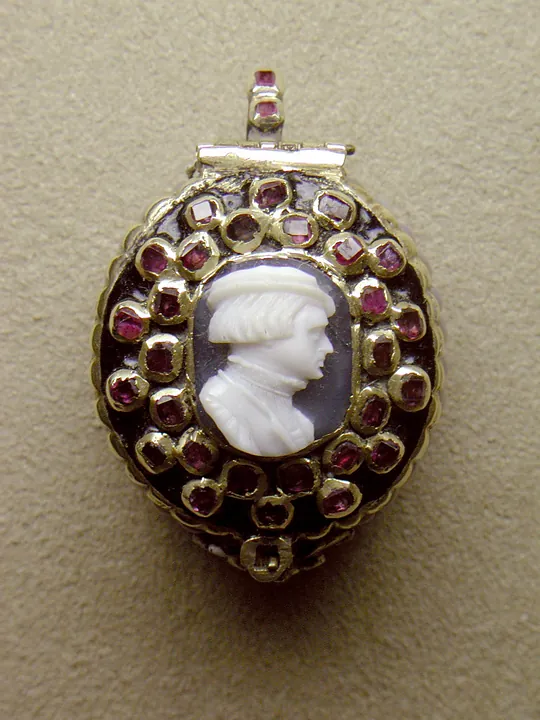
Pocket Watches · watch c. 1650, cameo 16th–17th century
Watch by Wilhelm Peffenhauser, Germany, watch c. 1650, cameo 16th–17th century
The Metropolitan Museum of Art, New York
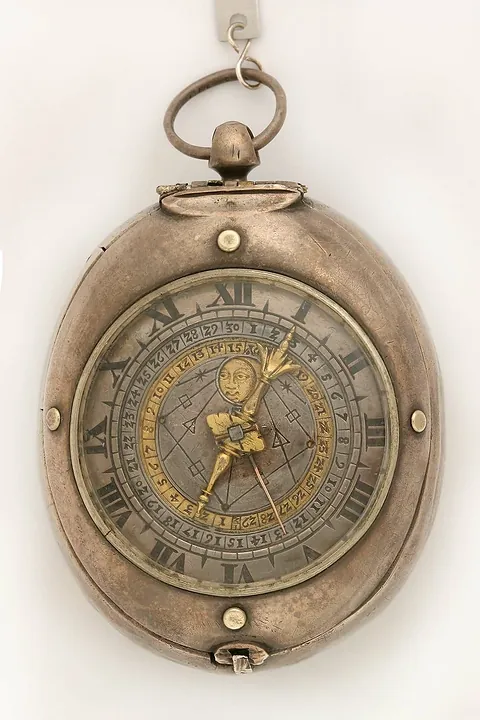
Pocket Watches · c. 1650
Pocket watch by Johann Sayller, Germany, c. 1650
German Clock Museum
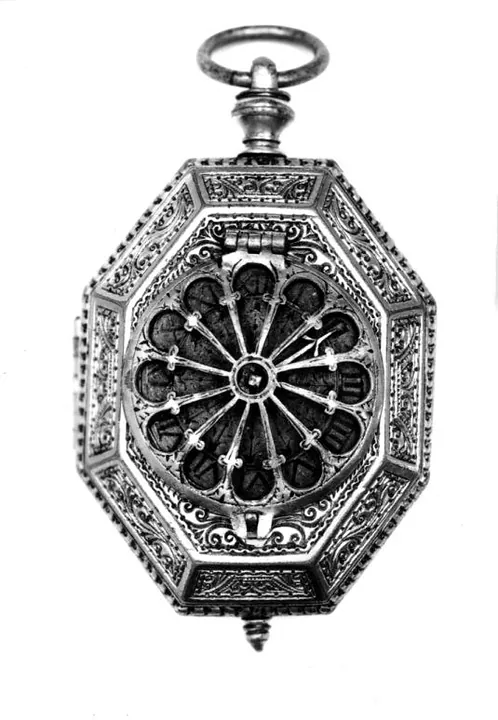
Pocket Watches · 1650–1699
Pocket watch, Germany, 1650–1699
Badisches Landesmuseum Karlsruhe
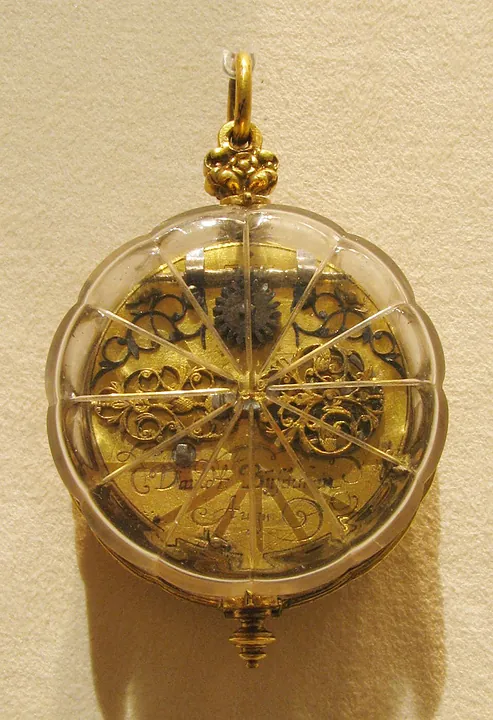
Pocket Watches · probably after 1657
Watch by David Buschman, Germany, probably after 1657
The Metropolitan Museum of Art, New York
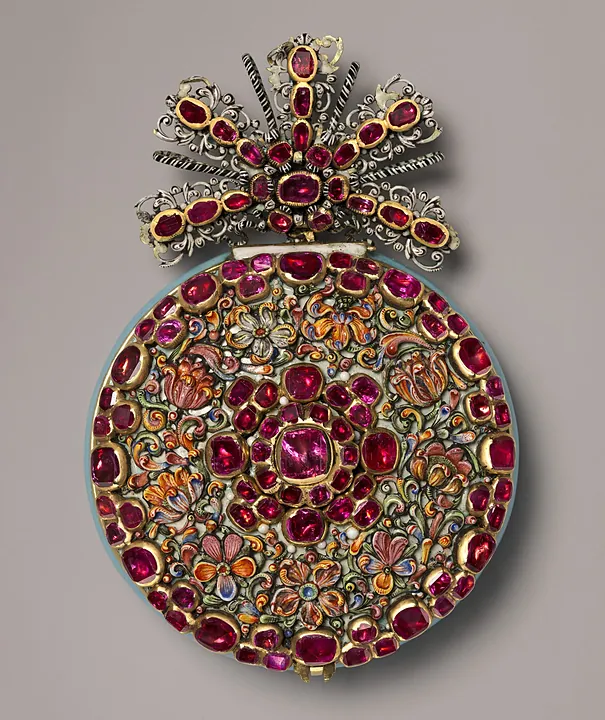
Pocket Watches · c. 1670
Watch by Nicolaus Rugendas the Younger, Germany, c. 1670
The Metropolitan Museum of Art, New York