
Wristwatches · Wristwatch
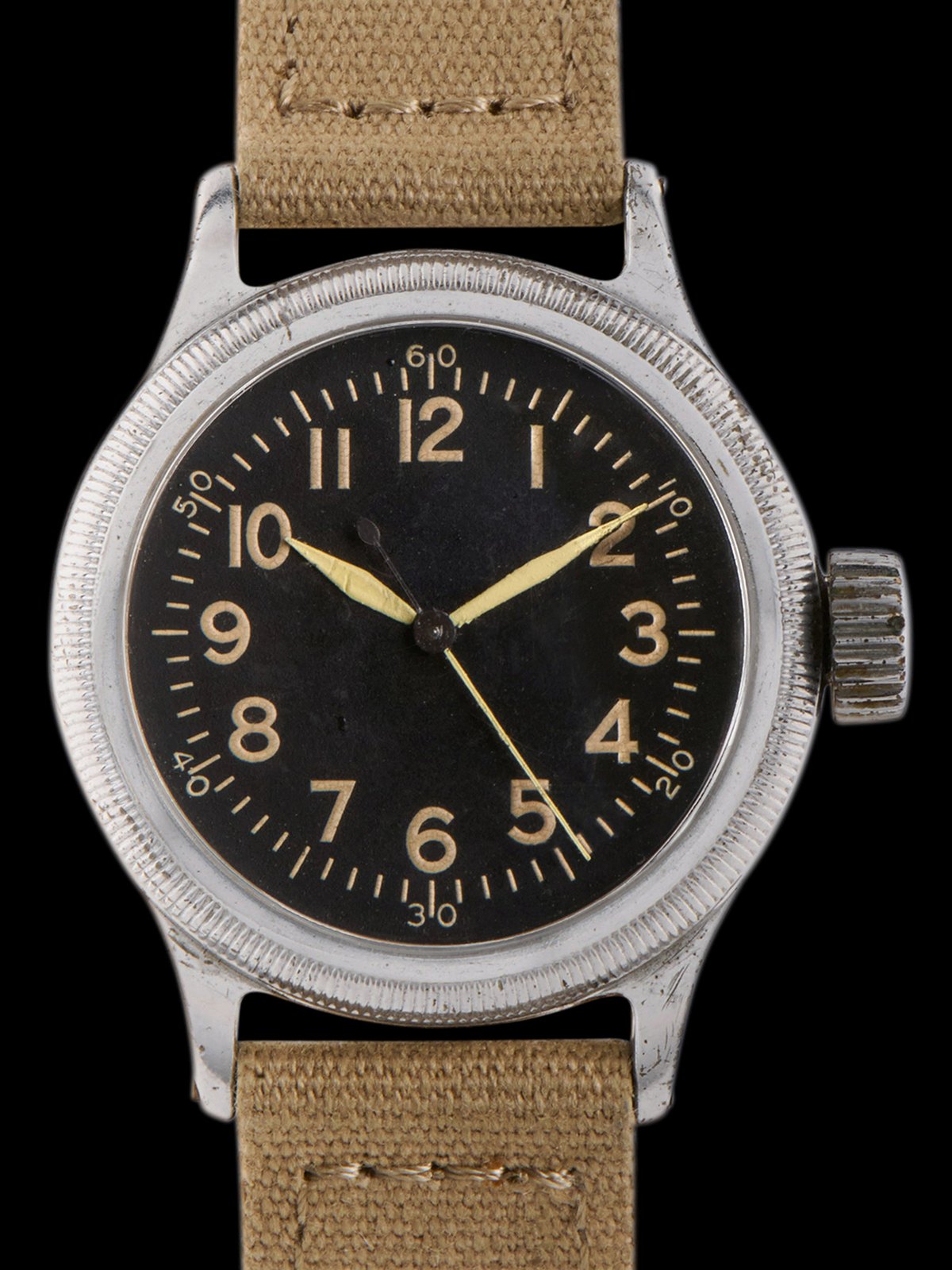
Elgin U.S. Military Issued Pilots Watch (Type A-11) "WWII Era", 1943
- Maker / attribution
- Elgin (maker)
- Date
- 1943
- Historical period
- Golden Age of Mechanical Watchmaking (1900 – 1945)
- Country of origin
- United States
- Object type
- Wristwatch
- Stock no.
- ELGA11WWII
- Credit line
- Dealer listing, Craft & Tailored (ELGA11WWII)
- Catalogue title (original)
- 1943 Elgin U.S. Military Issued Pilots Watch (Type A-11) "WWII Era" (English)
View the source record (dealer listing) ↗ (opens another website in a new tab)Suggest a correction
Record summary
Catalogued by Craft & Tailored (dealer), Los Angeles (stock number ELGA11WWII), this is a wristwatch by Elgin, made in United States, dated 1943. The Atlas places it in the Golden Age of Mechanical Watchmaking period (1900 – 1945) of its Wristwatches collection. The record is illustrated with 6 photographs.
Assembled from the source record's structured fields. Dates and attributions are given as the source states them; where a field is missing the Atlas leaves it blank rather than estimating.
Catalogue description
Dealer description — Craft & Tailored
Often touted as “the watch that won the war,” the Type A-11 remains one of the defining military watches of the Second World War. Manufactured by Elgin, Bulova, and Waltham, it was built to meet a shared military production standard, with legibility, reliability, and precise synchronization at the heart of its design. Although American in origin, the A-11 also served with British, Canadian, and Soviet air forces, cementing its place in Allied aviation history. Its straightforward, purposeful aesthetic remains a cornerstone of military watch design today. The A-11 specification required a hand-wound movement with at least 15 jewels, center seconds, and a hacking function, which stops the seconds hand when the crown is pulled out. This allowed aircrews to synchronize their watches to a common time reference, an essential capability when coordinating navigation and flight operations. The familiar wartime configuration paired a black dial with contrasting white Arabic numerals and an outer minute track marked at ten-minute intervals. While case construction and bezel designs varied between manufacturers and production runs, clarity and dependable timekeeping remained central to the specification. Founded in Illinois in 1864 as the National Watch Company, Elgin grew into one of America’s most prominent watch manufacturers, establishing its reputation through quality pocket watches before expanding into wristwatches and military instruments. That manufacturing experience found a natural application in the A-11, with Elgin’s version utilizing the hand-wound, 16-jewel caliber 539. Its hacking mechanism and central seconds display made it particularly well-suited to the demands of wartime aviation. Dating to 1943, this Elgin U.S. military-issued Type A-11 represents an important chapter in both American watchmaking and military history. Its appeal lies in the direct relationship between its design and its intended purpose: a practical timing instrument built for service during WWII. For collectors of military watches or vintage American horology, it offers a compelling connection to the era and the enduring appeal of a watch designed entirely around function. SPECS Stock # ELGA11WWII Brand Elgin Style U.S. Military Pilots Watch Model Type A-11 Serial T14XXXX Size Men's Material Chrome Plated Brass Dial Matte Black Millimeters 32 Strap 2pc Military-Style Canvas Strap CASE & BRACELET The well-preserved chrome-plated brass case exhibits honest signs of use, with minimal wear to the chrome finish. The lugs remain particularly well-preserved, showing no notable damage, wear, or warping, contributing to the watch’s impressive overall presentation for its age. The screw-down coin-edge bezel remains crisp, showing only light signs of use, and the large winding crown is believed to be original to the watch. The screw-down caseback retains all of its original factory and military markings in clear, sharply defined condition. The watch comes supplied on a two-piece military-style canvas strap. DIAL & HANDS The original non-luminous black dial remains exceptionally well-preserved, with no notable damage and only subtle, scattered spotting that blends into the surface of the dial. The painted minute track and Arabic numerals have aged to a lovely cream tone and remain fully intact throughout. The original white-painted kite-style hands have developed a complementary cream patina and exhibit minor, age-appropriate wear, most noticeable on the hour hand, while retaining all of their original paint. ACCESSORIES
Historical context
Golden Age of Mechanical Watchmaking (1900 – 1945)
The wristwatch displaces the pocket watch; waterproof cases, self-winding and grand complications.
The wristwatch overtook the pocket watch. Military use in the First World War, aviation, water-resistant cases (1926), automatic winding (1923–31), rectangular Art Deco designs and early chronographs and calendars defined the period.
Read the period in the timelineMore wristwatches from this periodEarlier: Industrial Revolution
Atlas type guide
Military, pilot and travel watches
The wristwatch owes much of its adoption by men to warfare and aviation. Wristlets — small pocket watches soldered with lugs and worn on a strap — were used in colonial campaigns and became standard equipment in the First World War, with protective grilles over the crystal ('shrapnel guards'). Louis Cartier's Santos (1904), designed for the aviator Alberto Santos-Dumont, is often cited as an early purpose-made pilot's watch.
In the Second World War governments specified watches in detail: the German B-Uhr observation watches, the American A-11, and the British 'W.W.W.' (the 'Dirty Dozen' set of 1945). After the war, jet travel brought GMT and world-time watches, which show two or more time zones at once — Louis Cottier's world-time mechanism and the Rolex GMT-Master (1955) are examples.
What to look for
- Military markings on the case back: broad arrow, issue numbers, 'W.W.W.', 'A.T.P.'
- High-legibility black dials with luminous Arabic numerals; oversized crowns for gloved hands.
- 24-hour hands and rotating 24-hour bezels or city rings on GMT/world-time watches.
- Wire lugs on early wristlets converted from pocket watches.
Dating clues
- Wire-lug wristlets: c. 1900–1925.
- Military specifications of the Second World War: 1939–1945.
- GMT and world-time wristwatches: mainly after 1950.
General guidance written by the Atlas editors about this kind of object. It is not a statement about this particular piece; for that, rely on the source record above and on physical examination.
Related records
Wristwatches · 1920-1926?
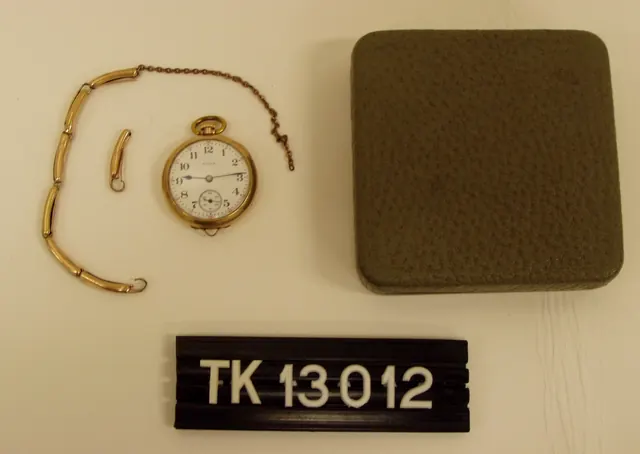
Wristwatch by Elgin, United States, 1920-1926?
Työväenmuseo Werstas
Pocket Watches · c. 1871
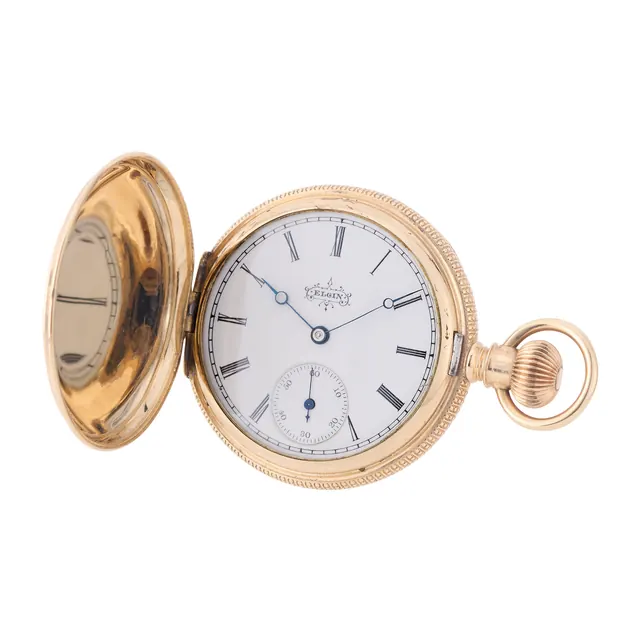
Elgin pocket watch, Hunting Case Pocket Watch, circa 1871
Antiquorum auction archive, Geneva
Wristwatches · 1930s
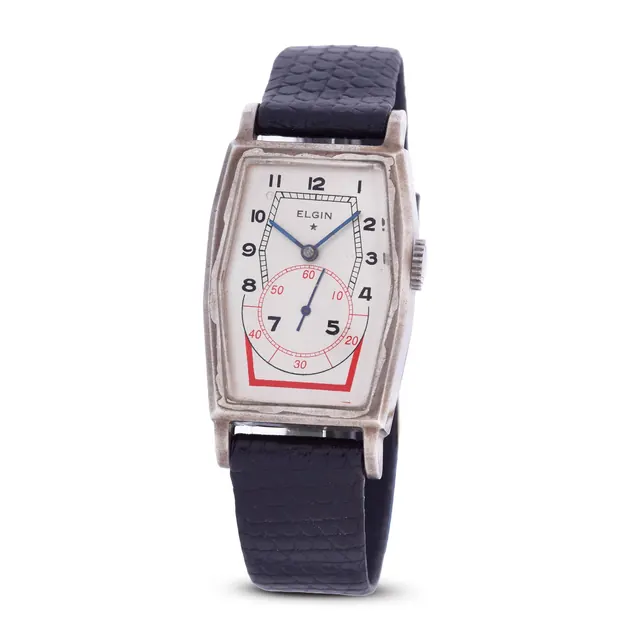
Elgin wristwatch, National Watch, 1930s
Antiquorum auction archive, Geneva
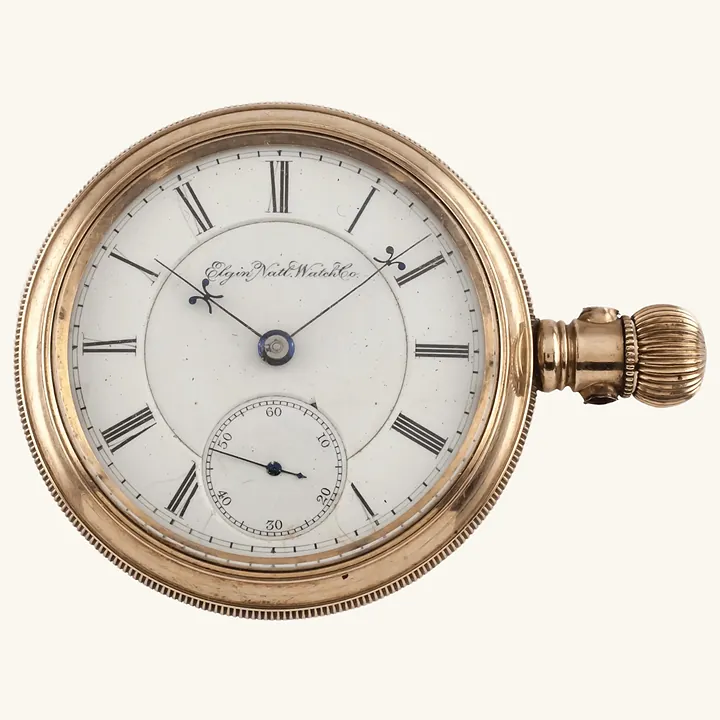
Pocket Watches · 1887
Elgin Antique Gold Filled Pocket Watch Gr 27 15 Jewel, 1887
WatchMuseum.org shop
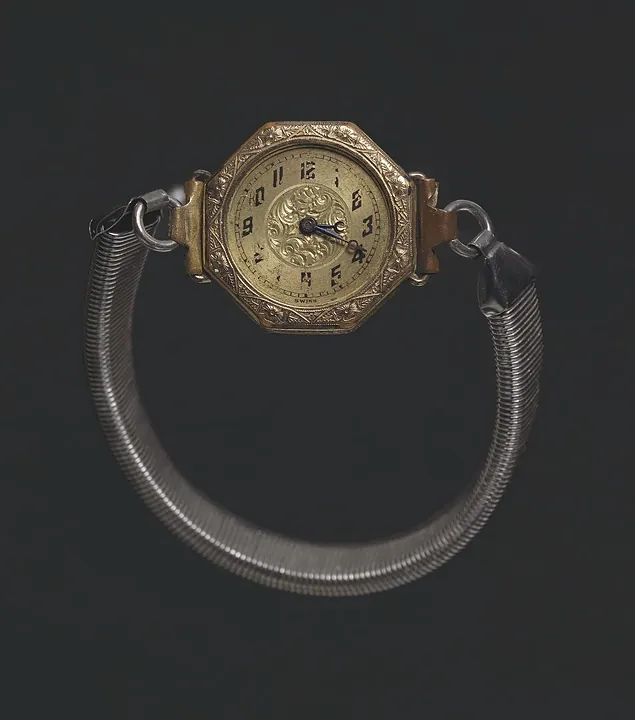
Wristwatches · early to mid 20th century
Woman's wristwatch worn by Harriette Vyda Simms Moore, early to mid 20th century
National Museum of African American History and Culture, Smithsonian Institution, Washington DC
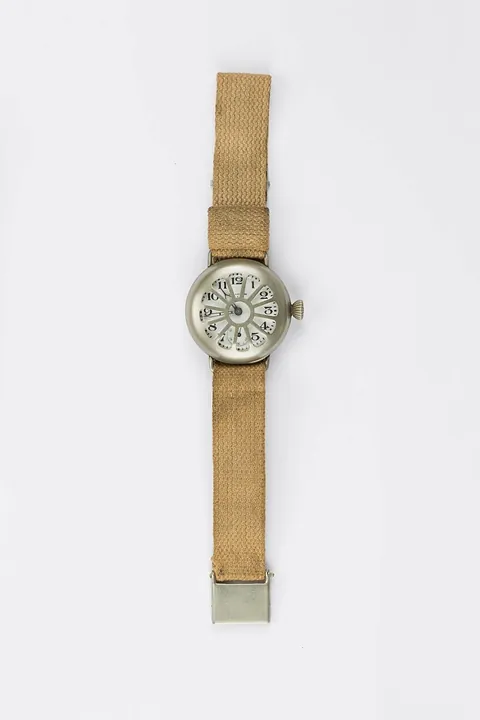
Wristwatches · 1921
Wristwatch by Waltham A. W. W. Co., United States, 1921
German Clock Museum
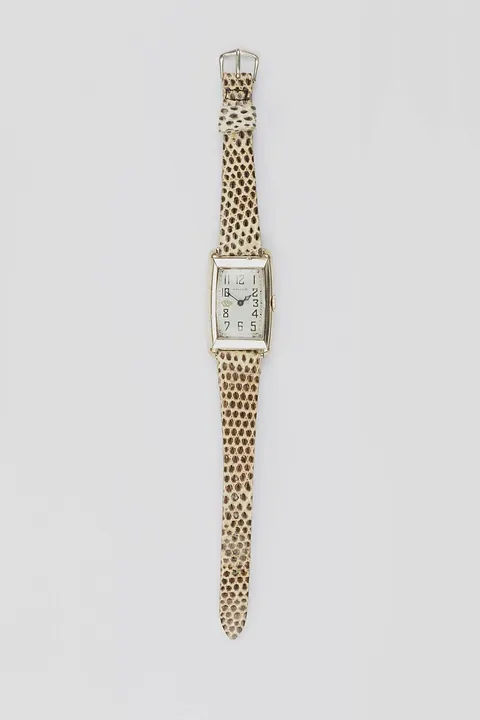
Wristwatches · 1929
Wristwatch by Waltham A. W. W. Co., United States, 1929
German Clock Museum
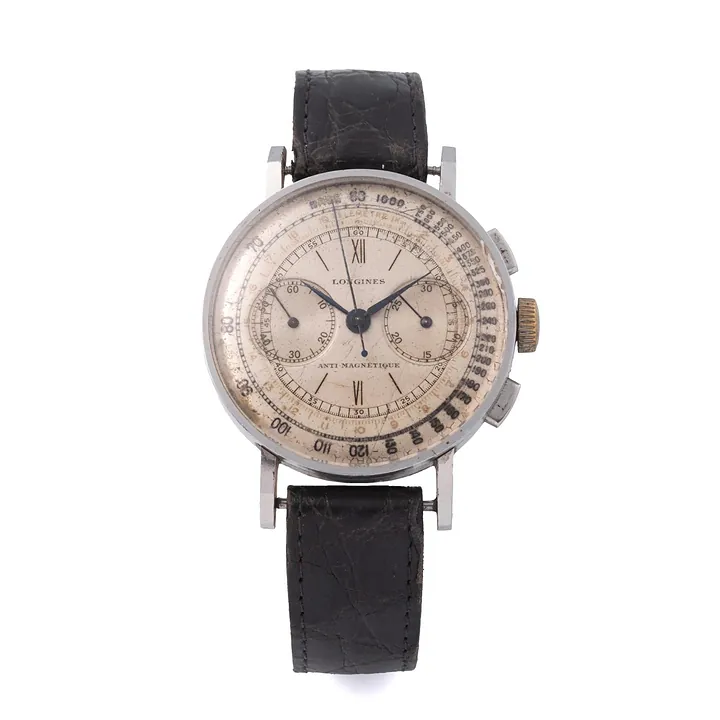
Wristwatches · 1930–1940
Longines Chronograph, ref. 22185, circa 1930/1940
Antiquorum auction archive, Geneva