
Pocket Watches · Pocket watch
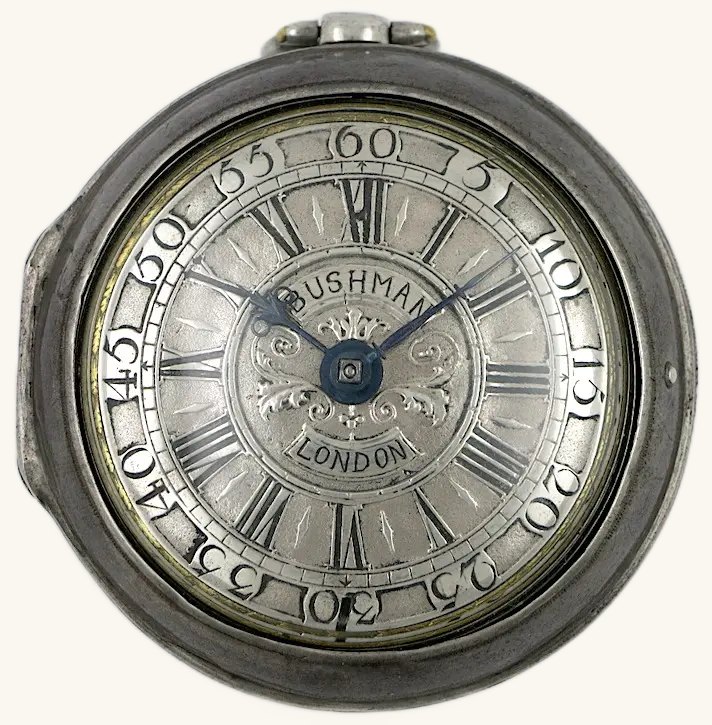
Early London verge by a good maker, c. 1700
- Maker / attribution
- Unrecorded in source
- Date
- c. 1700
- Historical period
- Early Modern Horology (1600 – 1750)
- Country of origin
- England
- Object type
- Pocket watch
- Dealer
- WatchMuseum.org shop
- Stock no.
- Product 5621
- Credit line
- Dealer listing, WatchMuseum.org shop (product 5621)
- Catalogue title (original)
- Early London verge by a good maker (English)
View the source record (dealer listing) ↗ (opens another website in a new tab)Suggest a correction
Record summary
Catalogued by WatchMuseum.org shop (stock number Product 5621), this is a pocket watch, made in England, dated c. 1700. The Atlas places it in the Early Modern Horology period (1600 – 1750) of its Pocket Watches collection. The record is illustrated with 6 photographs.
Assembled from the source record's structured fields. Dates and attributions are given as the source states them; where a field is missing the Atlas leaves it blank rather than estimating.
Catalogue description
Dealer description — WatchMuseum.org shop
Crafted in the heart of London around 1700, this remarkable verge pocket watch is a testament to the exceptional craftsmanship of its time, attributed to the esteemed clockmaker Johann Bushmann II, also known as John Bushman. Born in Augsburg and later establishing his career in London, Bushman became a Free Brother in the Clockmakers’ Company in 1692 and served as an Assistant in 1720, marking his prominence in the horological community. This exquisite timepiece features a fine gilt verge movement, intricately engraved and adorned with a pierced winged balance cock that boasts a distinctive wide ”D” foot, showcasing the meticulous artistry of its maker. The watch’s unique charm is further enhanced by the four tulip pillars with their unusual wide crested tops, a silver regulator disk, and blued screws, all contributing to its captivating beauty. The silver champleve dial, signed at the center, remains in good condition, complemented by blued steel beetle and poker hands that complete the elegant design. Housed in a silver inner case, likely crafted by John Willoughby of Old Bailey, London, the watch bears a maker’s mark and serial number, with only slight compression on the band and a later 18th-century replacement bow. The outer case, adorned with different maker’s marks, is in very good condition and features a skillfully engraved inscription, “N. J. Wennberg, 1781,” on the back, suggesting a slightly later date than the inner case. This extraordinary timepiece, with its excellent working condition and rich historical provenance, is a rare find for collectors and enthusiasts alike, embodying the elegance and precision of early London horology. This exquisite London verge pocket watch features a fine movement and is made by a highly regarded craftsman. The gilt verge movement is adorned with intricate engravings and a pierced winged balance cock with a distinctive wide “D” foot. The four tulip pillars, with their unusual wide crested tops, add to the watch’s unique charm. The silver regulator disk and blued screws further enhance the movement’s beauty. The watch is in excellent working condition, with only minor scratches on the signature. The dial is a silver champleve dial, signed at the center, and is in good condition. The blued steel beetle and poker hands complement the overall design. The watch is housed in a silver inner case with a maker’s mark and serial number. The case is in good condition, with slight compression on the band. A small stud next to the winding aperture indicates the original presence of a shutter disk. The bow is a later 18th century replacement. The hinge is intact and the bezel closes securely. Lightly engraved initials “JHB” can be found on the back. The watch also comes with a silver pair case, featuring different maker’s marks. The outer case is in very good condition, with a functioning catch, catch button, and hinge. The back of the case is skillfully engraved with the inscription “N. J. Wennberg, 1781.” The rounded hinge suggests that the outer case is slightly later in date compared to the inner case by a different maker. This remarkable timepiece is attributed to Johann Bushmann II (also known as John Bushman), a skilled clockmaker who was born in Augsburg and later moved to London. He became a Free Brother in the Clockmakers’ Company in 1692 and served as the Assistant in the Company in 1720. The inner case is likely made by John Willoughby of Old Bailey, London. John Bushman London Period: c1700 Silver pair cases, 55 mm. Verge escapement Condition: Excellent
Historical context
Early Modern Horology (1600 – 1750)
Huygens' pendulum and balance spring transform accuracy; English makers develop the anchor and deadbeat escapements.
The balance spring (c. 1675) improved watches dramatically and introduced the minute hand. English pair-cased verge watches with pierced balance cocks and French oignons were typical; enamel painting at Blois and Geneva, and the repeating watch (1680s), made watches objects of great refinement.
Read the period in the timelineMore pocket watches from this periodEarlier: Renaissance Horology
Atlas type guide
Verge and pair-cased watches
After Christiaan Huygens and Robert Hooke applied the balance spring around 1675, the verge watch became a reasonably reliable timekeeper and the minute hand became standard. Through the eighteenth century the typical English watch was a pair-cased verge: a fusee movement with a pierced, engraved balance cock, housed in an inner case and a separate protective outer case, often of repoussé gold, shagreen, tortoiseshell or enamel.
French watches of the same period were thicker 'oignons', later replaced by elegant thinner watches following Jean-Antoine Lépine's bar-bridge calibre of c. 1770. Dutch, Swiss and German makers supplied international markets, and verge watches were made until the mid-nineteenth century as cheaper alternatives to the cylinder and lever.
What to look for
- The pierced balance cock on the backplate: winged (continental) or with a foot (English); its style dates the watch.
- Fusee and chain visible through the movement; key winding through the dial (early) or case back.
- Hallmarks inside English silver or gold cases, which give a date letter.
- Maker's name and serial number engraved on the backplate; watch papers inside outer cases.
- Enamel dials (after c. 1720) versus earlier champlevé metal dials.
Dating clues
- Champlevé dials: c. 1680–1730; white enamel dials thereafter.
- English case hallmarks give the year of assay to within a year.
- Verge watches persisted in cheap production until c. 1850.
General guidance written by the Atlas editors about this kind of object. It is not a statement about this particular piece; for that, rely on the source record above and on physical examination.
Related records
Pocket Watches · 17th century
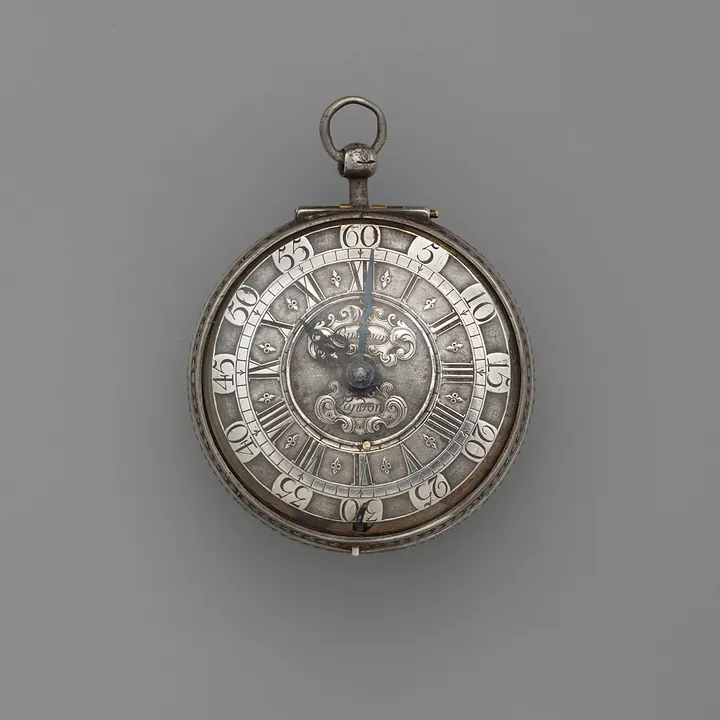
Watch by John Bushman, England, 17th century
The Metropolitan Museum of Art, New York
Pocket Watches · c. 1610-1620
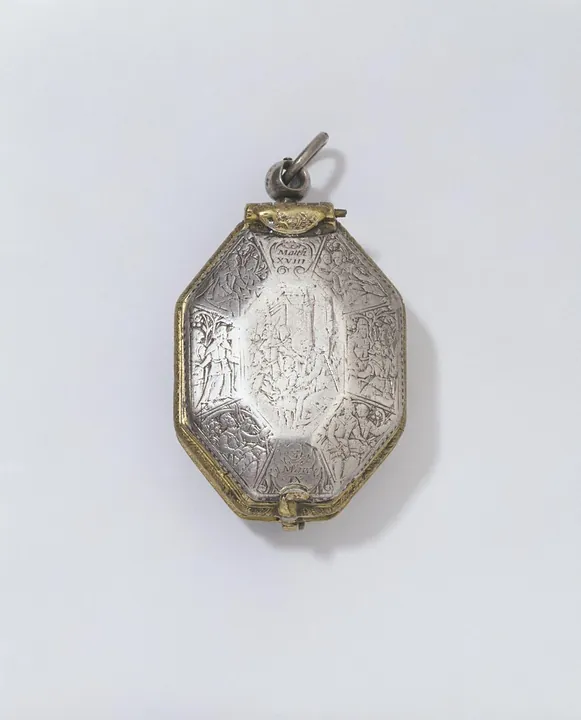
Case and dial of engraved silver and gilt brass. English, about 1640.
Victoria and Albert Museum, London
Pocket Watches · c. 1610
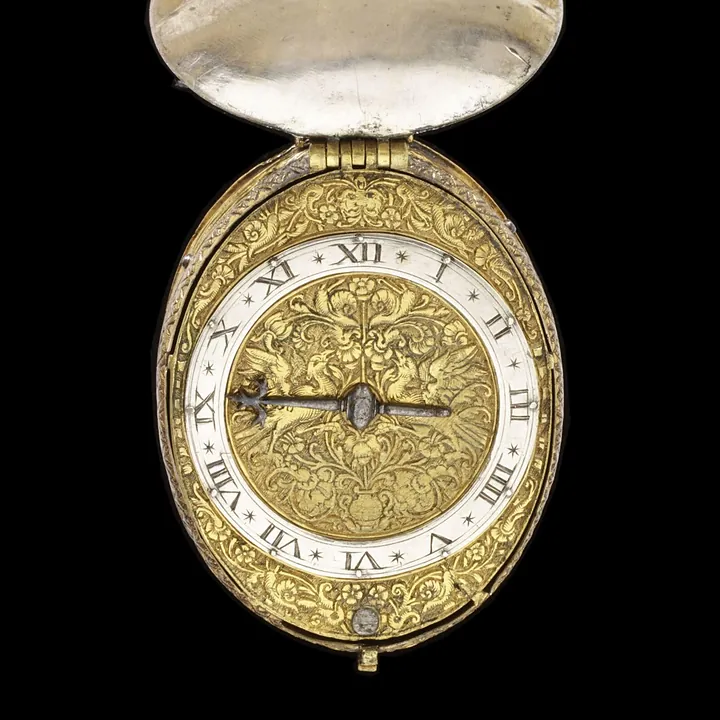
Watch by N. Ridgdale, England, c. 1610
Victoria and Albert Museum, London
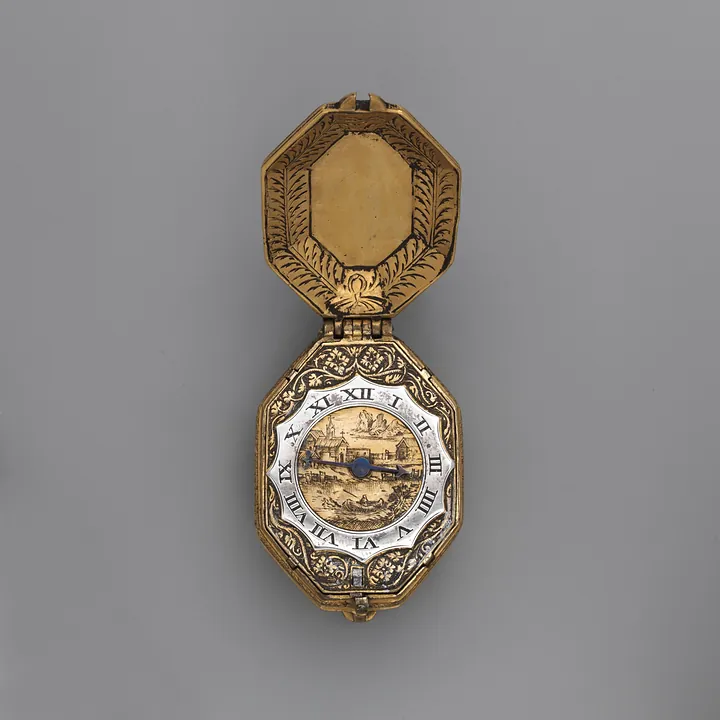
Pocket Watches · c. 1620–25
Watch by Isaac Symms, England, c. 1620–25
The Metropolitan Museum of Art, New York
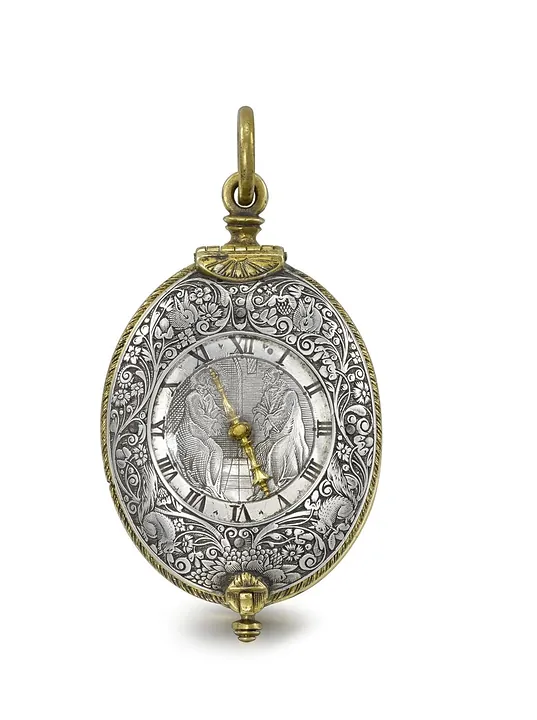
Pocket Watches · 1622–1628
Pocket watch by James Vautrollier, England, 1622–1628
Science Museum Group, London
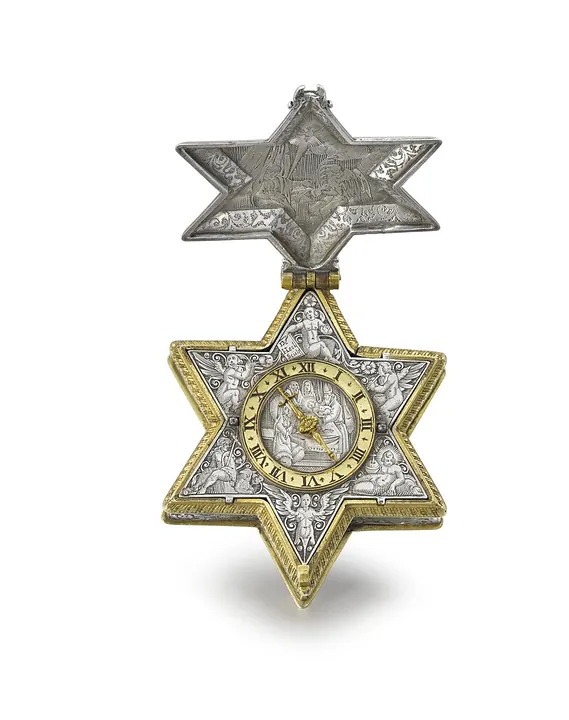
Pocket Watches · 1625
Pocket watch by David Ramsay, England, 1625
Science Museum Group, London
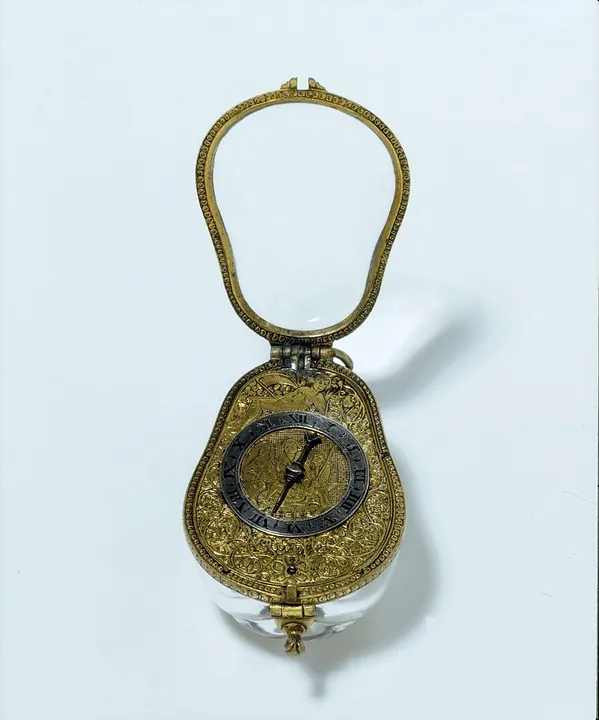
Pocket Watches · c. 1635
Jewellery, England
Victoria and Albert Museum, London
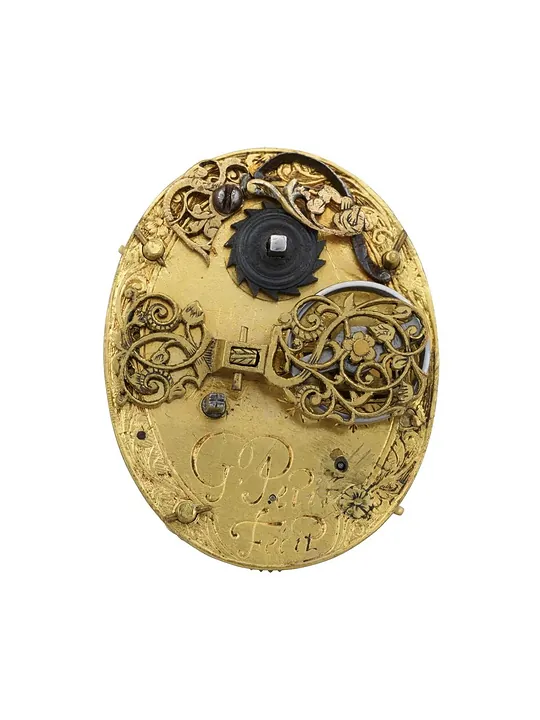
Pocket Watches · 1630
Pocket watch by G Petit, England, 1630
Science Museum Group, London