
Pocket Watches · Pocket watch
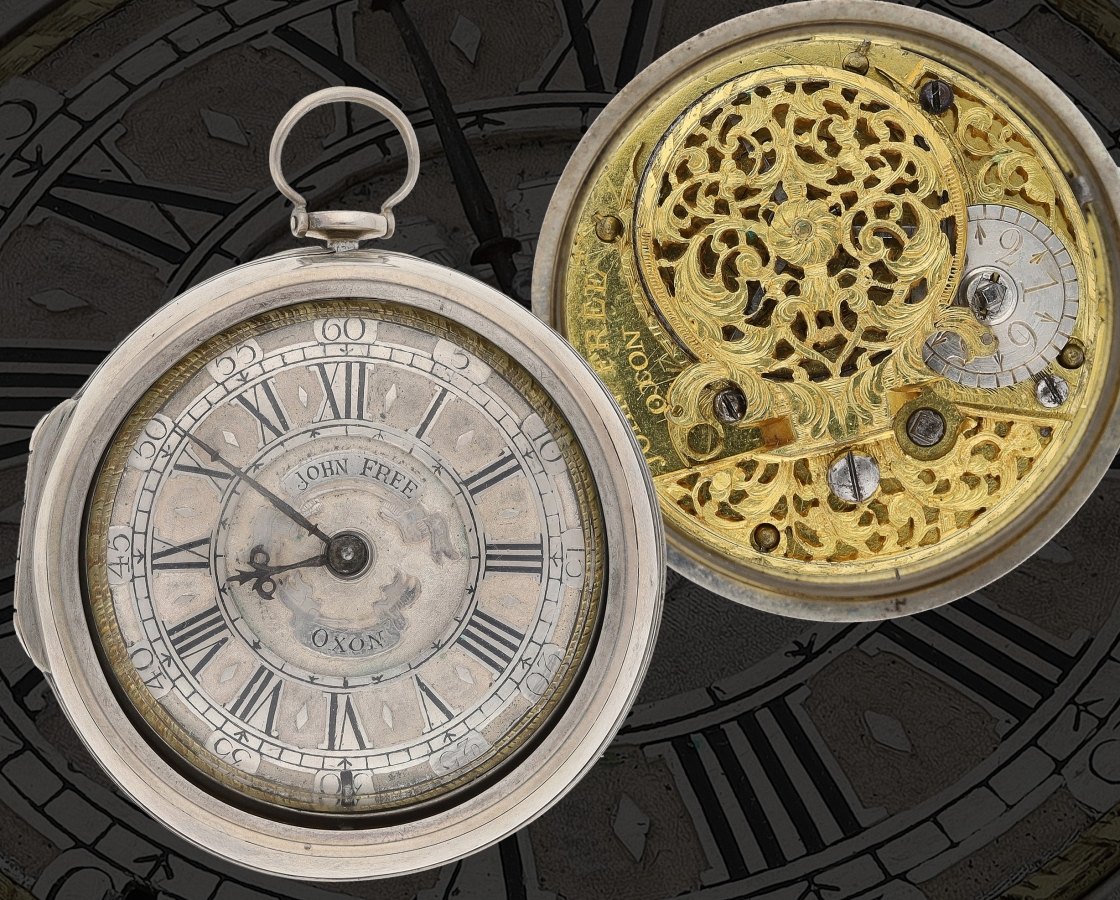
Early 18th century silver pair cased verge pocket watch by John Free
- Maker / attribution
- John Free (maker)
- Date
- early 18th century
- Historical period
- Early Modern Horology (1600 – 1750)
- Country of origin
- Unrecorded in source
- Object type
- Pocket watch
- Materials / technique
- silver
- Dimensions
- Diameter 56 mm
- Auction house
- Gardiner Houlgate (auction house), Corsham
- Lot
- Sale 71, lot 15
- Credit line
- Auction lot record: lot 15, The Tony Gibbons Watch Collection, Gardiner Houlgate (20th October 2025)
- Catalogue title (original)
- John Free, Oxon - fine early 18th century silver pair cased verge pocket watch, No. 47, signed fusee movement with flat steel balance, pierced and engraved winged balance cock and foot, silver regulat (English)
View the source record (auction lot) ↗ (opens another website in a new tab)Suggest a correction
Record summary
Catalogued by Gardiner Houlgate (auction house), Corsham (lot Sale 71, lot 15), this is a pocket watch by John Free, dated early 18th century. The Atlas places it in the Early Modern Horology period (1600 – 1750) of its Pocket Watches collection. Materials and techniques recorded by the source: silver. Recorded dimensions: Diameter 56 mm. The record is illustrated with 1 photograph.
Assembled from the source record's structured fields. Dates and attributions are given as the source states them; where a field is missing the Atlas leaves it blank rather than estimating.
Catalogue description
Lot description — Gardiner Houlgate
John Free, Oxon - fine early 18th century silver pair cased verge pocket watch, No. 47, signed fusee movement with flat steel balance, pierced and engraved winged balance cock and foot, silver regulating dial and Egyptian pillars, signed champlevé dial with Roman numerals and Arabic minute numerals, beetle and poker hands, bulls eye glass, plain cases with the outer case engraved 'T. Hardy 1767', case maker I.W', 56mm
Historical context
Early Modern Horology (1600 – 1750)
Huygens' pendulum and balance spring transform accuracy; English makers develop the anchor and deadbeat escapements.
The balance spring (c. 1675) improved watches dramatically and introduced the minute hand. English pair-cased verge watches with pierced balance cocks and French oignons were typical; enamel painting at Blois and Geneva, and the repeating watch (1680s), made watches objects of great refinement.
Read the period in the timelineMore pocket watches from this periodEarlier: Renaissance Horology
Atlas type guide
Verge and pair-cased watches
After Christiaan Huygens and Robert Hooke applied the balance spring around 1675, the verge watch became a reasonably reliable timekeeper and the minute hand became standard. Through the eighteenth century the typical English watch was a pair-cased verge: a fusee movement with a pierced, engraved balance cock, housed in an inner case and a separate protective outer case, often of repoussé gold, shagreen, tortoiseshell or enamel.
French watches of the same period were thicker 'oignons', later replaced by elegant thinner watches following Jean-Antoine Lépine's bar-bridge calibre of c. 1770. Dutch, Swiss and German makers supplied international markets, and verge watches were made until the mid-nineteenth century as cheaper alternatives to the cylinder and lever.
What to look for
- The pierced balance cock on the backplate: winged (continental) or with a foot (English); its style dates the watch.
- Fusee and chain visible through the movement; key winding through the dial (early) or case back.
- Hallmarks inside English silver or gold cases, which give a date letter.
- Maker's name and serial number engraved on the backplate; watch papers inside outer cases.
- Enamel dials (after c. 1720) versus earlier champlevé metal dials.
Dating clues
- Champlevé dials: c. 1680–1730; white enamel dials thereafter.
- English case hallmarks give the year of assay to within a year.
- Verge watches persisted in cheap production until c. 1850.
General guidance written by the Atlas editors about this kind of object. It is not a statement about this particular piece; for that, rely on the source record above and on physical examination.
Related records
Pocket Watches · 1600–1699
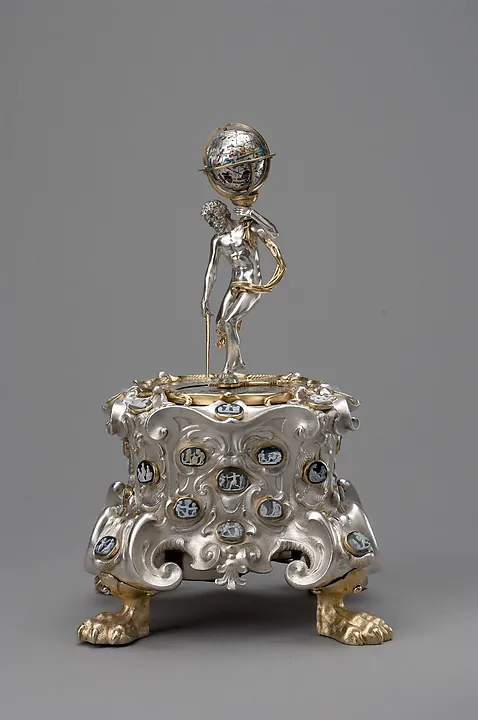
Pocket watch by Georg Ernst, Germany, 1600–1699
Fine Arts Museum Vienna
Pocket Watches · c. 1600
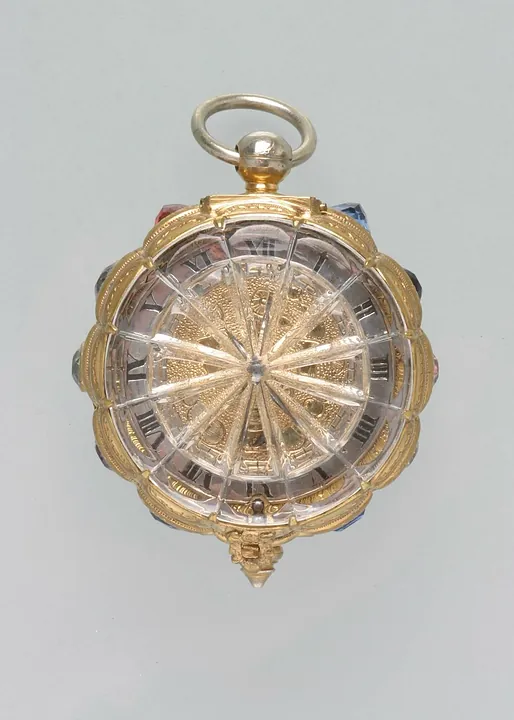
Pocket watch by Balthasar de Paep, Belgium, c. 1600
German Clock Museum
Pocket Watches · c. 1600
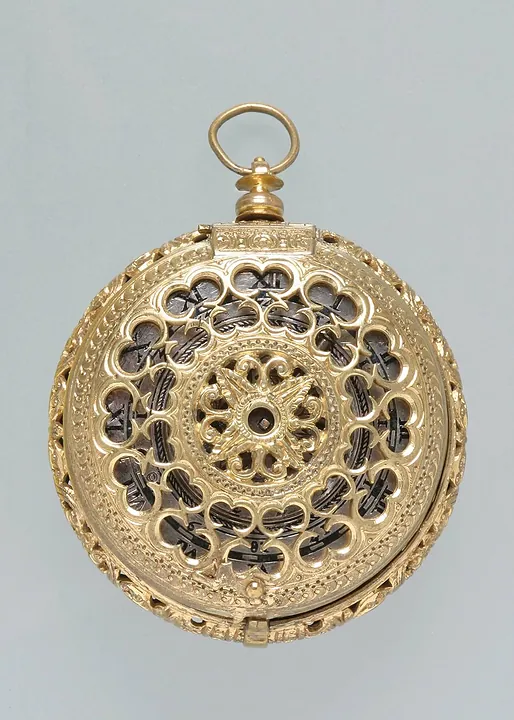
Pocket watch by Hans Reinboldt, France, c. 1600
German Clock Museum
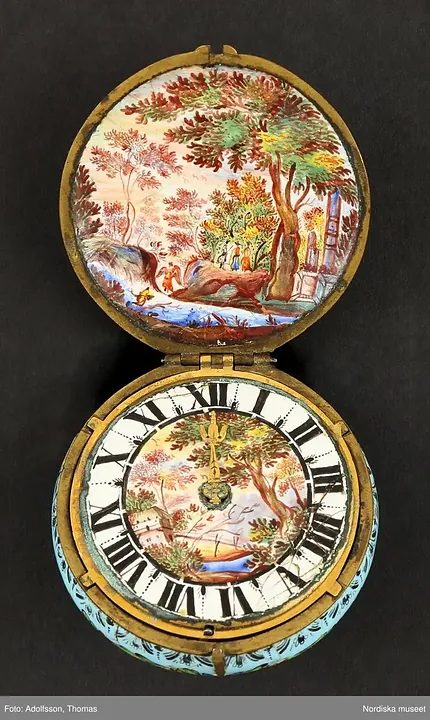
Pocket Watches · 1600–1699
Pocket watch by Johan Etmiller, Germany, 1600–1699
Nordic Museum Foundation
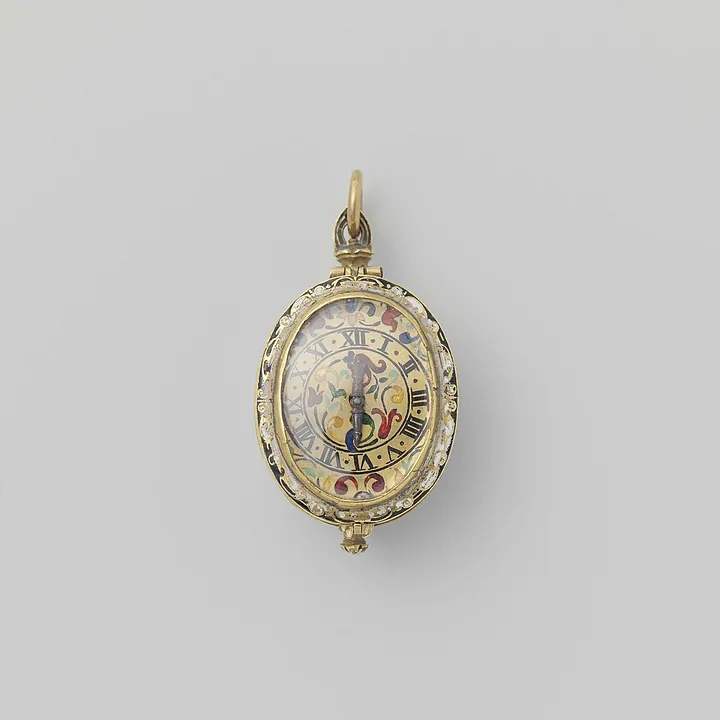
Pocket Watches · 1600
Pocket watch, France, 1600
Rijksmuseum
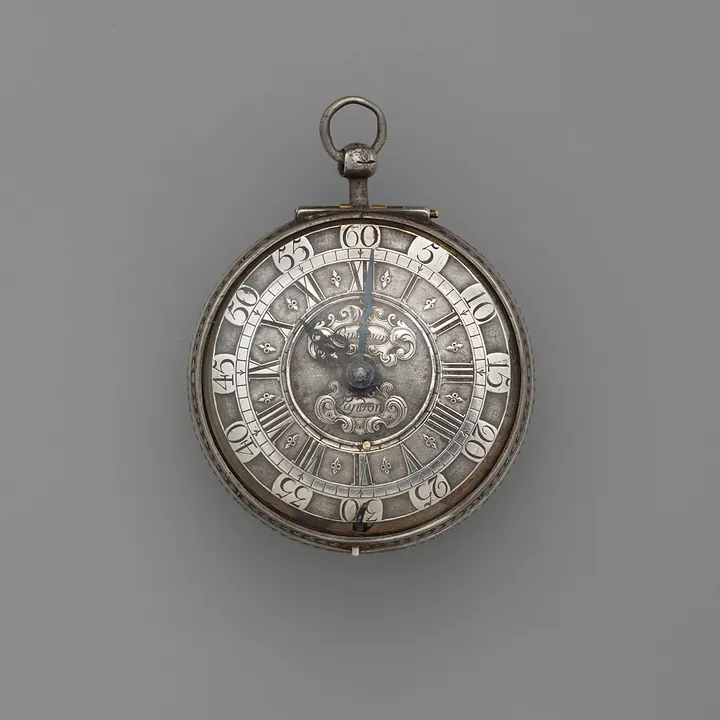
Pocket Watches · 17th century
Watch by John Bushman, England, 17th century
The Metropolitan Museum of Art, New York
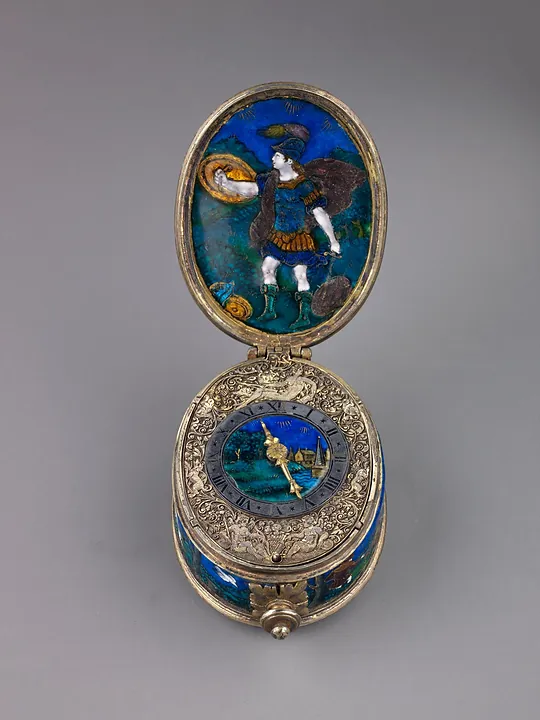
Pocket Watches · first quarter of 17th century
Watch by Suzanne de Court, France, first quarter of 17th century
The Metropolitan Museum of Art, New York
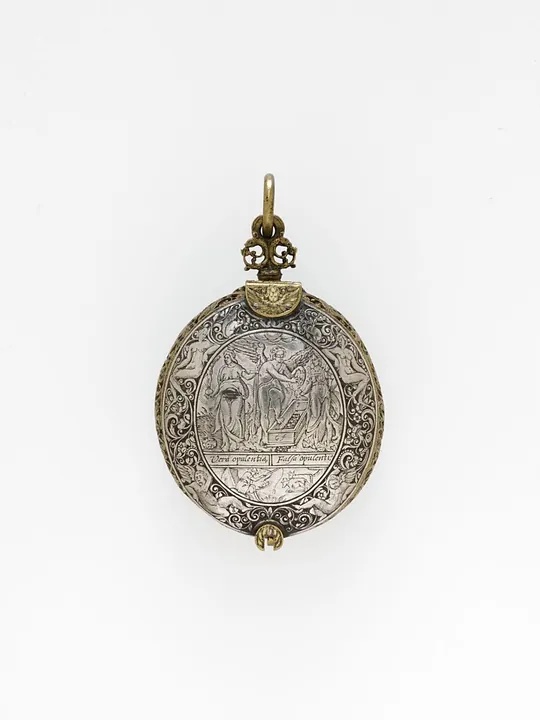
Pocket Watches · early 17th century
Watch of engraved and pierced silver and gilt brass, signed 'Noel Hubert A Rouen', France, early 17th century
Victoria and Albert Museum, London