
Wristwatches · Wristwatch
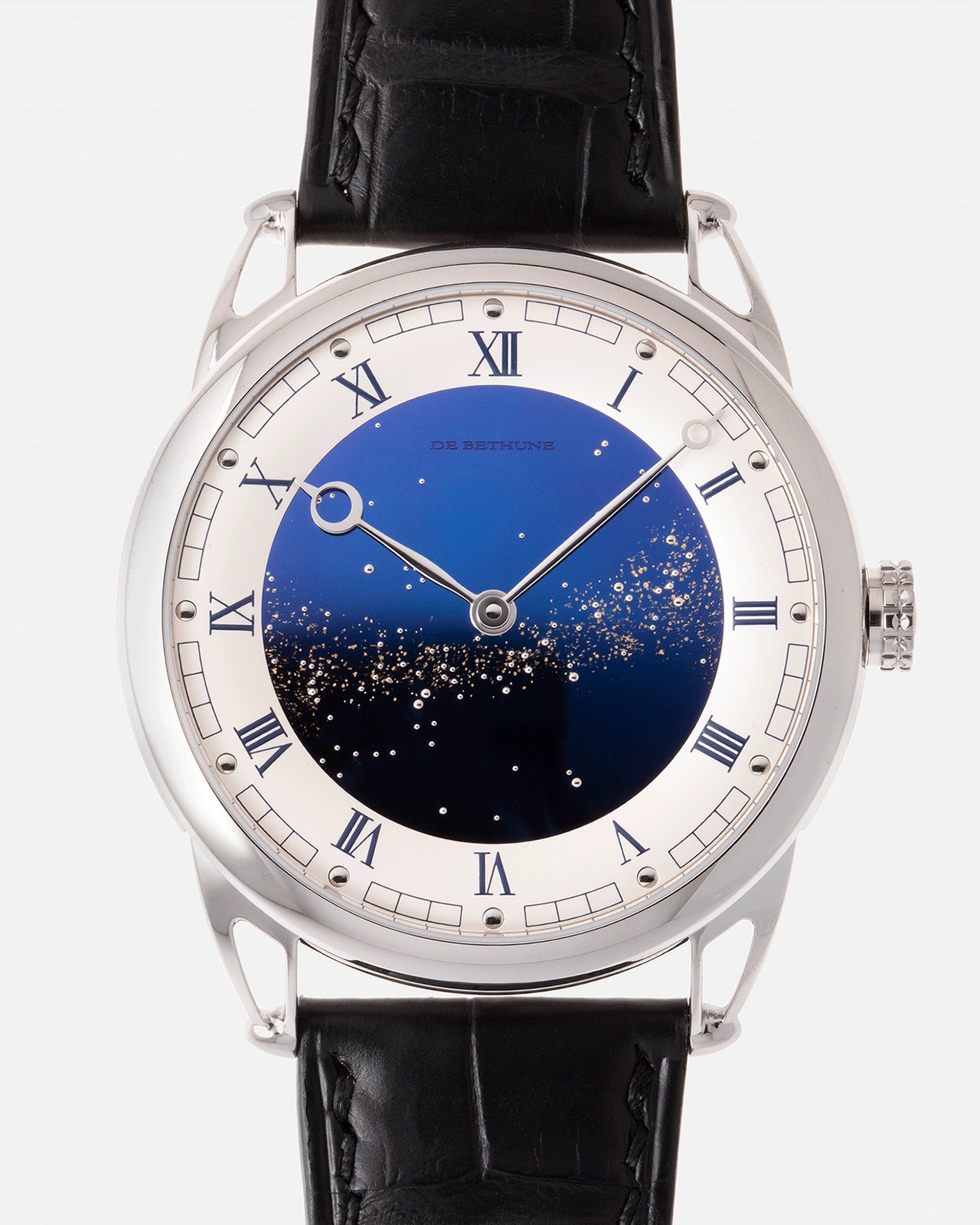
De Bethune DB25 Starry Varius, 2020
- Maker / attribution
- De Bethune (maker)
- Date
- 2020
- Historical period
- Contemporary Horology (2010 – Present)
- Country of origin
- Switzerland
- Object type
- Wristwatch
- Dimensions
- Case 42 mm
- Stock no.
- Product 6560365576279
- Credit line
- Dealer listing, S.Song Watches (product 6560365576279)
- Catalogue title (original)
- De Bethune DB25 Starry Varius (English)
View the source record (dealer listing) ↗ (opens another website in a new tab)Suggest a correction
Record summary
Catalogued by S.Song Watches (dealer), Seattle (stock number Product 6560365576279), this is a wristwatch by De Bethune, made in Switzerland, dated 2020. The Atlas places it in the Contemporary Horology period (2010 – Present) of its Wristwatches collection. Recorded dimensions: Case 42 mm. The record is illustrated with 6 photographs.
Assembled from the source record's structured fields. Dates and attributions are given as the source states them; where a field is missing the Atlas leaves it blank rather than estimating.
Catalogue description
Dealer description — S.Song Watches
Amongst the litany of independent brands that have popped up in recent years, few of them can compete with the timepieces that De Bethune has been creating. Recognized as one of the most important independent watchmakers today, De Bethune has created a powerful individual identity as they have unrelentingly developed and stuck with their own unique style. The De Bethune DB25 Starry Varius you see here today is a perfect example of this. With a remarkable focus on ergonomics, finishing, and raw craftsmanship, the DB25 Starry Varius is a wonderful example of why De Bethune is held to such high regard in the watchmaking industry. Free from complications that might muddle its design, the DB25 is a time-only timepiece powered by the impeccably finished 6-day power reserve manually-wound cal. DB2005 movement. Featuring 160 parts with a silver plate and barrel bridge cover adorned with "côtes de Bethune” finishing, hand-snailed barrels, and hand-polished, chamfered steel parts throughout, this movement is a feast for the eyes. Beyond its movement, where the Starry Varius’ design really shines lies in its dial. Made from a highly polished blued titanium plate, the dial speaks to De Bethune’s signature aesthetic. Featuring a starry night sky made up of several applications of material, including around 100 different-sized, applied, white gold stars and tiny specks of gold leaf, this dial is a true work of art, which each example being slightly different. Interestingly, this particular DB 25 Starry Varius is quite special as it was specifically customized by its original owner to house silver hands, rather than the standard gold ones in order to match the titanium case better. Despite the unconventional design of the DB25, De Bethune worked hard to make sure that functionality and wearability weren’t compromised. With hollowed-out lugs that sit excellently on the wrist, this 42mm watch wears just as well as any other conventional timepiece. With its insane craftsmanship, impressive movement, and intricate dial details, De Bethune as a brand is becoming increasingly popular, and the DB 25 acts as the perfect ‘gateway’ into this brand.
Historical context
Contemporary Horology (2010 – Present)
Silicon components, connected watches, optical-lattice research clocks and a thriving independent scene.
Smartwatches became the world's best-selling watches, while mechanical watchmaking focuses on craft, innovation (silicon components, new escapements) and independent makers.
Read the period in the timelineMore wristwatches from this periodEarlier: Mechanical Renaissance
Atlas type guide
Wristwatches
Bracelet watches were worn by women from the early nineteenth century — Breguet made one for Caroline Murat, Queen of Naples, in 1810–12 — but the wristwatch only became a man's instrument with military use and aviation in the early twentieth century. Between the World Wars it overtook the pocket watch; the 1920s and 1930s brought rectangular Art Deco cases, water-resistant cases and the first automatic winding systems.
After 1945 the wristwatch became a carrier of identity — dress watches, sports and dive watches, chronographs, calendars — produced by Swiss, American, Japanese, German, Soviet and Chinese industries. The quartz revolution after 1969 and the mechanical renaissance since the 1990s, including the rise of independent watchmakers, complete the story.
What to look for
- The reference number (between the lugs or inside the case back) and serial number, the starting point for dating.
- The calibre: its maker and number are often stamped under the dial or on the bridge.
- Originality of dial, hands and crown — refinished ('redial') dials are common.
- Case material marks: 18K/750, 14K/585, stainless steel, gold-filled, plated.
Dating clues
- Wire-lug cases: before c. 1925.
- Water-resistant screw-down cases: from 1926.
- Quartz movements: from 1969; sapphire crystals widespread after c. 1980.
General guidance written by the Atlas editors about this kind of object. It is not a statement about this particular piece; for that, rely on the source record above and on physical examination.
Related records
Wristwatches · c. 2015
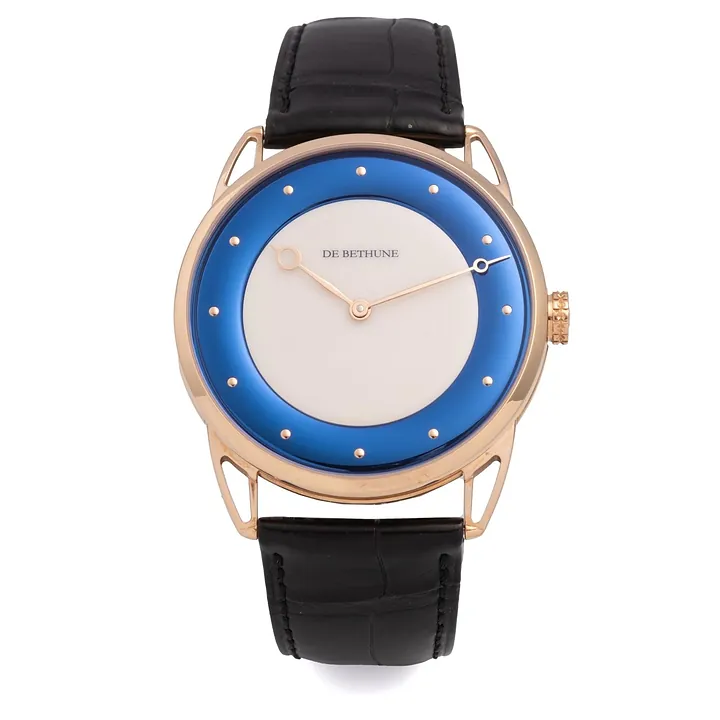
De Bethune White Night, ref. DB 25 XPA Rv3, c. 2015
Antiquorum auction archive, Geneva
Wristwatches · c. 2002
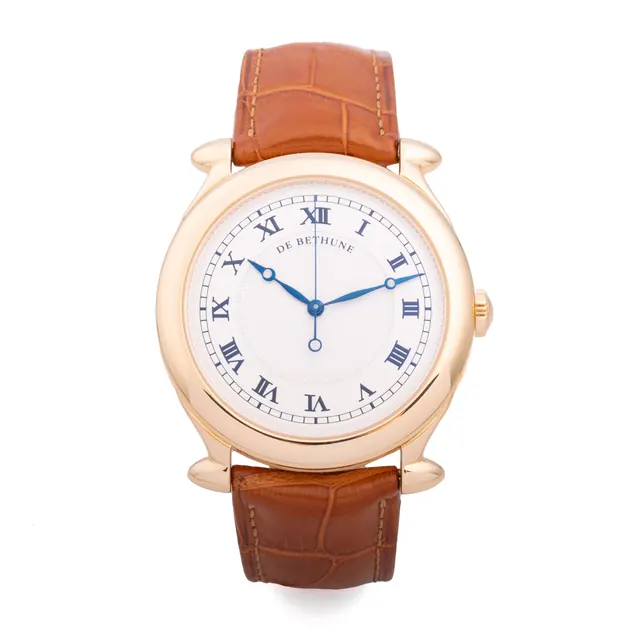
De Bethune wristwatch, ref. DB5RT, No. 007, circa 2002
Antiquorum auction archive, Geneva
Wristwatches · 2008
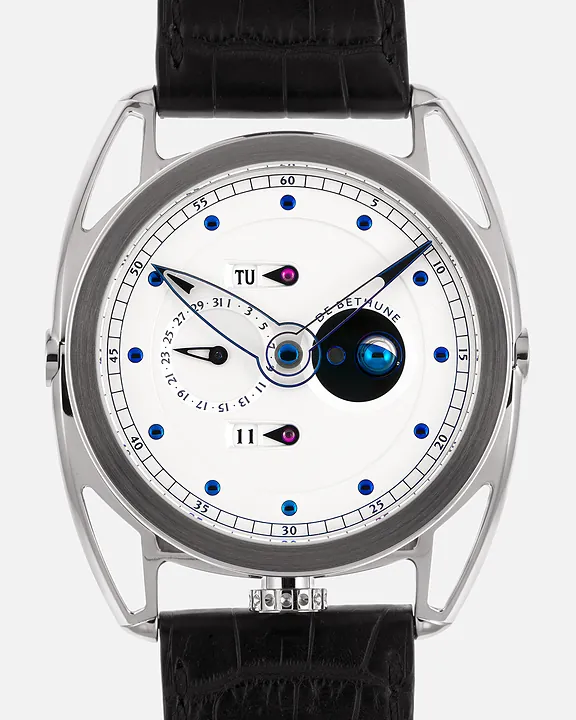
De Bethune DB26 Perpetual Calendar Moonphase DB26WS1, 2008
S.Song Watches (dealer), Seattle
Wristwatches · 2019
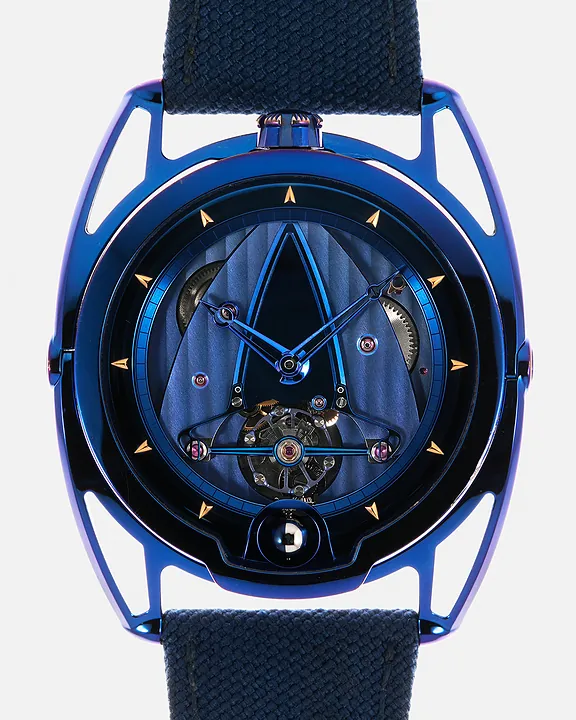
De Bethune DB28 Kind Of Blue, 2019
S.Song Watches (dealer), Seattle

Wristwatches · c. 2010s
Breguet Type XXI, ref. 3810, c. 2010s (Antiquorum Lot 381-24)
Antiquorum auction archive, Geneva

Wristwatches · c. 2010s
Breguet Type XXI, ref. 3810, c. 2010s (Antiquorum Lot 386-229)
Antiquorum auction archive, Geneva

Wristwatches · Sold in September 2010
Breitling Cosmonaute, ref. A 22322, Sold in September 2010
Antiquorum auction archive, Geneva

Wristwatches · c. 2010
Corum Bubble Chrono, ref. 396.150.20, c. 2010
Antiquorum auction archive, Geneva