
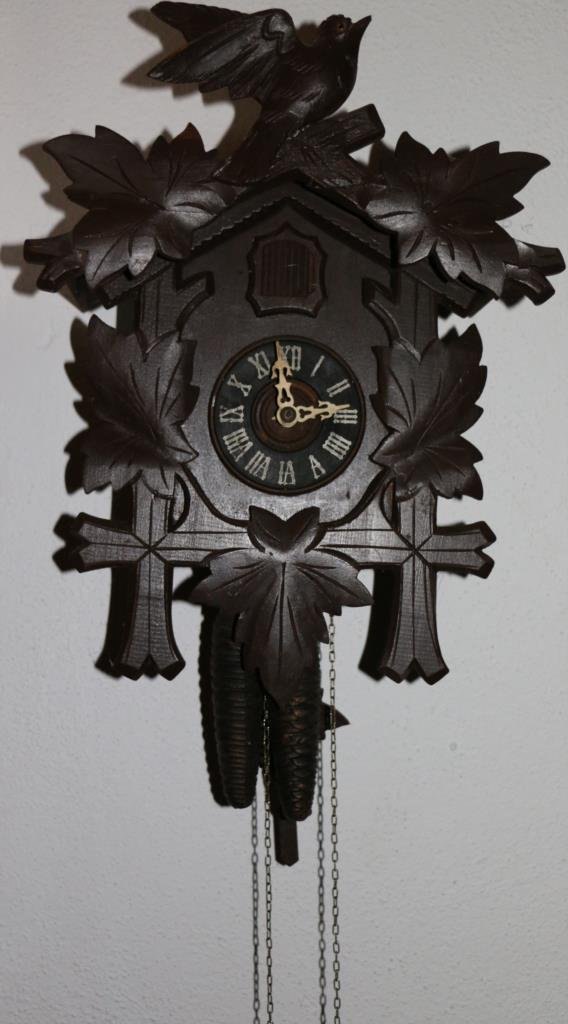
Clocks · Cuckoo clock
Cuckoo clock, 20th century
- Maker / attribution
- Unrecorded in source
- Date
- 20th century
- Historical period
- Golden Age of Mechanical Watchmaking (1900 – 1945)
- Country of origin
- Unrecorded in source
- Place
- Hammerschmiede (Lahr-Reichenbach )
- Object type
- Cuckoo clock
- Materials / technique
- Holz, Metall
- Holding institution
- Hammerschmiede mit Bienen- und Heimatmuseum Reichenbach
- Accession / object no.
- RE-2021-2-0070
- Credit line
- Hammerschmiede mit Bienen- und Heimatmuseum Reichenbach
- Catalogue title (original)
- Kuckucksuhr (German)
View the source record ↗ (opens another website in a new tab)Suggest a correction
Record summary
Held and catalogued by Hammerschmiede mit Bienen- und Heimatmuseum Reichenbach (object number RE-2021-2-0070), this is a cuckoo clock, made in Hammerschmiede (Lahr-Reichenbach ), dated 20th century. The Atlas places it in the Golden Age of Mechanical Watchmaking period (1900 – 1945) of its Clocks collection. Materials and techniques recorded by the source: Holz, Metall. The record is illustrated with 1 photograph.
Assembled from the source record's structured fields. Dates and attributions are given as the source states them; where a field is missing the Atlas leaves it blank rather than estimating.
Catalogue description
Catalogue description from Hammerschmiede mit Bienen- und Heimatmuseum Reichenbach (German)
Https://de.wikipedia.org/wiki/Kuckucksuhr Als Kuckucksuhr wird eine mechanische Uhr bezeichnet, deren Schlagwerk den Ruf eines Kuckucks imitiert. Meist ertönt dieser Ruf zur vollen Stunde gemeinsam mit einem Gong, wobei die Anzahl der Kuckucksrufe die Stunde angibt. Zusätzlich zum Schlag fährt aus einer Klappe oberhalb des Zifferblatts eine Kuckucksfigur heraus. Kuckucksuhren als charakteristisch deutsches Kulturgut sind weltweit bekannt als aufwendig verzierte Objekte, deren Gestaltung Wald- oder Jagdthemen aufgreift. Sie werden traditionell vor allem im Schwarzwald gefertigt. Häufig sind es Wanduhren, deren mechanisches Pendelwerk mit Kettenzug und Schlagwerk ausgestattet ist. Die Grundform des Gehäuses ist seit Mitte des 19. Jahrhunderts meist einem Bahnwärterhäuschen mit Schrägdach nachempfunden und mit geschnitzten Holzornamenten verziert. Der „Kuckucksruf“ wird traditionell durch ein Paar unterschiedlich hoher Pfeifen im Inneren der Uhr erzeugt. Einige Patente kommen jedoch auch mit einer einzigen Flöte aus. Je nach Ausführung wird die mechanische Kuckucksfigur – traditionell aus Holz geschnitzt und bemalt, heute oft aus Kunststoff – passend zum Kuckucksruf bewegt oder öffnet den Schnabel. Zusätzlich können außen an der Uhr noch andere bewegliche Zierelemente angebracht sein, die sich (meist nur zur vollen Stunde) mitbewegen (Tänzer, weitere Vögel). Heute werden neben den traditionell mechanischen Kuckucksuhren auch elektro-mechanische Modelle angeboten mit Quarzuhrwerk, elektronisch erzeugtem Kuckucksruf, sowie Kettenzug- und Pendelattrappen.
Shown in the original language of the source catalogue. An editor-reviewed English translation has not yet been published; we do not publish machine translations as authoritative text.
Historical context
Golden Age of Mechanical Watchmaking (1900 – 1945)
The wristwatch displaces the pocket watch; waterproof cases, self-winding and grand complications.
Between 1900 and 1945 clocks were electrified: master-clock systems ran factories and offices, synchronous mains clocks entered homes, and the Shortt free-pendulum clock set new standards of accuracy before the first quartz clocks (1927). Art Deco design reshaped mantel and table clocks.
Read the period in the timelineMore clocks from this periodEarlier: Industrial Revolution
Atlas type guide
Black Forest and cuckoo clocks
Clockmaking spread through the Black Forest in south-west Germany in the late seventeenth century as a winter occupation for farming families. Early clocks had wooden plates and wheels and a foliot ('Waaguhr') or short pendulum, with a painted wooden shield dial; pedlars (Uhrenträger) carried them across Europe. The cuckoo clock, which imitates the bird's call with two small bellows-driven pipes, appeared in the mid-eighteenth century.
The industry was organised around Furtwangen, Triberg, Schwenningen and Lenzkirch. The Furtwangen clockmaking school (1850) introduced the railway-house cuckoo clock design, and from the late nineteenth century factories such as Junghans, Kienzle and Hamburg-Amerikanische Uhrenfabrik produced clocks by the million. The German Clock Museum in Furtwangen preserves the region's history.
What to look for
- Wooden plates and wheels (earlier) versus brass movements (later).
- Painted shield dials (Lackschilduhr) with floral or figurative decoration.
- Cuckoo bellows and pipes, the carved 'railway house' or hunting-scene case.
- Trademarks and movement stamps of Black Forest factories.
Dating clues
- Wooden-wheeled foliot clocks: c. 1680–1750.
- Painted shield clocks: c. 1780–1880.
- Railway-house cuckoo clocks: after 1850; carved hunting-style cases after c. 1860.
General guidance written by the Atlas editors about this kind of object. It is not a statement about this particular piece; for that, rely on the source record above and on physical examination.
Read next:FoliotAnchor (recoil) escapement
Related records
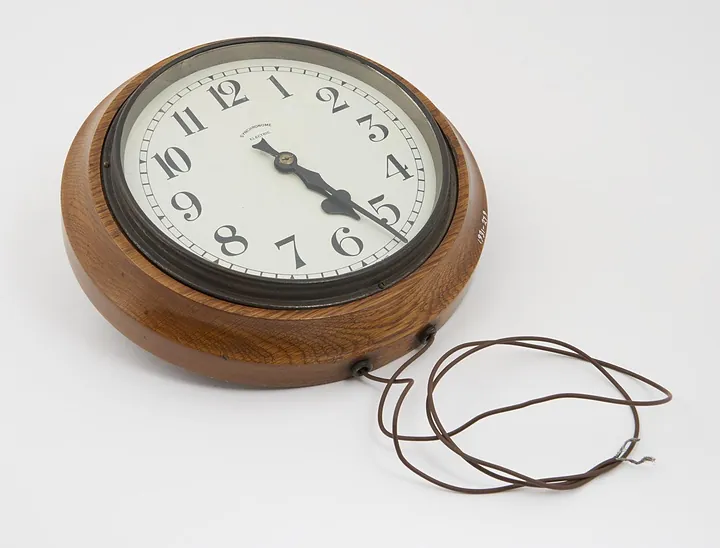
Clocks · 1890–1930
Clock with 8-inch impulse dial, by the Synchronome Company Limited, England, 1890–1930.
Science Museum Group, London
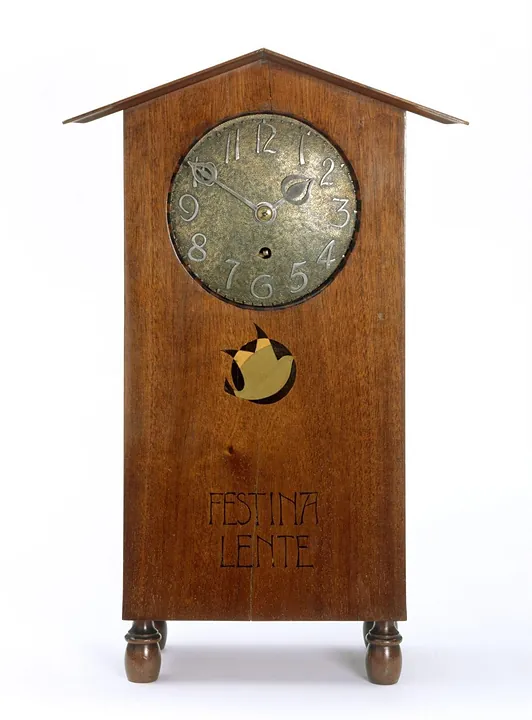
Clocks · c.1900
Clock by Mackay Hugh Baillie Scott, Bedfordshire, c.1900
Victoria and Albert Museum, London
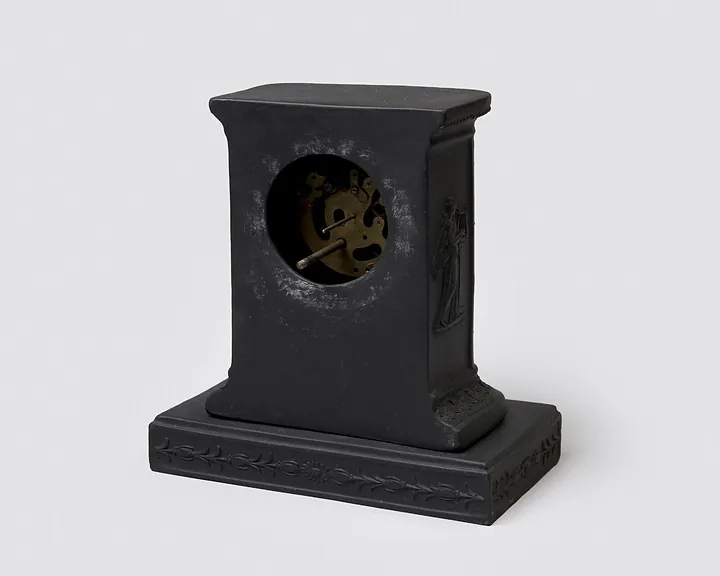
Clocks · c. 1900
Clock, black basalt, brass, Josiah Wedgwood and Sons, Etruria, c. 1900
Victoria and Albert Museum, London
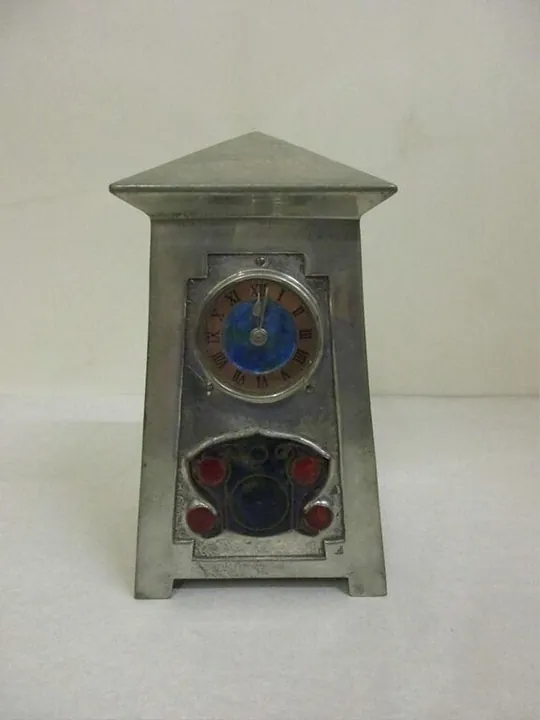
Clocks · c.1903-1904
Clock, pewter, made for Liberty& Co., England. 1903-4.
Victoria and Albert Museum, London
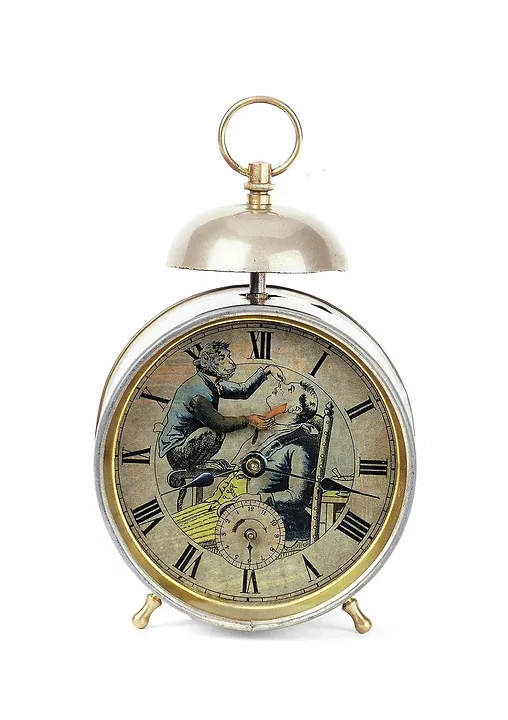
Clocks · c. 1900
Alarm clock by Union Clock Company, Germany, c. 1900
German Clock Museum
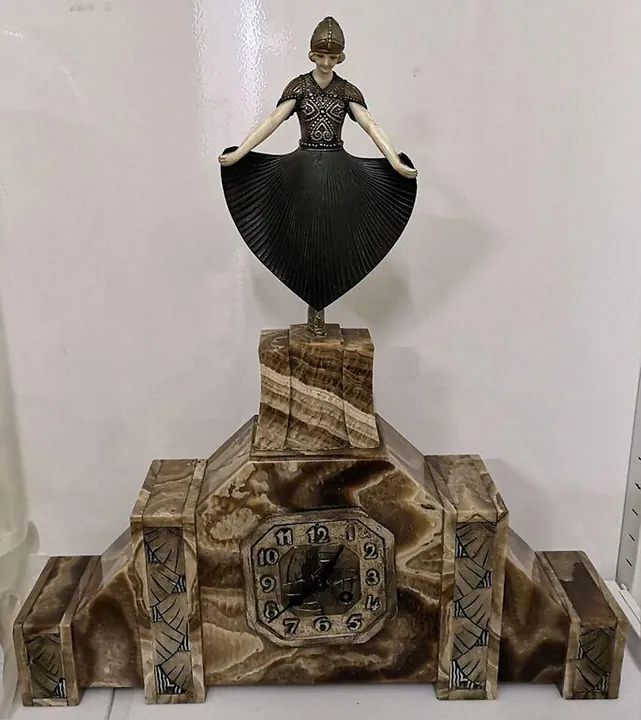
Clocks · 20th century
Base Metal, 20th c. Bronze, marble and ivory clock by Chiparus
Victoria and Albert Museum, London
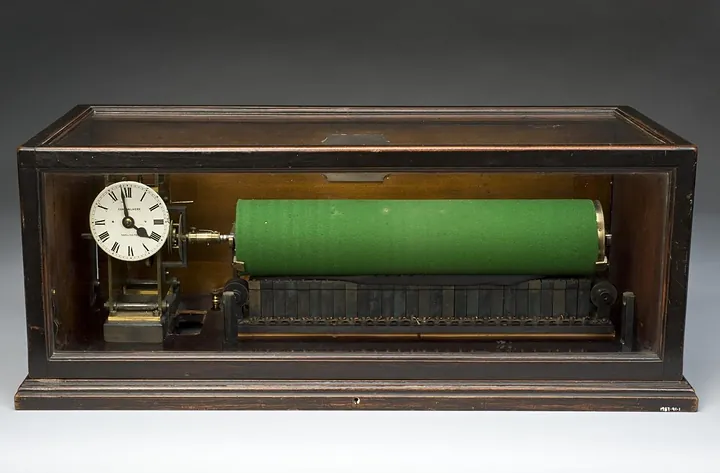
Clocks · 1900–1939
Clock by Cox-Walkers of Darlington, England, 1900–1939
Science Museum Group, London
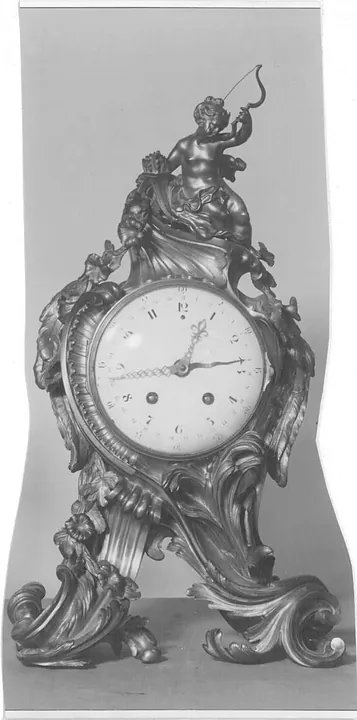
Clocks · 1900–1999
Clock by Französisch (Schule), 1900–1999
Fine Arts Museum Vienna