
Pocket Watches · Clock watch
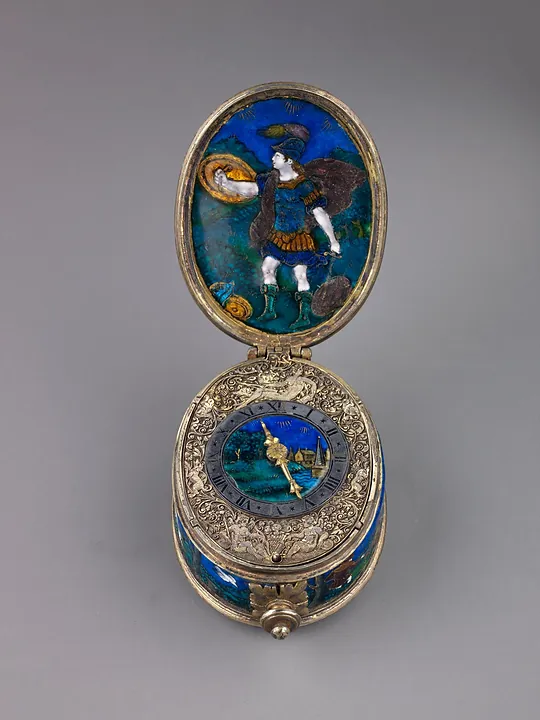
Clock-watch with alarm and calendar
- Maker / attribution
- Nicolas Forfaict (source attribution)
- Date
- c. 1600–1610
- Historical period
- Early Modern Horology (1600 – 1750)
- Country of origin
- French, Paris
- Object type
- Clock watch
- Dimensions
- 2 1/8 x 1 3/8 in. (5.4 x 3.5 cm)
- Holding institution
- The Metropolitan Museum of Art, New York
- Accession / object no.
- 17.190.1607
- Credit line
- The Metropolitan Museum of Art, New York
- Catalogue title (original)
- Clock-watch with alarm and calendar (English)
View the source record ↗ (opens another website in a new tab)Suggest a correction
Record summary
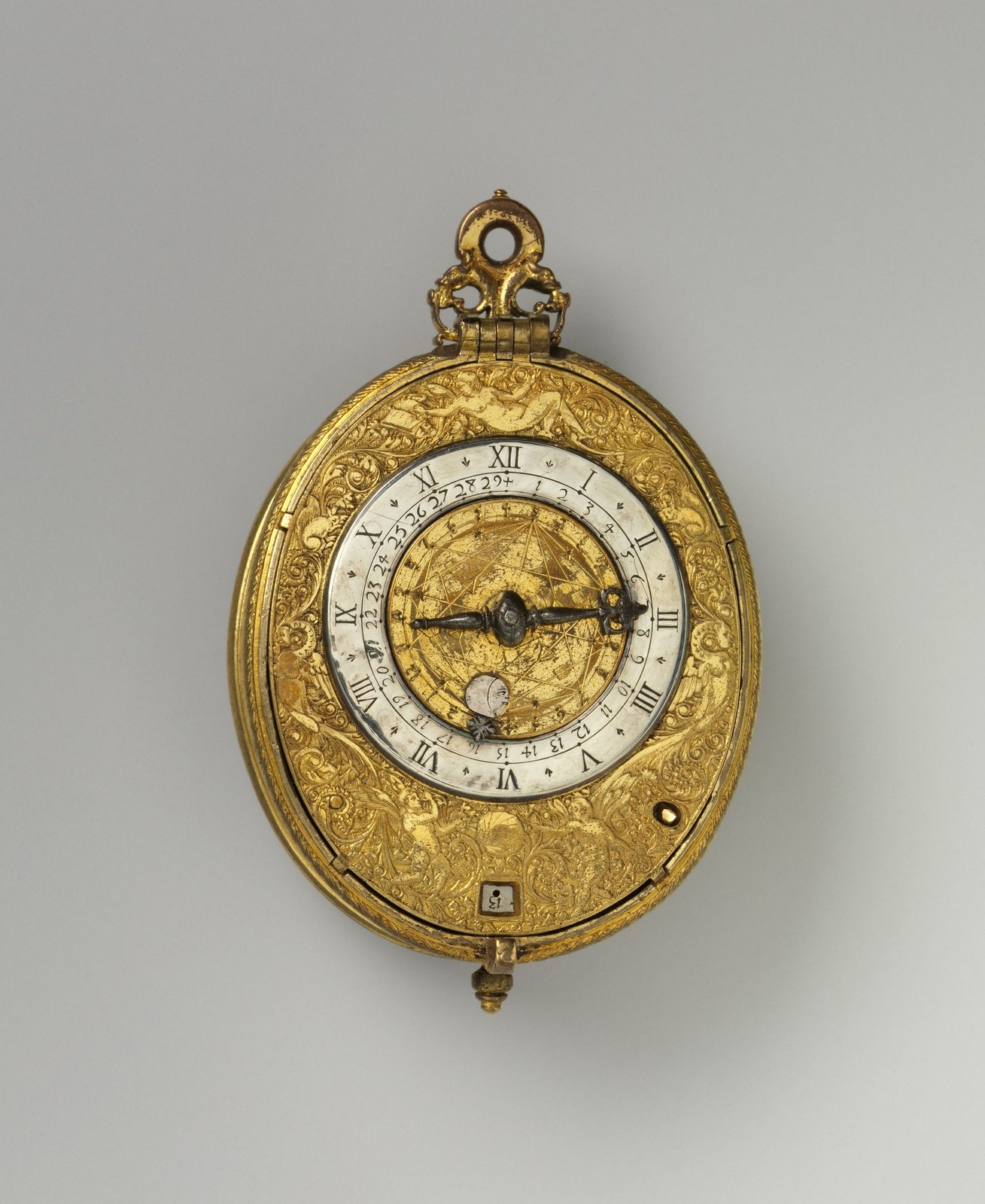
Held and catalogued by The Metropolitan Museum of Art, New York (object number 17.190.1607), this is a clock watch attributed to Nicolas Forfaict, made in French, Paris, dated c. 1600–1610. The Atlas places it in the Early Modern Horology period (1600 – 1750) of its Pocket Watches collection. Recorded dimensions: 2 1/8 x 1 3/8 in. (5.4 x 3.5 cm). The record is illustrated with 1 photograph.
Assembled from the source record's structured fields. Dates and attributions are given as the source states them; where a field is missing the Atlas leaves it blank rather than estimating.
Catalogue description
Original object description
Attributed to Parisian artisan Nicolas Forfaict (active ca. 1580–1615), this calendar and alarm clock-watch measures 2 1/8 by 1 3/8 inches (5.4 by 3.5 cm) and is curated by The Metropolitan Museum of Art's European Sculpture and Decorative Arts department. The mechanism incorporates gilded brass alongside blued and plain steel components. The dial and case consist of brass, silver-plated brass, and silver elements, accented by a single steel hand. Elaborately engraved motifs wrap the external surfaces up to a top suspension ring, and the opening case reveals openwork bridges alongside the inner gear wheels. Additional concentric rings on the face govern the calendar and waking indicators.
Construction and Materials
Constructed within an exterior footprint of 2 1/8 by 1 3/8 inches, the clock-watch movement utilizes gilded brass and steel, with select steel elements treated to a blued finish. Intricate pierced bridges inside the compact mechanism expose the gear trains to view. Brass and silvered brass make up the dial plate and enclosing case, which also features solid silver details and a centrally mounted pointer fashioned from steel.
Dial and Functions
Ornamented with figurative details and scrollwork, the main face includes an outer numeral chapter ring flanked by internal scales dedicated to the alarm mechanism and calendar tracking. A solitary steel hand indicates both primary time and auxiliary astronomical functions. Complete exterior surface engraving reflects early seventeenth-century Parisian decorative horology.
Provenance and Documentation
Presented to the museum in 1917 by J. Pierpont Morgan, this complex horological piece is catalogued as accession 17.190.1607. Museum records credit Nicolas Forfaict, who worked in Paris between 1580 and 1615, establishing the current dating and classification within the European Sculpture and Decorative Arts collection based on internal archival research.
Historical context
Early Modern Horology (1600 – 1750)
Huygens' pendulum and balance spring transform accuracy; English makers develop the anchor and deadbeat escapements.
The balance spring (c. 1675) improved watches dramatically and introduced the minute hand. English pair-cased verge watches with pierced balance cocks and French oignons were typical; enamel painting at Blois and Geneva, and the repeating watch (1680s), made watches objects of great refinement.
Read the period in the timelineMore pocket watches from this periodEarlier: Renaissance Horology
Atlas type guide
Early spring-driven watches
Portable spring-driven timepieces appeared in southern Germany, France and Italy in the early sixteenth century; Peter Henlein of Nuremberg is traditionally credited, although the historical record is complex. These early watches were worn as pendants or carried, had iron or brass movements with a verge escapement and a foliot or small balance, and used a stackfreed or fusee to equalise spring force. They indicated hours only and were notoriously inaccurate.
From the later sixteenth century watches were made in Blois, Paris, Geneva, London and Augsburg in oval, octagonal, cruciform, skull and other 'form' cases of rock crystal, gilt brass, silver and enamel. They were jewellery and status objects as much as timekeepers.
What to look for
- A single hour hand and often a touch-pin hour ring for feeling the time.
- Stackfreed (a cam and spring) instead of a fusee on German watches.
- Pierced and engraved cocks over the balance, fine gut fusee lines.
- Rock-crystal, enamelled or engraved form cases.
Dating clues
- Drum-shaped German watches: c. 1530–1580.
- Oval and form watches: c. 1580–1650.
- Before c. 1675 there is no balance spring; watches can vary by many minutes a day.
General guidance written by the Atlas editors about this kind of object. It is not a statement about this particular piece; for that, rely on the source record above and on physical examination.
Related records
Pocket Watches · c. 1605
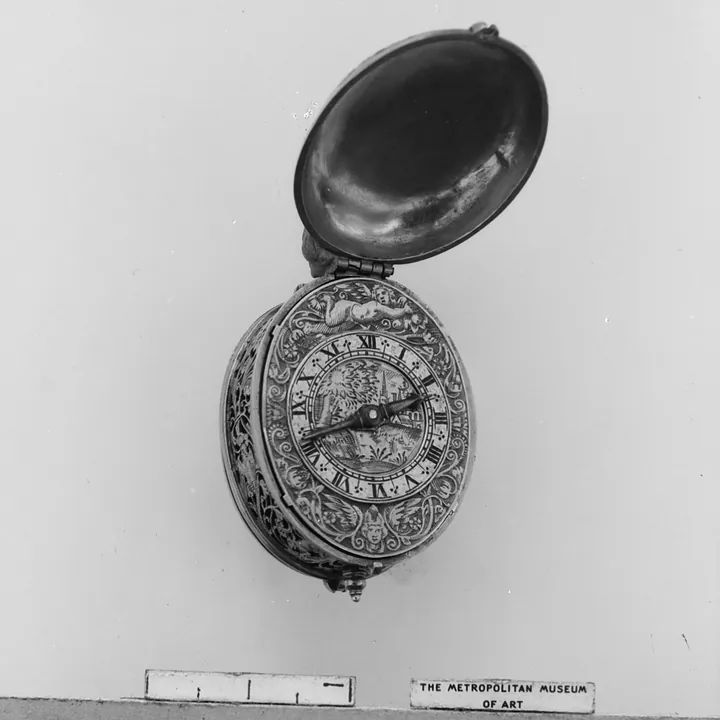
Watch by Nicolas Forfaict, France, c. 1605
The Metropolitan Museum of Art, New York
Pocket Watches · 1600–1699
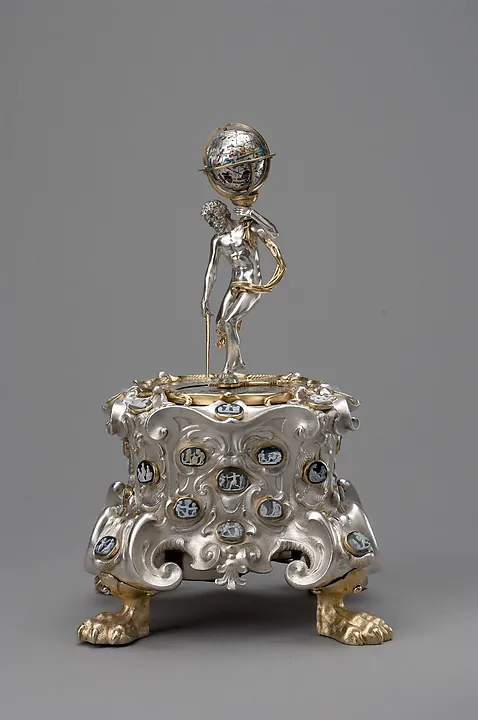
Pocket watch by Georg Ernst, Germany, 1600–1699
Fine Arts Museum Vienna
Pocket Watches · c. 1600
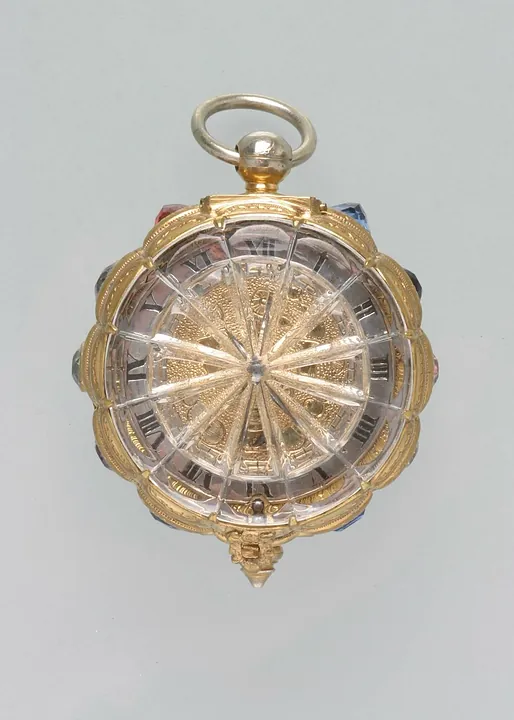
Pocket watch by Balthasar de Paep, Belgium, c. 1600
German Clock Museum
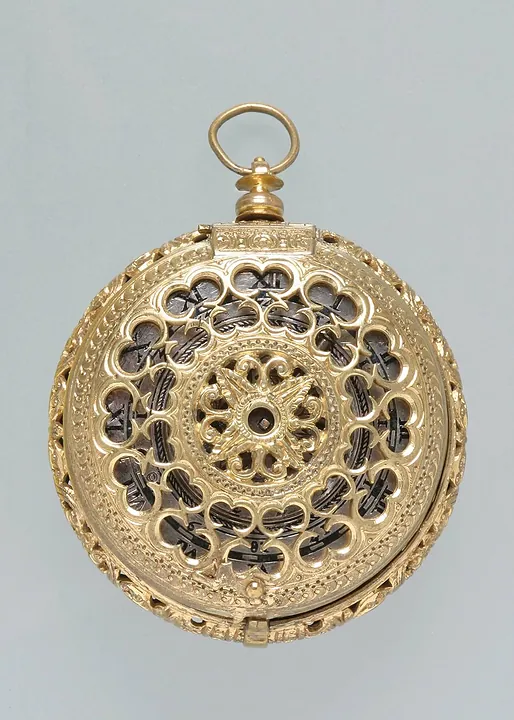
Pocket Watches · c. 1600
Pocket watch by Hans Reinboldt, France, c. 1600
German Clock Museum
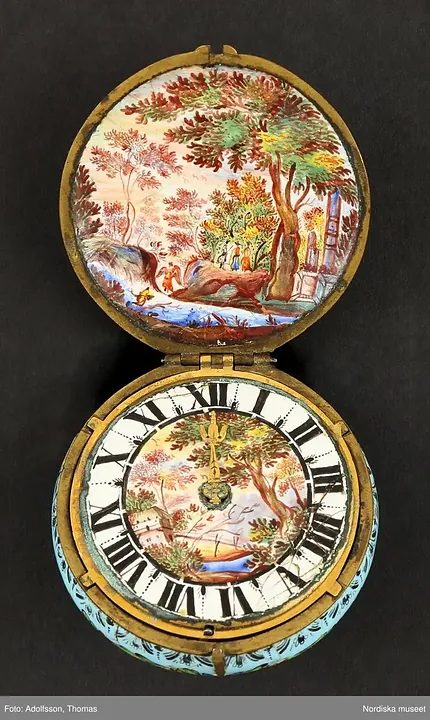
Pocket Watches · 1600–1699
Pocket watch by Johan Etmiller, Germany, 1600–1699
Nordic Museum Foundation
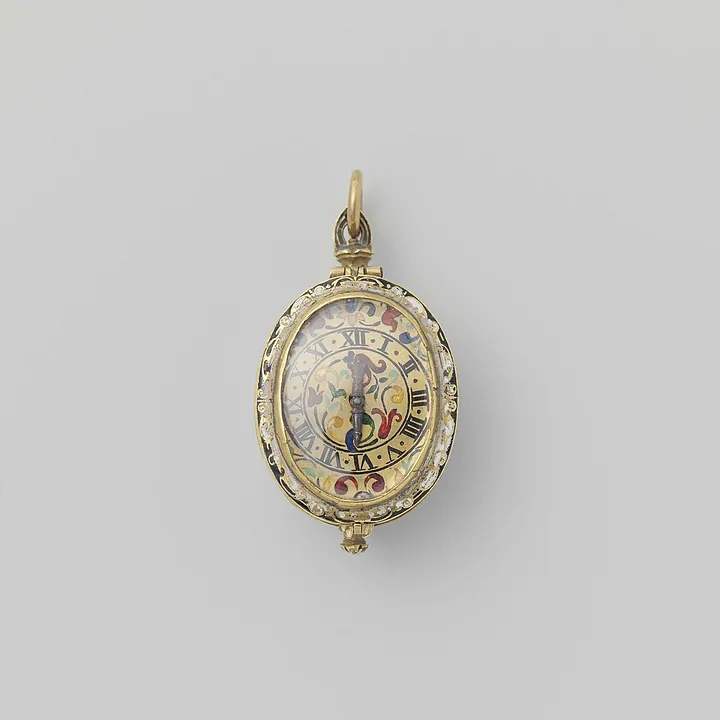
Pocket Watches · 1600
Pocket watch, France, 1600
Rijksmuseum
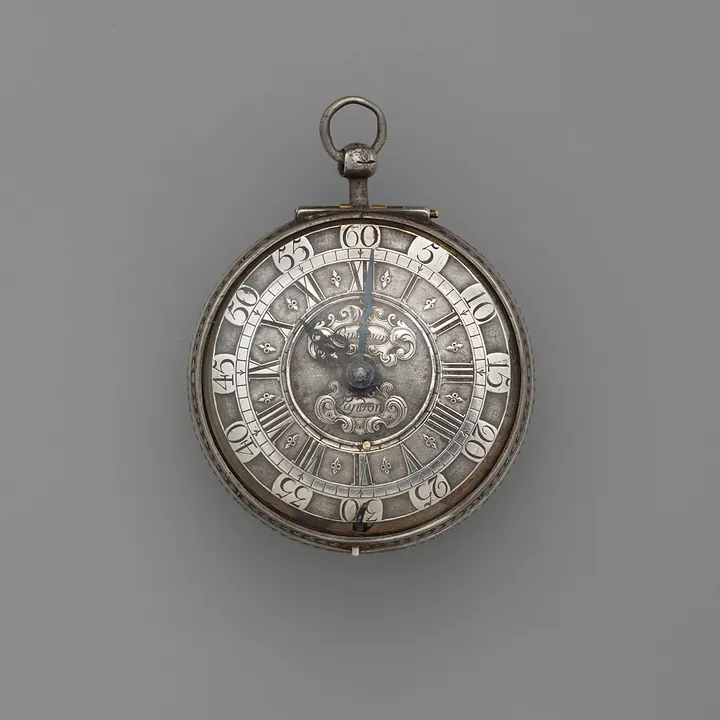
Pocket Watches · 17th century
Watch by John Bushman, England, 17th century
The Metropolitan Museum of Art, New York
Pocket Watches · first quarter of 17th century
Watch by Suzanne de Court, France, first quarter of 17th century
The Metropolitan Museum of Art, New York