
Movements & Components · Clock dial
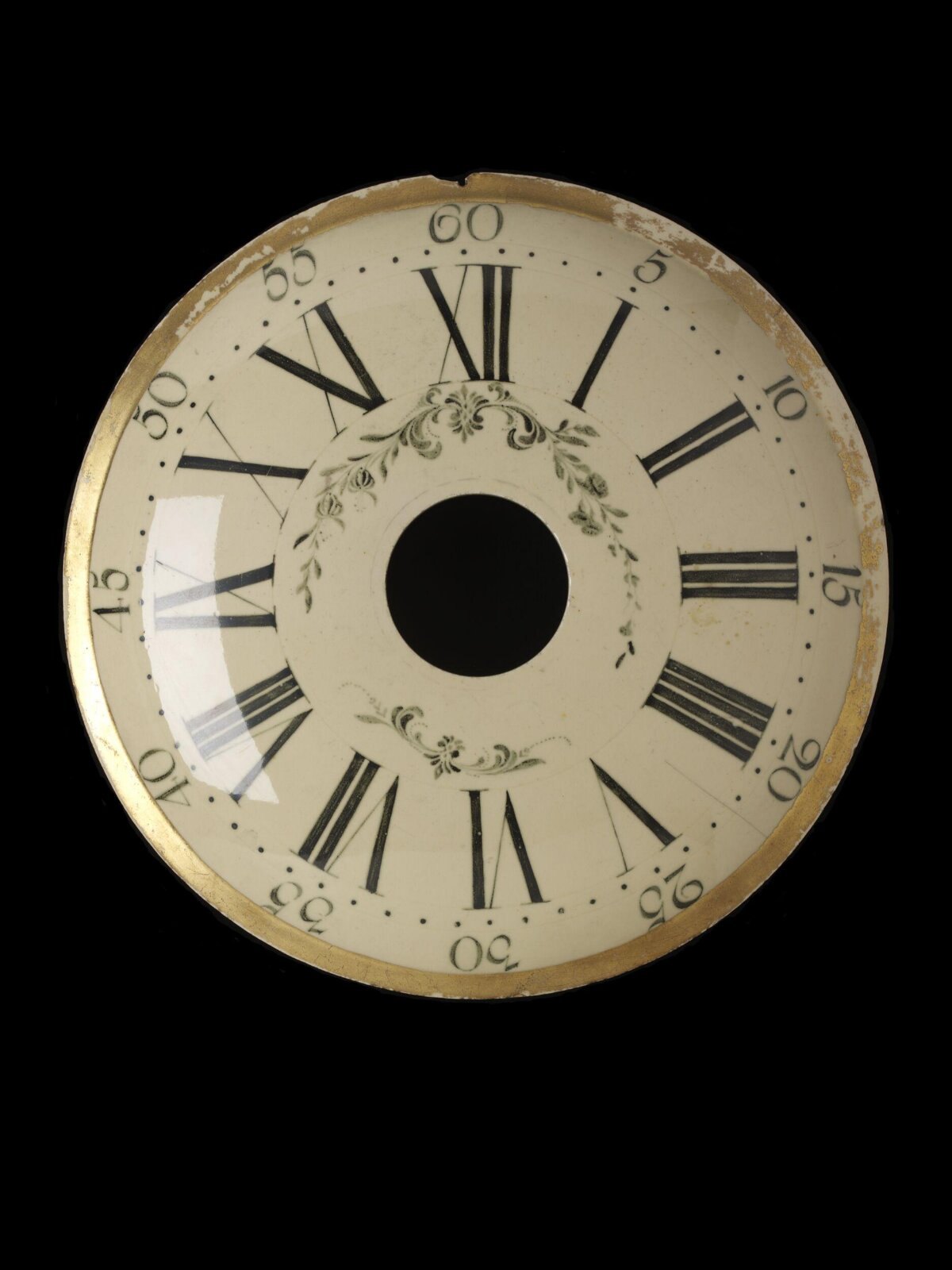
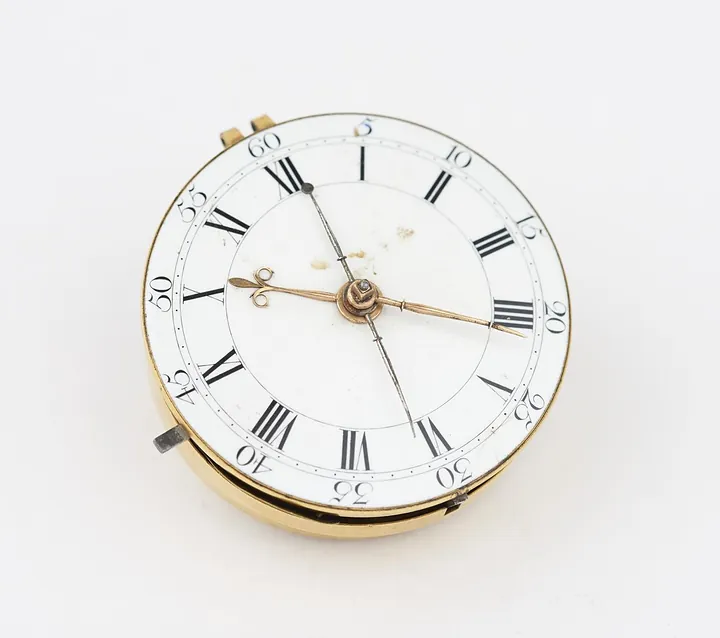
Clock dial, England, c. 1760-1780
- Maker / attribution
- Unrecorded in source
- Date
- c. 1760-1780
- Historical period
- Precision & Scientific Horology (1750 – 1850)
- Country of origin
- England
- Place
- Staffordshire
- Object type
- Clock dial
- Materials / technique
- Lead-glazed earthenware
- Holding institution
- Victoria and Albert Museum, London
- Accession / object no.
- 2286-1901
View the source record ↗ (opens another website in a new tab)Suggest a correction
Record summary
Held and catalogued by Victoria and Albert Museum, London (object number 2286-1901), this is a clock dial, made in Staffordshire, England, dated c. 1760-1780. The Atlas places it in the Precision & Scientific Horology period (1750 – 1850) of its Movements & Components collection. Materials and techniques recorded by the source: Lead-glazed earthenware. The record is illustrated with 1 photograph.
Assembled from the source record's structured fields. Dates and attributions are given as the source states them; where a field is missing the Atlas leaves it blank rather than estimating.
Catalogue description
Brief description — Victoria and Albert Museum
Clock dial, lead-glazed earthenware, Staffordshire, ca. 1760-1780.
Provenance
Jermyn Street Collection
Historical context
Precision & Scientific Horology (1750 – 1850)
Harrison solves longitude; Mudge invents the lever; Breguet's Paris workshop defines the modern watch.
The age of escapement invention: cylinder, duplex, lever, detent and many experimental escapements; compensation balances and fine finishing.
Read the period in the timelineMore movements & components from this periodEarlier: Early Modern Horology
Atlas type guide
Dials and hands
Dials record both fashion and technology. Early watches had engraved metal dials; champlevé dials with raised numerals dominated around 1680–1730, followed by white vitreous enamel, guilloché gold and silver dials, and printed metal dials in the twentieth century. Luminous paints — radium from c. 1910, tritium from c. 1960 and non-radioactive pigments from the late 1990s — answered the need for legibility in the dark.
Because dials are visible and easily damaged, they were often restored or replaced. Distinguishing original dials from 'redials', and original hands from later replacements, is one of the main tasks of identification and authentication.
What to look for
- Enamel hairlines, chips and the quality of painted numerals.
- Signatures and Swiss-made markings ('Swiss', 'Swiss Made', 'T Swiss T') at the bottom edge.
- Lume colour and condition, which should match between hands and dial.
- Dial feet and their positions on the reverse, which must match the movement.
Dating clues
- Champlevé metal dials: c. 1680–1730.
- 'Swiss Made' dial markings became usual after the 1950s; 'T Swiss T' indicates tritium (c. 1960–1998).
General guidance written by the Atlas editors about this kind of object. It is not a statement about this particular piece; for that, rely on the source record above and on physical examination.
Related records
Movements & Components · c. 1740–60
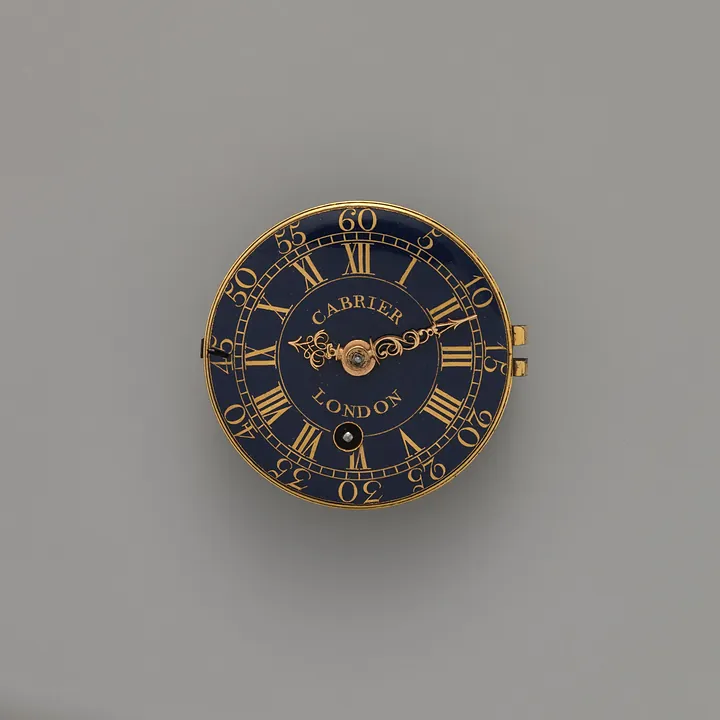
Watch movement by Charles Cabrier II, England, c. 1740–60
The Metropolitan Museum of Art, New York
Movements & Components · 1750
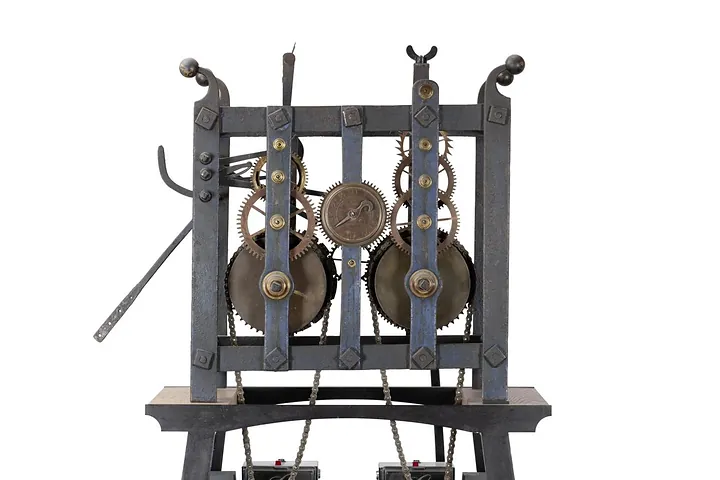
Clock movement by William Smith, England, 1750
Science Museum Group, London
Movements & Components · 1750–1775
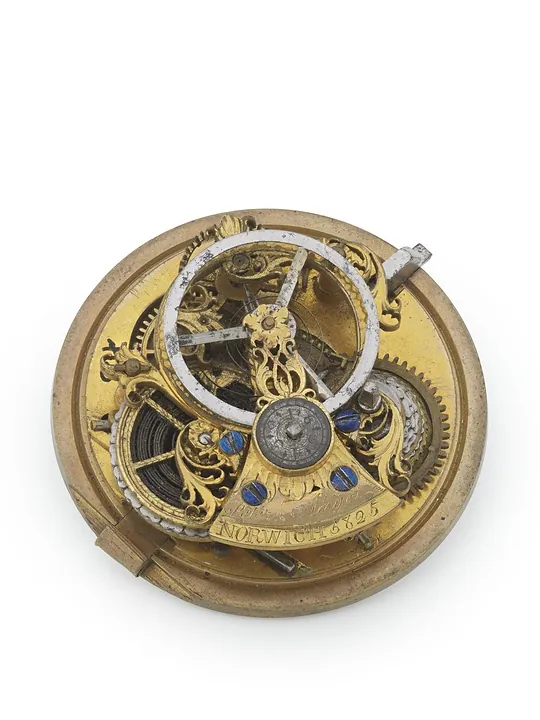
Watch movement by Peter Amyot, England, 1750–1775
Science Museum Group, London
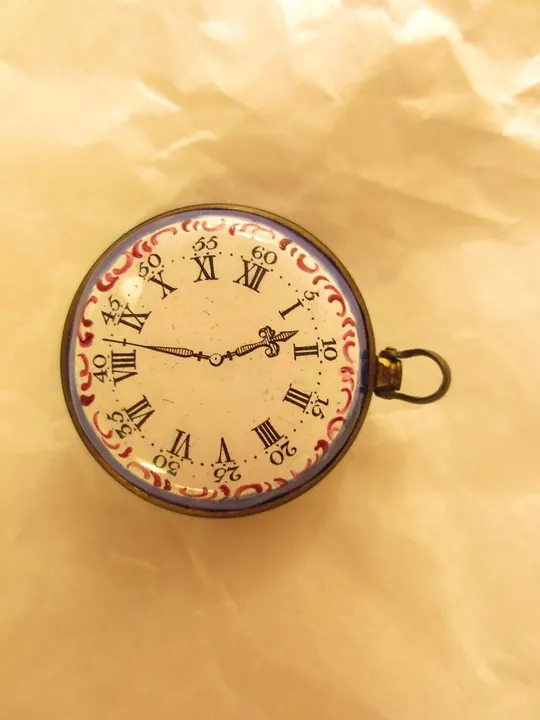
Movements & Components · late 18th century
Watch, Bilston enamel, England, late 18th century
Victoria and Albert Museum, London
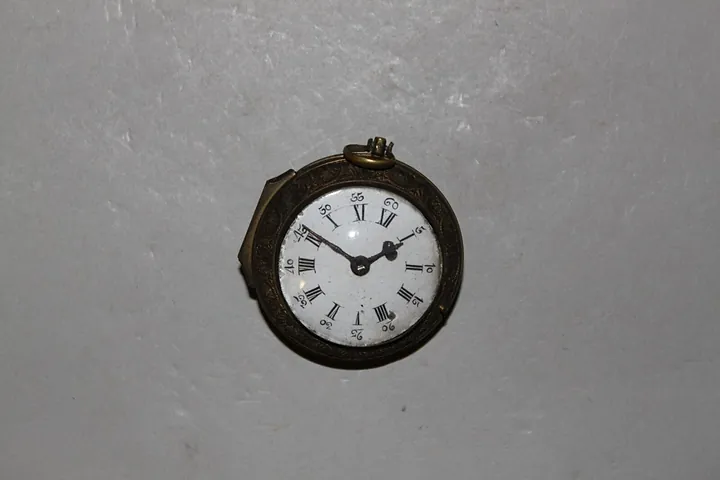
Movements & Components · late 18th century
Watch, cast brass and Bilston enamel, England, late 18th century (V&A 1664-1871)
Victoria and Albert Museum, London
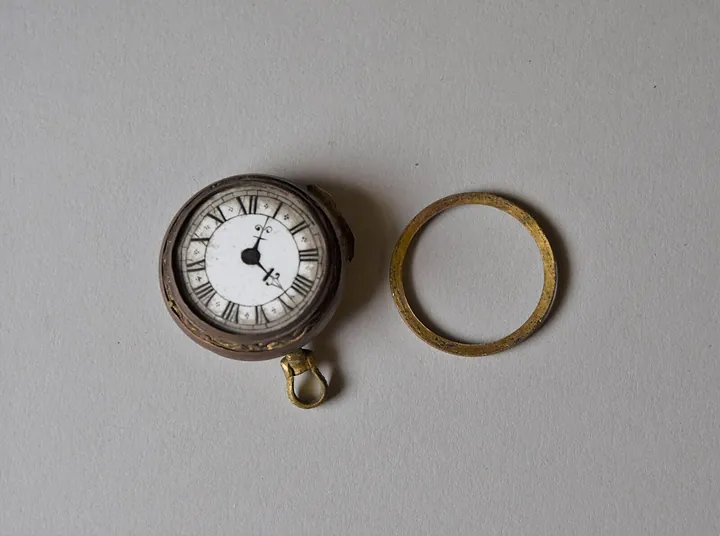
Movements & Components · late 18th century
Watch, cast brass and Bilston enamel, England, late 18th century (V&A 1665-1871)
Victoria and Albert Museum, London
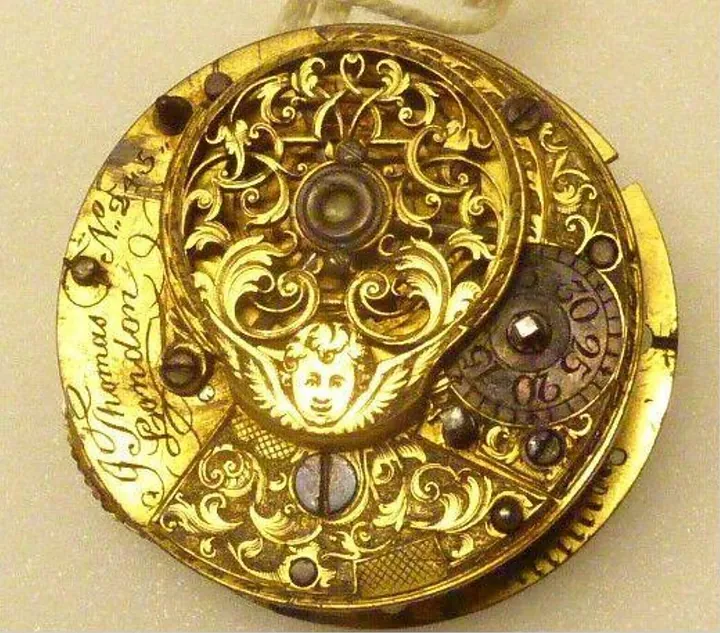
Movements & Components · 1770–1780
Brass, pierced and engraved, English (London), 1770–1780
Victoria and Albert Museum, London
Movements & Components · 1775
Cylinder escapement, by J. Davis, about 1775, England
Science Museum Group, London