
Clocks · Clock
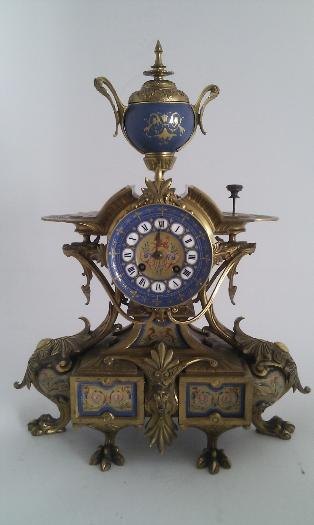
Clock by Samuel Marti et Cie., 1850–1880
- Maker / attribution
- Samuel Marti et Cie. (movement)
- Date
- 1850–1880
- Historical period
- Industrial Revolution (1850 – 1900)
- Country of origin
- Unrecorded in source
- Place
- Francia París
- Object type
- Clock
- Materials / technique
- Esmalte Bronce Porcelana Acero Latón Vidrio
- Dimensions
- Altura = 47 cm Anchura = 33 cm Profundidad = 18 cmEsfera de reloj: Diámetro = 12,20 cm
- Holding institution
- National Museum of Decorative Arts
- Accession / object no.
- pages_Main_idt_5165_inventary_CE05145_table_FMUS_museum_MNAD
- Credit line
- National Museum of Decorative Arts
- Catalogue title (original)
- Reloj de sobremesa (Spanish)
View the source record ↗ (opens another website in a new tab)Suggest a correction
Record summary
Held and catalogued by National Museum of Decorative Arts (object number pages_Main_idt_5165_inventary_CE05145_table_FMUS_museum_MNAD), this is a clock by Samuel Marti et Cie., made in Francia París, dated 1850–1880. The Atlas places it in the Industrial Revolution period (1850 – 1900) of its Clocks collection. Materials and techniques recorded by the source: Esmalte Bronce Porcelana Acero Latón Vidrio. Recorded dimensions: Altura = 47 cm Anchura = 33 cm Profundidad = 18 cmEsfera de reloj: Diámetro = 12,20 cm. The record is illustrated with 1 photograph.
Assembled from the source record's structured fields. Dates and attributions are given as the source states them; where a field is missing the Atlas leaves it blank rather than estimating.
Catalogue description
Catalogue description from National Museum of Decorative Arts
Reloj de sobremesa tipo francés de estilo Imperio hecho en bronce dorado con esmaltes azules y rosados. Seis patas de líneas curvas en forma de pies de animales con garra sostienen un basamento adornado por rocallas y palmetas, además de contar con cabezas de dragones, todo ello cincelado y esmaltado. Asimismo, cuenta con cuatro placas de porcelana blanca esmaltada: dos en su frente y una en cada lateral -habiéndose dejado las dos traseras en bronce dorado-. Sobre ello se erige el pilar central, también adornado por tres placas de porcelana esmaltada, sobre la que se posiciona la esfera. Dicha esfera está realizada en esmalte azul menos en su zona central, en el que aparece una ornamentación de pequeños dragones, motivos vegetales y elementos florales. Los números son romanos y están esmaltados en negro, añadidos en pequeñas reservas ovaladas en esmalte blanco. Cuenta con pequeñas rayas doradas para indicar los minutos y aparece también una orla dorada de motivos florales en el borde del dial. Cabe señalar que posee dos bocallaves y aguja de las horas -se ha perdido la de los minutos- en metal dorado y de tipo pica de látigo. El conjunto se remata en la parte superior con un ánfora con tapa y doble asa hecha de porcelana esmaltada y de bronce dorado. Para acceder a la maquinaria, habría que abrir una tapa de cristal trasera, la cual no existe. El mecanismo está formado por dos trenes: uno de sonería a en punto y a y media, formado por campana, mazo y rueda contadora; y otro del movimiento de marcha, compuesto por escape de áncora, suspensión y péndulo -el cual le falta-.
Shown in the original language of the source catalogue. An editor-reviewed English translation has not yet been published; we do not publish machine translations as authoritative text.
Historical context
Industrial Revolution (1850 – 1900)
American interchangeable-parts manufacture; railroad time standards; Swiss and German factory systems.
Factory production transformed the clock into an everyday object. American makers (Seth Thomas, Ansonia, Waterbury) and German factories (Junghans, Gustav Becker, Lenzkirch) sold millions of shelf, wall and alarm clocks worldwide; France produced standardised Paris movements and carriage clocks; electric time distribution began.
Read the period in the timelineMore clocks from this periodEarlier: Precision & Scientific Horology
Atlas type guide
Domestic clocks
A clock combines four systems: a source of power (falling weight, coiled spring, or later electricity), a gear train that divides time, an escapement and oscillator that regulate it (foliot, pendulum or balance), and an indicating system of dial and hands or a bell. Its history runs from the large iron weight-driven clocks of the late thirteenth century to Renaissance spring-driven table clocks, the pendulum revolution of 1656, the factory clocks of the nineteenth century and electric and quartz clocks of the twentieth.
Domestic clocks also reflect regional furniture and decorative traditions — English longcase and bracket clocks, French pendules, Viennese regulators, Black Forest and American shelf clocks — and therefore record changing tastes as much as technical progress.
What to look for
- How the clock is powered: weights, spring barrel, fusee, electric coil.
- The oscillator: foliot, short pendulum, long seconds pendulum or balance.
- Whether it strikes: hour only (count wheel) or hours and quarters (rack striking).
- The maker or retailer's name on dial and movement, and any factory trademarks.
- Signs of alteration — replaced dials, converted escapements, 'married' cases.
Dating clues
- Before 1656 clocks used foliots or balances; after, most domestic clocks have pendulums.
- Anchor escapements spread after c. 1670; minute hands became common at the same time.
- Factory production in America and Germany transformed prices after c. 1840.
General guidance written by the Atlas editors about this kind of object. It is not a statement about this particular piece; for that, rely on the source record above and on physical examination.
Related records
Clocks · c. 1870
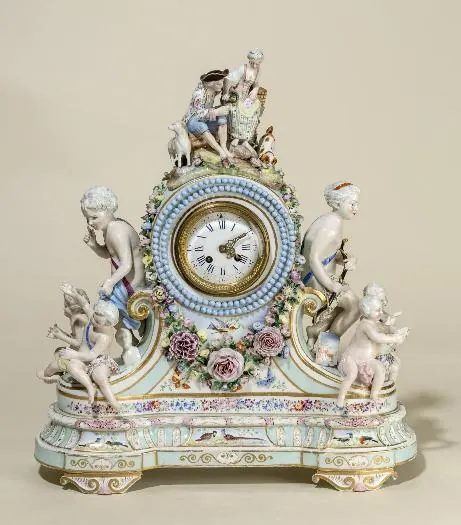
Clock by Samuel Marti et Cie., c. 1870
National Museum of Decorative Arts
Clocks · 1830–1870
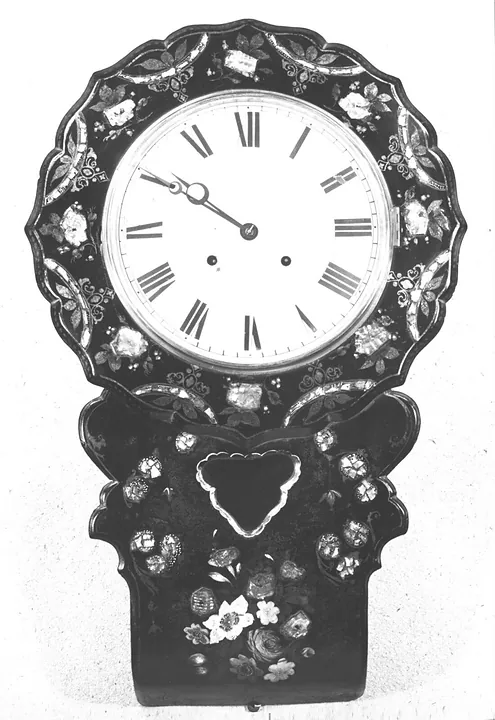
Wall clock in a papier mâché case with painted decoration. English, mid 19th century.
Victoria and Albert Museum, London
Clocks · 1840–1900
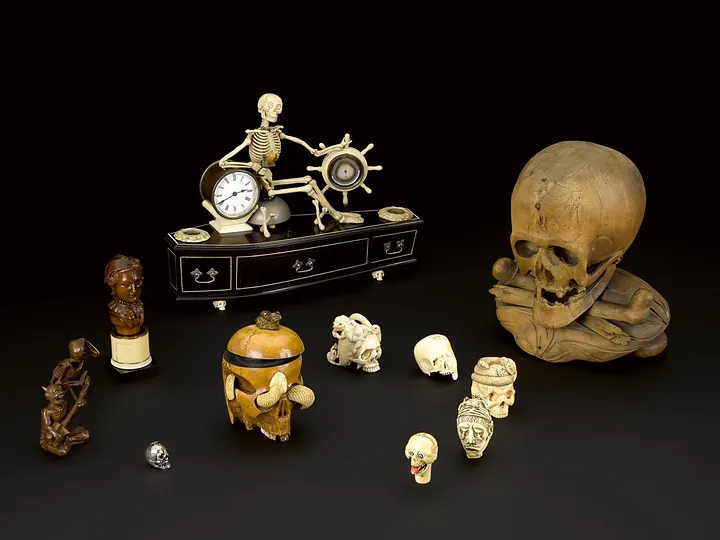
Alarm clock, mounted on model of coffin with skeleton, probably English, 1840–1900
Science Museum Group, London
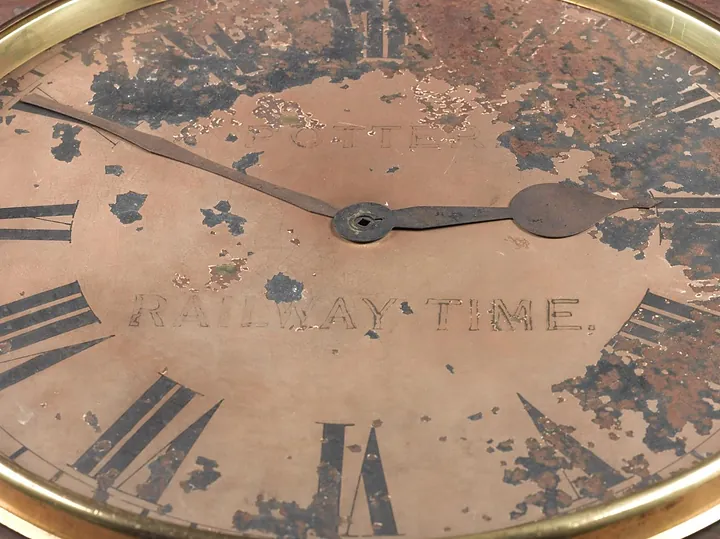
Clocks · 1840–1880
Clock dial marked "Potter, Railway Time" with two hands, unknown maker, British, 1840–1880
Science Museum Group, London
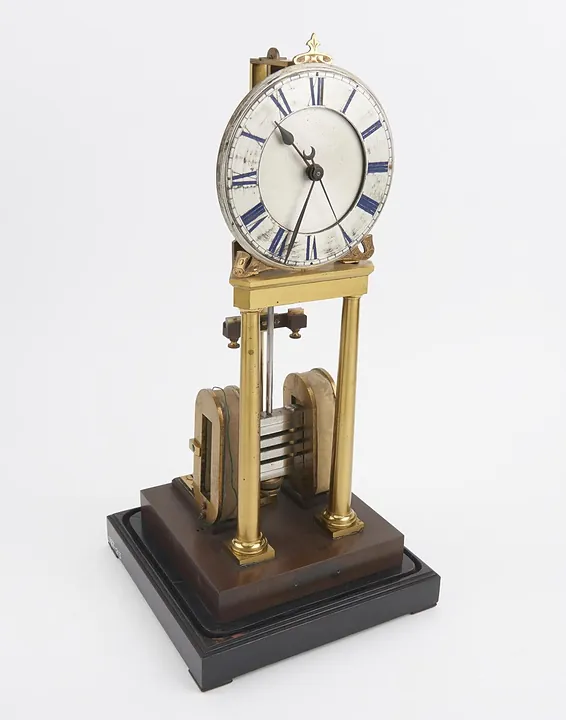
Clocks · 1840–1877
Electric clock of the Bain type
Science Museum Group, London
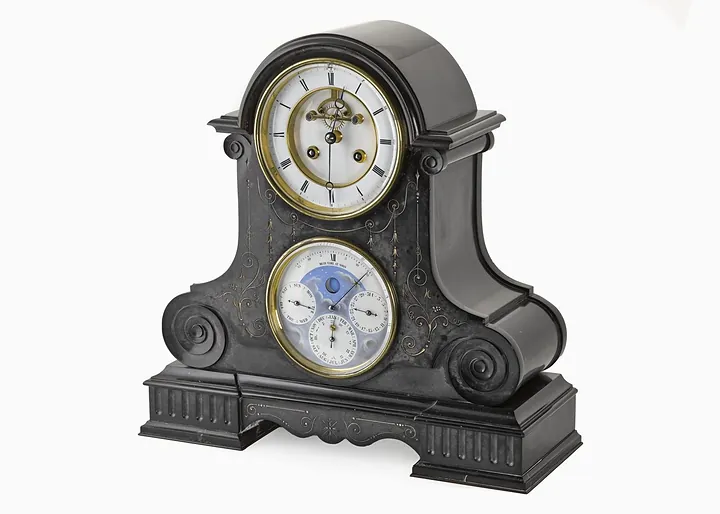
Clocks · 1840–1878
Mantel clock by A. Brocot, France, 1840–1878
Science Museum Group, London
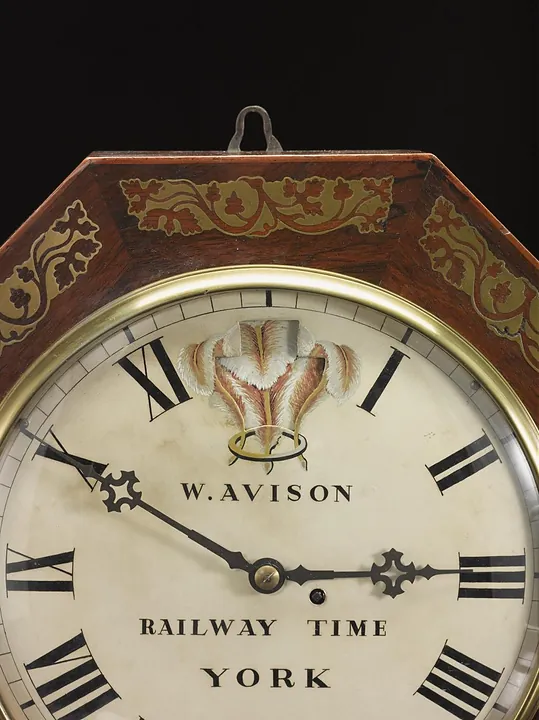
Clocks · 1840–1880
Wall Clock in octagonal case with Prince of Wales Feathers above makers name "W. Avison, Railway Time, York", made by William Avison, England, 1840–1880.
Science Museum Group, London
Clocks · 1841–1870
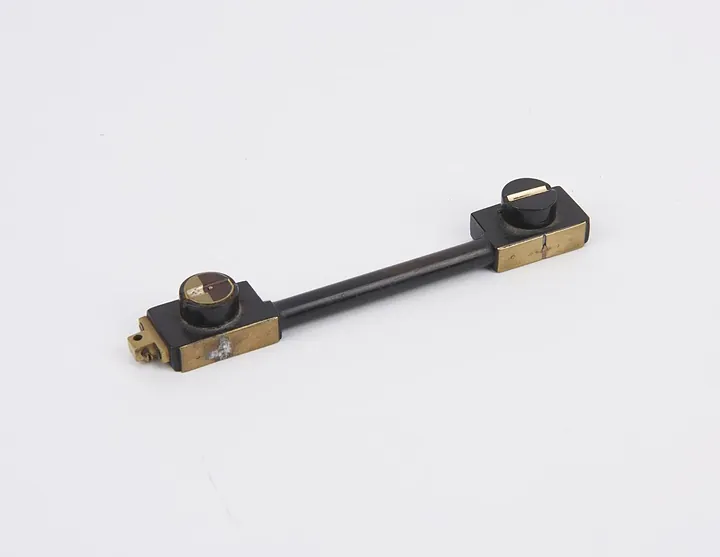
Contact bar from electric clock, unsigned, London, England, 1841–1870
Science Museum Group, London