
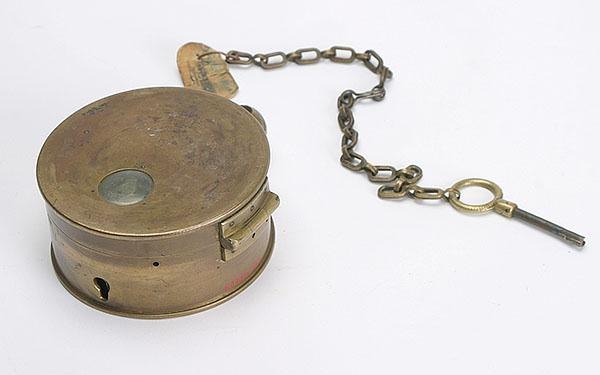
Clocks · Clock
Clock, 1900-l alku
- Maker / attribution
- Unrecorded in source
- Date
- 1900-l alku
- Historical period
- Golden Age of Mechanical Watchmaking (1900 – 1945)
- Country of origin
- Unrecorded in source
- Object type
- Clock
- Materials / technique
- metal, brass, cardboard
- Dimensions
- diameter 8,5 cm, reunan diameter 8,8 cm, height 4,3 cm, nupin height c.. 1,6 cm ja diameter 2 cm, ikkunan diameter c.. 2 cm, avaimen length 6,1 cm ja pään diameter 2,2 cm, ketjun length 24 cm.
- Holding institution
- Lusto – Suomen Metsämuseo
- Accession / object no.
- E07004:997
- Credit line
- Lusto – Suomen Metsämuseo (via Finna)
- Catalogue title (original)
- Kello; Vartijan kello (Finnish)
View the source record ↗ (opens another website in a new tab)Suggest a correction
Record summary
Held and catalogued by Lusto – Suomen Metsämuseo (object number E07004:997), this is a clock, dated 1900-l alku. The Atlas places it in the Golden Age of Mechanical Watchmaking period (1900 – 1945) of its Clocks collection. Materials and techniques recorded by the source: metal, brass, cardboard. Recorded dimensions: diameter 8,5 cm, reunan diameter 8,8 cm, height 4,3 cm, nupin height c.. 1,6 cm ja diameter 2 cm, ikkunan diameter c.. 2 cm, avaimen length 6,1 cm ja pään diameter 2,2 cm, ketjun length 24 cm. The record is illustrated with 1 photograph.
Assembled from the source record's structured fields. Dates and attributions are given as the source states them; where a field is missing the Atlas leaves it blank rather than estimating.
Catalogue description
Description — Lusto – Suomen Metsämuseo
Tukevatekoinen, kannellinen kello, jossa lieriönmuotoinen messinkirunko. Pohjasta ja etusivusta suora ja sileä runko matalahko ja hieman halkaisijaltaan sivuja kapeampi. Etusivun reunassa pieni, läpinäkyvä ja loivasti kupera muovi-ikkuna, josta osittain näkyvässä valkoisessa kellotaulussa mustat numerot ympyränmuotoon painetun viivaston yllä. Viivastossa ylimpänä, lähellä keskipistettä, yksittäinen, kaareutuva viiva, jossa ulkoreunaa kohti lähtevät tuntiviivat. Lähellä kellotaulun ulkoreunaa ruutuviivasto, jonka keskimmäisen viivan päälle merkitty tunnin puolikas numerolla 30. Varttitunnit merkitty pelkillä viivoilla. Ikkunan alareunassa näkyy kellotaulun päälle asettuva koristeellinen, alhaalta ylöspäin osoittava tukeva metallinuoli. Kellon sivun yläosassa metallinen sarana, jonka varassa kansi kääntyy. Lukitus ja avaus tapahtuu vastapäiseen sivuun upotetun pieniavaimisen lukon kautta. Myös kannen ikkunan kohdalla sivussa avaimenreikä, josta kello todennäköisesti vedetty. Kellon sivun ylälaidassa messingistä tehty pyöreä, kaulallinen nuppi, jonka etu- ja takapuolella reikämäinen, ei läpi ulottuva, syvennys. Kellon mukana avain, jossa ohut putkimainen sauvaosa. Avaimen alapään kieleke katkennut, yläpäässä keltaisesta metallista tehty tai metallilla päällystetty rengas. Pyöreän renkaan pinta kuvioitu matalalla vinoviivoituksella nyöriä muistuttavaksi. Renkaassa kiinni lyhyt tuppimainen kanta, johon pakotettu numero 1. Kanta renkaineen painettu avaimen sauvan päähän. Renkaaseen kiinnitetty lyhyt messinkiketju, joka on valmistettu kaksinkerroin taivutetuista, soikionmuotoisista renkaista. Jokaisen taivutetun soikion toisessa päässä kiinteä, pyöreä rengas, joka yhdistää ketjun osat toisiinsa. Ketjun päähän kiinnitetty lyhyellä kuparilankalenkillä pahvista leikattu lappu, jossa käsinkirjoitettua tekstiä.
Shown in the original language of the source catalogue. An editor-reviewed English translation has not yet been published; we do not publish machine translations as authoritative text.
Inscriptions & marks
Avaimen ketjuun kiinnitetyssä pahvilapussa molemmilla puolilla käsinkirjoitetut nimet KYLLÖNEN ja Roponen sekä numero 356. Myös kelloon kirjoitettu käsin numero 356 (Puuliiton luettelointimerkintä).
Historical context
Golden Age of Mechanical Watchmaking (1900 – 1945)
The wristwatch displaces the pocket watch; waterproof cases, self-winding and grand complications.
Between 1900 and 1945 clocks were electrified: master-clock systems ran factories and offices, synchronous mains clocks entered homes, and the Shortt free-pendulum clock set new standards of accuracy before the first quartz clocks (1927). Art Deco design reshaped mantel and table clocks.
Read the period in the timelineMore clocks from this periodEarlier: Industrial Revolution
Atlas type guide
Domestic clocks
A clock combines four systems: a source of power (falling weight, coiled spring, or later electricity), a gear train that divides time, an escapement and oscillator that regulate it (foliot, pendulum or balance), and an indicating system of dial and hands or a bell. Its history runs from the large iron weight-driven clocks of the late thirteenth century to Renaissance spring-driven table clocks, the pendulum revolution of 1656, the factory clocks of the nineteenth century and electric and quartz clocks of the twentieth.
Domestic clocks also reflect regional furniture and decorative traditions — English longcase and bracket clocks, French pendules, Viennese regulators, Black Forest and American shelf clocks — and therefore record changing tastes as much as technical progress.
What to look for
- How the clock is powered: weights, spring barrel, fusee, electric coil.
- The oscillator: foliot, short pendulum, long seconds pendulum or balance.
- Whether it strikes: hour only (count wheel) or hours and quarters (rack striking).
- The maker or retailer's name on dial and movement, and any factory trademarks.
- Signs of alteration — replaced dials, converted escapements, 'married' cases.
Dating clues
- Before 1656 clocks used foliots or balances; after, most domestic clocks have pendulums.
- Anchor escapements spread after c. 1670; minute hands became common at the same time.
- Factory production in America and Germany transformed prices after c. 1840.
General guidance written by the Atlas editors about this kind of object. It is not a statement about this particular piece; for that, rely on the source record above and on physical examination.
Related records
Clocks · 1890–1930
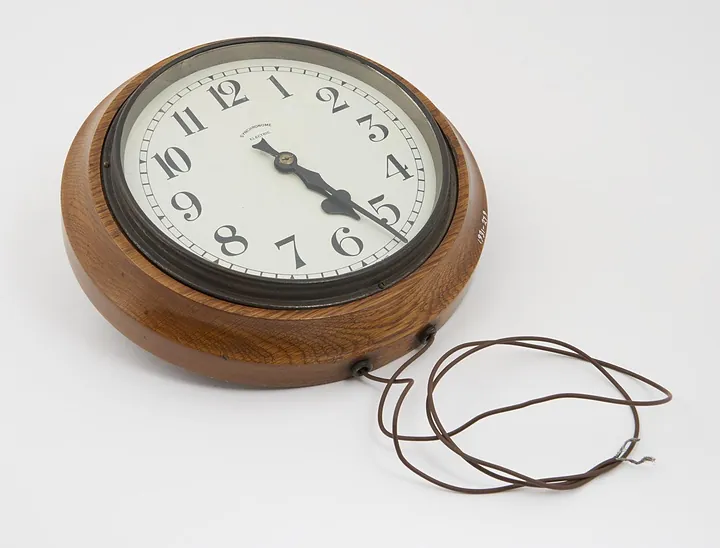
Clock with 8-inch impulse dial, by the Synchronome Company Limited, England, 1890–1930.
Science Museum Group, London
Clocks · c.1900
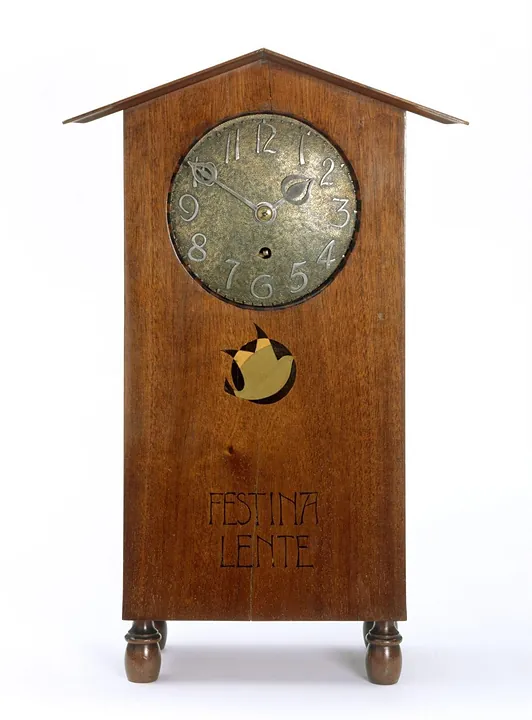
Clock by Mackay Hugh Baillie Scott, Bedfordshire, c.1900
Victoria and Albert Museum, London
Clocks · c. 1900
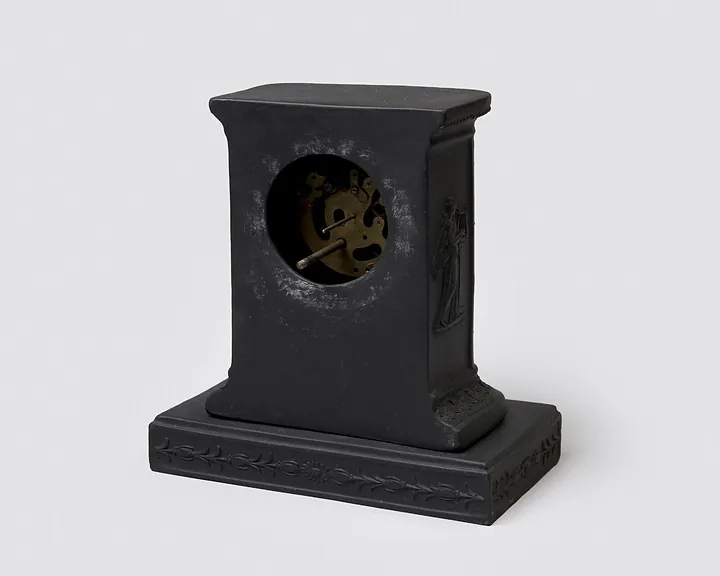
Clock, black basalt, brass, Josiah Wedgwood and Sons, Etruria, c. 1900
Victoria and Albert Museum, London
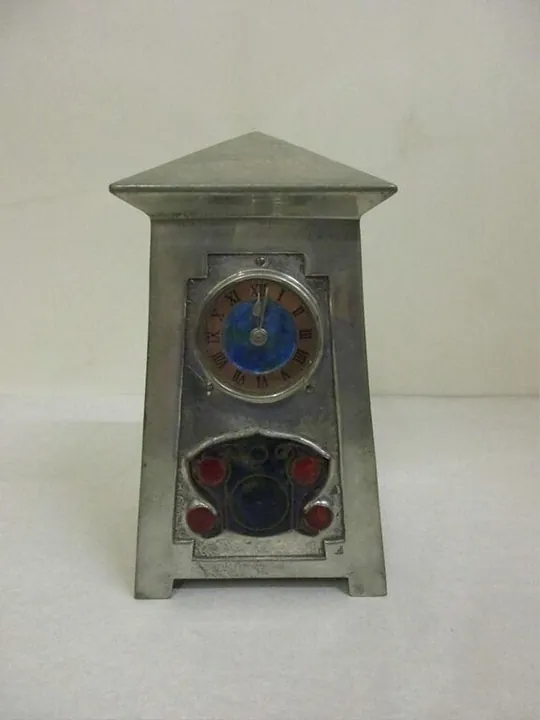
Clocks · c.1903-1904
Clock, pewter, made for Liberty& Co., England. 1903-4.
Victoria and Albert Museum, London
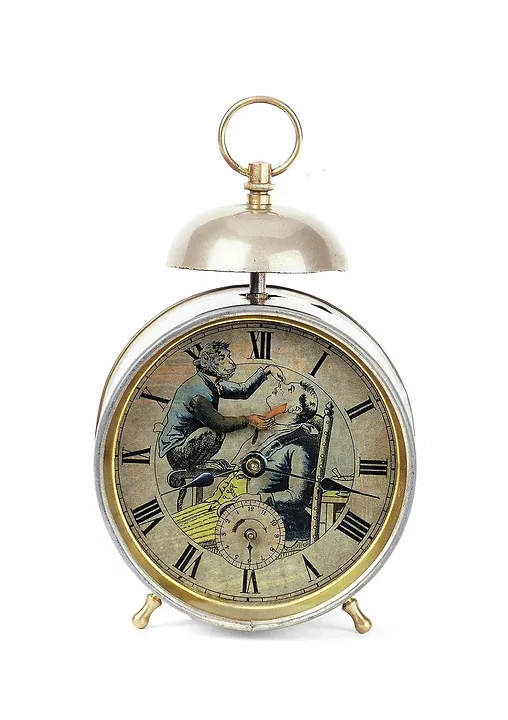
Clocks · c. 1900
Alarm clock by Union Clock Company, Germany, c. 1900
German Clock Museum
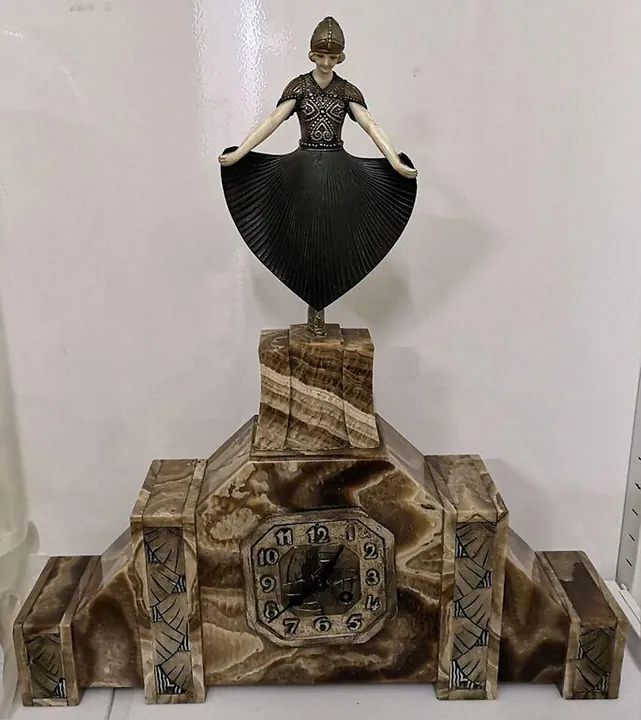
Clocks · 20th century
Base Metal, 20th c. Bronze, marble and ivory clock by Chiparus
Victoria and Albert Museum, London
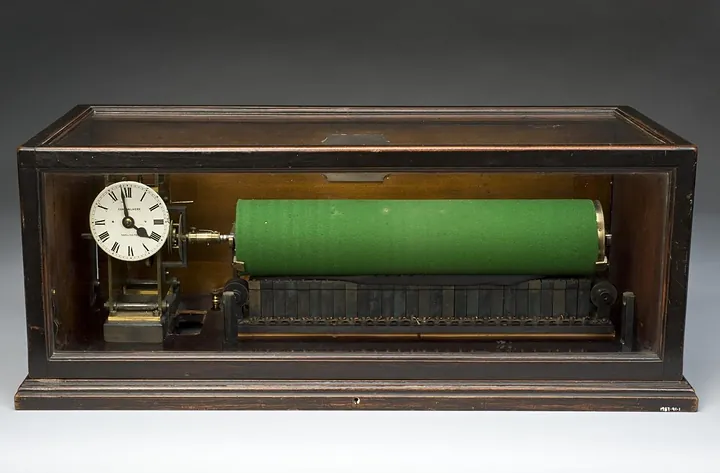
Clocks · 1900–1939
Clock by Cox-Walkers of Darlington, England, 1900–1939
Science Museum Group, London
Clocks · 1900–1999
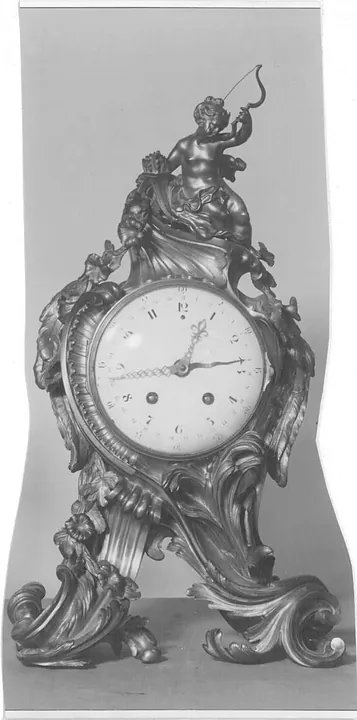
Clock by Französisch (Schule), 1900–1999
Fine Arts Museum Vienna