
Wristwatches · Wristwatch
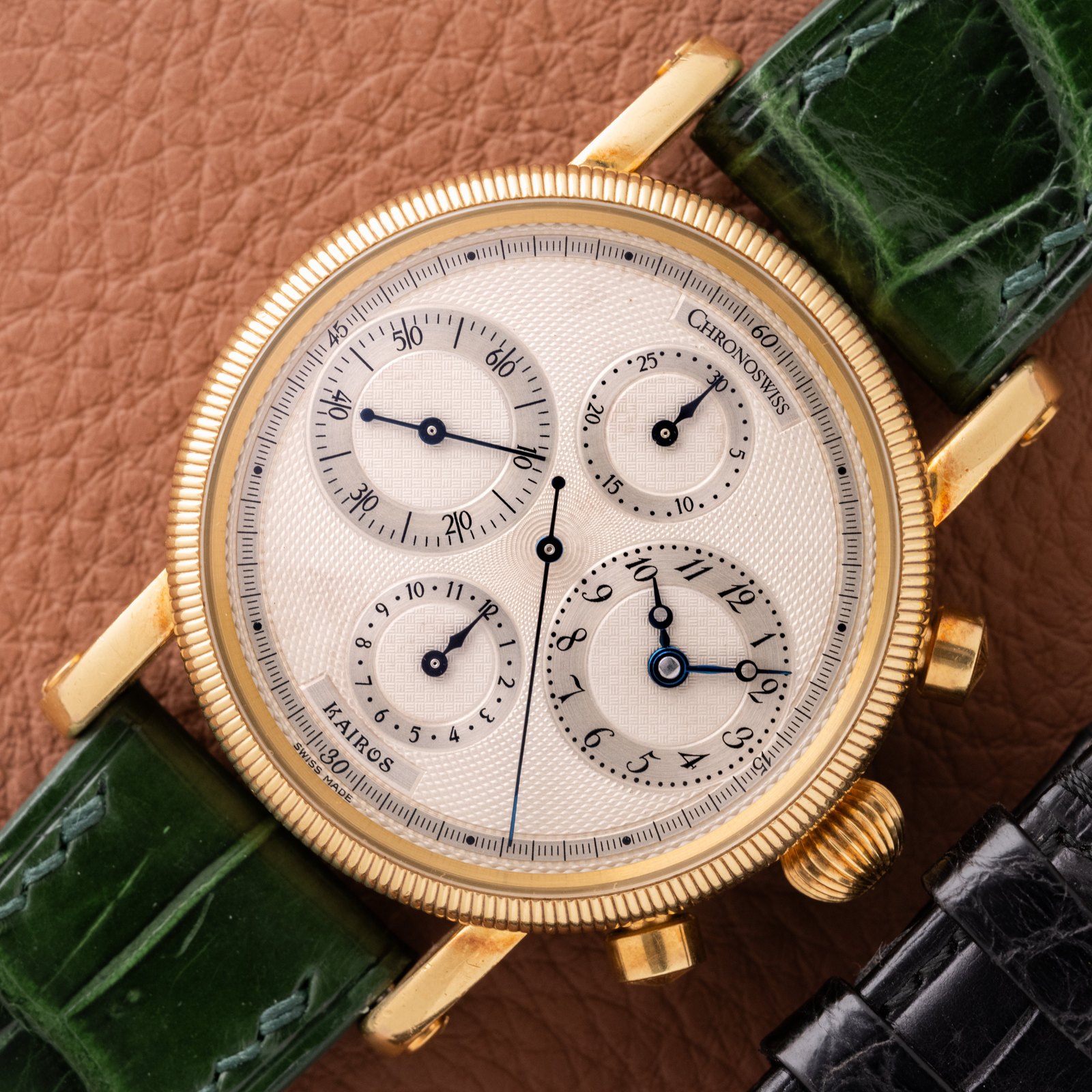
Chronoswiss Kairos Mark I Dial in Yellow Gold (Ref. CH7251), 1990s
- Maker / attribution
- Chronoswiss (maker)
- Date
- 1990s
- Historical period
- Mechanical Renaissance (1990 – 2010)
- Country of origin
- Germany
- Object type
- Wristwatch
- Materials / technique
- yellow gold
- Dimensions
- Case 38 mm
- Stock no.
- Product 15932598452407
- Credit line
- Dealer listing, Huntington Company (product 15932598452407)
- Catalogue title (original)
- 1990s Chronoswiss Kairos Mark I Dial in Yellow Gold (Ref. CH7251) (English)
View the source record (dealer listing) ↗ (opens another website in a new tab)Suggest a correction
Record summary
Catalogued by Huntington Company (dealer) (stock number Product 15932598452407), this is a wristwatch by Chronoswiss, made in Germany, dated 1990s. The Atlas places it in the Mechanical Renaissance period (1990 – 2010) of its Wristwatches collection. Materials and techniques recorded by the source: yellow gold. Recorded dimensions: Case 38 mm. The record is illustrated with 6 photographs.
Assembled from the source record's structured fields. Dates and attributions are given as the source states them; where a field is missing the Atlas leaves it blank rather than estimating.
Catalogue description
Dealer description — Huntington Company
History and Significance The revival of traditional mechanical watchmaking during the 1980s and 1990s created an opportunity for smaller manufacturers to establish identities outside the increasingly standardized world of Swiss luxury watches. Chronoswiss was among the most important companies to emerge during this period. Founded in 1983 by German watchmaker Gerd-Rüdiger Lang, the company embraced mechanical watchmaking at a time when the effects of the quartz crisis were still being felt throughout the industry. Rather than pursuing contemporary designs or electronic technology, Chronoswiss looked toward the elaborate instruments and traditional watchmaking techniques of earlier generations. This philosophy would become the foundation of a distinctive collection of mechanical watches characterized by intricate dials, unconventional displays, and recognizable case architecture. Gerd-Rüdiger Lang's background played an important role in shaping the company's direction. Having worked in the Swiss watch industry before establishing Chronoswiss, Lang developed a particular appreciation for mechanical chronographs, historical movements, and traditional finishing techniques. Early Chronoswiss watches frequently incorporated details that had become uncommon in mainstream production, including elaborate guilloché dials, onion-shaped crowns, and finely fluted case edges. These characteristics were not simply decorative additions, but part of a broader effort to reconnect contemporary watchmaking with the craftsmanship and visual language of earlier mechanical instruments. The result was a collection that stood apart from many of the established Swiss manufacturers of the period. The Kairos is a particularly interesting expression of this approach. Its name is derived from the ancient Greek concept of the appropriate or opportune moment, an idea that differs from the more conventional understanding of time as a continuous, measurable quantity. Rather than presenting time through a familiar central arrangement, the Kairos uses a series of subsidiary displays positioned across an elaborate guilloché dial. The principal time display is located at three o'clock, with elegant Breguet-style numerals providing a classical appearance. Additional registers occupy the remaining sections of the dial, creating an unusually architectural composition that encourages closer examination. Early examples of the Kairos can be distinguished by several subtle details, including the presence of the model name at six o'clock. This Mark I configuration retains the original "KAIROS" signature, an attractive characteristic for collectors interested in the earliest production of the reference. The finely textured silver dial is especially impressive, with guilloché patterns introducing depth and contrast between the different displays. Surrounding the dial is the distinctive Chronoswiss case, incorporating a fluted coin-edge construction and an oversized onion crown. These elements would become central to the manufacturer's visual identity, connecting the Kairos to other important Chronoswiss models from the same period. Writer’s Thoughts The early Chronoswiss catalog contains some wonderfully unusual watches, and the Kairos is among the most distinctive. The arrangement of the dial is immediately recognizable, but the real attraction becomes apparent when examining the individual details. The Breguet numerals, guilloché patterns, fluted case, and oversized crown create a composition that feels connected to traditional pocket watchmaking without looking like a conventional wristwatch. There is a tremendous amount of personality in the design, particularly in the original Mark I configuration with the Kairos signature at six o'clock. Our Promise Every watch is thoroughly vetted, carefully described with complete transparency, and guaranteed authentic. Each piece is offered in honest condition, ensuring collectors receive a timepiece that reflects both originality and integrity. Specifications Brand: Chronoswiss Model: Kairos Mark I Reference: CH7251 Year: 1990s Case Material: 18k Yellow Gold Case Size: 38mm Dial: Silver Guilloché Mark I Dial with Kairos Signature at Six O'Clock and Breguet Numeral Time Display Movement: Automatic Mechanical Movement with Decorated Gold Rotor Strap/Buckle: New H.C. Green Leather Strap; Original Strap Included Buckle/Clasp: Original Chronoswiss Deployant Clasp Included Contents: Watch, Original Strap, and Original Deployant Clasp Condition Case: Unpolished yellow gold case remains in excellent vintage condition with sharp, well-defined edges and attractive natural oxidation. Light surface wear is consistent with age and careful use. Dial: Silver guilloché dial remains in excellent condition with beautifully preserved decorative patterns, crisp printing, and clean subsidiary displays. Hands: Hands remain in excellent condition with well-preserved finishing and no notable visible imperfections. Crystal: Crystal remains in excellent condition with no notable visible wear. Strap/Buckle: Newly fitted H.C. green leather strap remains in excellent condition. Original leather strap is included and shows signs of wear consistent with age. Buckle/Clasp: Original Chronoswiss deployant clasp remains in good vintage condition with light
Historical context
Mechanical Renaissance (1990 – 2010)
Mechanical watches return as cultural objects; independent watchmaking flourishes.
Mechanical watches returned as cultural and luxury objects. Complications, tourbillons and new materials proliferated; independent watchmakers such as George Daniels, F.P. Journe and Philippe Dufour revived artisanal watchmaking; collecting vintage watches became a major field.
Read the period in the timelineMore wristwatches from this periodEarlier: Quartz Revolution
Atlas type guide
Wristwatches
Bracelet watches were worn by women from the early nineteenth century — Breguet made one for Caroline Murat, Queen of Naples, in 1810–12 — but the wristwatch only became a man's instrument with military use and aviation in the early twentieth century. Between the World Wars it overtook the pocket watch; the 1920s and 1930s brought rectangular Art Deco cases, water-resistant cases and the first automatic winding systems.
After 1945 the wristwatch became a carrier of identity — dress watches, sports and dive watches, chronographs, calendars — produced by Swiss, American, Japanese, German, Soviet and Chinese industries. The quartz revolution after 1969 and the mechanical renaissance since the 1990s, including the rise of independent watchmakers, complete the story.
What to look for
- The reference number (between the lugs or inside the case back) and serial number, the starting point for dating.
- The calibre: its maker and number are often stamped under the dial or on the bridge.
- Originality of dial, hands and crown — refinished ('redial') dials are common.
- Case material marks: 18K/750, 14K/585, stainless steel, gold-filled, plated.
Dating clues
- Wire-lug cases: before c. 1925.
- Water-resistant screw-down cases: from 1926.
- Quartz movements: from 1969; sapphire crystals widespread after c. 1980.
General guidance written by the Atlas editors about this kind of object. It is not a statement about this particular piece; for that, rely on the source record above and on physical examination.
Related records
Wristwatches · c. 2004
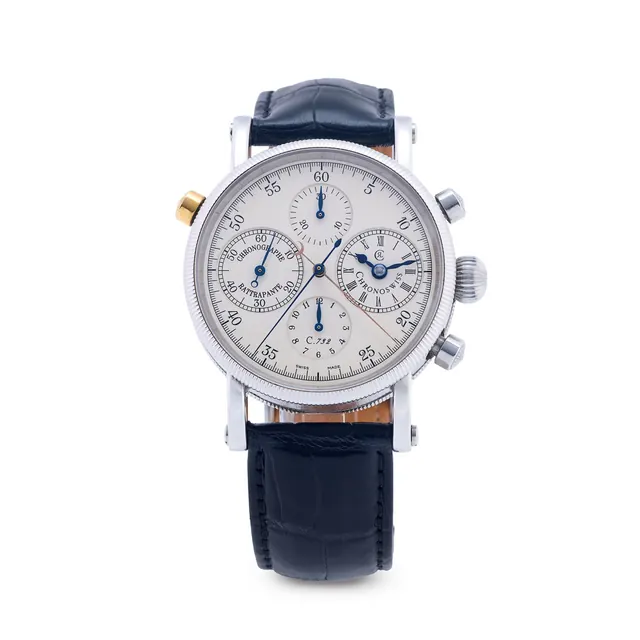
Chronoswiss wristwatch, ref. CH7323, Rattrapante Chronograph, circa 2004
Antiquorum auction archive, Geneva
Wristwatches · Sold in June 1994
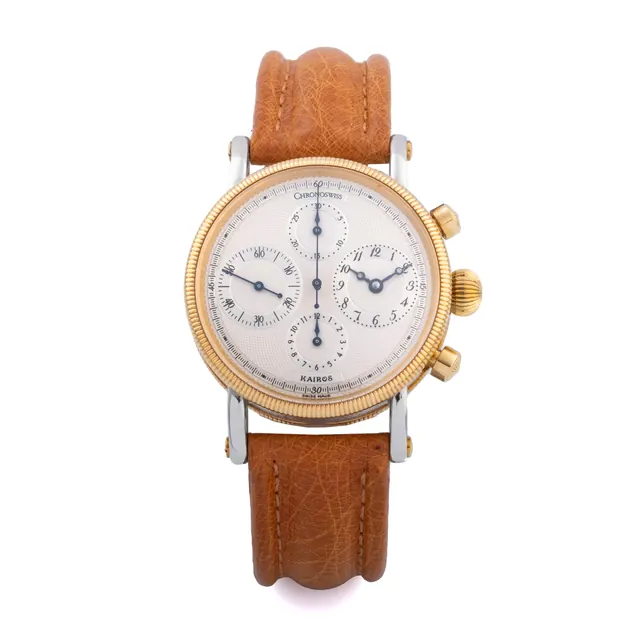
Chronoswiss wristwatch, ref. CH, Swiss Kairos Chronograph, Sold in June 1994
Antiquorum auction archive, Geneva
Wristwatches · c. 1996
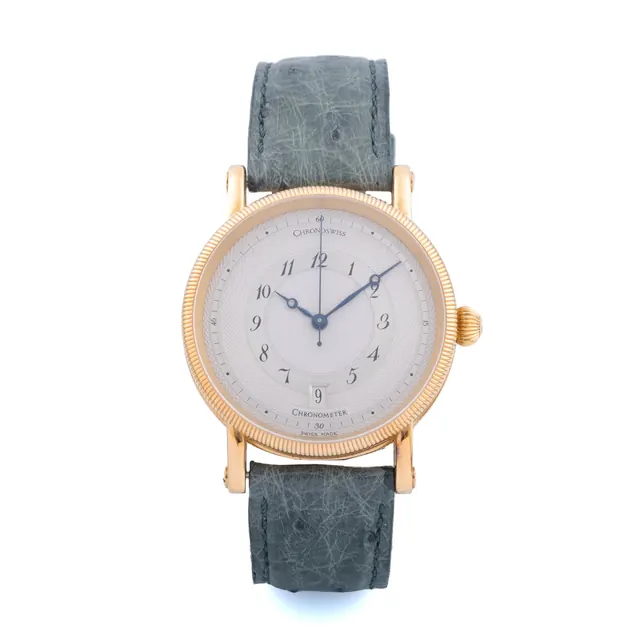
Chronoswiss wristwatch, ref. CH2821, Swiss Chronometer, circa 1996
Antiquorum auction archive, Geneva
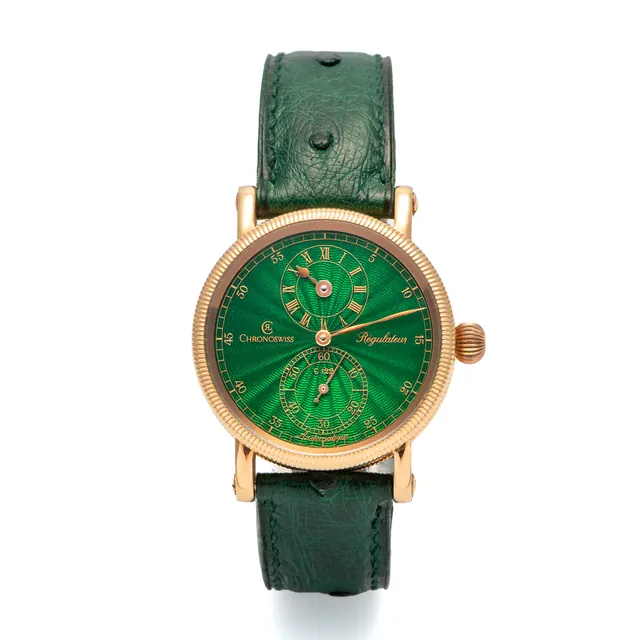
Wristwatches · c. 2000
Chronoswiss wristwatch, Regulateur Green Enamel Guilloche Dial, circa 2000
Antiquorum auction archive, Geneva
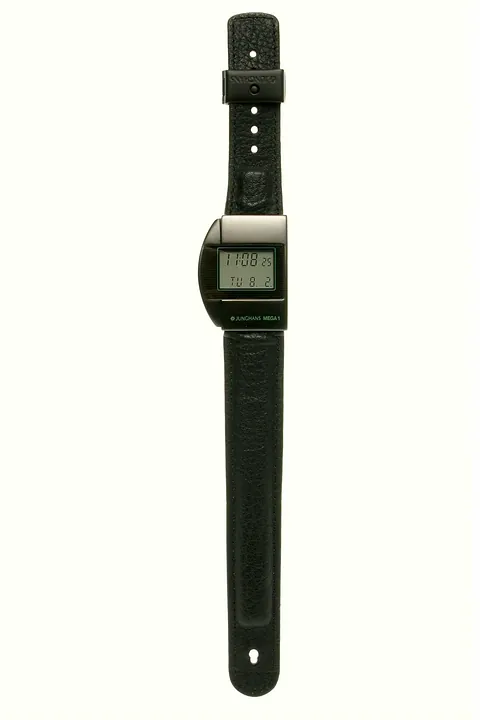
Wristwatches · c. 1990
Wristwatch, Germany, c. 1990 (no. 29875)
German Clock Museum
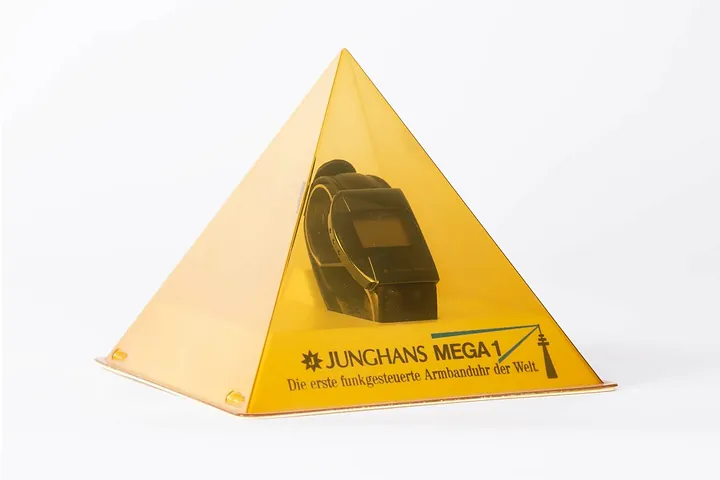
Wristwatches · 1990
Wristwatch, Germany, 1990 (no. 59620)
German Clock Museum
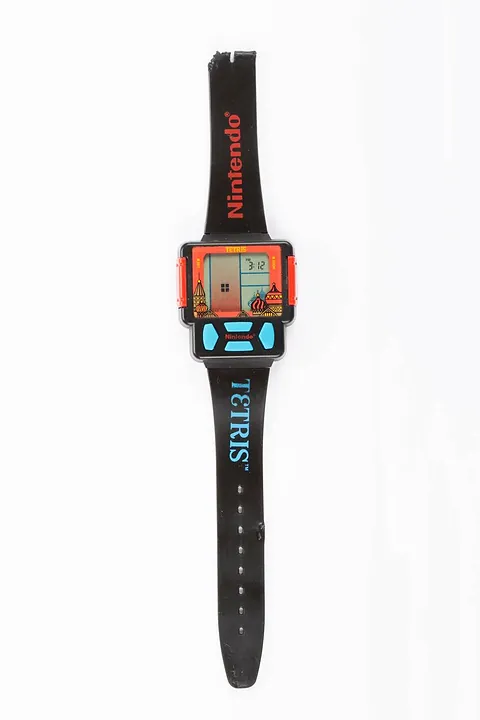
Wristwatches · c. 1991
Wristwatch by EM-Entertainment München, Merchandising, Film und Fernseh GmbH, Germany, c. 1991
German Clock Museum
Wristwatches · c. 2000
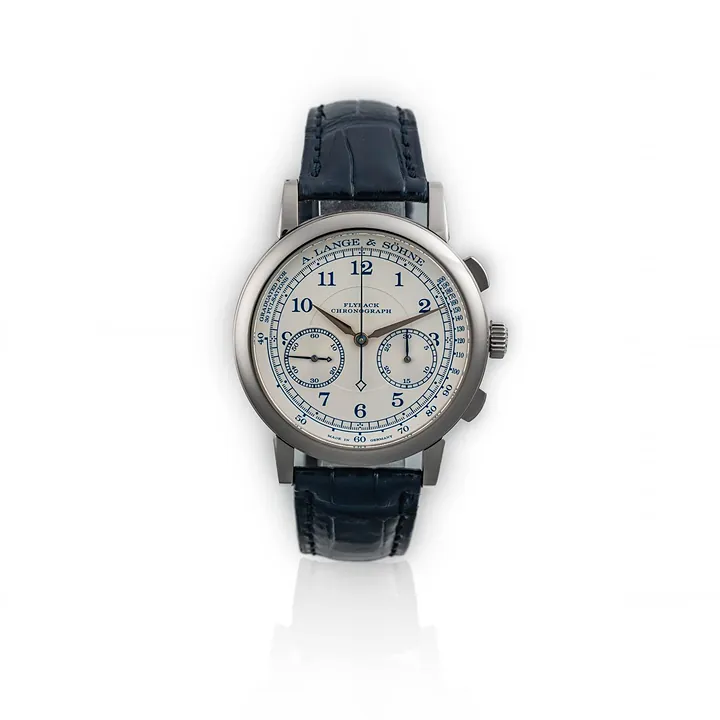
A.Lange & Söhne 1815 Chronograph, ref. 414.026, c. 2000
Antiquorum auction archive, Geneva