
Wristwatches · Wristwatch
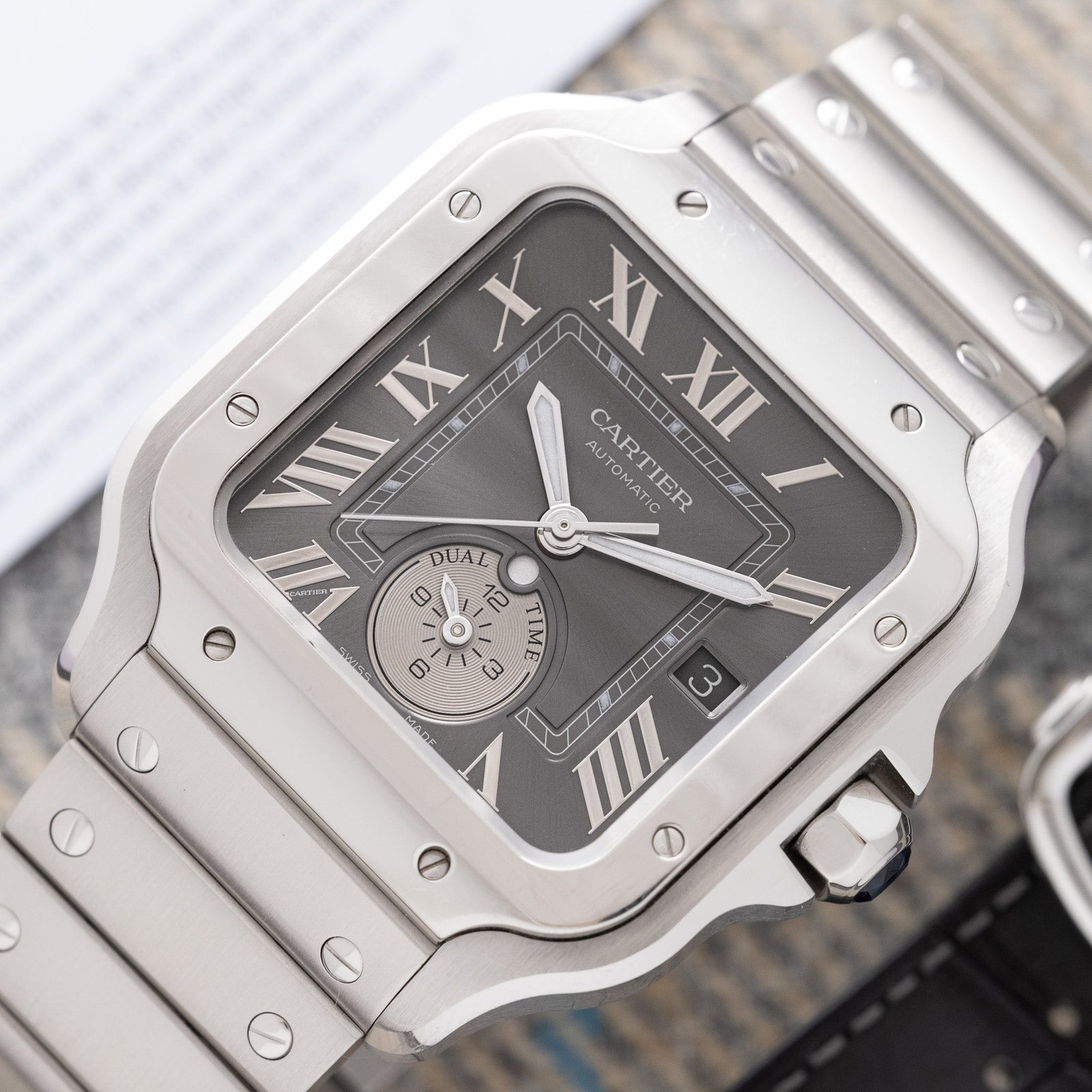
Cartier Santos Dual Time Large (Ref. WSSA0076), 2024
- Maker / attribution
- Cartier (maker)
- Date
- 2024
- Historical period
- Contemporary Horology (2010 – Present)
- Country of origin
- France
- Object type
- Wristwatch
- Dimensions
- Case 40.2 mm
- Stock no.
- Product 8056354898103
- Credit line
- Dealer listing, Huntington Company (product 8056354898103)
- Catalogue title (original)
- 2024 Cartier Santos Dual Time Large - Box & Papers (Ref. WSSA0076) (English)
View the source record (dealer listing) ↗ (opens another website in a new tab)Suggest a correction
Record summary
Catalogued by Huntington Company (dealer) (stock number Product 8056354898103), this is a wristwatch by Cartier, made in France, dated 2024. The Atlas places it in the Contemporary Horology period (2010 – Present) of its Wristwatches collection. Recorded dimensions: Case 40.2 mm. The record is illustrated with 6 photographs.
Assembled from the source record's structured fields. Dates and attributions are given as the source states them; where a field is missing the Atlas leaves it blank rather than estimating.
Catalogue description
Dealer description — Huntington Company
How The Santos Began Its Life - In 1904, Brazilian aviator Alberto Santos-Dumont complained about the unreliability and impracticality of using a pocket watch while flying. Louis Cartier designed a flat wristwatch with a square bezel, which became the first mass-produced men's wristwatch. Santos-Dumont became the first person to be filmed in an airplane flight in 1906, taking 21.5 seconds with a Cartier watch on his wrist. The Santos-Dumont watch was offered in platinum and yellow gold models. Cartier also developed the deployant mechanism for the straps, which is still used today. The Santos continued to be manufactured through the first half of the 20th century, but its square design declined due to WW2 and military requirements for round watches. In 1978, Cartier redesigned the Santos de Cartier, adding an integrated bracelet and stainless steel case and bracelet, a "bimetal" gold-steel design that became popular in the 1980s. Specifications Reference: WSSA0076 Model: Santos De Cartier Movement: Automatic Year: 2024 Contents: A true complete set including the original grey leather strap. Case: This case is 40.2mm and remains unpolished with normal signs of wear from the original owner. Dial: The grey sunburst dial features Roman numerals and a dual time indicator at 6 o'clock with a circle at 12 o'clock showing AM/PM. Strap & Buckle: The original Bracelet is in nice condition, and so is the leather strap and buckle. Being a new model, the watch features the quick release button for an easy strap change.
Historical context
Contemporary Horology (2010 – Present)
Silicon components, connected watches, optical-lattice research clocks and a thriving independent scene.
Smartwatches became the world's best-selling watches, while mechanical watchmaking focuses on craft, innovation (silicon components, new escapements) and independent makers.
Read the period in the timelineMore wristwatches from this periodEarlier: Mechanical Renaissance
Atlas type guide
Military, pilot and travel watches
The wristwatch owes much of its adoption by men to warfare and aviation. Wristlets — small pocket watches soldered with lugs and worn on a strap — were used in colonial campaigns and became standard equipment in the First World War, with protective grilles over the crystal ('shrapnel guards'). Louis Cartier's Santos (1904), designed for the aviator Alberto Santos-Dumont, is often cited as an early purpose-made pilot's watch.
In the Second World War governments specified watches in detail: the German B-Uhr observation watches, the American A-11, and the British 'W.W.W.' (the 'Dirty Dozen' set of 1945). After the war, jet travel brought GMT and world-time watches, which show two or more time zones at once — Louis Cottier's world-time mechanism and the Rolex GMT-Master (1955) are examples.
What to look for
- Military markings on the case back: broad arrow, issue numbers, 'W.W.W.', 'A.T.P.'
- High-legibility black dials with luminous Arabic numerals; oversized crowns for gloved hands.
- 24-hour hands and rotating 24-hour bezels or city rings on GMT/world-time watches.
- Wire lugs on early wristlets converted from pocket watches.
Dating clues
- Wire-lug wristlets: c. 1900–1925.
- Military specifications of the Second World War: 1939–1945.
- GMT and world-time wristwatches: mainly after 1950.
General guidance written by the Atlas editors about this kind of object. It is not a statement about this particular piece; for that, rely on the source record above and on physical examination.
Related records

Clocks · 1863
Clock by Albert-Ernest Carrier-Belleuse, France, 1863
The Metropolitan Museum of Art, New York

Clocks · c. 1980s
Cartier "art Deco", c. 1980s
Antiquorum auction archive, Geneva

Clocks · c. 2000s
Cartier Desk Clock with Alarm, c. 2000s
Antiquorum auction archive, Geneva

Clocks · c. 2000s
Cartier Lacquer Arched Desk Clock with Alarm, ref. W0100037, c. 2000s
Antiquorum auction archive, Geneva
Wristwatches · c. 2010s
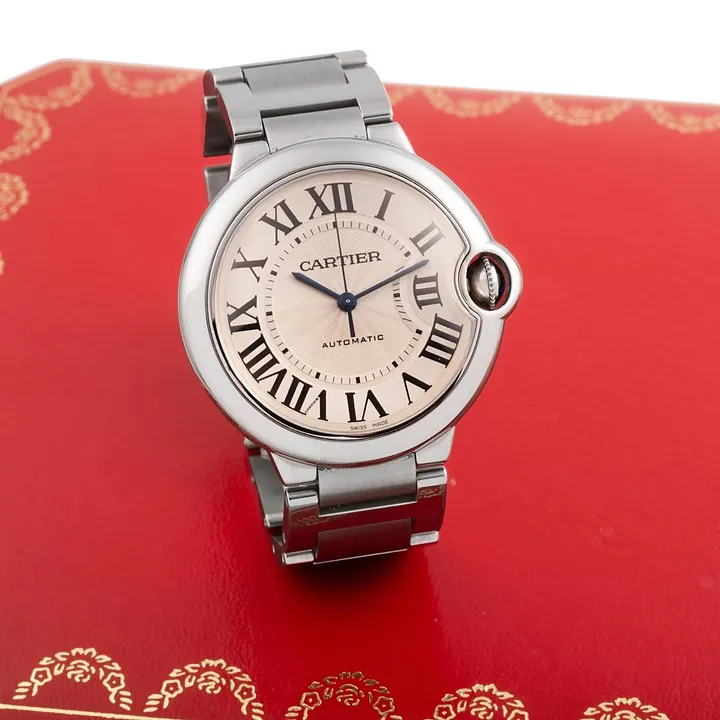
Cartier Ballon Bleu, ref. 3284, c. 2010s
Antiquorum auction archive, Geneva

Wristwatches · originally sold in December 2021 (per the lot record)
Cartier Tank Must, ref. CRWSTA0054, originally sold in December 2021
Antiquorum auction archive, Geneva
Wristwatches · originally sold in 2023 (per the lot record)
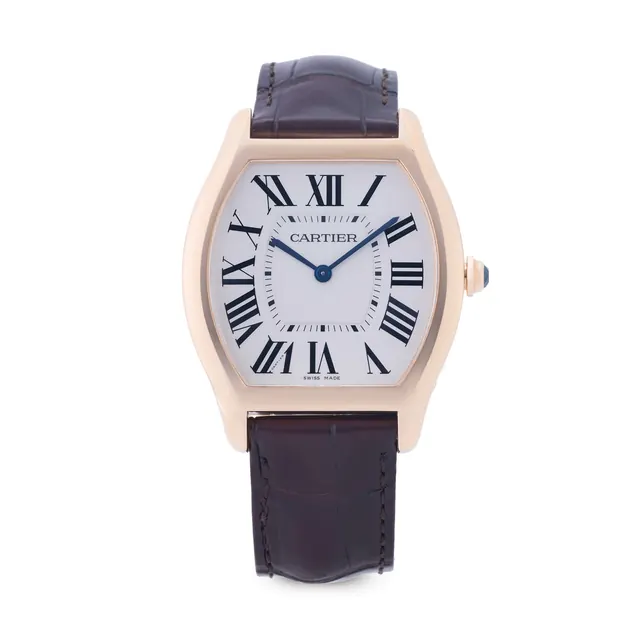
Cartier wristwatch, ref. WGTO0002, Tortue, originally sold in 2023
Antiquorum auction archive, Geneva
Wristwatches · c. 2020
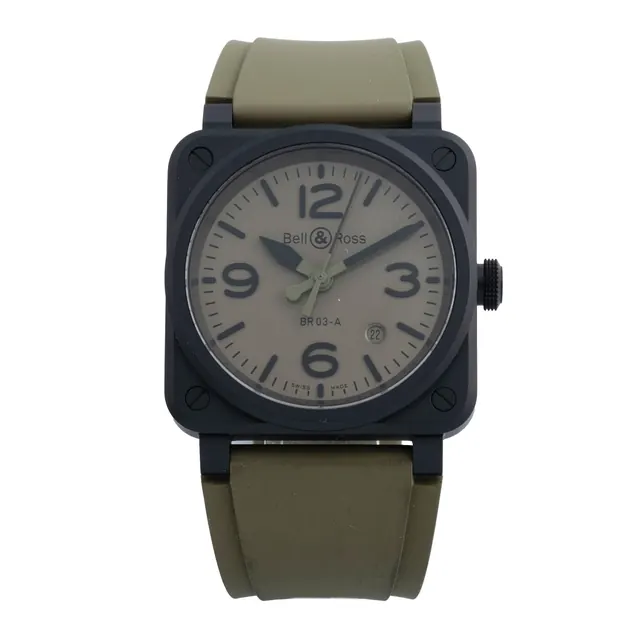
Bell & Ross wristwatch, ref. BR, Aviation Type, circa 2020
Antiquorum auction archive, Geneva