
Wristwatches · Wristwatch
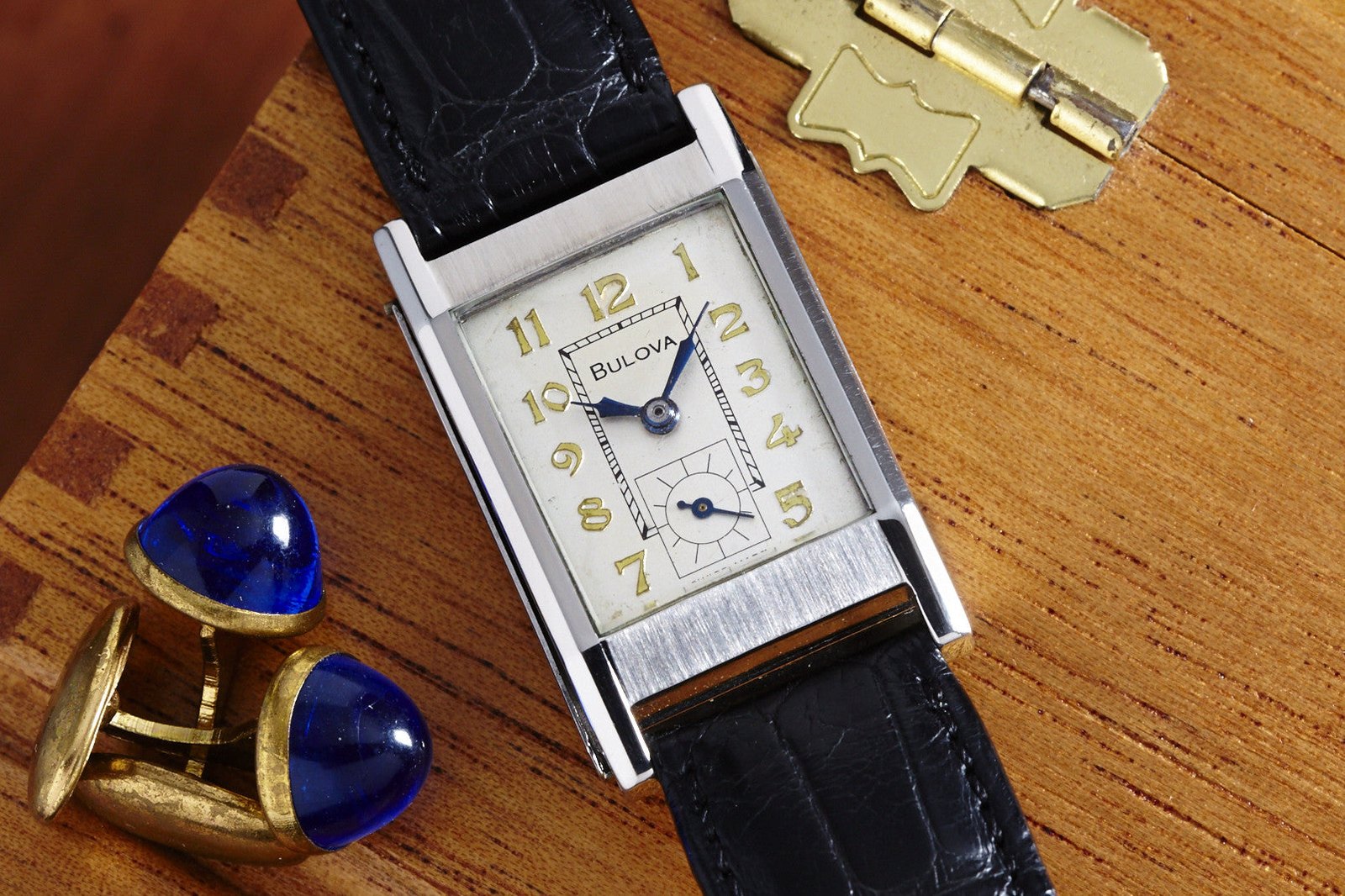
Bulova Reference 48, early 1930s
- Maker / attribution
- Bulova (maker)
- Date
- early 1930s
- Historical period
- Golden Age of Mechanical Watchmaking (1900 – 1945)
- Country of origin
- United States
- Object type
- Wristwatch
- Stock no.
- Product 982939521
- Credit line
- Dealer listing, Analog/Shift (product 982939521)
- Catalogue title (original)
- Bulova Reference 48 (English)
View the source record (dealer listing) ↗ (opens another website in a new tab)Suggest a correction
Record summary
Catalogued by Analog/Shift (dealer), New York (stock number Product 982939521), this is a wristwatch by Bulova, made in United States, dated early 1930s. The Atlas places it in the Golden Age of Mechanical Watchmaking period (1900 – 1945) of its Wristwatches collection. The record is illustrated with 6 photographs.
Assembled from the source record's structured fields. Dates and attributions are given as the source states them; where a field is missing the Atlas leaves it blank rather than estimating.
Catalogue description
Dealer description — Analog/Shift
One of the most rewarding parts of working in the vintage watch business are the rare occasions that we come across something truly unusual that we have never seen before. This doesn't happen nearly often as we'd like, but when it does - and when that truly unusual watch turns out to be something downright brilliant, it makes it all the sweeter! When this piece - an incredibly rare Bulova from the early 1930s - walked into our offices a few weeks ago, our jaws dropped. A local collector has had this in his possession for many years, and pulled it out to show us on a recent visit. Needless to say, he didn't leave with it! You are looking at a true marvel of horological design. Outwardly, it is simply a handsome steel gentleman's dress watch, fitted with a clean silver dial bearing applied gold Arabic numerals and featuring a mechanical movement with subsidiary seconds displayed by blued steel "Lozenge" hands. The only thing that seems a little out of place is the apparent lack of a crown. But the front of the watch only tells a small part of its story - the backside is something incredible unto its own. Flipping the watch over in your hand, you will notice that there is a hinged case back attached to the top portion of the backside of the case. At first glance it appears this is an outer covering for the internal case, something you'd need to pop out of place to adjust or service the movement. However, beneath that hinged cover is where the real brilliance of this timepiece lies. Fitted to the "inner" case back is a crown for adjusting the time displayed on the front side. Positioned next to it is a small plunger, which, when depressed, serves to wind the Calibre 7AP movement inside. Here's how it works: When worn on the wrist, the hinged case back is gently pressed and released by the motion of your forearm. This, in turn, depresses the plunger, winding the movement internally. Known by some collectors as a "Back Wind" wristwatch, this is essentially a manually-wound movement which is drawing its power from perpetual motion of the wrist. The movement has been fitted with a clutch mechanism to prevent overwinding, and the whole thing works like a charm. And its from NINETEEN THIRTY TWO! If this watch said "Patek Philippe" on the dial instead of "Bulova," we'd be talking about a seriously valuable timepiece here... Alas, American ingenuity doesn't add up to a whole lot of dollar value in this instance, but this is a tremendous piece of history and deserves to go into the hands of someone who will truly appreciate it for the technical marvel that it is. Drop us a line if you'd like to discuss! To see a high-res video of this piece, click on over to our Vimeo channel, HERE .
Historical context
Golden Age of Mechanical Watchmaking (1900 – 1945)
The wristwatch displaces the pocket watch; waterproof cases, self-winding and grand complications.
The wristwatch overtook the pocket watch. Military use in the First World War, aviation, water-resistant cases (1926), automatic winding (1923–31), rectangular Art Deco designs and early chronographs and calendars defined the period.
Read the period in the timelineMore wristwatches from this periodEarlier: Industrial Revolution
Atlas type guide
Wristwatches
Bracelet watches were worn by women from the early nineteenth century — Breguet made one for Caroline Murat, Queen of Naples, in 1810–12 — but the wristwatch only became a man's instrument with military use and aviation in the early twentieth century. Between the World Wars it overtook the pocket watch; the 1920s and 1930s brought rectangular Art Deco cases, water-resistant cases and the first automatic winding systems.
After 1945 the wristwatch became a carrier of identity — dress watches, sports and dive watches, chronographs, calendars — produced by Swiss, American, Japanese, German, Soviet and Chinese industries. The quartz revolution after 1969 and the mechanical renaissance since the 1990s, including the rise of independent watchmakers, complete the story.
What to look for
- The reference number (between the lugs or inside the case back) and serial number, the starting point for dating.
- The calibre: its maker and number are often stamped under the dial or on the bridge.
- Originality of dial, hands and crown — refinished ('redial') dials are common.
- Case material marks: 18K/750, 14K/585, stainless steel, gold-filled, plated.
Dating clues
- Wire-lug cases: before c. 1925.
- Water-resistant screw-down cases: from 1926.
- Quartz movements: from 1969; sapphire crystals widespread after c. 1980.
General guidance written by the Atlas editors about this kind of object. It is not a statement about this particular piece; for that, rely on the source record above and on physical examination.
Related records
Wristwatches · c. 1969
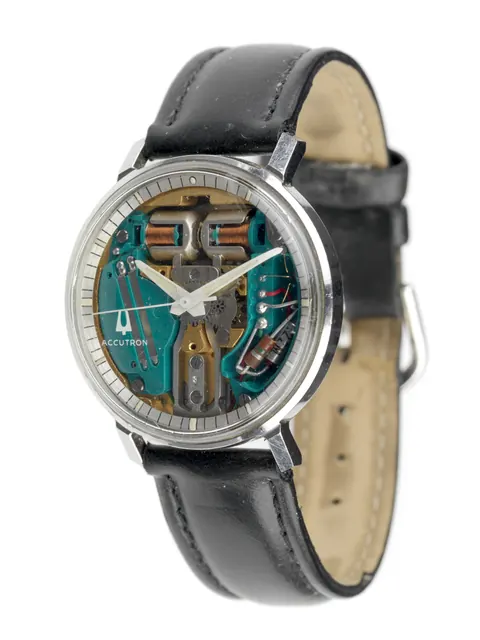
Bulova 'Accutron' tuning-fork wristwatch by Bulova
Royal Museums Greenwich
Wristwatches · c. 1965
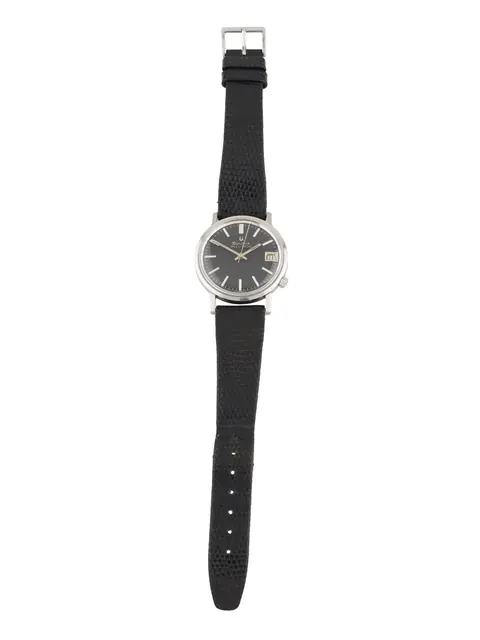
Wristwatch Accutron by Knud Geelmuyden Bull
Royal Museums Greenwich
Clocks · c. 1960s
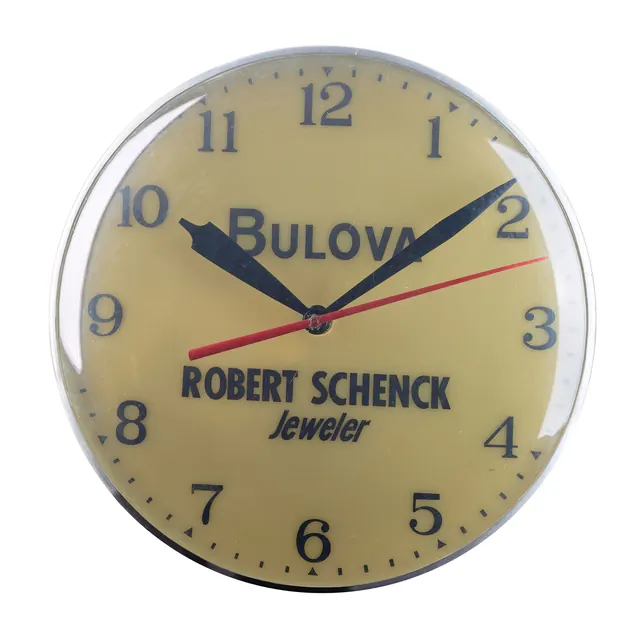
Bulova wall clock, Lighted Advertising Wall Clock for Robert Schenck Jeweler, circa 1960s
Antiquorum auction archive, Geneva
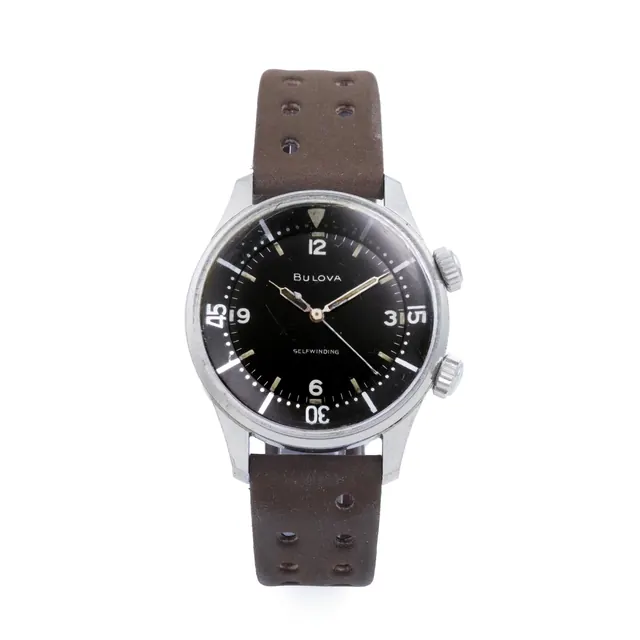
Wristwatches · 1963
Bulova wristwatch, ref. 314, Diver Super Compressor, 1963
Antiquorum auction archive, Geneva
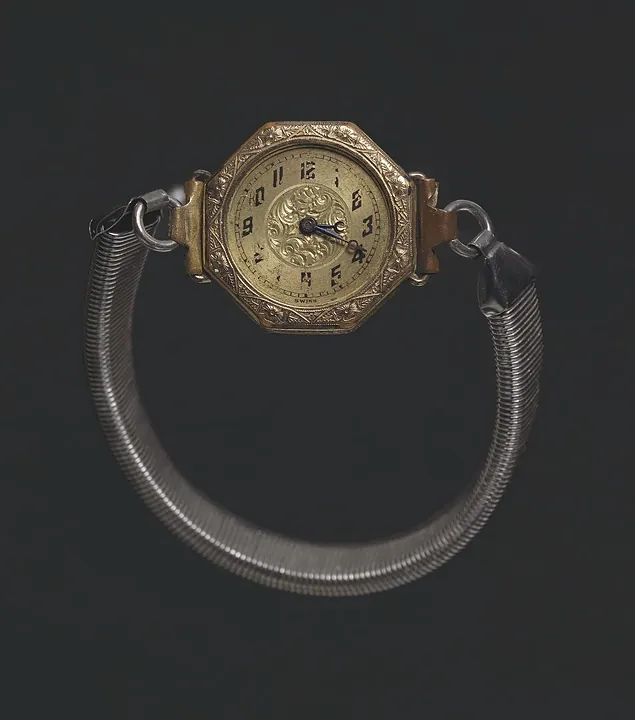
Wristwatches · early to mid 20th century
Woman's wristwatch worn by Harriette Vyda Simms Moore, early to mid 20th century
National Museum of African American History and Culture, Smithsonian Institution, Washington DC
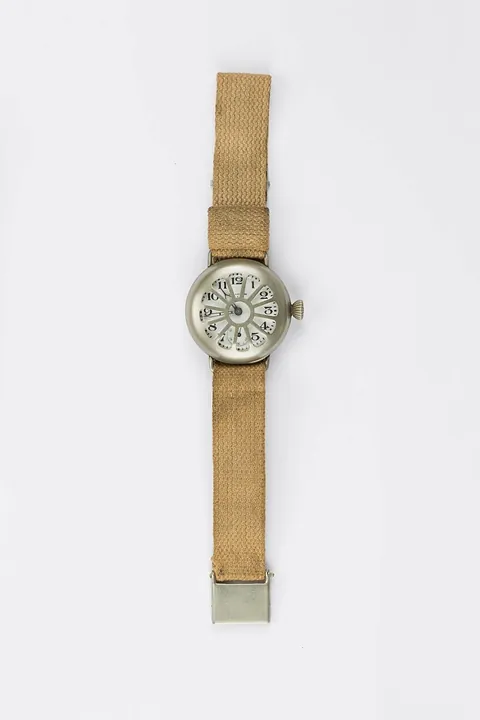
Wristwatches · 1921
Wristwatch by Waltham A. W. W. Co., United States, 1921
German Clock Museum
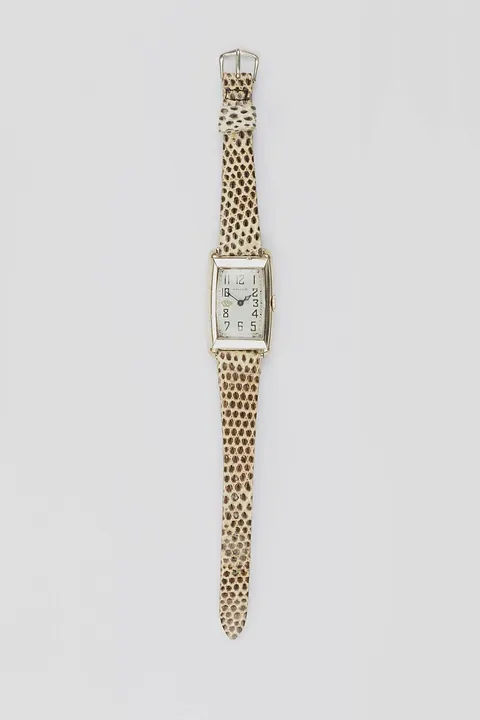
Wristwatches · 1929
Wristwatch by Waltham A. W. W. Co., United States, 1929
German Clock Museum
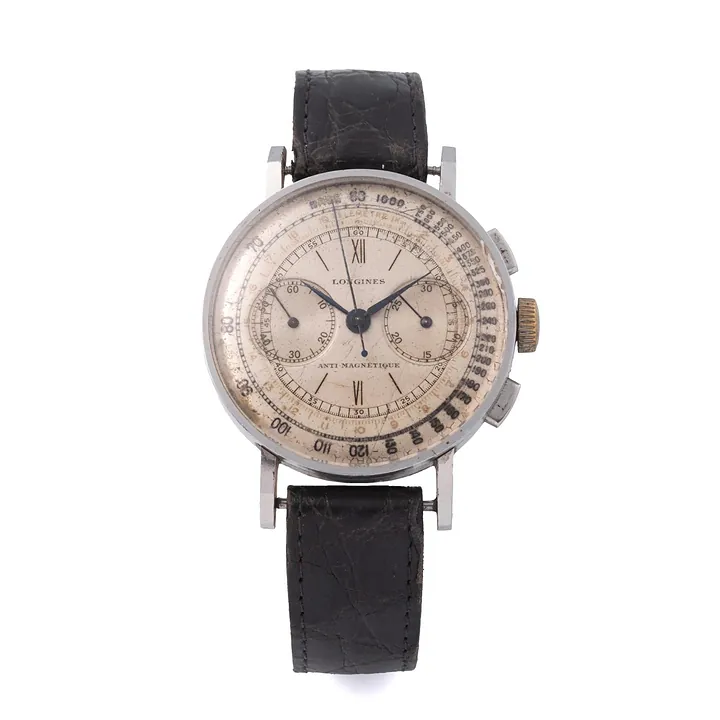
Wristwatches · 1930–1940
Longines Chronograph, ref. 22185, circa 1930/1940
Antiquorum auction archive, Geneva