
Wristwatches · Wristwatch
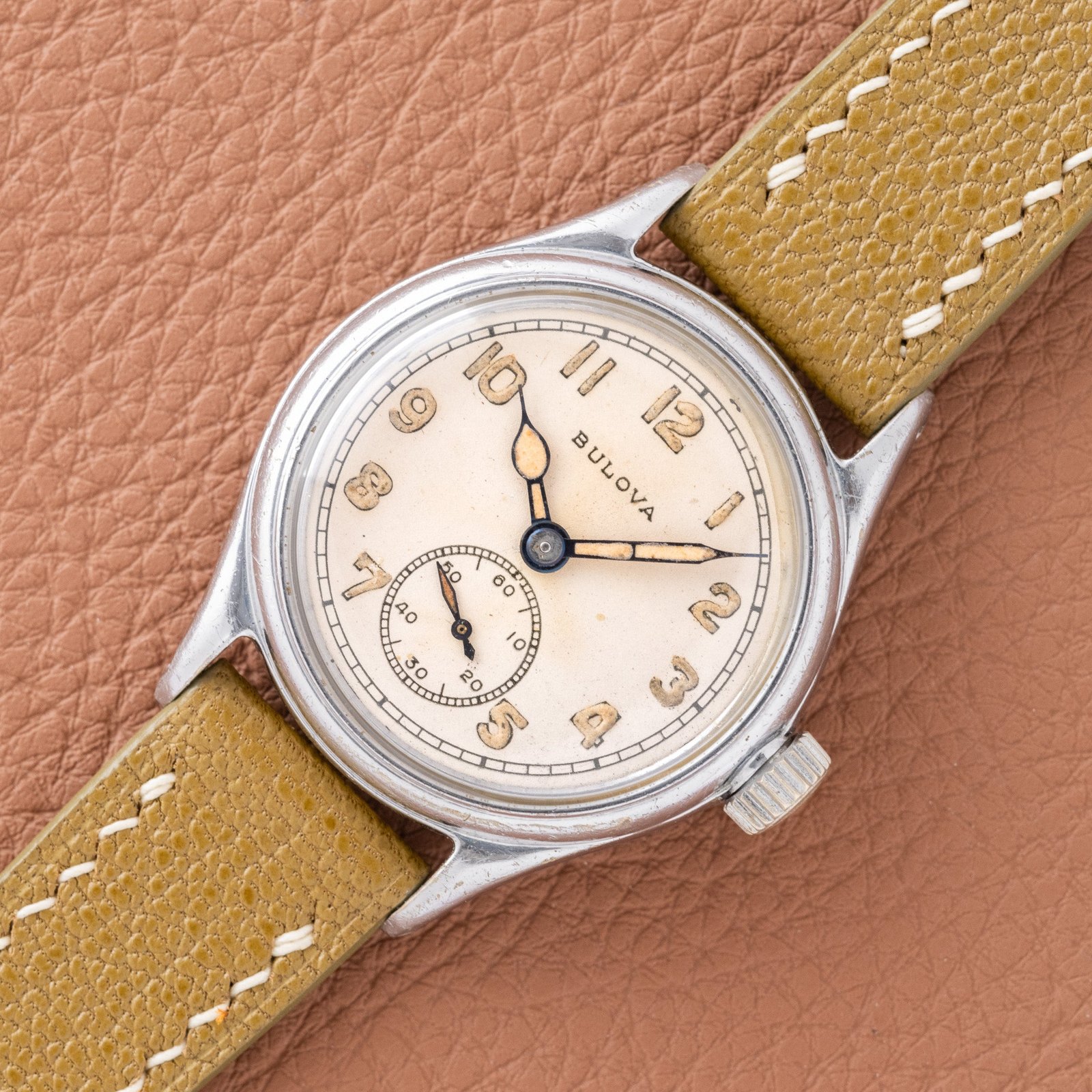
Bulova Military Issued WW2 Officers Watch, 1940s
- Maker / attribution
- Bulova (maker)
- Date
- 1940s
- Historical period
- Golden Age of Mechanical Watchmaking (1900 – 1945)
- Country of origin
- United States
- Object type
- Wristwatch
- Dimensions
- Case 32 mm
- Stock no.
- Product 8403165511863
- Credit line
- Dealer listing, Huntington Company (product 8403165511863)
- Catalogue title (original)
- 1940s Bulova Military Issued WW2 Officers Watch (English)
View the source record (dealer listing) ↗ (opens another website in a new tab)Suggest a correction
Record summary
Catalogued by Huntington Company (dealer) (stock number Product 8403165511863), this is a wristwatch by Bulova, made in United States, dated 1940s. The Atlas places it in the Golden Age of Mechanical Watchmaking period (1900 – 1945) of its Wristwatches collection. Recorded dimensions: Case 32 mm. The record is illustrated with 6 photographs.
Assembled from the source record's structured fields. Dates and attributions are given as the source states them; where a field is missing the Atlas leaves it blank rather than estimating.
Catalogue description
Dealer description — Huntington Company
History & Significance During the Second World War, Bulova was one of several American manufacturers contracted to produce wristwatches for U.S. military use. These watches were designed as practical tools, prioritizing legibility, durability, and ease of service over any decorative elements. Issued across various branches, they became standard equipment for soldiers and personnel who relied on accurate timekeeping in daily operations. The typical WWII Bulova military watch features a compact stainless steel case, a highly legible dial with bold Arabic numerals, and a subsidiary seconds display. The restrained design reflects wartime material constraints and the need for reliability under demanding conditions. Today, these watches serve as tangible artifacts of mid-20th-century military history and represent an important chapter in American watchmaking during a period defined by utility and mass mobilization. Writer’s Thoughts There’s something very honest about these wartime Bulovas. They’re small, straightforward, and entirely purposeful. I like how the dial tells the story, simple printing, clear numerals, nothing unnecessary. This is the kind of watch that feels earned rather than styled, and it wears with a quiet confidence that modern military-inspired pieces rarely capture. It’s easy to imagine this being worn day in and day out, doing exactly what it was meant to do. Our Promise Every watch is thoroughly vetted, carefully described with complete transparency, and guaranteed authentic. This watch is offered in honest condition. Specifications Brand: Bulova Model: Military Issue Year: 1940s Case Material: Stainless steel case with smooth fixed bezel Case Size: 32 mm Dial: Cream military dial with Arabic numerals and subsidiary seconds Crystal: Acrylic Movement: Manual wind Bulova movement Strap/Bracelet: Leather strap Buckle/Clasp: Stainless steel pin buckle Contents: Watch only Condition Case: Stainless steel case shows honest wear consistent with age and use. Original proportions remain intact. Crystal: Acrylic crystal shows light surface marks from wear. No cracks observed. Dial: The original dial is well preserved with even aging and clear printing. Hands: Original hands show light aging consistent with the rest of the watch. Strap/Bracelet: The leather strap is new. Buckle/Clasp: The buckle is new.
Historical context
Golden Age of Mechanical Watchmaking (1900 – 1945)
The wristwatch displaces the pocket watch; waterproof cases, self-winding and grand complications.
The wristwatch overtook the pocket watch. Military use in the First World War, aviation, water-resistant cases (1926), automatic winding (1923–31), rectangular Art Deco designs and early chronographs and calendars defined the period.
Read the period in the timelineMore wristwatches from this periodEarlier: Industrial Revolution
Atlas type guide
Military, pilot and travel watches
The wristwatch owes much of its adoption by men to warfare and aviation. Wristlets — small pocket watches soldered with lugs and worn on a strap — were used in colonial campaigns and became standard equipment in the First World War, with protective grilles over the crystal ('shrapnel guards'). Louis Cartier's Santos (1904), designed for the aviator Alberto Santos-Dumont, is often cited as an early purpose-made pilot's watch.
In the Second World War governments specified watches in detail: the German B-Uhr observation watches, the American A-11, and the British 'W.W.W.' (the 'Dirty Dozen' set of 1945). After the war, jet travel brought GMT and world-time watches, which show two or more time zones at once — Louis Cottier's world-time mechanism and the Rolex GMT-Master (1955) are examples.
What to look for
- Military markings on the case back: broad arrow, issue numbers, 'W.W.W.', 'A.T.P.'
- High-legibility black dials with luminous Arabic numerals; oversized crowns for gloved hands.
- 24-hour hands and rotating 24-hour bezels or city rings on GMT/world-time watches.
- Wire lugs on early wristlets converted from pocket watches.
Dating clues
- Wire-lug wristlets: c. 1900–1925.
- Military specifications of the Second World War: 1939–1945.
- GMT and world-time wristwatches: mainly after 1950.
General guidance written by the Atlas editors about this kind of object. It is not a statement about this particular piece; for that, rely on the source record above and on physical examination.
Related records
Wristwatches · c. 1969
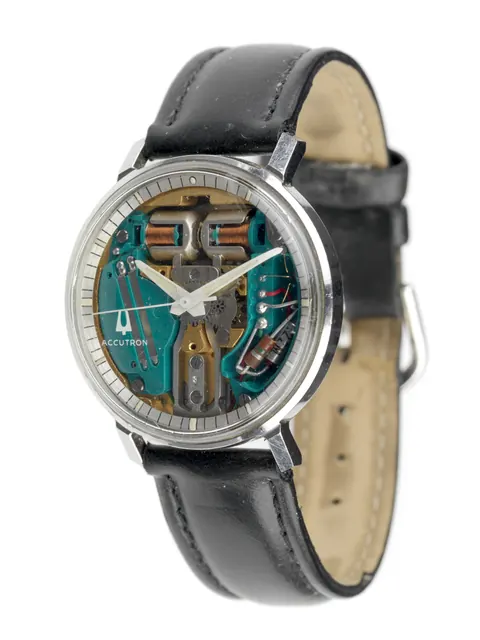
Bulova 'Accutron' tuning-fork wristwatch by Bulova
Royal Museums Greenwich
Wristwatches · c. 1965
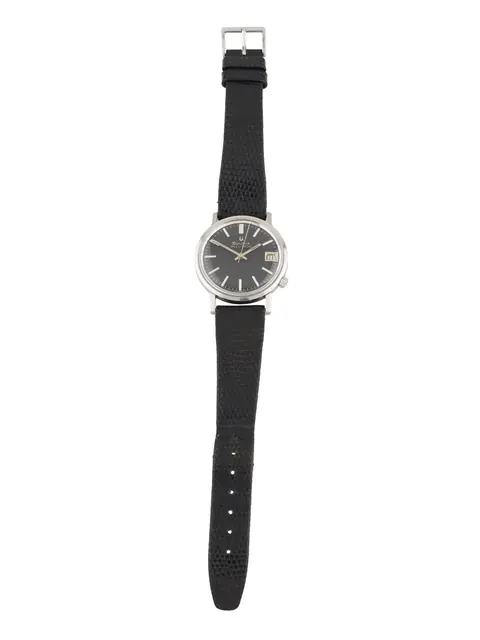
Wristwatch Accutron by Knud Geelmuyden Bull
Royal Museums Greenwich
Clocks · c. 1960s
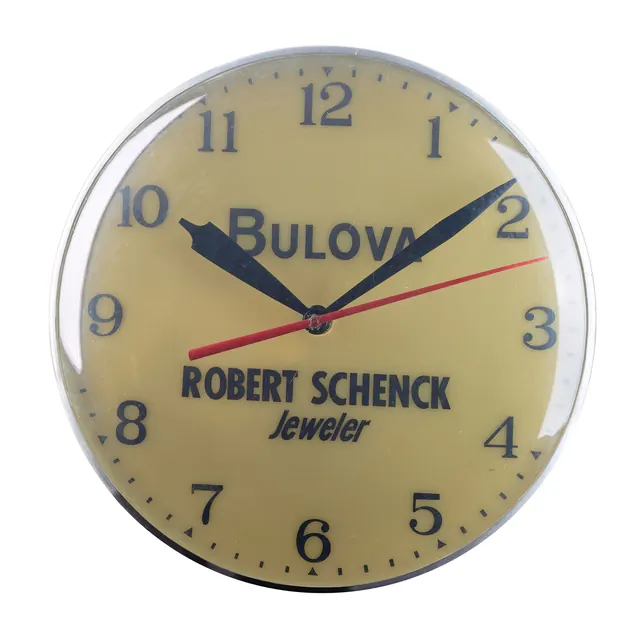
Bulova wall clock, Lighted Advertising Wall Clock for Robert Schenck Jeweler, circa 1960s
Antiquorum auction archive, Geneva
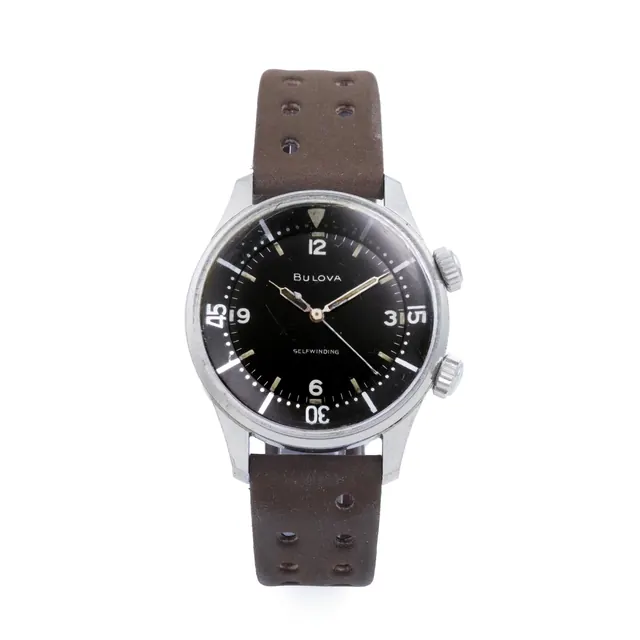
Wristwatches · 1963
Bulova wristwatch, ref. 314, Diver Super Compressor, 1963
Antiquorum auction archive, Geneva
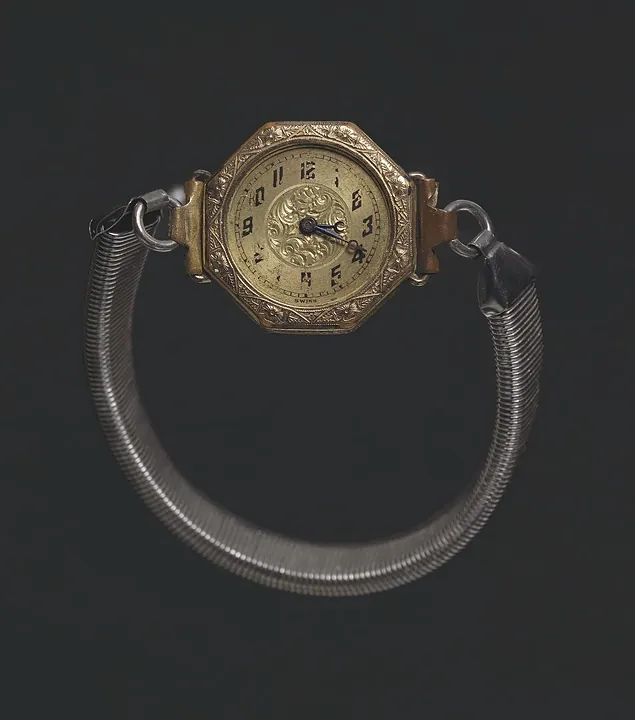
Wristwatches · early to mid 20th century
Woman's wristwatch worn by Harriette Vyda Simms Moore, early to mid 20th century
National Museum of African American History and Culture, Smithsonian Institution, Washington DC
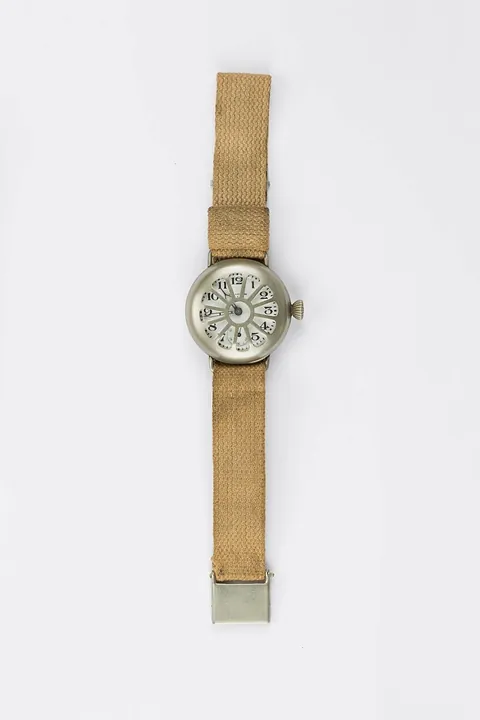
Wristwatches · 1921
Wristwatch by Waltham A. W. W. Co., United States, 1921
German Clock Museum
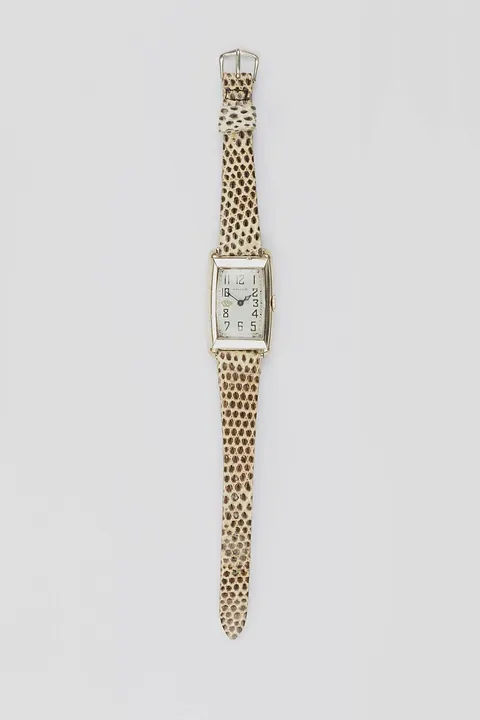
Wristwatches · 1929
Wristwatch by Waltham A. W. W. Co., United States, 1929
German Clock Museum
Wristwatches · 1930–1940
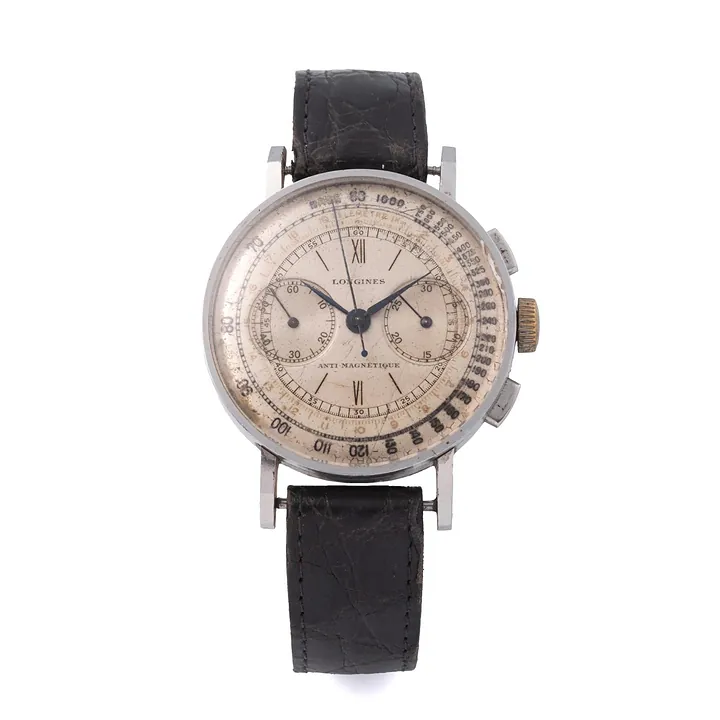
Longines Chronograph, ref. 22185, circa 1930/1940
Antiquorum auction archive, Geneva