
Wristwatches · Wristwatch
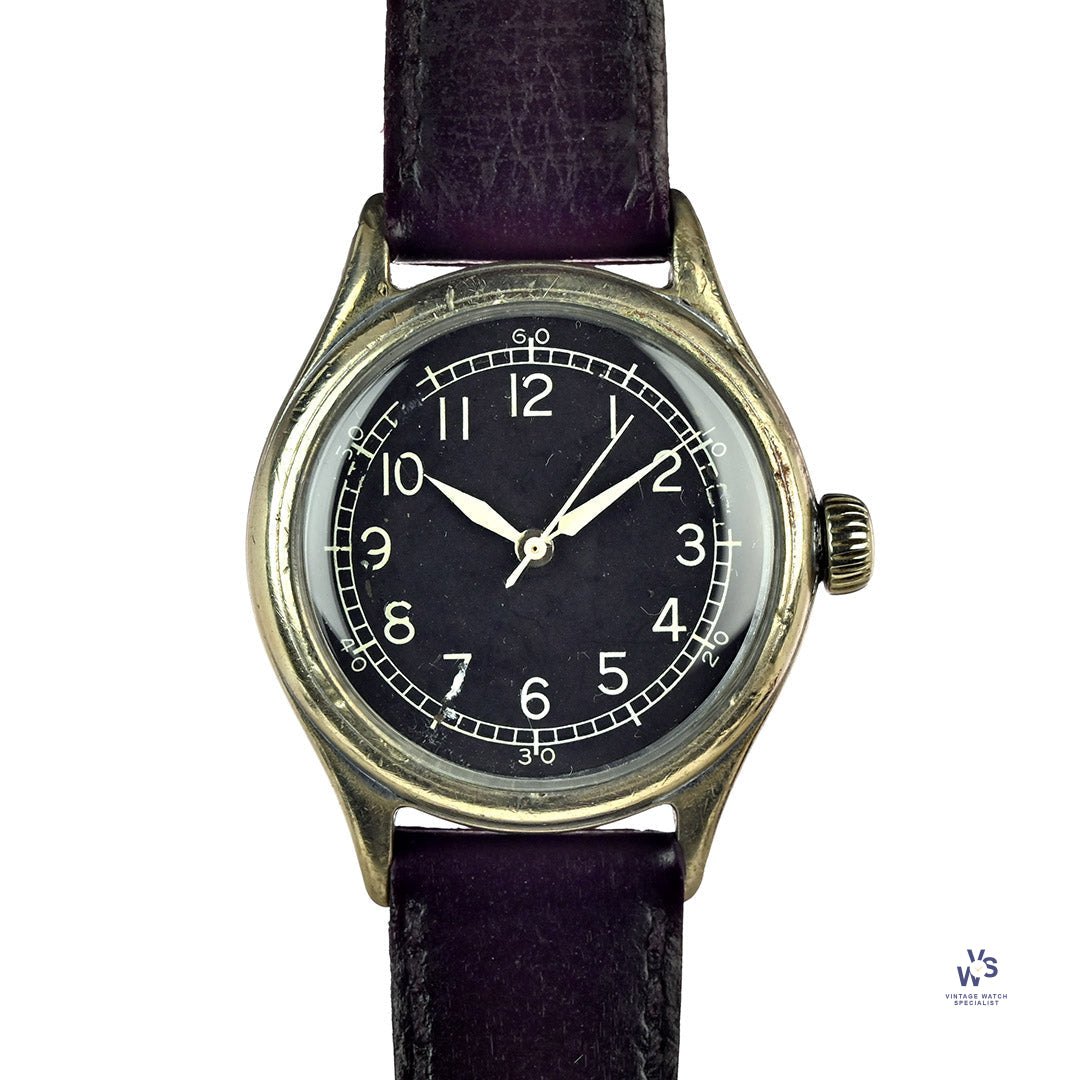
Bulova A11, American Issued WW2 Military Watch, Hacking Seconds, circa 1940s
- Maker / attribution
- Bulova (maker)
- Date
- c. 1940s
- Historical period
- Golden Age of Mechanical Watchmaking (1900 – 1945)
- Country of origin
- United States
- Object type
- Wristwatch
- Stock no.
- VWS3228cs
- Credit line
- Dealer listing, Vintage Watch Specialist (VWS3228cs)
- Catalogue title (original)
- Bulova - A11 - American Issued WW2 Military Watch - Hacking Seconds - c.1940s (English)
View the source record (dealer listing) ↗ (opens another website in a new tab)Suggest a correction
Record summary
Catalogued by Vintage Watch Specialist (dealer), United Kingdom (stock number VWS3228cs), this is a wristwatch by Bulova, made in United States, dated c. 1940s. The Atlas places it in the Golden Age of Mechanical Watchmaking period (1900 – 1945) of its Wristwatches collection. The record is illustrated with 6 photographs.
Assembled from the source record's structured fields. Dates and attributions are given as the source states them; where a field is missing the Atlas leaves it blank rather than estimating.
Catalogue description
Dealer description — Vintage Watch Specialist
A Very Well Preserved Bulova A11 American Military Watch with a Rich Black Dial and Original Military Markings, c.1940s The Bulova A11 military watch holds a distinguished place in horological history, particularly during World War II. Introduced in the early 1940s, the A11 was designed to meet the precise needs of U.S. Army Air Force navigators and pilots. Known for its robust construction and reliable performance, the A11 featured a black dial with luminous hands and markers, ensuring optimal readability even in low-light conditions. One of its key attributes was its hacking seconds feature, which allowed for synchronized timekeeping crucial for coordinated missions. The watch's movement was based on the renowned Swiss-made Bulova 10AK mechanism, known for its accuracy and durability. What's on Offer This rare watch is in great shape considering its age of 80-plus years! The dial is rich black with the synonymous bold Arabic numerals and stark minute track as we expect to see on a WW2 military watch. The nickel-plated case shows signs of wear but less than we would expect and normally see on a watch that has seen action during the war. On the case back you can see the original military markings and the watch is in full working order. This should pique the interest of any military enthusiast as a rare and valuable survivor of WW2.
Historical context
Golden Age of Mechanical Watchmaking (1900 – 1945)
The wristwatch displaces the pocket watch; waterproof cases, self-winding and grand complications.
The wristwatch overtook the pocket watch. Military use in the First World War, aviation, water-resistant cases (1926), automatic winding (1923–31), rectangular Art Deco designs and early chronographs and calendars defined the period.
Read the period in the timelineMore wristwatches from this periodEarlier: Industrial Revolution
Atlas type guide
Military, pilot and travel watches
The wristwatch owes much of its adoption by men to warfare and aviation. Wristlets — small pocket watches soldered with lugs and worn on a strap — were used in colonial campaigns and became standard equipment in the First World War, with protective grilles over the crystal ('shrapnel guards'). Louis Cartier's Santos (1904), designed for the aviator Alberto Santos-Dumont, is often cited as an early purpose-made pilot's watch.
In the Second World War governments specified watches in detail: the German B-Uhr observation watches, the American A-11, and the British 'W.W.W.' (the 'Dirty Dozen' set of 1945). After the war, jet travel brought GMT and world-time watches, which show two or more time zones at once — Louis Cottier's world-time mechanism and the Rolex GMT-Master (1955) are examples.
What to look for
- Military markings on the case back: broad arrow, issue numbers, 'W.W.W.', 'A.T.P.'
- High-legibility black dials with luminous Arabic numerals; oversized crowns for gloved hands.
- 24-hour hands and rotating 24-hour bezels or city rings on GMT/world-time watches.
- Wire lugs on early wristlets converted from pocket watches.
Dating clues
- Wire-lug wristlets: c. 1900–1925.
- Military specifications of the Second World War: 1939–1945.
- GMT and world-time wristwatches: mainly after 1950.
General guidance written by the Atlas editors about this kind of object. It is not a statement about this particular piece; for that, rely on the source record above and on physical examination.
Related records
Wristwatches · c. 1969
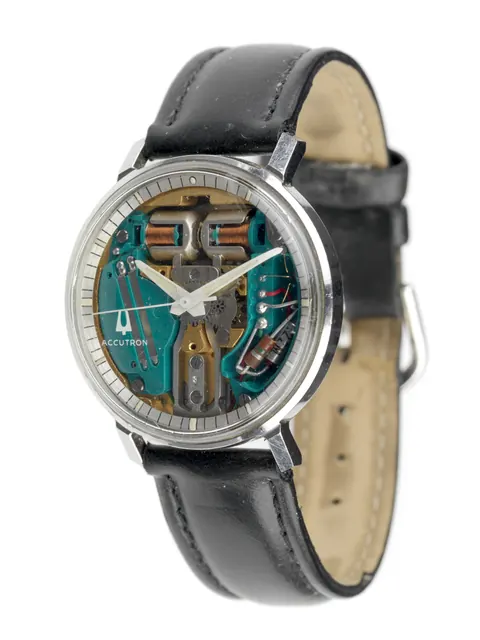
Bulova 'Accutron' tuning-fork wristwatch by Bulova
Royal Museums Greenwich
Wristwatches · c. 1965
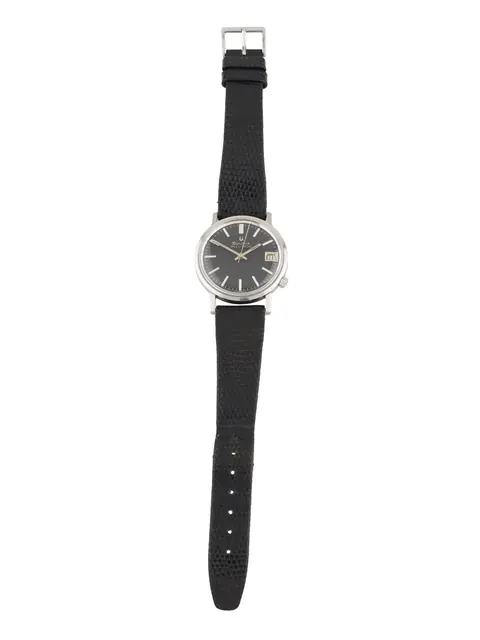
Wristwatch Accutron by Knud Geelmuyden Bull
Royal Museums Greenwich
Clocks · c. 1960s
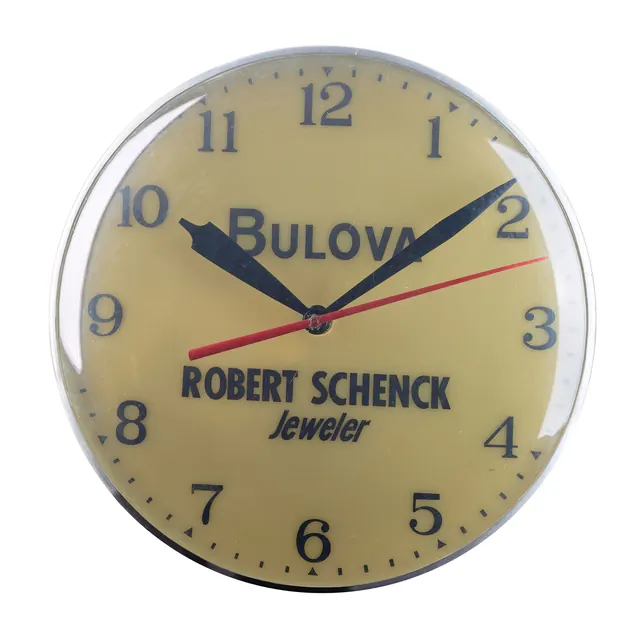
Bulova wall clock, Lighted Advertising Wall Clock for Robert Schenck Jeweler, circa 1960s
Antiquorum auction archive, Geneva
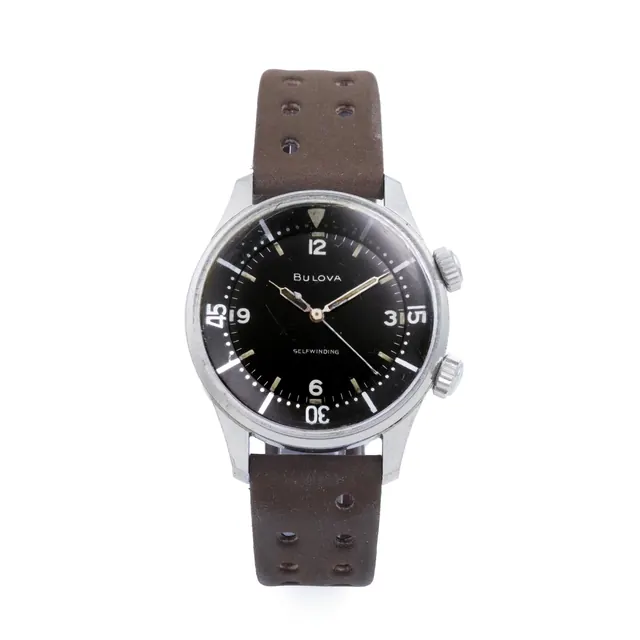
Wristwatches · 1963
Bulova wristwatch, ref. 314, Diver Super Compressor, 1963
Antiquorum auction archive, Geneva
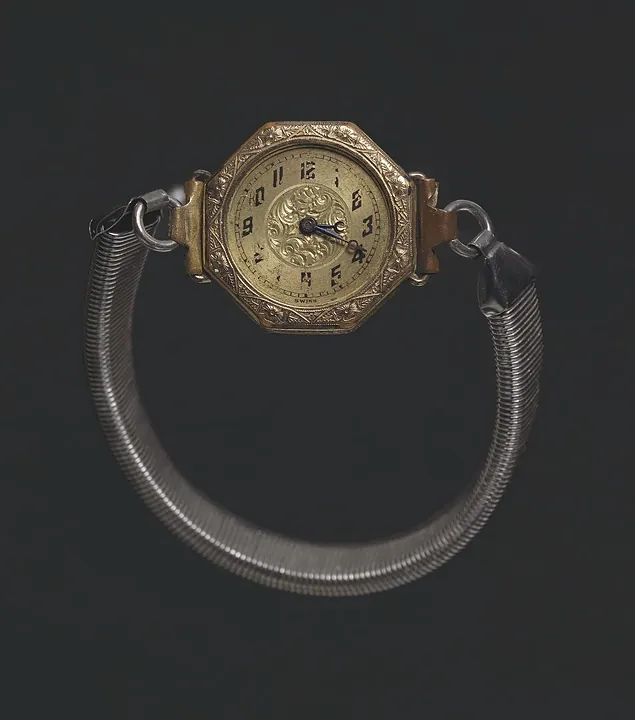
Wristwatches · early to mid 20th century
Woman's wristwatch worn by Harriette Vyda Simms Moore, early to mid 20th century
National Museum of African American History and Culture, Smithsonian Institution, Washington DC
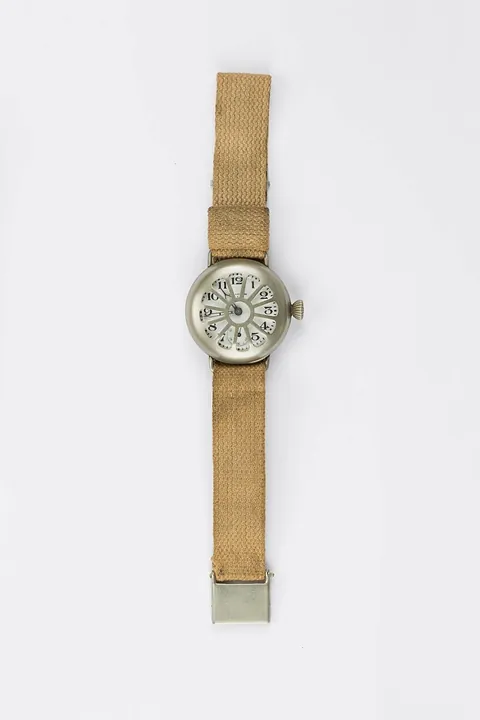
Wristwatches · 1921
Wristwatch by Waltham A. W. W. Co., United States, 1921
German Clock Museum
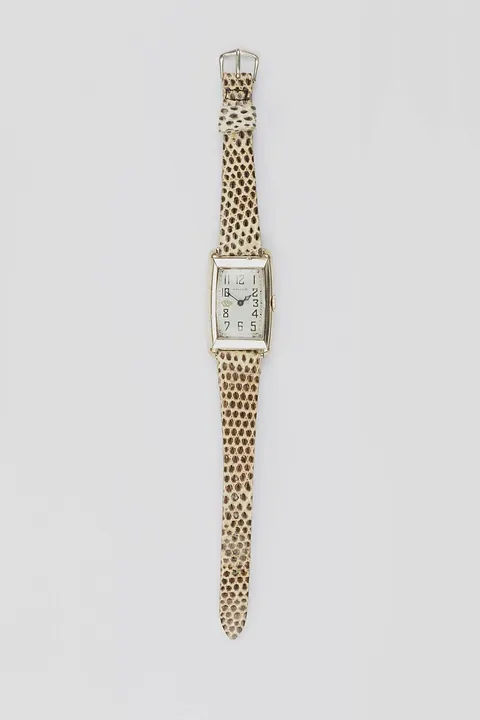
Wristwatches · 1929
Wristwatch by Waltham A. W. W. Co., United States, 1929
German Clock Museum
Wristwatches · 1930–1940
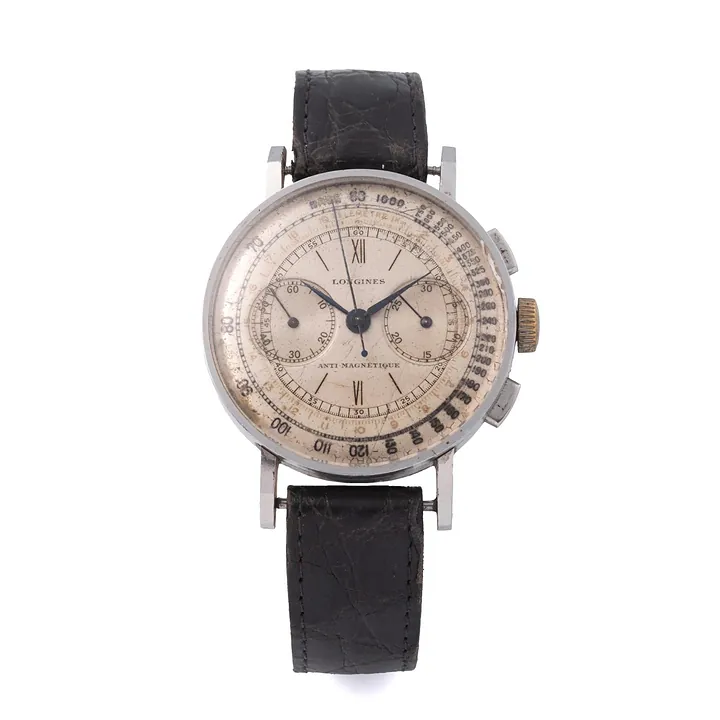
Longines Chronograph, ref. 22185, circa 1930/1940
Antiquorum auction archive, Geneva