
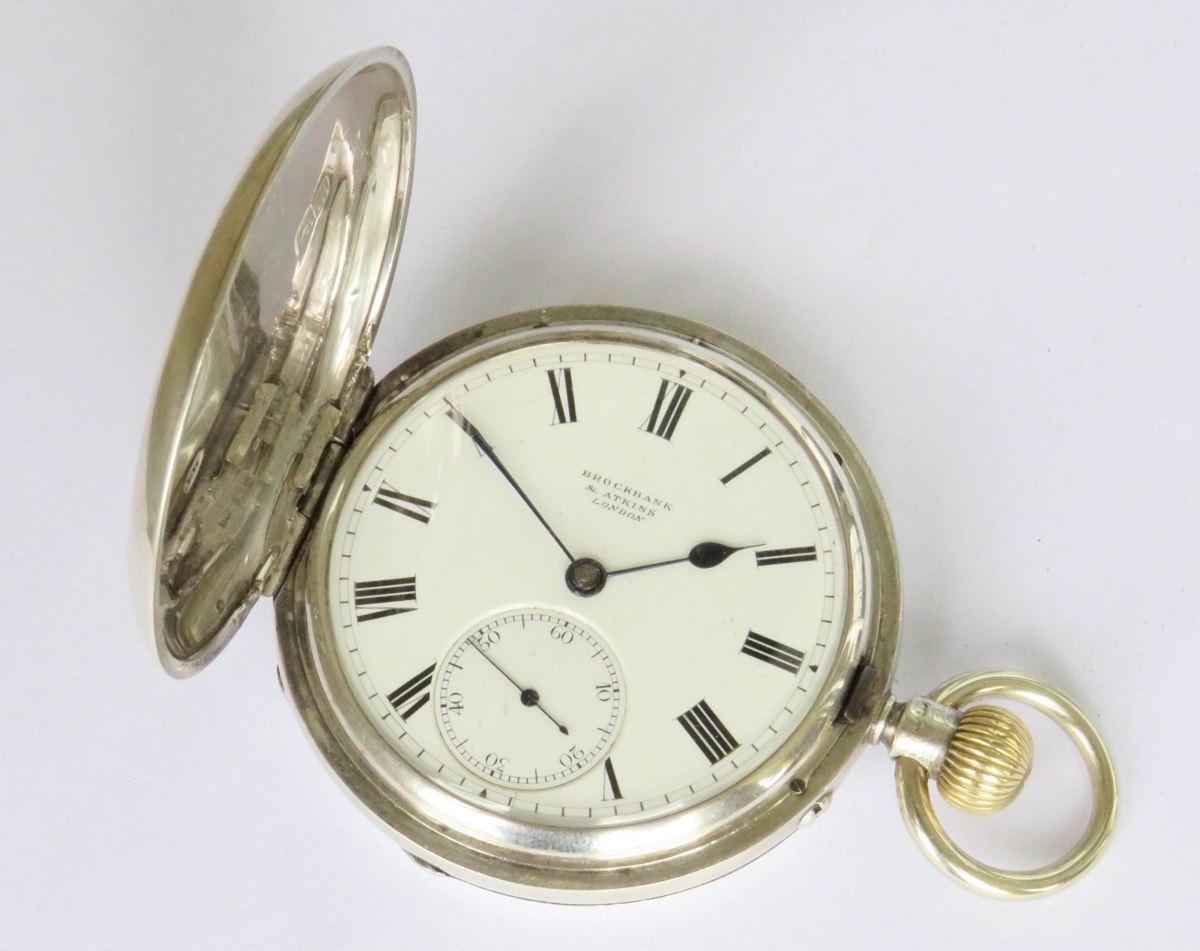
Pocket Watches · Full hunter pocket watch
Brockbank & Atkins Silver Full Hunter Pocket Watch
- Maker / attribution
- Brockbank & Atkins (source attribution)
- Date
- 1907
- Historical period
- Golden Age of Mechanical Watchmaking (1900 – 1945)
- Country of origin
- Unrecorded in source
- Object type
- Full hunter pocket watch
- Dimensions
- 49mm
- Holding institution
- The Vintage Wrist Watch Company / Sellingantiques.co.uk
- Accession / object no.
- SA1072716
- Credit line
- The Vintage Wrist Watch Company / Sellingantiques.co.uk
- Catalogue title (original)
- Antique Silver Full Hunter Pocket Watch, Brockbank & Atkins | Sellingantiques.co.uk (English)
View the source record ↗ (opens another website in a new tab)Suggest a correction
Record summary
Held and catalogued by The Vintage Wrist Watch Company / Sellingantiques.co.uk (object number SA1072716), this is a full hunter pocket watch attributed to Brockbank & Atkins, dated 1907. The Atlas places it in the Golden Age of Mechanical Watchmaking period (1900 – 1945) of its Pocket Watches collection. Recorded dimensions: 49mm. The record is illustrated with 1 photograph.
Assembled from the source record's structured fields. Dates and attributions are given as the source states them; where a field is missing the Atlas leaves it blank rather than estimating.
Catalogue description
Original object description
Produced by London makers Brockbank & Atkins, this silver full hunter pocket watch has an overall diameter of 49 mm, excluding the pendant and bow. Depressing the fluted gilt crown unsprings the front lid to reveal a white dial protected by acrylic glazing, detailed with black Roman numerals, Breguet/spade center hands, a running seconds subsidiary dial at 6 o'clock, and the maker's signature placed beneath the 12 o'clock marker. A silver bow is fitted to the pendant alongside the winding crown. Hallmarks for London, 1907, are stamped on the insides of all three silver case covers together with the maker's mark 'JW', tentatively linked by the vendor to Joseph Walton, among other contemporaneous London case makers using identical initials. Beneath a hinged silver dust cover sits an English keyless movement bearing the inscription 'Brockbank & Atkins, London'. Because the movement remains hidden in provided imagery, its physical state, caliber design, and jewel count cannot be verified, though the vendor suggests it was manufactured for the firm by an outworker in Coventry rather than constructed directly in their workshops.
Historical context
Golden Age of Mechanical Watchmaking (1900 – 1945)
The wristwatch displaces the pocket watch; waterproof cases, self-winding and grand complications.
The pocket watch reached technical maturity and then began to give way to the wristwatch after the First World War. Complicated watches for collectors such as Henry Graves Jr. and James Ward Packard, railroad watches, and slim Art Deco dress watches are characteristic.
Read the period in the timelineMore pocket watches from this periodEarlier: Industrial Revolution
Atlas type guide
Hunter, half-hunter and open-face watches
In the nineteenth century the pocket watch case settled into a few standard forms. The hunter (French savonnette) has a hinged front lid protecting the crystal — reputedly for riders who could not risk broken glass — and is opened by pressing the crown or a push-piece. The half-hunter has a small window in the lid so the hands can be read when closed. The open-face (lépine) watch has no front cover, with the crown at 12; hunters normally carry the crown at 3.
Case types also changed with winding: key-wound watches gave way to keyless (stem-wound) mechanisms after Adrien Philippe's and others' designs of the 1840s, with pendant setting or lever setting.
What to look for
- Crown position relative to the seconds dial: at 3 for hunters, at 12 for open-face watches.
- Spring-loaded front cover with a push-piece in the pendant.
- Half-hunter chapter ring enamelled on the lid.
- Key holes in the inner dome (cuvette) versus keyless winding.
Dating clues
- Keyless winding spread after c. 1850 and became standard by c. 1890.
- English hallmarks inside gold and silver cases give the year of assay.
General guidance written by the Atlas editors about this kind of object. It is not a statement about this particular piece; for that, rely on the source record above and on physical examination.
Read next:Detached lever escapement
Related records
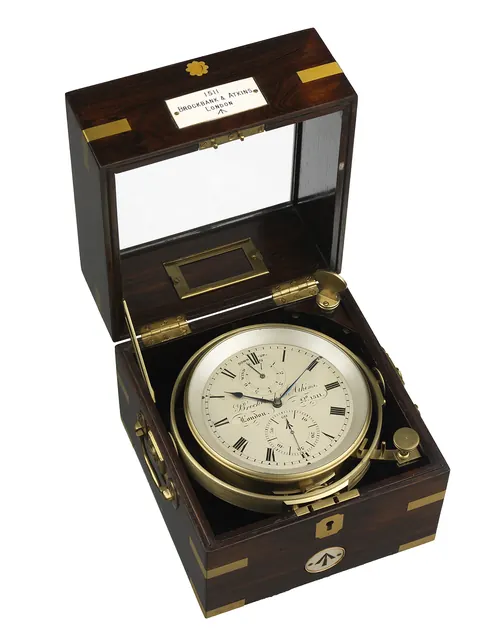
Instruments · c. 1858
Marine chronometer no. 1511 by Brockbank & Atkins
Royal Museums Greenwich
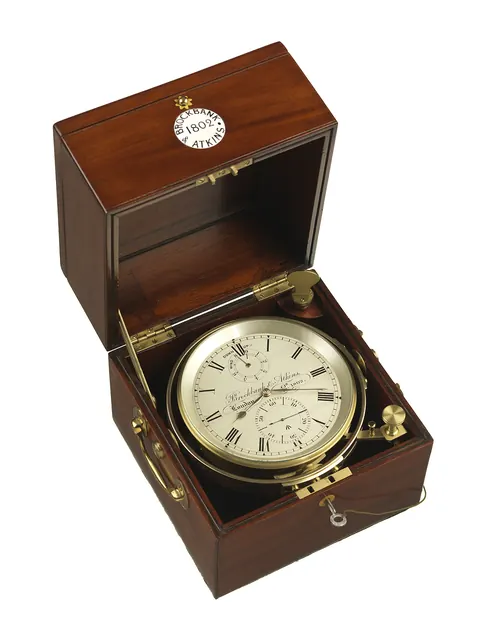
Instruments · c. 1867
Marine chronometer no. 1802 by Brockbank & Atkins
Royal Museums Greenwich
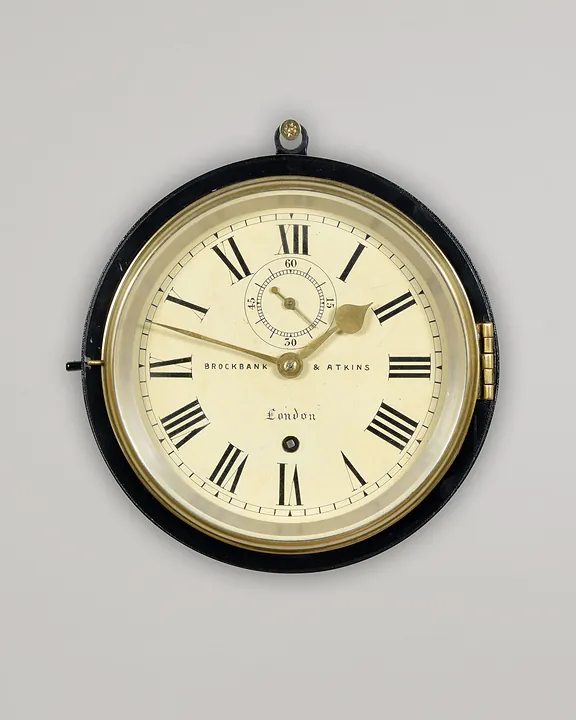
Clocks · c. 1860
Clock by Brockbank & Atkins, London, c. 1860
Howard Walwyn Fine Antique Clocks (dealer), London
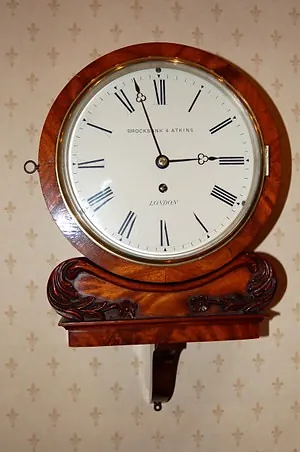
Clocks · c. 1835
Wall clock by Brockbank & Atkins, London, c. 1835
Pendulum of Mayfair (dealer), London
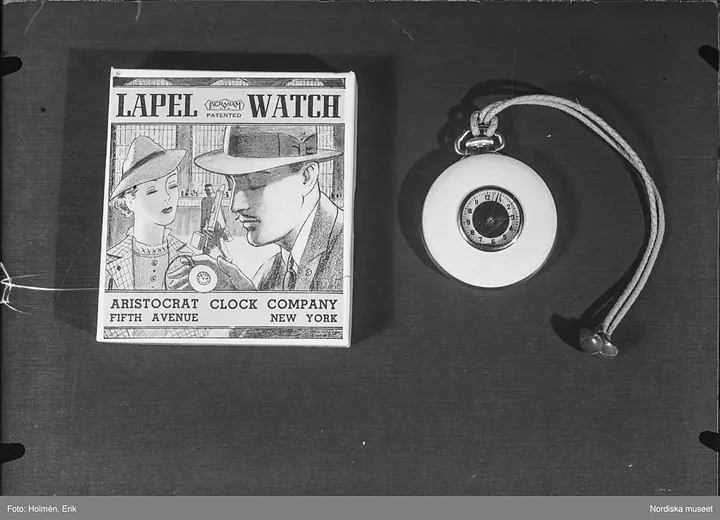
Pocket Watches · 1900–1999
Lapel watch by Erik Holmén, 1900–1999
Nordic Museum Foundation
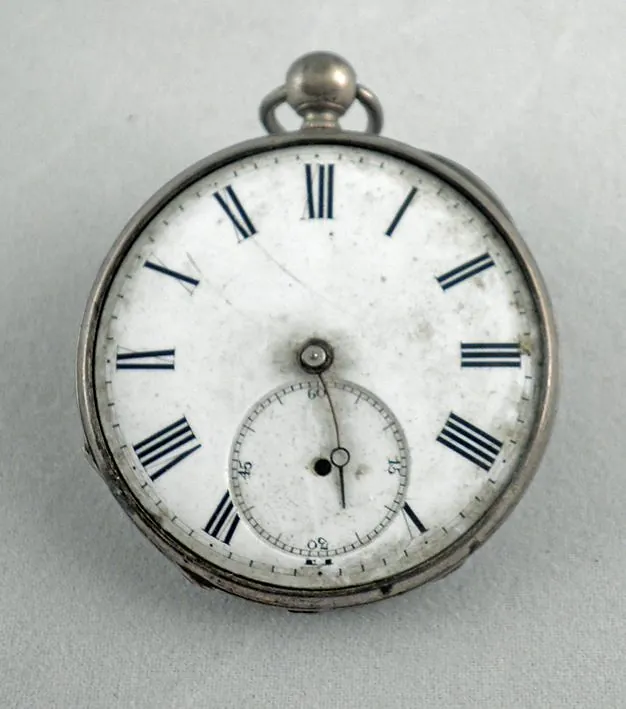
Pocket Watches · 1873–1930
Pocket watch, Lilla Malma socken, 1873–1930
Sörmland Museum
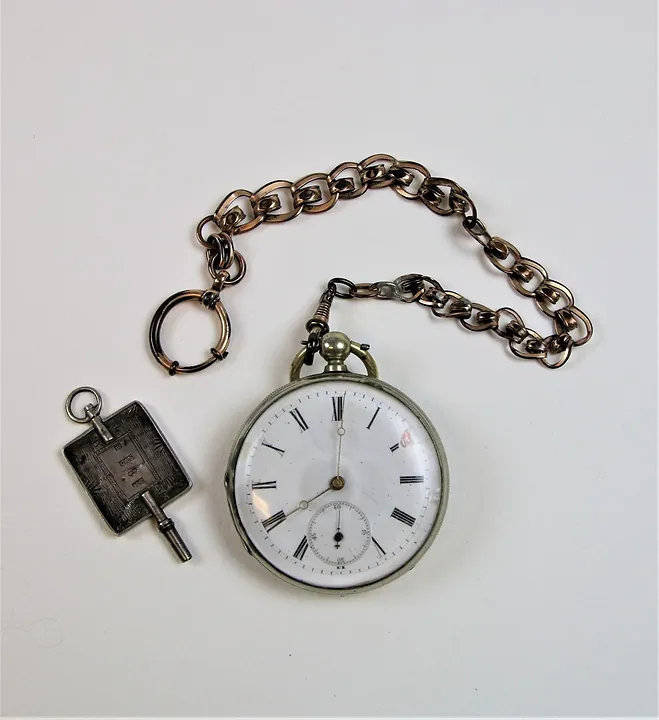
Pocket Watches · 1880–1920
Pocket watch, Sweden, 1880–1920
Sörmland Museum
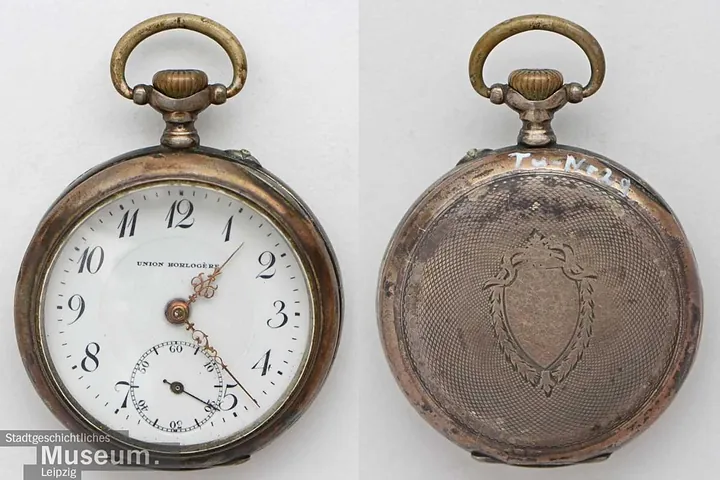
Pocket Watches · 1890–1910
Pocket watch by Union Horlogère, France, 1890–1910
Museum of City History Leipzig