
Wristwatches · Wristwatch
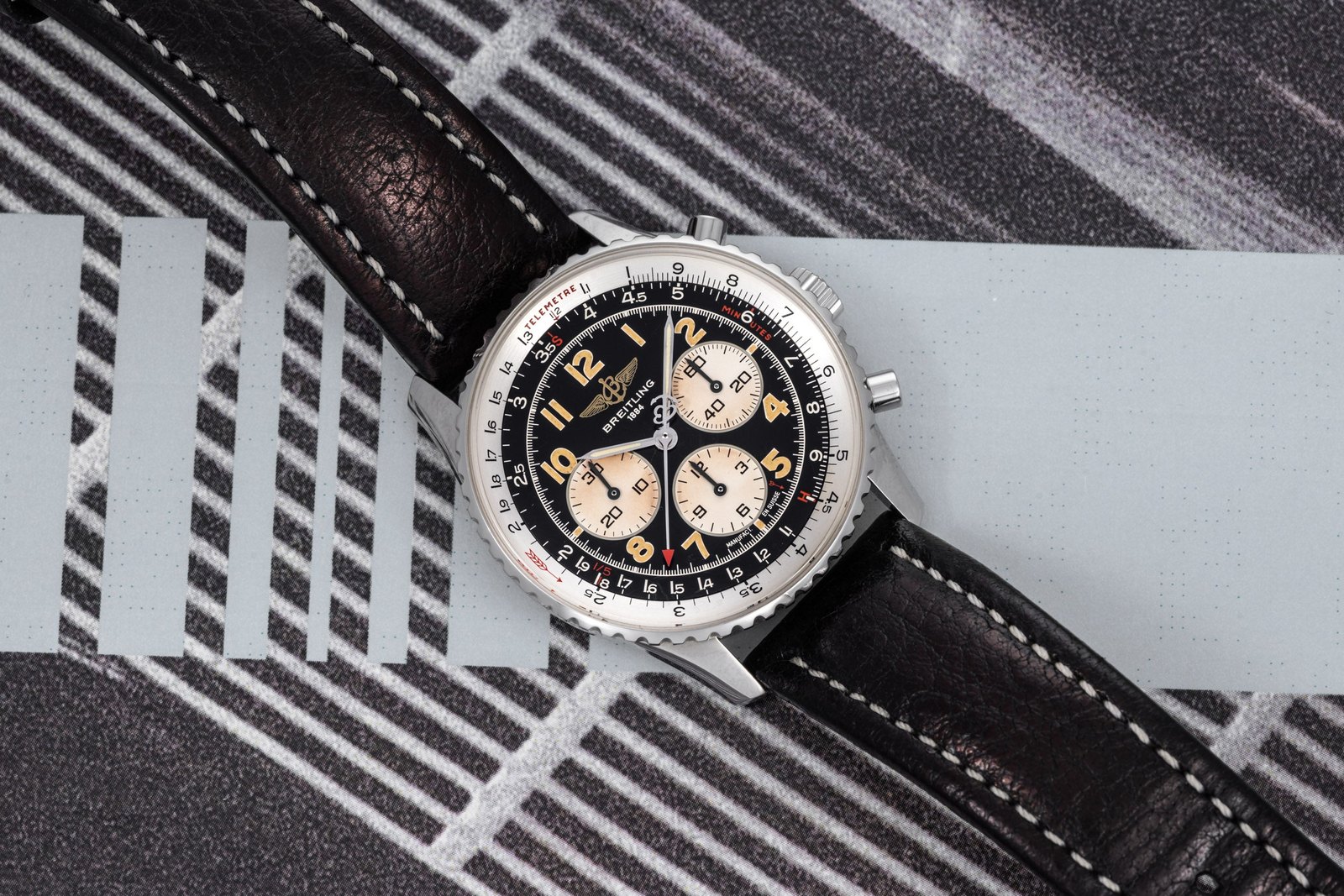
Breitling Navitimer 92, c. 1990s
- Maker / attribution
- Breitling (maker)
- Date
- c. 1990s
- Historical period
- Mechanical Renaissance (1990 – 2010)
- Country of origin
- Switzerland
- Object type
- Wristwatch
- Dimensions
- Case 38 mm
- Stock no.
- 40940026
- Credit line
- Dealer listing, Analog/Shift (40940026)
- Catalogue title (original)
- Breitling Navitimer 92 (English)
View the source record (dealer listing) ↗ (opens another website in a new tab)Suggest a correction
Record summary
Catalogued by Analog/Shift (dealer), New York (stock number 40940026), this is a wristwatch by Breitling, made in Switzerland, dated c. 1990s. The Atlas places it in the Mechanical Renaissance period (1990 – 2010) of its Wristwatches collection. Recorded dimensions: Case 38 mm. The record is illustrated with 6 photographs.
Assembled from the source record's structured fields. Dates and attributions are given as the source states them; where a field is missing the Atlas leaves it blank rather than estimating.
Catalogue description
Dealer description — Analog/Shift
How many watches can you spot from a mile away? How many watches have come to define their genre? Not too many. Not too many at all. Before the early 1950s, the concept of a civilian tool watch was a novel idea. Watch companies produced a few purpose-designed pieces for military use in the early 20th century, but most watches that were sold at retailers were designed with purely fashion in mind. In the 1950s and 1960s, the tool watch market exploded, fueled by the popularity of SCUBA diving and the growing interest in aviation. Breitling was one of the earliest manufactures to respond to the trend when they released the Navitimer in 1954. We’ve been referring to the Navitimer as a watch, but that’s not quite right — it’s really a wrist-worn navigation computer. The Navitimer’s most distinctive feature, the slide rule bezel, was used by pilots to calculate airspeed, ascent and descent rates, flight time, distance traveled, fuel consumption and even imperial to metric unit conversions. The Navitimer truly is a mechanical computer, and also happens to be one of the best damn looking watches out there. How cool is that? This particular Navitimer dates to circa the 1990s and features 38mm stainless steel case, a domed sapphire crystal, a signed crown, a bidirectional rotating telemetry and slide rule bezel, a deep gloss black tritium dial with silvered sub-regusters, and the automatic Breitling Caliber B30 automatic-winding chronograph movmenet beating away within. In fantastic professionally refinished condition throughout, this piece also comes with its complete kit! This is a tremendous opportunity to own a neo-vintage iteration of a classic reference. Don’t miss it!
Historical context
Mechanical Renaissance (1990 – 2010)
Mechanical watches return as cultural objects; independent watchmaking flourishes.
Mechanical watches returned as cultural and luxury objects. Complications, tourbillons and new materials proliferated; independent watchmakers such as George Daniels, F.P. Journe and Philippe Dufour revived artisanal watchmaking; collecting vintage watches became a major field.
Read the period in the timelineMore wristwatches from this periodEarlier: Quartz Revolution
Atlas type guide
Wristwatches
Bracelet watches were worn by women from the early nineteenth century — Breguet made one for Caroline Murat, Queen of Naples, in 1810–12 — but the wristwatch only became a man's instrument with military use and aviation in the early twentieth century. Between the World Wars it overtook the pocket watch; the 1920s and 1930s brought rectangular Art Deco cases, water-resistant cases and the first automatic winding systems.
After 1945 the wristwatch became a carrier of identity — dress watches, sports and dive watches, chronographs, calendars — produced by Swiss, American, Japanese, German, Soviet and Chinese industries. The quartz revolution after 1969 and the mechanical renaissance since the 1990s, including the rise of independent watchmakers, complete the story.
What to look for
- The reference number (between the lugs or inside the case back) and serial number, the starting point for dating.
- The calibre: its maker and number are often stamped under the dial or on the bridge.
- Originality of dial, hands and crown — refinished ('redial') dials are common.
- Case material marks: 18K/750, 14K/585, stainless steel, gold-filled, plated.
Dating clues
- Wire-lug cases: before c. 1925.
- Water-resistant screw-down cases: from 1926.
- Quartz movements: from 1969; sapphire crystals widespread after c. 1980.
General guidance written by the Atlas editors about this kind of object. It is not a statement about this particular piece; for that, rely on the source record above and on physical examination.
Related records
Clocks · c. 1990s
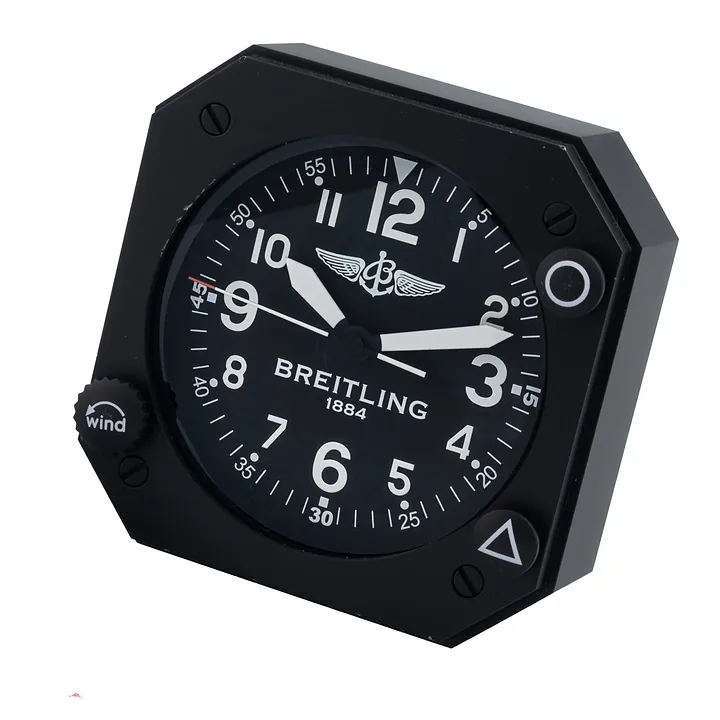
Breitling clock, c. 1990s (Antiquorum Lot 389-18)
Antiquorum auction archive, Geneva
Clocks · c. 1990s
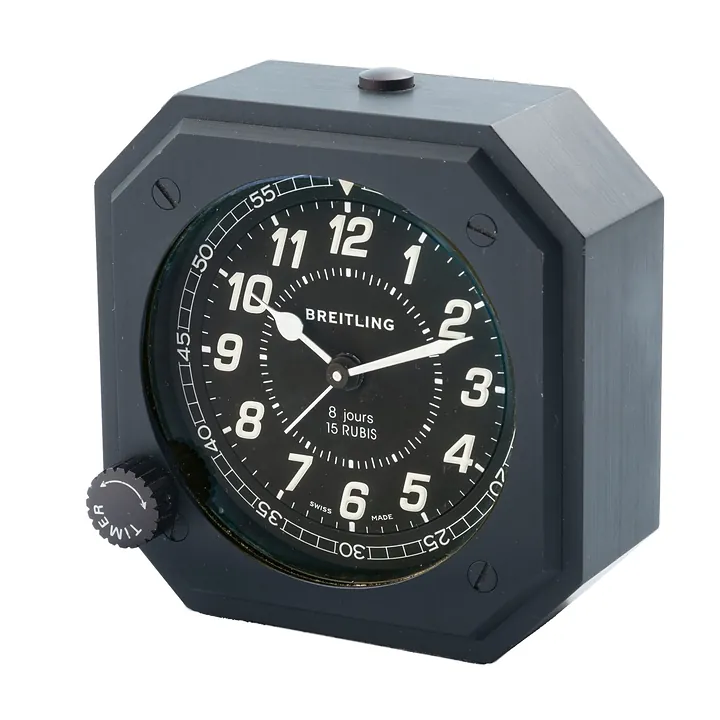
Breitling clock, c. 1990s (Antiquorum Lot 389-20)
Antiquorum auction archive, Geneva
Wristwatches · c. 1940s
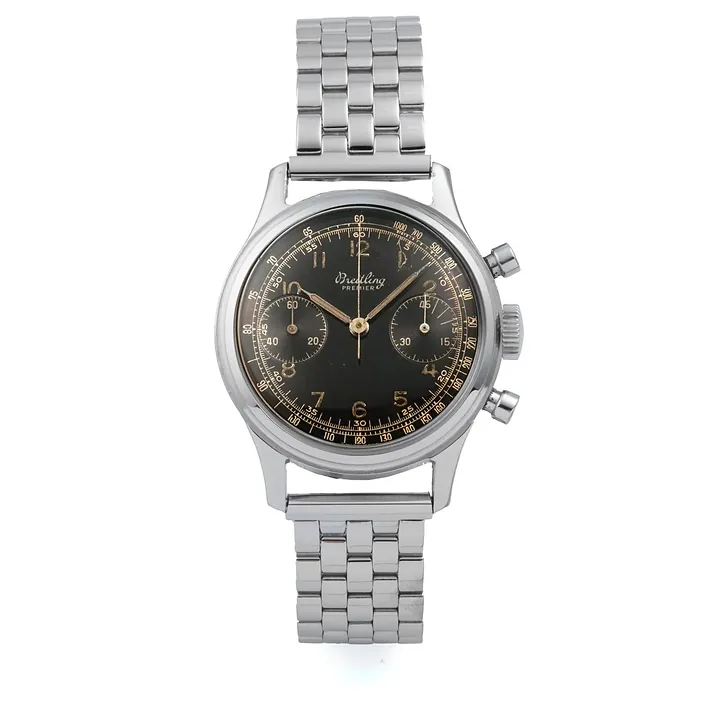
Breitling Premier, ref. 790, c. 1940s
Antiquorum auction archive, Geneva

Wristwatches · c. 1945
Breitling Premier, ref. 790, c. 1945
Antiquorum auction archive, Geneva

Wristwatches · 2008
Wristwatch by Breitling?, 2008
Museum Rotterdam

Wristwatches · c. 1990s
Audemars Piguet Bamboo, c. 1990s
Antiquorum auction archive, Geneva

Wristwatches · c. 1990
Audemars Piguet Huitieme Perpetual Calendar, ref. 25696PT, c. 1990
Antiquorum auction archive, Geneva

Wristwatches · c. 1990
Breitling Chronomat, ref. b13050.1, c. 1990
Antiquorum auction archive, Geneva