
Wristwatches · Wristwatch
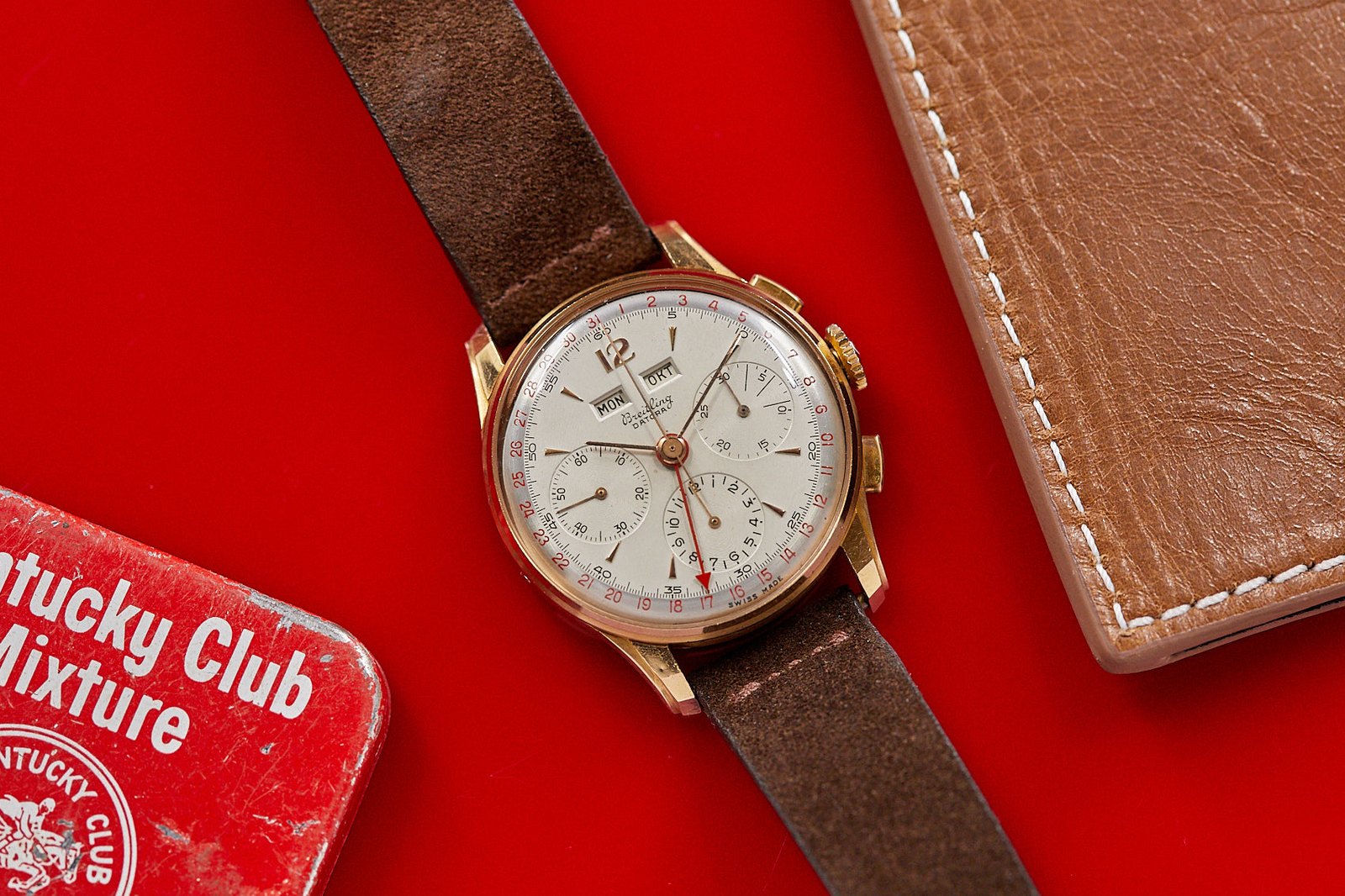
Breitling Datora Chronograph, 1940s
- Maker / attribution
- Breitling (maker)
- Date
- 1940s
- Historical period
- Golden Age of Mechanical Watchmaking (1900 – 1945)
- Country of origin
- Switzerland
- Object type
- Wristwatch
- Stock no.
- 18040099
- Credit line
- Dealer listing, Analog/Shift (18040099)
- Catalogue title (original)
- Breitling Datora Chronograph (English)
View the source record (dealer listing) ↗ (opens another website in a new tab)Suggest a correction
Record summary
Catalogued by Analog/Shift (dealer), New York (stock number 18040099), this is a wristwatch by Breitling, made in Switzerland, dated 1940s. The Atlas places it in the Golden Age of Mechanical Watchmaking period (1900 – 1945) of its Wristwatches collection. The record is illustrated with 6 photographs.
Assembled from the source record's structured fields. Dates and attributions are given as the source states them; where a field is missing the Atlas leaves it blank rather than estimating.
Catalogue description
Dealer description — Analog/Shift
Why We Love It We admit it, we have a love/hate relationship with Breitling. In our opinion, the modern iteration of the brand has struggled with design and overall identity for decades. John Travolta, anyone? But dismissing the brand entirely would be a mistake as well, as their archives are filled with both functional and beautiful designs from years past. Many of which feature quality movements from some of the best houses. And some don't. Sussing them out can be a challenge, and many a collector has been burned by a less-than Breitling timepiece in their collecting career. Of course, that's where we come in. The example that we have here, a Reference 785, dates from the 1940s, and is driven by a Valjoux 72c ('c' for calendar) drivetrain and represents what some believe was the pinnacle of Breitling's achievements in complex chronograph production. Outwardly, the watch is drenched with design; its cascading faceted bevels and crown vibrate with a timeless Art Deco styling. Its solid 18k gold case is crisp and its hallmarks clearly legible. On the dial, flashes of red in the tachymeter track and the arrow-shaped date indicator hand sing playfully against a the simple silver-tone backdrop with classic applied dart markers and a prominent applied Arabic 12:00 marker. As handsome as it is elegant, this expression of the oft-praised Datora design is arguably the most striking Breitling chrono you've ever laid eyes on. Just wait until you put it on your wrist! The Story While the Navitimer , with its storied connection to aviation and spaceflight, is perhaps the most notable of Breitling's chronographs, the brand's earlier examples are not to be ignored. With functional, legible dials and simple case designs, they're an exercise in understated elegance; indeed, one could almost say they're dress watches, particularly those with cases constructed from precious metals. Breitling have been producing technical timepieces more or less since the brand's inception in 1885. The brand developed the first ever monopusher chronograph wristwatch in 1915, and further innovated chronograph design by adding a second pusher at 4 o'clock in 1933. Breitling's perfection of the chronograph blossomed in the 1940s, when it developed chronograph calibres with further complications, such as rattrapante (split second), day and date, and moon-phase functions. The brand began applying the name "Datora" to chronographs with date windows in the 1940s, but the name is perhaps best associated with a triple calendar version (which was also produced by Heuer). While Breitling relied mainly on èbauche manufacturer Venus for its chronograph movements, the brand also employed the king of chronograph calibers, Valjoux 72, in some of its designs.
Historical context
Golden Age of Mechanical Watchmaking (1900 – 1945)
The wristwatch displaces the pocket watch; waterproof cases, self-winding and grand complications.
The wristwatch overtook the pocket watch. Military use in the First World War, aviation, water-resistant cases (1926), automatic winding (1923–31), rectangular Art Deco designs and early chronographs and calendars defined the period.
Read the period in the timelineMore wristwatches from this periodEarlier: Industrial Revolution
Atlas type guide
Chronographs and split-seconds watches
A chronograph is a watch with an additional seconds hand that can be started, stopped and returned to zero independently of the timekeeping. Louis Moinet built an early example in 1816 and Nicolas Rieussec a recording 'chronographe' in 1821; Adolphe Nicole's heart-shaped reset cam (patented 1862) made the modern return-to-zero possible. Split-seconds (rattrapante) chronographs add a second hand that can be stopped for intermediate times; flyback chronographs restart instantly.
Chronographs were essential tools for doctors (pulsometer scales), artillery (telemeter), engineers and sport. In wristwatches, Valjoux, Venus, Lemania and later the automatic chronographs of 1969 (Zenith El Primero, the Chronomatic Calibre 11 group and Seiko 6139) are milestones.
What to look for
- Push-pieces on the case band or a single button in the crown (monopusher).
- Subsidiary registers for minutes and hours; tachymeter, telemeter or pulsometer scales.
- Column wheel versus cam control visible in the movement.
- Calibre markings of specialist makers (Valjoux, Lemania, Venus, Landeron).
Dating clues
- Pocket chronographs with heart cam reset: after 1862.
- Wrist chronographs: from c. 1910; two-button designs from the 1930s.
- Automatic chronographs: from 1969.
General guidance written by the Atlas editors about this kind of object. It is not a statement about this particular piece; for that, rely on the source record above and on physical examination.
Read next:Flyback chronographChronograph
Related records
Clocks · c. 1990s
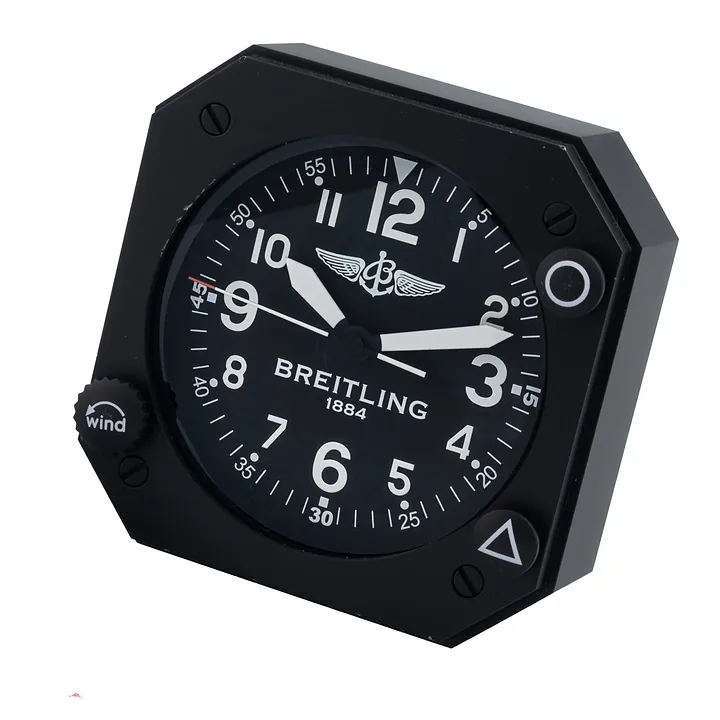
Breitling clock, c. 1990s (Antiquorum Lot 389-18)
Antiquorum auction archive, Geneva
Clocks · c. 1990s
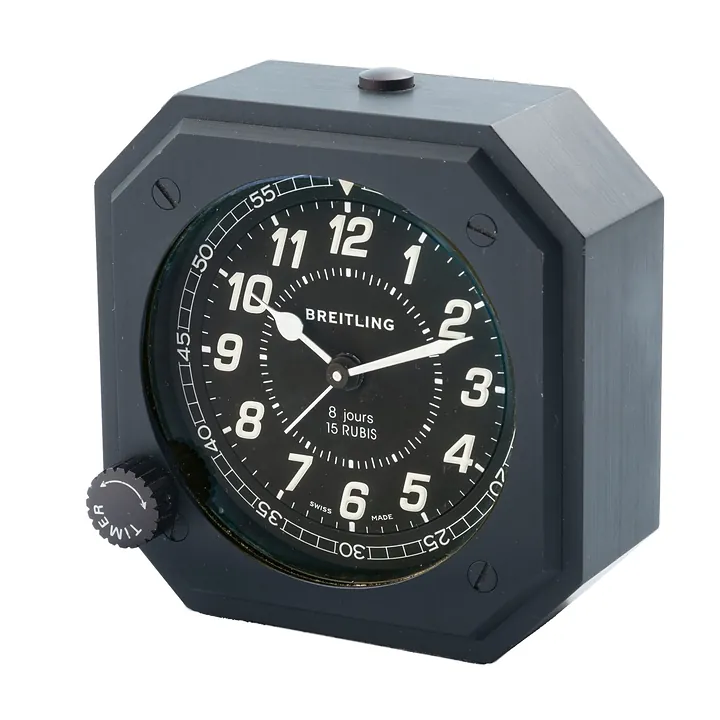
Breitling clock, c. 1990s (Antiquorum Lot 389-20)
Antiquorum auction archive, Geneva
Wristwatches · c. 1940s
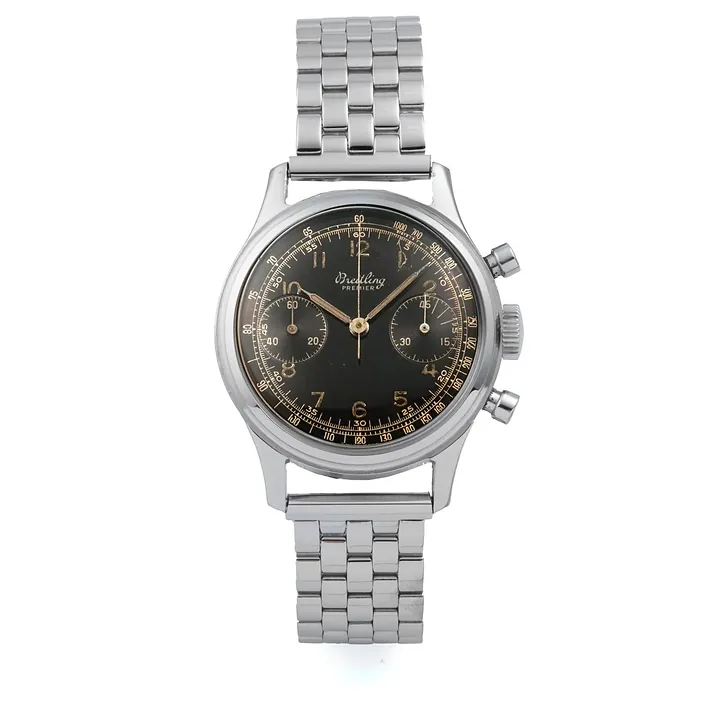
Breitling Premier, ref. 790, c. 1940s
Antiquorum auction archive, Geneva

Wristwatches · c. 1945
Breitling Premier, ref. 790, c. 1945
Antiquorum auction archive, Geneva

Wristwatches · 1931
Rolex 'Oyster Perpetual' rotor self-winding wrist-watch, lever escapement, in steel case with glass in back, Montres Rolex SA, Geneva, Switzerland, 1931
Science Museum Group, London

Wristwatches · 1900–1999
Wristwatch by Certina, Switzerland, 1900–1999
Nordic Museum Foundation
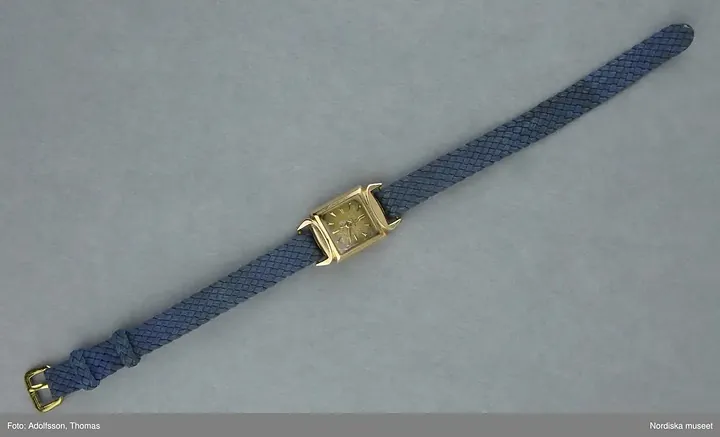
Wristwatches · 1900–1999
Wristwatch by Omega, Västerås, 1900–1999
Nordic Museum Foundation
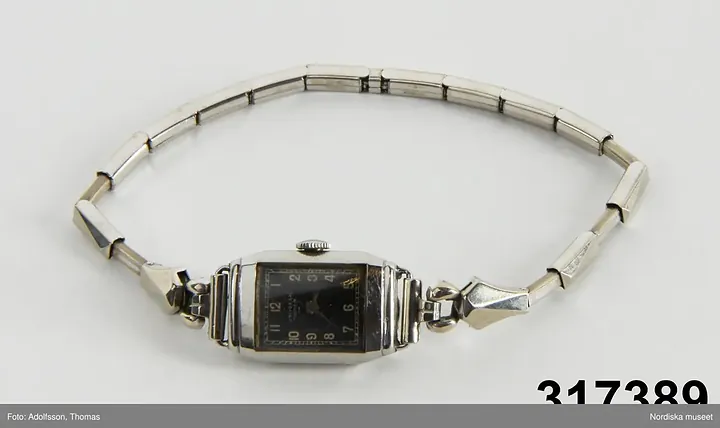
Wristwatches · 1900–1999
Wristwatch by Universal, Switzerland, 1900–1999
Nordic Museum Foundation