
Wristwatches · Wristwatch
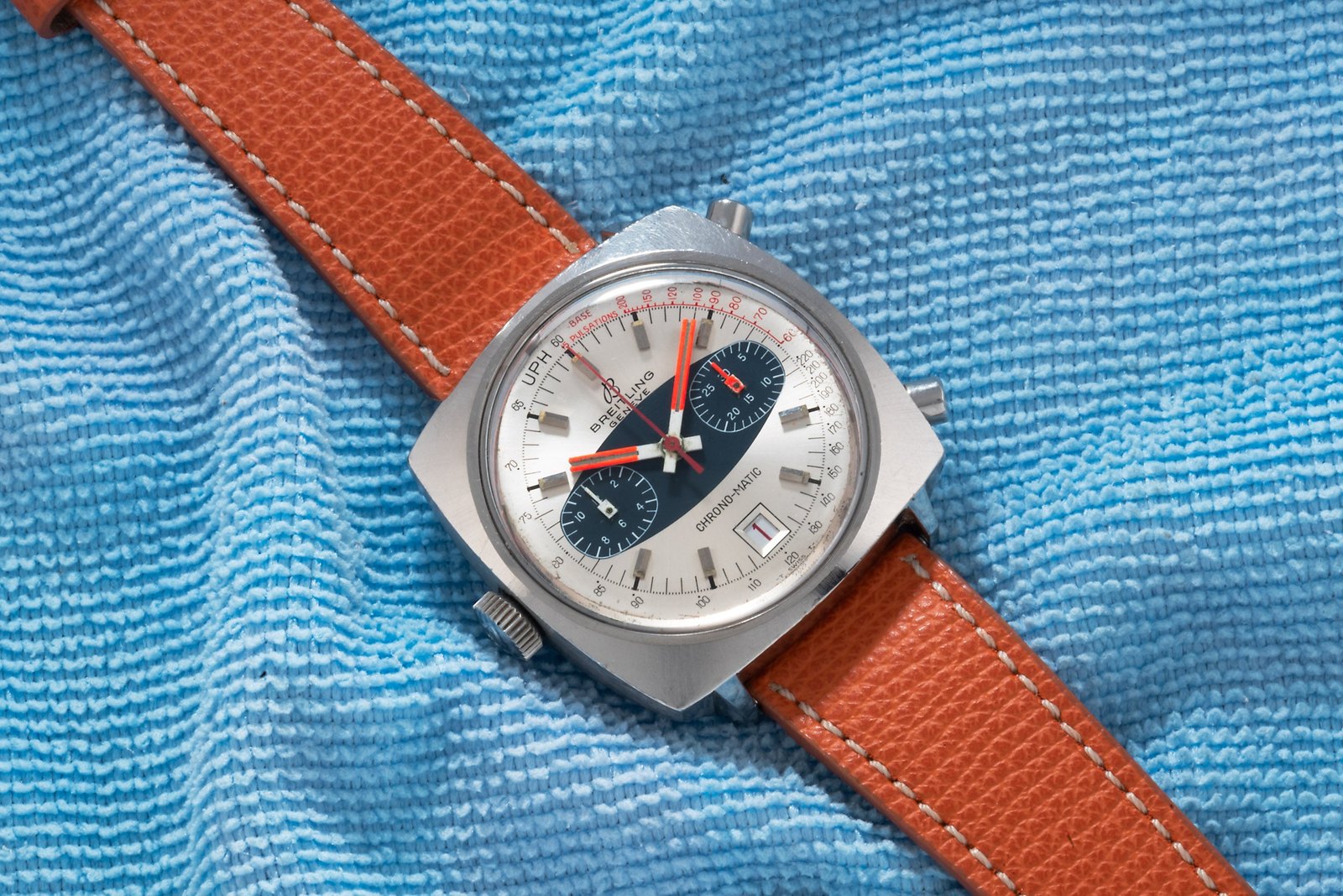
Breitling Chronomatic 'Surfboard' Chronograph
- Maker / attribution
- Breitling (maker)
- Date
- c. 1969
- Historical period
- Quartz Revolution (1969 – 1990)
- Country of origin
- Switzerland
- Object type
- Wristwatch
- Dimensions
- Case 38 mm
- Stock no.
- 40940074
- Credit line
- Dealer listing, Analog/Shift (40940074)
- Catalogue title (original)
- Breitling Chronomatic 'Surfboard' Chronograph (English)
View the source record (dealer listing) ↗ (opens another website in a new tab)Suggest a correction
Record summary
Catalogued by Analog/Shift (dealer), New York (stock number 40940074), this is a wristwatch by Breitling, made in Switzerland, dated c. 1969. The Atlas places it in the Quartz Revolution period (1969 – 1990) of its Wristwatches collection. Recorded dimensions: Case 38 mm. The record is illustrated with 6 photographs.
Assembled from the source record's structured fields. Dates and attributions are given as the source states them; where a field is missing the Atlas leaves it blank rather than estimating.
Catalogue description
Dealer description — Analog/Shift
There is perhaps no more versatile complication than the chronograph. From race cars to rocket ships, boats to battlefields, you are likely to find a chronograph being employed to measure a plethora of tasks and times. From the Greek khrónos (“time) and gráphō (“to write”), a chronograph is a watch that has the ability to record time, generally via the addition of small sub-counters that register minutes and hours. When it comes to collecting vintage chronographs, Breitling can be somewhat polarizing. Best known for their Navitimer line of aviation watches, some collectors can find their dials to be too hectic and difficult to read for daily wear. As a result, we feel that Breitling’s chronographs get swept under the table all together. We'd like to change that, and this Chronomatic 'Surfboard' model, is one of the best ways we know how! Dating to circa 1969, this piece features a 38mm stainless steel cushion case with an acrylic crystal, a signed crown, barrel pushers, and a polished bezel. It contains a matte black exotic ‘racing’ dial with applied indices, and a dual-register chronograph layout with a date at 6:00, and a matching handset with a bright orange seconds hand. If this isn’t one of the coolest dials you’ve ever seen, full stop, then we’ll eat our hat! Powered by the infamous Calibre 11 automatic winding movement, it comes paired to one of our Analog:Shift Pitt orange Alpine leather straps with a steel pin buckle. Whether you’re a diehard automotive fanatic or you’re simply on the hunt for an unconventional chronograph, this Breitling is a fantastic piece to snag.
Historical context
Quartz Revolution (1969 – 1990)
Seiko's Astron begins mass quartz timekeeping; traditional industries contract sharply.
Quartz and digital watches transformed the market after 1969. Swiss employment collapsed, Japanese and Hong Kong production soared, and the Swatch (1983) helped the Swiss industry recover; mechanical watches survived as luxury goods.
Read the period in the timelineMore wristwatches from this periodEarlier: Modern Mechanical Horology
Atlas type guide
Chronographs and split-seconds watches
A chronograph is a watch with an additional seconds hand that can be started, stopped and returned to zero independently of the timekeeping. Louis Moinet built an early example in 1816 and Nicolas Rieussec a recording 'chronographe' in 1821; Adolphe Nicole's heart-shaped reset cam (patented 1862) made the modern return-to-zero possible. Split-seconds (rattrapante) chronographs add a second hand that can be stopped for intermediate times; flyback chronographs restart instantly.
Chronographs were essential tools for doctors (pulsometer scales), artillery (telemeter), engineers and sport. In wristwatches, Valjoux, Venus, Lemania and later the automatic chronographs of 1969 (Zenith El Primero, the Chronomatic Calibre 11 group and Seiko 6139) are milestones.
What to look for
- Push-pieces on the case band or a single button in the crown (monopusher).
- Subsidiary registers for minutes and hours; tachymeter, telemeter or pulsometer scales.
- Column wheel versus cam control visible in the movement.
- Calibre markings of specialist makers (Valjoux, Lemania, Venus, Landeron).
Dating clues
- Pocket chronographs with heart cam reset: after 1862.
- Wrist chronographs: from c. 1910; two-button designs from the 1930s.
- Automatic chronographs: from 1969.
General guidance written by the Atlas editors about this kind of object. It is not a statement about this particular piece; for that, rely on the source record above and on physical examination.
Read next:Flyback chronographChronograph
Related records
Clocks · c. 1990s
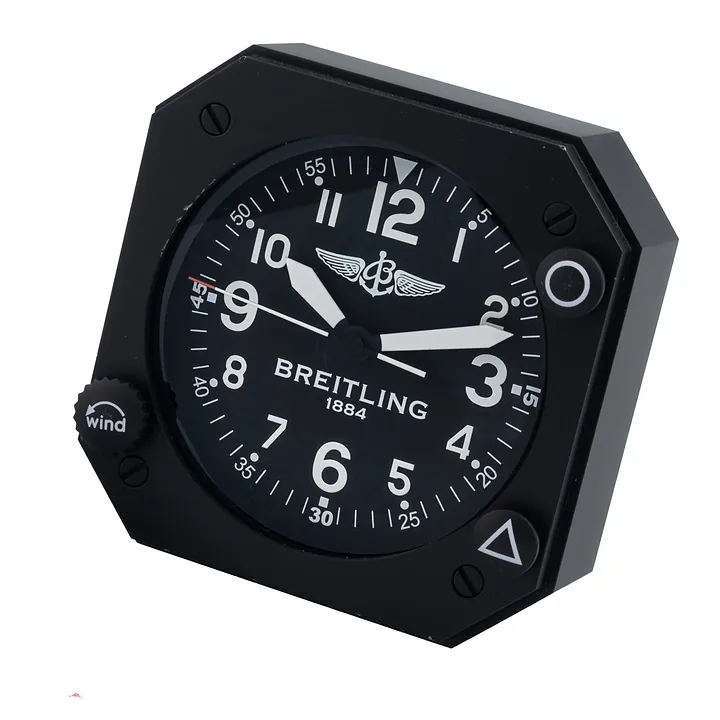
Breitling clock, c. 1990s (Antiquorum Lot 389-18)
Antiquorum auction archive, Geneva
Clocks · c. 1990s
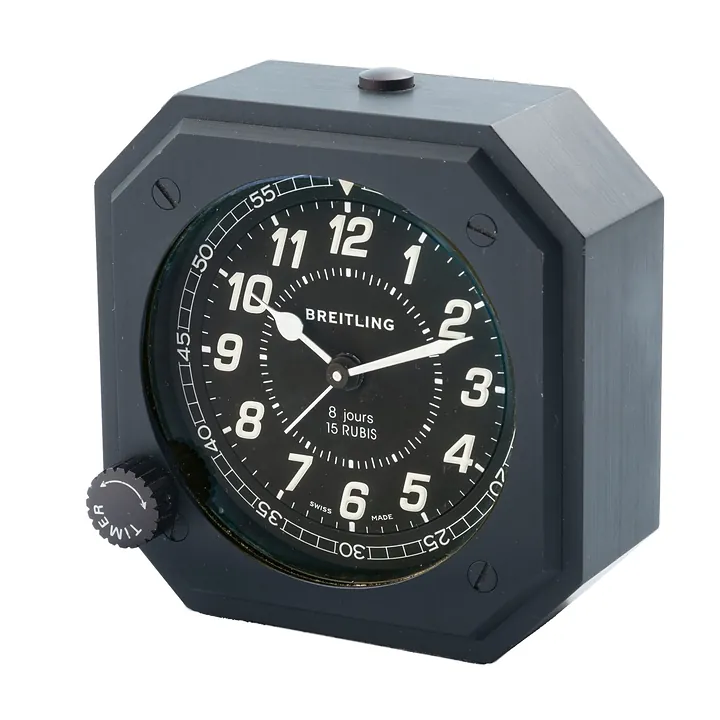
Breitling clock, c. 1990s (Antiquorum Lot 389-20)
Antiquorum auction archive, Geneva
Wristwatches · c. 1940s
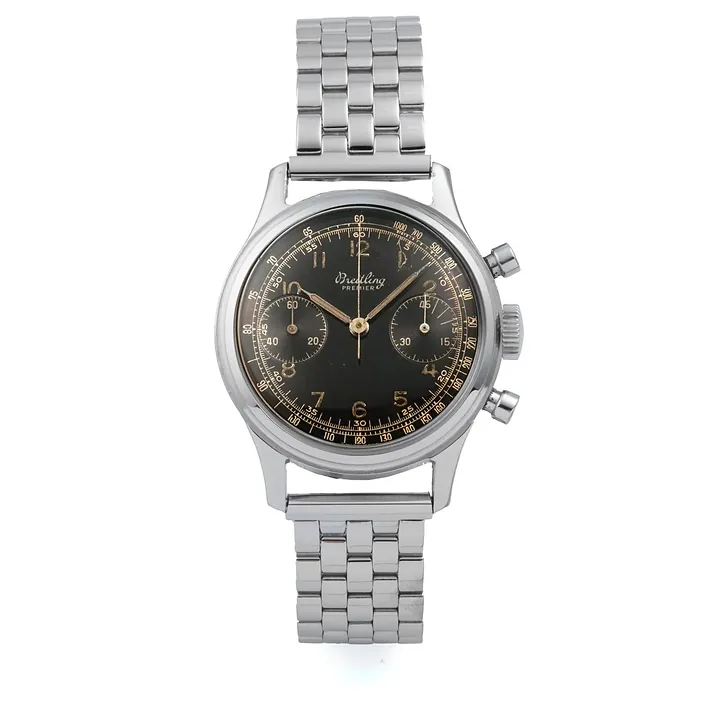
Breitling Premier, ref. 790, c. 1940s
Antiquorum auction archive, Geneva

Wristwatches · c. 1945
Breitling Premier, ref. 790, c. 1945
Antiquorum auction archive, Geneva

Wristwatches · 1970
Wristwatch by Heno, Switzerland, 1970
Museum Rotterdam

Wristwatches · 1960–1986
'Tri-Compax' calendar chronograph wristwatch in gold case, by Universal, Geneva, Switzerland, 1960–1986.
Science Museum Group, London

Wristwatches · 1969–1970
Beta 21 Quartz wristwatch movement, made in Switzerland, 1970.
Science Museum Group, London

Wristwatches · c. 1969
Omega Speedmaster Moonwatch, ref. 145022-69st, c. 1969
Antiquorum auction archive, Geneva