
Pocket Watches · Dress watch
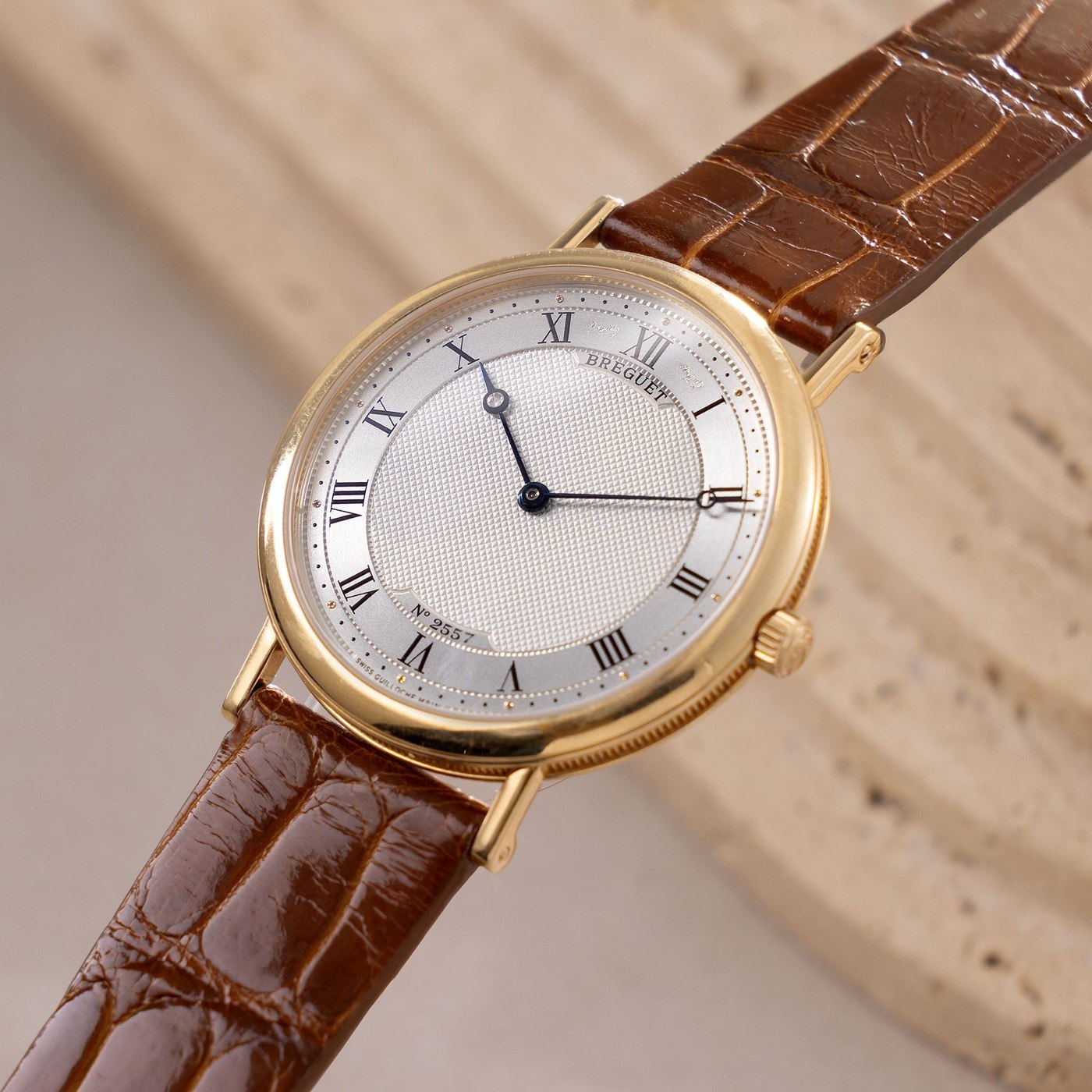
Breguet Classique Reference 5130
- Maker / attribution
- Breguet (source attribution)
- Date
- c. 2000 (serial 2557)
- Historical period
- Mechanical Renaissance (1990 – 2010)
- Country of origin
- Switzerland
- Object type
- Dress watch
- Materials / technique
- 18k yellow gold
- Dimensions
- 35 mm
- Holding institution
- Bulang & Sons
- Accession / object no.
- breguet-classique-reference-5130-f50d44ebf9
- Credit line
- Bulang & Sons
- Catalogue title (original)
- Breguet Ultra thin Classique Dress watch Guilloche dial ref 5130 in 18 k yellow gold Automatique (English)
View the source record ↗ (opens another website in a new tab)Suggest a correction
Record summary
Held and catalogued by Bulang & Sons (object number breguet-classique-reference-5130-f50d44ebf9), this is a dress watch attributed to Breguet, made in Switzerland, dated c. 2000 (serial 2557). The Atlas places it in the Mechanical Renaissance period (1990 – 2010) of its Pocket Watches collection. Materials and techniques recorded by the source: 18k yellow gold. Recorded dimensions: 35 mm. The record is illustrated with 1 photograph.
Assembled from the source record's structured fields. Dates and attributions are given as the source states them; where a field is missing the Atlas leaves it blank rather than estimating.
Catalogue description
Original object description
Originating in Switzerland, this Breguet Classique reference 5130 is an 18k yellow gold automatic dress watch spanning 35 mm in diameter. The exterior construction incorporates a solid case back alongside slim, straight lugs and the manufacturer's characteristic coin-edge fluting encircling the case middle. Its dial, executed in silvered gold, exhibits a central field decorated with hand-engraved guilloché, framed by a brushed hour track bearing black Roman numerals. Blued hands featuring hollow moon-shaped tips indicate the hours and minutes. A signature is positioned beneath 12 o'clock, whereas the dial's lower edge is inscribed with serial number 2557, suggesting a production timeframe circa 2000. Powering this time-only piece is the automatic Breguet calibre 502, an engine developed from the Frédéric Piguet calibre 71, which the vendor notes was fully serviced by their watchmaker. The timepiece is mounted on a leather strap secured by an authentic, signed pin buckle crafted in matching 18k yellow gold.
Inscriptions & marks
2557
Historical context
Mechanical Renaissance (1990 – 2010)
Mechanical watches return as cultural objects; independent watchmaking flourishes.
Collectors' interest in antique pocket watches grew, and a few houses made new pocket watches with grand complications as technical showpieces.
Read the period in the timelineMore pocket watches from this periodEarlier: Quartz Revolution
Atlas type guide
Pocket watches
The pocket watch was the dominant personal timekeeper from the late seventeenth century until the First World War. Its development tracks the history of the escapement: verge watches with fusees until the late eighteenth century; Thomas Mudge's lever escapement (c. 1755) and the cylinder escapement popularised by George Graham and later by Swiss makers; and the Swiss and English lever watches of the nineteenth century. Lépine's bar-bridge calibre and keyless winding made watches thinner and easier to use.
Industrialisation transformed the trade: American factories such as Waltham (from 1850) and Elgin produced interchangeable parts by machine, and Swiss makers responded with their own mechanisation after the 1876 Philadelphia Exhibition. By 1900 a reliable watch was affordable to millions; the finest makers continued to produce complications and precision watches.
What to look for
- The escapement: verge (crown wheel), cylinder, duplex, English or Swiss lever.
- Key winding (a square arbor in dial or back) or keyless crown winding.
- Signatures and serial numbers on the movement, dial and inside case back.
- Hallmarks, case maker's marks and gold or silver standards stamped in the case.
- Dial material: enamel, silver, gold, later printed metal.
Dating clues
- Verge watches dominate before c. 1800; cylinder watches c. 1770–1900; lever watches after c. 1820.
- Keyless winding: increasingly common after c. 1860.
- Manufacturer serial number lists exist for Waltham, Elgin, Longines, Omega, Patek Philippe and others.
General guidance written by the Atlas editors about this kind of object. It is not a statement about this particular piece; for that, rely on the source record above and on physical examination.
Read next:Verge escapementDetached lever escapementFuseeIdentification Centre
Related records
Pocket Watches · 1700–1799
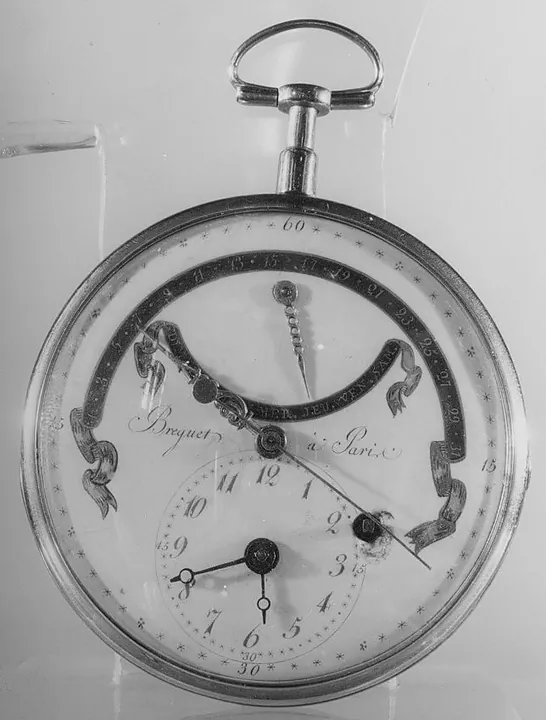
Pocket watch by Breguet, Belgium, 1700–1799
Royal Institute for Cultural Heritage
Pocket Watches · 1700–1799
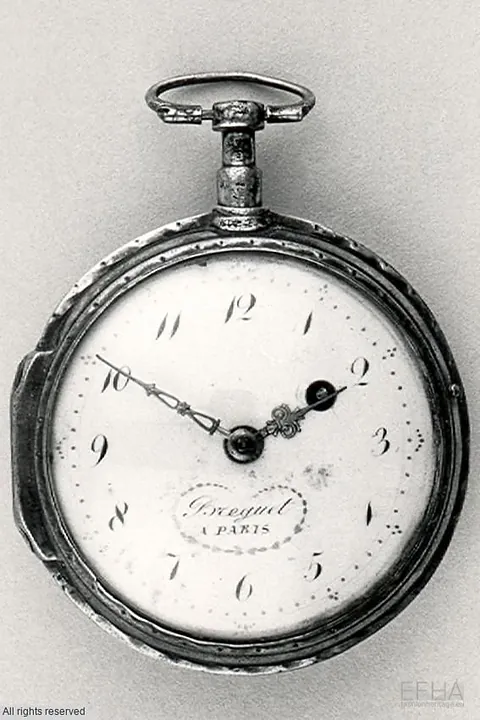
Pocket watch by Breguet, France, 1700–1799
Fashion Museum of Antwerp
Pocket Watches · c. 1790
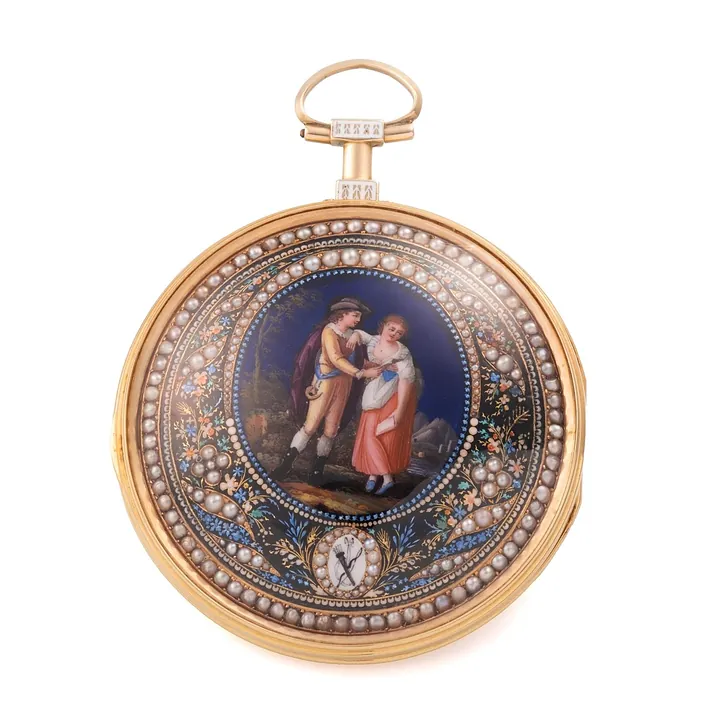
Breguet Love Letter, c. 1790
Antiquorum auction archive, Geneva
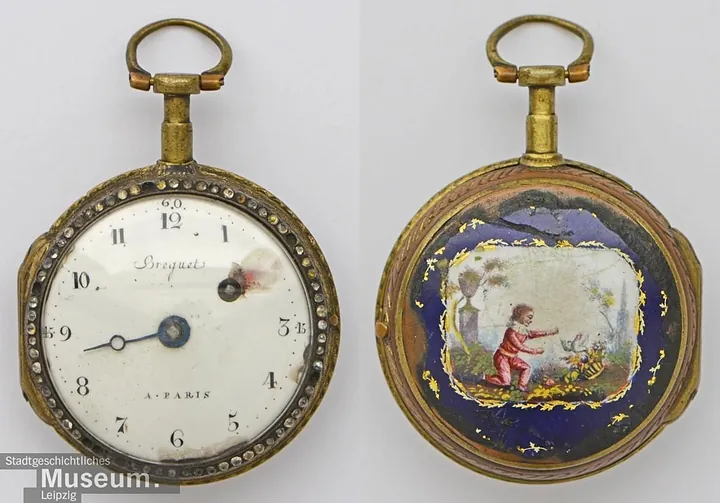
Pocket Watches · 1790
Pocket watch possibly by Breguet, France, 1790
Museum of City History Leipzig
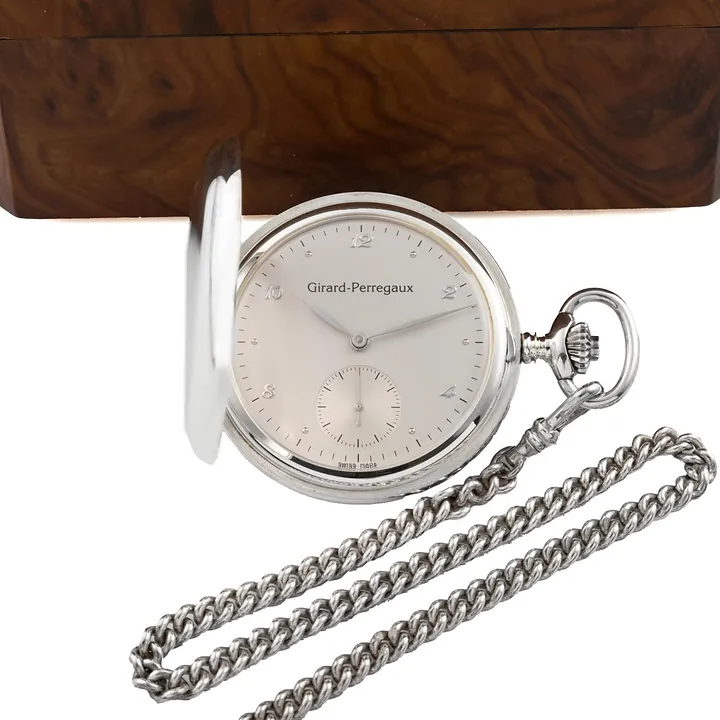
Pocket Watches · c. 1998
Girard Perregaux pocket watch, c. 1998
Antiquorum auction archive, Geneva
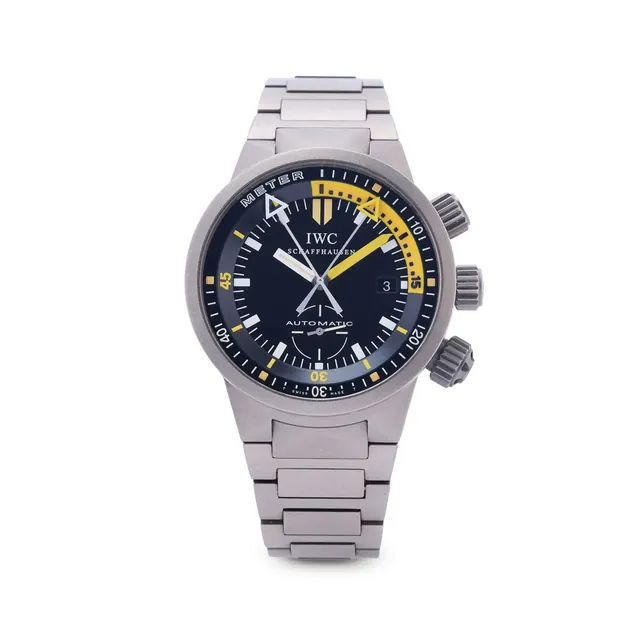
Pocket Watches · c. 2000s
IWC pocket watch, ref. 3527, Deep One Diver's Watch, circa 2000s
Antiquorum auction archive, Geneva
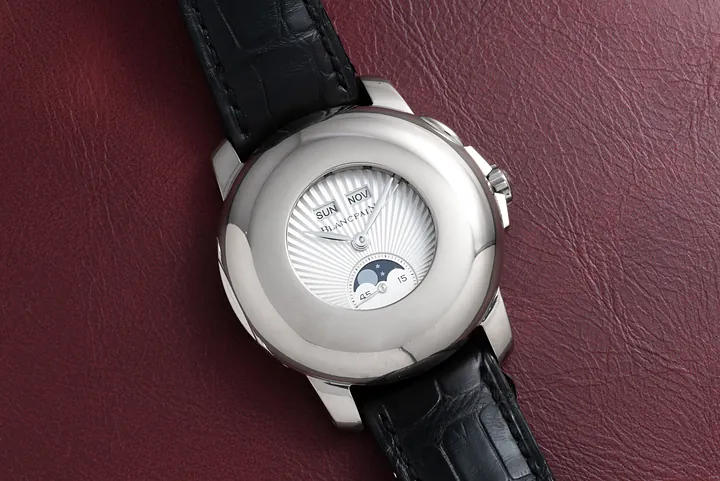
Pocket Watches · c. 1990
Blancpain Half Hunter Complete Calendar Moonphase LE, c. 1990
Analog/Shift (dealer), New York
Pocket Watches · 2007
Rolex Pro Hunter Seadweller Reference 16600 Black DLC Coated, 2007
Bulang & Sons (dealer), Copenhagen