
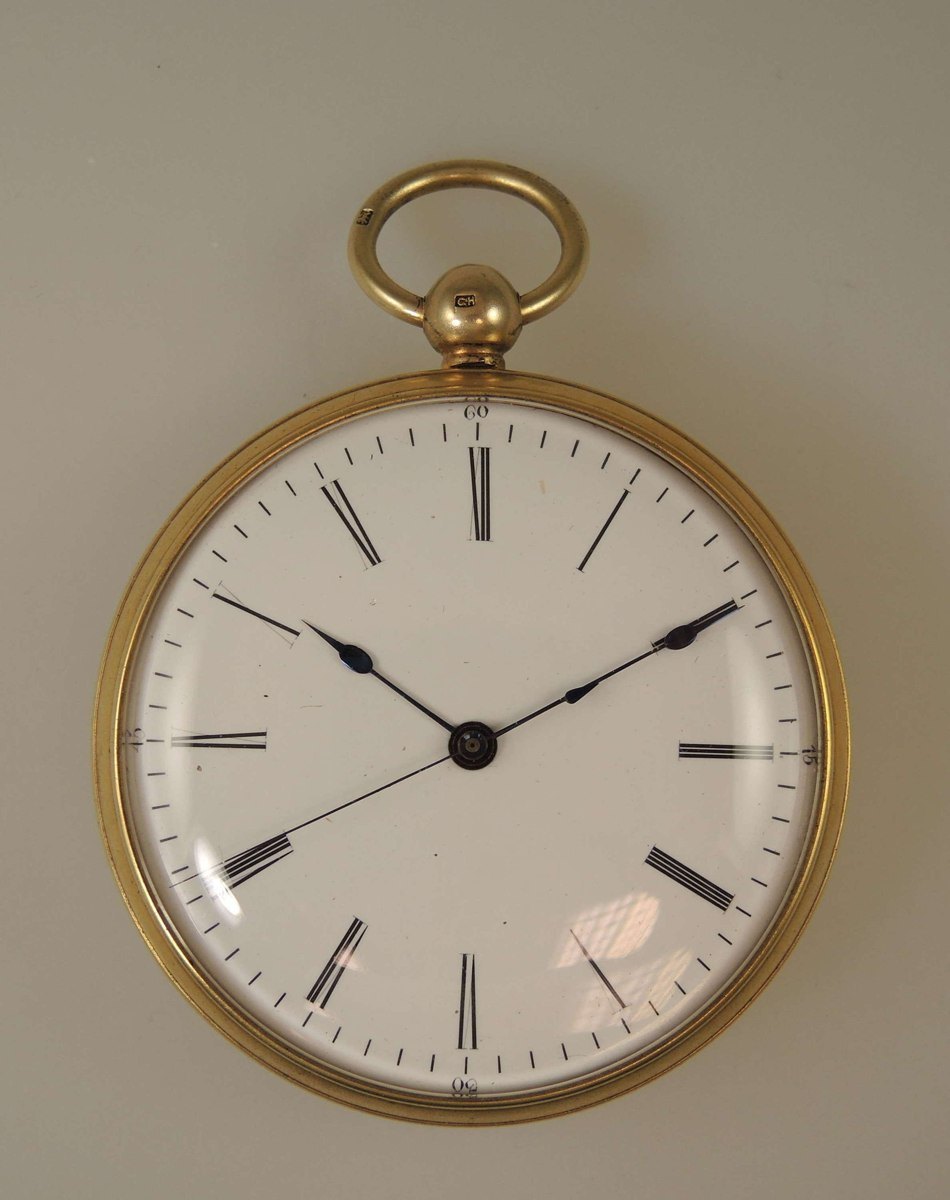
Pocket Watches · Duplex pocket watch
Bovet & Fleurier Chinese Market Duplex pocket watch
- Maker / attribution
- Bovet & Fleurier (source attribution)
- Date
- c. 1850
- Historical period
- Industrial Revolution (1850 – 1900)
- Country of origin
- Switzerland
- Object type
- Duplex pocket watch
- Dimensions
- 60mm wide x 20mm deep
- Holding institution
- Atlam Watches via Antiques Boutique
- Accession / object no.
- 4.300 (AB-130295)
- Credit line
- Atlam Watches via Antiques Boutique
- Catalogue title (original)
- Silver gilt Chinese Market Duplex pocket watch. Bovet & Fleurier c1850 in Antique Mens Watches (English)
View the source record ↗ (opens another website in a new tab)Suggest a correction
Record summary
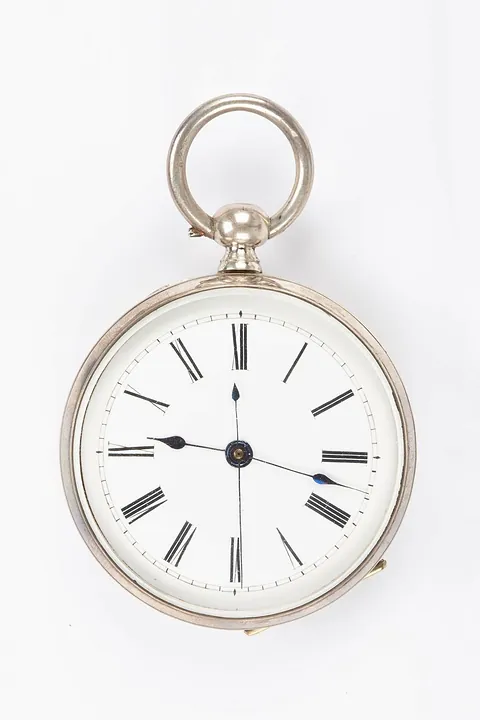
Held and catalogued by Atlam Watches via Antiques Boutique (object number 4.300 (AB-130295)), this is a duplex pocket watch attributed to Bovet & Fleurier, made in Switzerland, dated c. 1850. The Atlas places it in the Industrial Revolution period (1850 – 1900) of its Pocket Watches collection. Recorded dimensions: 60mm wide x 20mm deep. The record is illustrated with 1 photograph.
Assembled from the source record's structured fields. Dates and attributions are given as the source states them; where a field is missing the Atlas leaves it blank rather than estimating.
Catalogue description
Original object description
This key-wound and key-set pocket watch is recorded by dealers as having a movement signed 'Bovet & Fleurier' from circa 1850, fitted inside a silver-gilt case stamped with London hallmarks for 1936. Sized at 60 mm in diameter and 20 mm in depth, the large housing comprises a smooth front bezel, a hinged outer rear cover, and a glazed inner bezel that has lost its protective crystal; punch marks are visible on both the bow and the pendant. The white enamel dial sits beneath mineral glass, presenting Roman hour numerals, blued steel hands with spoon terminals, an outer minute ring marked with Arabic numerals at fifteen-minute intervals, and a sweep center seconds hand. Retaining an accompanying winding key, the mechanism features brushed gilt plates detailed with enamel and carved polished scrolls, bat-wing steel balance weights finished in blue, an open-standing mainspring barrel, and a crab-tooth duplex escapement. Because traditional Chinese-market watches lack hallmarks and 1936 postdates the movement significantly, the vendor reasoned that the case was either fabricated later specifically for this movement or officially stamped in London long after its initial creation.
Historical context
Industrial Revolution (1850 – 1900)
American interchangeable-parts manufacture; railroad time standards; Swiss and German factory systems.
Machine production with interchangeable parts, pioneered by Waltham (1850s) and adopted by Elgin, Longines, Omega and others, made reliable lever watches widely affordable. Keyless winding became standard, railroad watch standards were introduced (1890s), and Swiss and American industries competed globally.
Read the period in the timelineMore pocket watches from this periodEarlier: Precision & Scientific Horology
Atlas type guide
Watches for the Chinese and Ottoman markets
From the late eighteenth century English and Swiss makers produced watches specifically for export to China and the Ottoman Empire. For China, Fleurier houses such as Bovet, Juvet and Vrard made matching pairs of watches with richly engraved and decorated movements, often with the duplex escapement whose centre seconds hand jumps in full seconds. For Ottoman buyers, London makers such as George Prior and Markwick Markham supplied verge watches with Turkish numerals in triple or quadruple cases of tortoiseshell and silver.
These watches reflect global trade networks and the tastes of distant markets, and are important evidence for cross-cultural exchange in horology.
What to look for
- Engraved, fully decorated movements visible under a glass back.
- Duplex escapement with a jumping centre seconds hand.
- Chinese characters on the movement (e.g. the maker's name in transliteration).
- Turkish (Ottoman) numerals on the dial and multiple protective outer cases.
Dating clues
- Chinese-market Fleurier watches: c. 1820–1900.
- English Ottoman-market watches: c. 1770–1850.
General guidance written by the Atlas editors about this kind of object. It is not a statement about this particular piece; for that, rely on the source record above and on physical examination.
Read next:Verge escapement
Related records
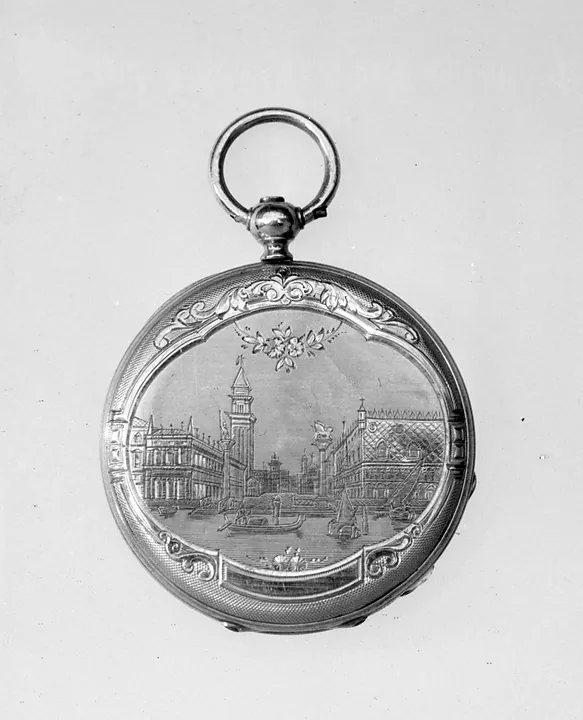
Pocket Watches · c. 1850
Watch by Eugène Bornand, Switzerland, c. 1850
The Metropolitan Museum of Art, New York
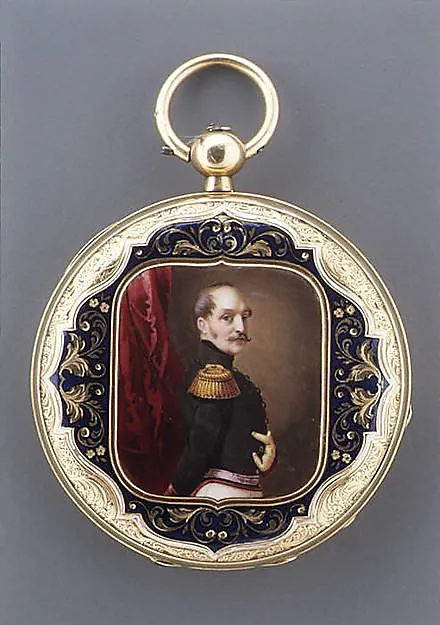
Pocket Watches · probably c. 1850–55
Watch by Firm of Perret & Cie, Switzerland, probably c. 1850–55
The Metropolitan Museum of Art, New York
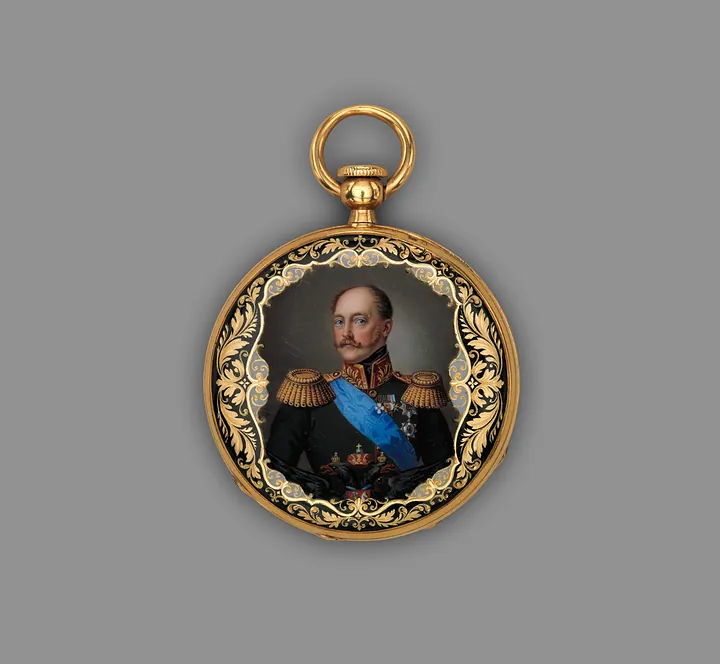
Pocket Watches · c. 1850–55
Watch by François Czapek, c. 1850–55
The Metropolitan Museum of Art, New York
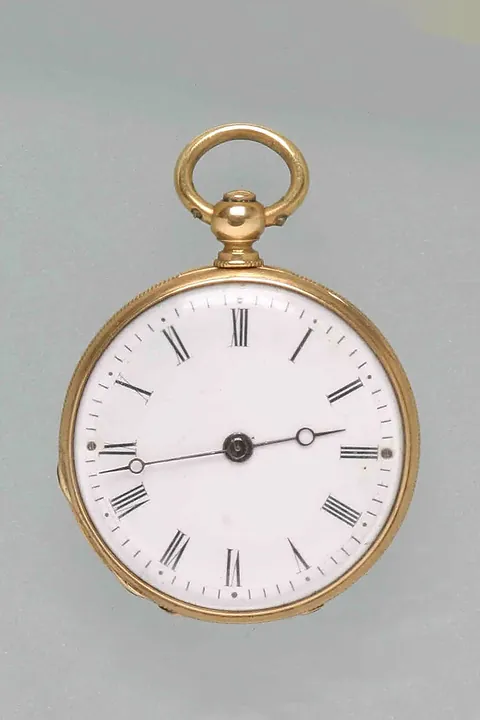
Pocket Watches · c. 1850
Pocket watch by D Bachelard et Fils, Switzerland, c. 1850
German Clock Museum
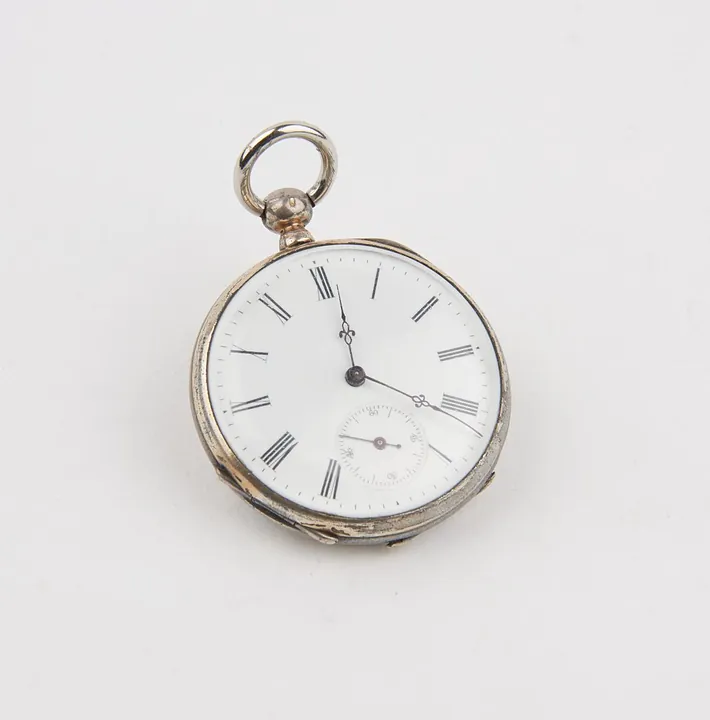
Pocket Watches · 1850–1899
Pocket watch by GT, Switzerland, 1850–1899
Science Museum Group, London
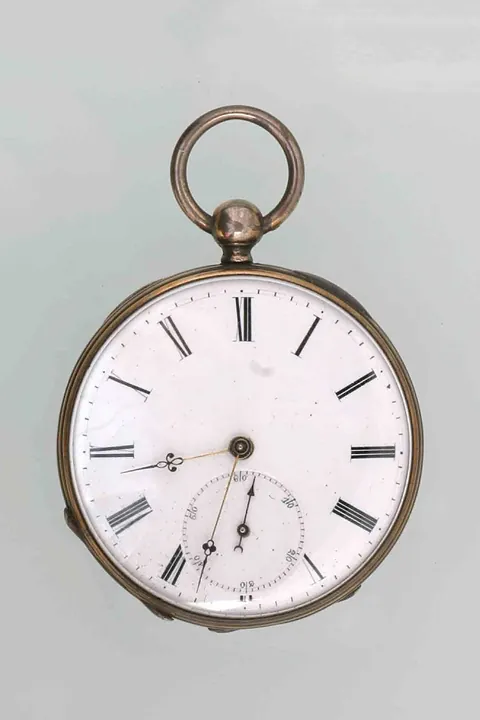
Pocket Watches · c. 1850
Pocket watch by Perret et Cie., Switzerland, c. 1850
German Clock Museum
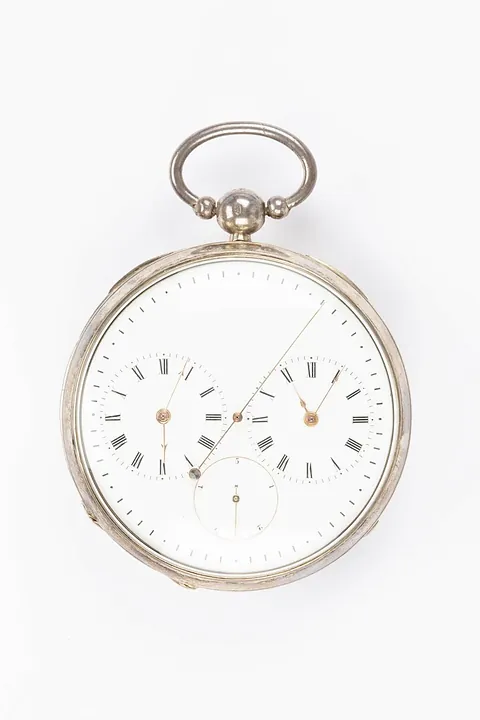
Pocket Watches · c. 1850
Pocket watch, probably Switzerland, c. 1850 (no. 58079)
German Clock Museum
Pocket Watches · c. 1850
Pocket watch, Switzerland, c. 1850 (no. 58081)
German Clock Museum