
Wristwatches · Wristwatch
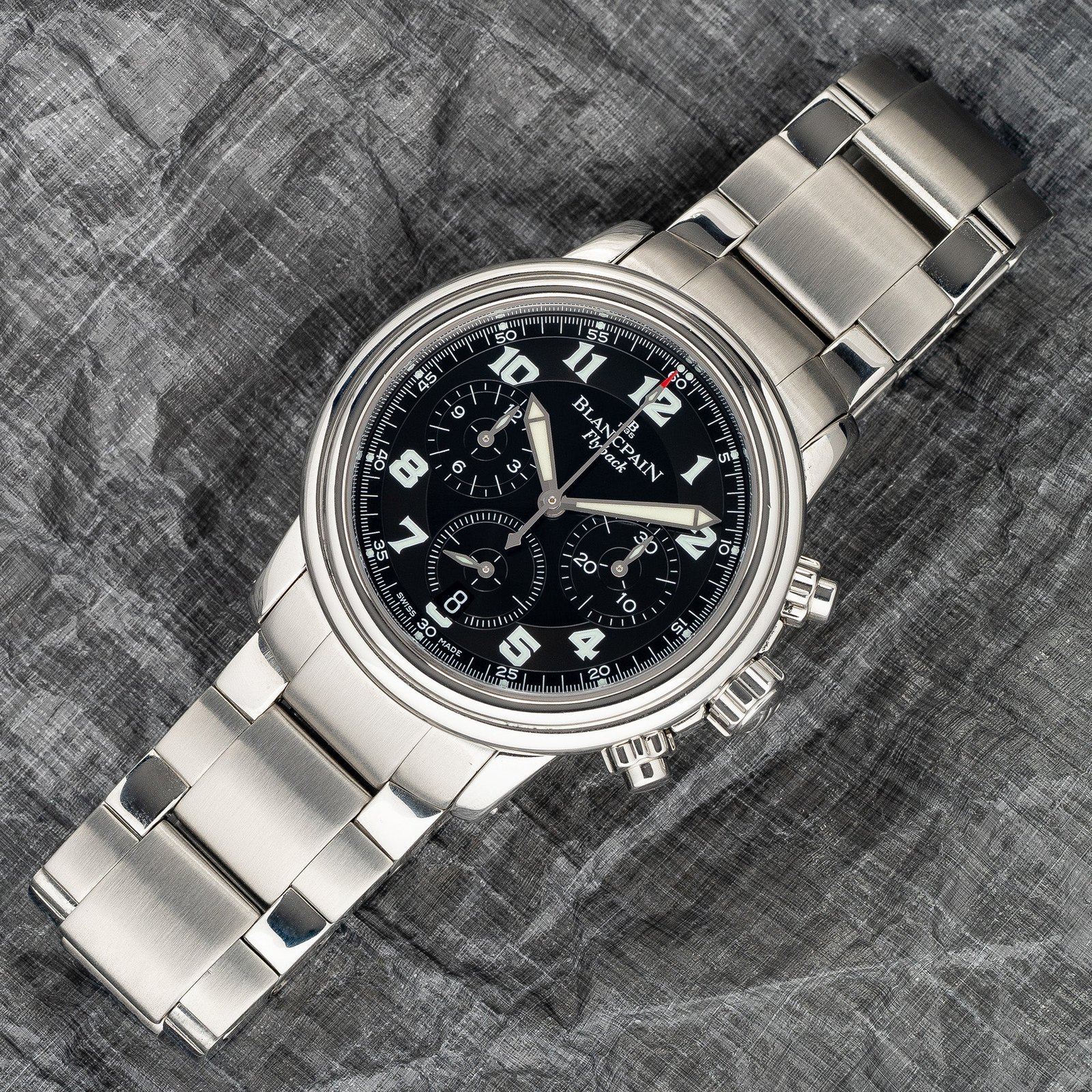
Blancpain Léman Flyback 2185F Chronograph
- Maker / attribution
- Blancpain (maker)
- Date
- c. 2002
- Historical period
- Mechanical Renaissance (1990 – 2010)
- Country of origin
- Switzerland
- Object type
- Wristwatch
- Dimensions
- Case 38 mm
- Stock no.
- Product 8857275203860
- Credit line
- Dealer listing, Collectors Corner NY (product 8857275203860)
- Catalogue title (original)
- Blancpain Léman Flyback 2185F Chronograph - Full Set (English)
View the source record (dealer listing) ↗ (opens another website in a new tab)Suggest a correction
Record summary
Catalogued by Collectors Corner NY (dealer), New York (stock number Product 8857275203860), this is a wristwatch by Blancpain, made in Switzerland, dated c. 2002. The Atlas places it in the Mechanical Renaissance period (1990 – 2010) of its Wristwatches collection. Recorded dimensions: Case 38 mm. The record is illustrated with 6 photographs.
Assembled from the source record's structured fields. Dates and attributions are given as the source states them; where a field is missing the Atlas leaves it blank rather than estimating.
Catalogue description
Dealer description — Collectors Corner NY
Blancpain is the oldest watchmaking company, dating back to 1735. The brand has weathered centuries and has a rich history of heritage, craftsmanship and innovation. Credited with what we know as the modern dive watch, its iconic Fifty Fathoms celebrated its 70th anniversary in 2023, having been released the same year as the Rolex Submariner in 1953. Although Blancpain might not be the first name to come to mind for many, the brand is getting more deserved attention as collectors unpack its fantastic contribution to the world of horology. This Léman Flyback from circa 2002 is a neo-vintage gem offering great value. It houses the high-grade F185 movement, first introduced in 1989 and still the thinnest automatic chronograph caliber to this day. The case is elegant at 38mm wide, with a short 42mm lug to lug and a slim 11mm height. It was originally rated to 100 meters of water resistance thanks to its screw-down pushers, and with a pressure test it will be practical for rainy days. The lacquer dial offers immense depth, stepped across multiple levels. The large Arabic numerals carry generous lume and hark back to early military watches of the 1930s. Even the sub-register hands are lumed, a feature we hardly see elsewhere. This piece remains in excellent shape and comes complete with its box and papers. It makes an interesting all-around daily driver with a sporty look on its high quality steel bracelet, or it can be dressed up on leather for almost any occasion. Explore more of our vintage Blancpain watches .
Historical context
Mechanical Renaissance (1990 – 2010)
Mechanical watches return as cultural objects; independent watchmaking flourishes.
Mechanical watches returned as cultural and luxury objects. Complications, tourbillons and new materials proliferated; independent watchmakers such as George Daniels, F.P. Journe and Philippe Dufour revived artisanal watchmaking; collecting vintage watches became a major field.
Read the period in the timelineMore wristwatches from this periodEarlier: Quartz Revolution
Atlas type guide
Chronographs and split-seconds watches
A chronograph is a watch with an additional seconds hand that can be started, stopped and returned to zero independently of the timekeeping. Louis Moinet built an early example in 1816 and Nicolas Rieussec a recording 'chronographe' in 1821; Adolphe Nicole's heart-shaped reset cam (patented 1862) made the modern return-to-zero possible. Split-seconds (rattrapante) chronographs add a second hand that can be stopped for intermediate times; flyback chronographs restart instantly.
Chronographs were essential tools for doctors (pulsometer scales), artillery (telemeter), engineers and sport. In wristwatches, Valjoux, Venus, Lemania and later the automatic chronographs of 1969 (Zenith El Primero, the Chronomatic Calibre 11 group and Seiko 6139) are milestones.
What to look for
- Push-pieces on the case band or a single button in the crown (monopusher).
- Subsidiary registers for minutes and hours; tachymeter, telemeter or pulsometer scales.
- Column wheel versus cam control visible in the movement.
- Calibre markings of specialist makers (Valjoux, Lemania, Venus, Landeron).
Dating clues
- Pocket chronographs with heart cam reset: after 1862.
- Wrist chronographs: from c. 1910; two-button designs from the 1930s.
- Automatic chronographs: from 1969.
General guidance written by the Atlas editors about this kind of object. It is not a statement about this particular piece; for that, rely on the source record above and on physical examination.
Read next:Chronograph
Related records
Clocks · c. 2010
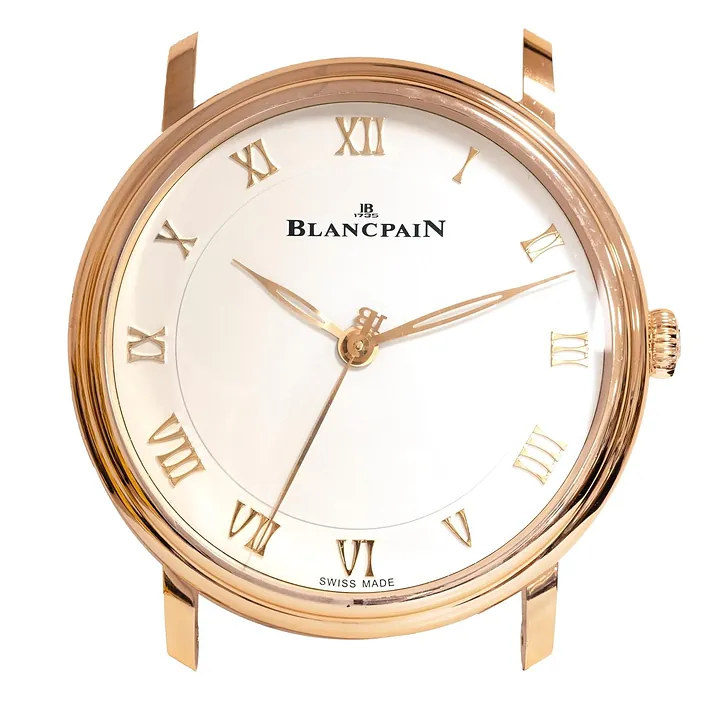
Blancpain clock, c. 2010
Antiquorum auction archive, Geneva
Wristwatches · c. 1930
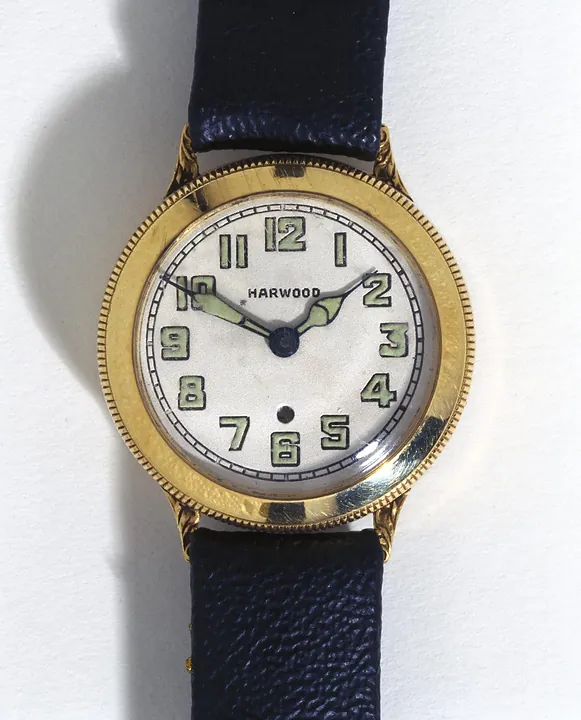
Wristwatch by J. Harwood and Son and Blancpain, Switzerland, c. 1930
Science Museum Group, London
Wristwatches · c. 1930
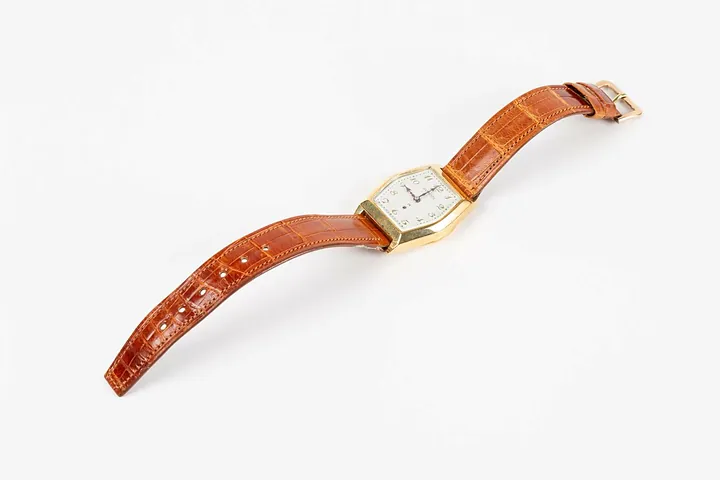
Wristwatch by Harwood (Société Centrale de la Montre Sans Remontoir), Switzerland, c. 1930 (no. 58042)
German Clock Museum
Wristwatches · c. 1932
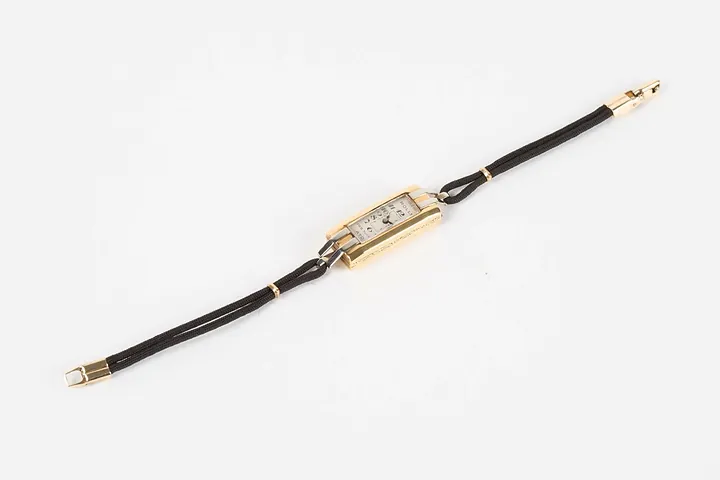
Wristwatch by Blancpain, Switzerland, c. 1932
German Clock Museum

Wristwatches · 2008
Wristwatch by Breitling?, 2008
Museum Rotterdam

Wristwatches · c. 1990s
Audemars Piguet Bamboo, c. 1990s
Antiquorum auction archive, Geneva

Wristwatches · c. 1990
Audemars Piguet Huitieme Perpetual Calendar, ref. 25696PT, c. 1990
Antiquorum auction archive, Geneva

Wristwatches · c. 1990
Breitling Chronomat, ref. b13050.1, c. 1990
Antiquorum auction archive, Geneva