
Wristwatches · Wristwatch
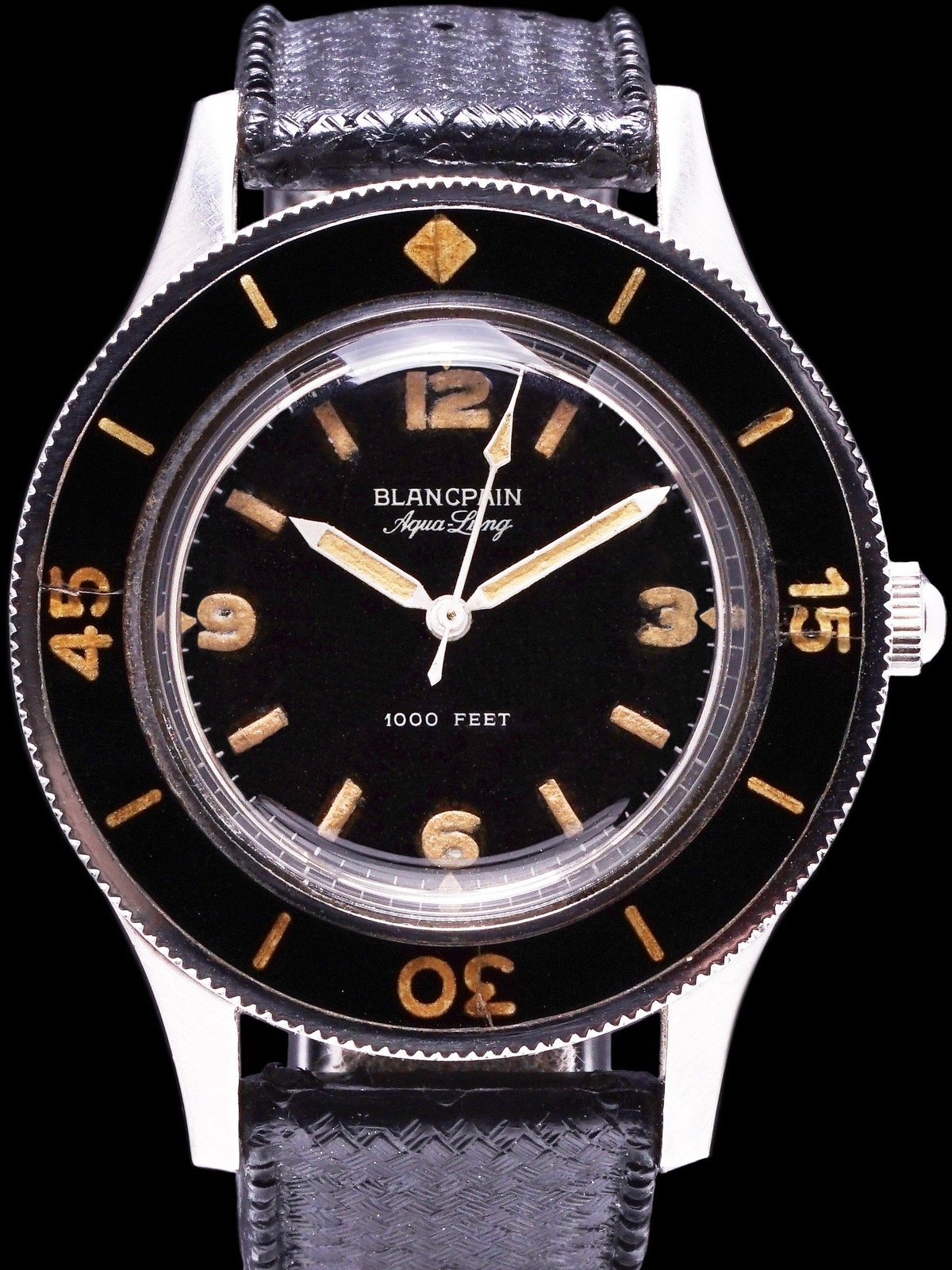
Blancpain Fifty Fathoms (Ref. 2462) Aqualung 1000FT, 1953
- Maker / attribution
- Blancpain (maker)
- Date
- 1953
- Historical period
- Modern Mechanical Horology (1945 – 1969)
- Country of origin
- Switzerland
- Object type
- Wristwatch
- Dimensions
- Case 41 mm
- Stock no.
- BLNCP-FF50
- Credit line
- Dealer listing, Craft & Tailored (BLNCP-FF50)
- Catalogue title (original)
- 1953 Blancpain Fifty Fathoms (Ref. 2462) Aqualung 1000FT (English)
View the source record (dealer listing) ↗ (opens another website in a new tab)Suggest a correction
Record summary
Catalogued by Craft & Tailored (dealer), Los Angeles (stock number BLNCP-FF50), this is a wristwatch by Blancpain, made in Switzerland, dated 1953. The Atlas places it in the Modern Mechanical Horology period (1945 – 1969) of its Wristwatches collection. Recorded dimensions: Case 41 mm. The record is illustrated with 6 photographs.
Assembled from the source record's structured fields. Dates and attributions are given as the source states them; where a field is missing the Atlas leaves it blank rather than estimating.
Catalogue description
Dealer description — Craft & Tailored
(Capt. Bob Maloubier wearing a Blancpain Fifty Fathoms) The Blancpain series of dive watches have a history that is just as storied as some of the more infamous and famous dive watches of the same era. The vintage Blancpain dive watches are becoming increasingly rare as a result of collectors holding onto these specific timepieces and very small production numbers by Blancpain, to begin with. The Armed Forces were early adopters of Blancpain dive watches. Including the French and American Navy as were the early underwater explorers such as Jacque Cousteau among many others. The early Blancpain dive watches embody the golden era of design and innovation that we love from the late 1950s into the 1960s. The idea for the Blancpain Fifty Fathoms was conceived in 1952 due to members French Navy who required a dive watch for their elite team of combat “Frogmen” divers. After testing numerous dive watches French Navy officers Captain Robert “Bob” Maloubier & Lieutenant Claude Riffaud, could not obtain one fit for the requirements of their elite team. The elite unit required a watch that was extremely water-resistant and still visible underwater even at night. Capt. Maloubier created the blueprints required and sent them around to various watch companies. At the time Most of the watchmaking companies at the time focused on manufacturing piloting and aviation watches. Finally, Capt. Maloubier and Lt. Riffaud engaged with Jean-Jacques Fiechter, who was Blancpain’s CEO from 1950 to 1980. Being a diver himself, Fiechter took to the idea and agreed to develop the timepiece for the elite team of combat divers. Fiechter not only accepted the requirements to produce the specific timepieces but also added to the design features thus resulting in a product that adhered to the specifications set forth by the French Navy but also resulted in features and innovations for the dive watch industry as a whole. This specific Blancpain Ref. 2462 Fifty Fathoms "Aqua Lung" is an extremely fine example. The glossy dial paired with the 3-dimensional bakelite bezel insert sets this Blancpain apart from other "Golden Era" Divers. The radium markers and numerals are unique and specific to the early Blancpain Fifty Fathoms. It is these simple and understated elements that make this rare piece standout from the crowd. Stock # BLNCP-FF50 Brand Blancpain Style Fifty Fathoms Model Aqualung Serial 29XX Size Men's Material Stainless Steel Dial Black (Glossy) Millimeters 41mm Strap 2pc Black Tropic Strap CASE & BRACELET The case remains in stunning condition showing the factory chamfers and factory finishing. The original bakelite bezel is in excellent condition with the luminous indices withing the bakelite showing a wonderful golden patina. The case back is also in original and unpolished condition properly displaying the engraved serial number, anti-magnetic, waterproof, shock protected, and automatic engravings. The watch is supplied on an era-correct 2pc black tropic strap DIAL & HANDS The original glossy dial is in immaculate and untouched condition. The dial is free of any cracks or blemishing and is downright stunning. When viewed under UV light the radium within the bezel and dial still retain glow for a brief moment as do the hands. The radium numerals and markers show the same golden patina and are fully intact with very minimal lume degradation if any at all. ACCESSORIES None. The watch was recently serviced and keeping time perfectly.
Historical context
Modern Mechanical Horology (1945 – 1969)
Tool watches for divers, pilots and astronauts; electric watches anticipate the electronic age.
The classic era of the mechanical wristwatch: dive watches, chronographs for motor racing and space flight, GMT watches for jet travel, slim dress watches, automatic calendars, and the rise of Japanese manufacturers alongside Swiss, American, German and Soviet industries.
Read the period in the timelineMore wristwatches from this periodEarlier: Golden Age of Mechanical Watchmaking
Atlas type guide
Dive and water-resistant watches
Keeping water and dust out of a wristwatch was a long-standing challenge. Rolex's screw-down Oyster case (1926) and Omega's Marine (1932) were landmarks; in the early 1950s Blancpain's Fifty Fathoms and Rolex's Submariner defined the professional dive watch with rotating bezels for timing dives, luminous dials and high water resistance. The ISO 6425 standard (1982) later codified what a 'diver's watch' must do.
Dive watches became icons of post-war design and exploration, and their evolution — helium escape valves, ceramic bezels, saturation-diving depth ratings — records the history of underwater work.
What to look for
- Unidirectional or bidirectional rotating bezel with minute markings.
- Screw-down crown and case back; depth rating printed on the dial.
- Luminous hands and markers (radium before c. 1960, tritium c. 1960–1998, then Super-LumiNova).
- Reference numbers on the case between the lugs or inside the back.
Dating clues
- Screw-down Oyster cases: from 1926.
- Professional dive watches: from 1953.
- Tritium 'T' marks on dials: c. 1960–1998.
General guidance written by the Atlas editors about this kind of object. It is not a statement about this particular piece; for that, rely on the source record above and on physical examination.
Related records
Clocks · c. 2010
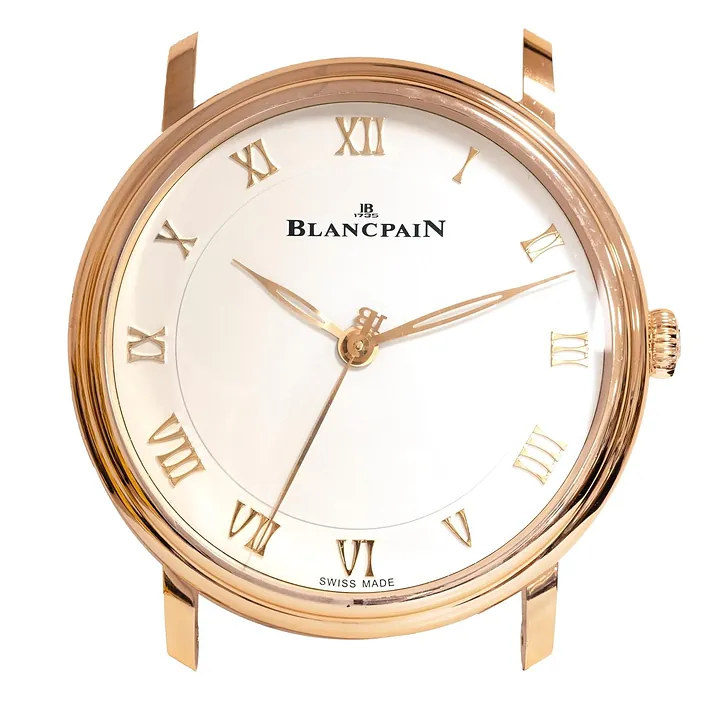
Blancpain clock, c. 2010
Antiquorum auction archive, Geneva
Wristwatches · c. 1930
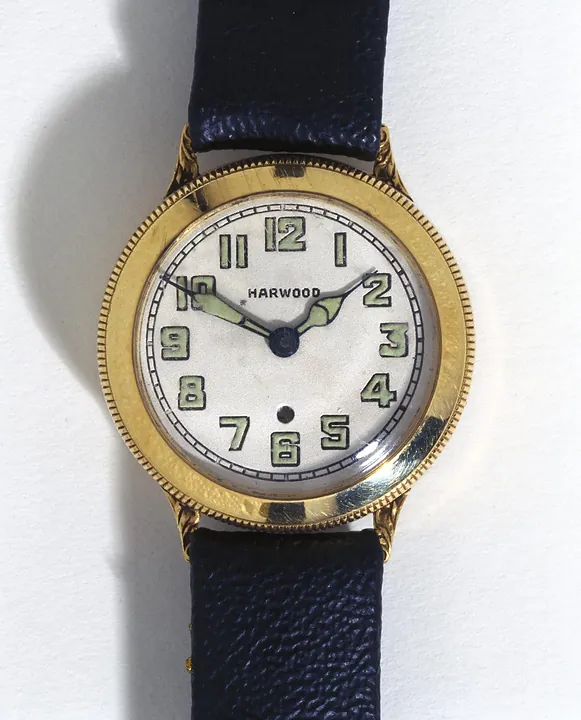
Wristwatch by J. Harwood and Son and Blancpain, Switzerland, c. 1930
Science Museum Group, London
Wristwatches · c. 1930
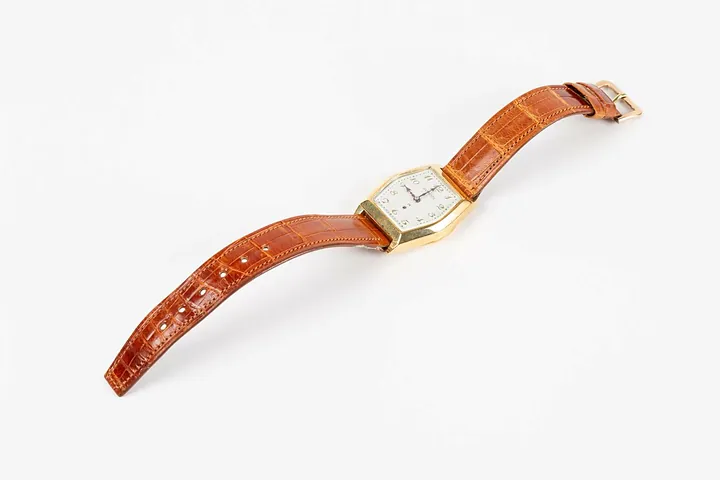
Wristwatch by Harwood (Société Centrale de la Montre Sans Remontoir), Switzerland, c. 1930 (no. 58042)
German Clock Museum
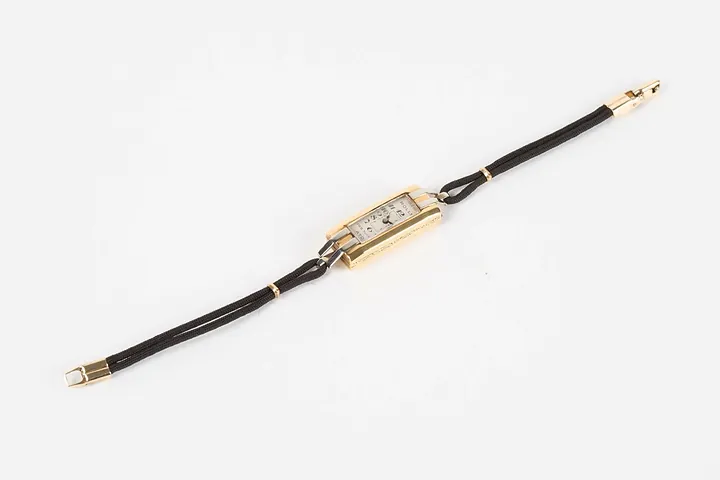
Wristwatches · c. 1932
Wristwatch by Blancpain, Switzerland, c. 1932
German Clock Museum

Wristwatches · 1945
Wristwatch by Eterna, 1945
Museum Rotterdam

Wristwatches · c. 1945
Breitling Premier, ref. 790, c. 1945
Antiquorum auction archive, Geneva

Wristwatches · c. 1945
Universal Genève Uni-Compax, ref. 22492, c. 1945
Antiquorum auction archive, Geneva

Wristwatches · c. 1950s
Baume & Mercier wristwatch, c. 1950s
Antiquorum auction archive, Geneva