
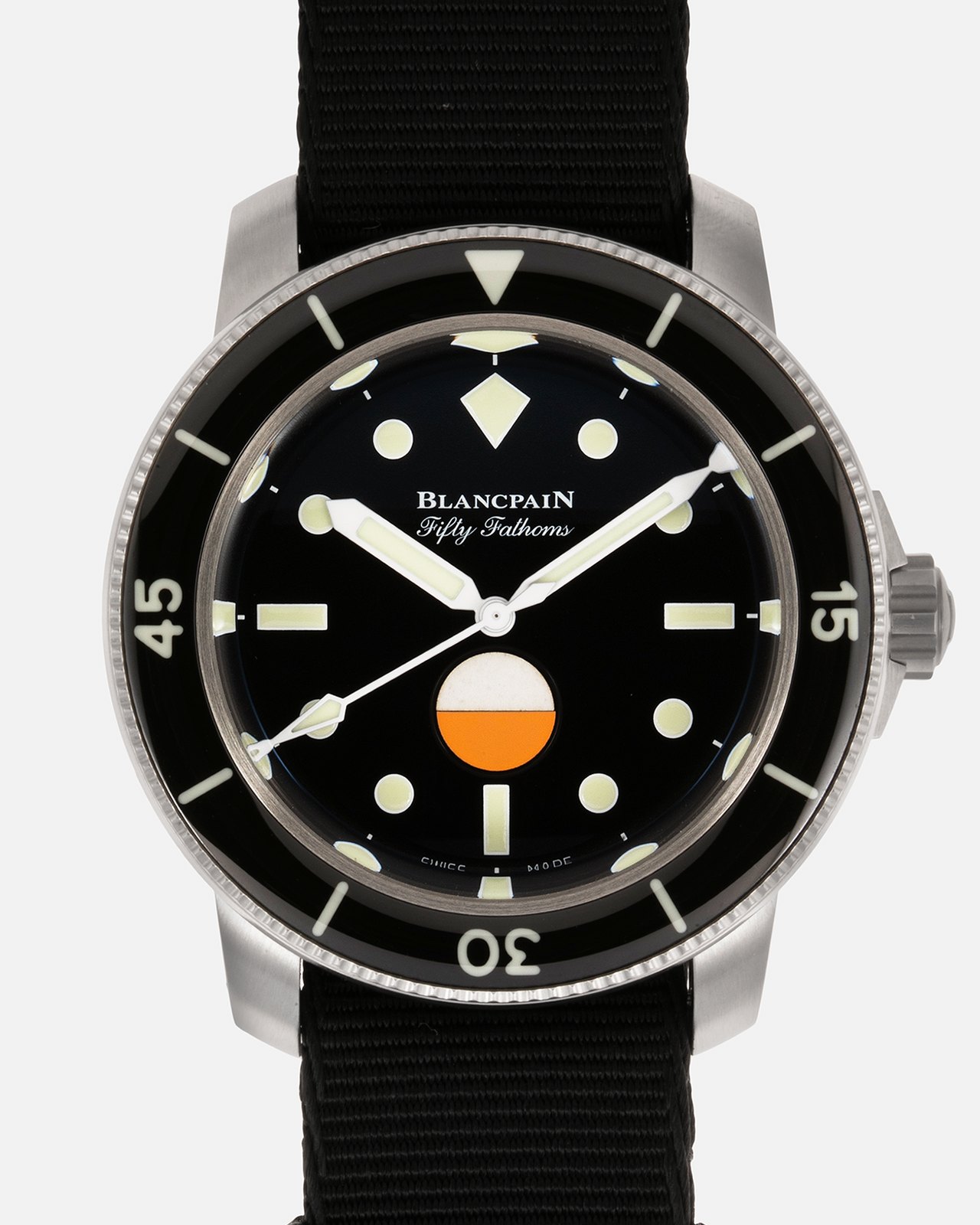
Wristwatches · Wristwatch
Blancpain Fifty Fathoms Milspec Hodinkee Edition, 2020
- Maker / attribution
- Blancpain (maker)
- Date
- 2020
- Historical period
- Contemporary Horology (2010 – Present)
- Country of origin
- Switzerland
- Object type
- Wristwatch
- Dimensions
- Case 40.3 mm
- Stock no.
- Product 6888705589335
- Credit line
- Dealer listing, S.Song Watches (product 6888705589335)
- Catalogue title (original)
- Blancpain Fifty Fathoms Milspec Hodinkee Edition (English)
View the source record (dealer listing) ↗ (opens another website in a new tab)Suggest a correction
Record summary
Catalogued by S.Song Watches (dealer), Seattle (stock number Product 6888705589335), this is a wristwatch by Blancpain, made in Switzerland, dated 2020. The Atlas places it in the Contemporary Horology period (2010 – Present) of its Wristwatches collection. Recorded dimensions: Case 40.3 mm. The record is illustrated with 6 photographs.
Assembled from the source record's structured fields. Dates and attributions are given as the source states them; where a field is missing the Atlas leaves it blank rather than estimating.
Catalogue description
Dealer description — S.Song Watches
Launched in 1953, the Blancpain Fifty Fathoms is arguably the first modern dive watch ever. Released as a commission piece for the French 'Frogmen' – an elite military group of combat swimmers, the Fifty Fathoms was designed with strict requirements in mind with its task of keeping its wearers alive on their life or death military missions at its central design philosophy. Today Blancpain's most famous model, and one of the most important dive watches we have in horology, the Fifty Fathoms has been revamped with the help of Hodinkee by taking inspiration from an earlier model, the Fifty Fathoms Milspec 1 from the late 1950s. Fitted with an entirely satin-brushed 40.3mm stainless steel case with strong lugs and short crown guards, the Fifty Fathoms Mil-Spec is an agreeable watch on the wrist that retains the Fifty Fathoms' aesthetic in abundance with its iconic luminous sapphire crystal bezel. With a domed sapphire crystal suspended over the Fifty Fathom's dial, the Mil-Spec retains an air of heritage-centric design, something you would expect from a design revival like this. Perhaps the Mil-Spec's most distinctive piece of design is its incredibly legible black dial. Featuring large luminous dots and an unusual trapezoidal shape at 12 o'clock, the dial is immediately reminiscent of the original Fifty Fathoms Milspec 1. However, its most apparent link to the 1950's creation is not its hour markers but its fully-functioning moisture indicator at 6 o'clock. An orange and white circle, this moisture indicator will turn completely red if the Mil-Spec's 300m of water resistance is compromised. Powered by Blancpain's automatic cal. 1154, the Mil-Spec features a sapphire crystal caseback and a lengthy 4-day power reserve that ensures it will remain running for extended periods of rest, should you manage to keep it off your wrist. Strapped to a black nylon NATO strap, this 250-piece limited edition collaborative timepiece makes for a nice change from the abundance of bracelet-clad modern watches that have taken over the market. Comfortable on the wrist, rare, and historically minded, this is quite the addition to any dive watch enthusiast's collection.
Historical context
Contemporary Horology (2010 – Present)
Silicon components, connected watches, optical-lattice research clocks and a thriving independent scene.
Smartwatches became the world's best-selling watches, while mechanical watchmaking focuses on craft, innovation (silicon components, new escapements) and independent makers.
Read the period in the timelineMore wristwatches from this periodEarlier: Mechanical Renaissance
Atlas type guide
Dive and water-resistant watches
Keeping water and dust out of a wristwatch was a long-standing challenge. Rolex's screw-down Oyster case (1926) and Omega's Marine (1932) were landmarks; in the early 1950s Blancpain's Fifty Fathoms and Rolex's Submariner defined the professional dive watch with rotating bezels for timing dives, luminous dials and high water resistance. The ISO 6425 standard (1982) later codified what a 'diver's watch' must do.
Dive watches became icons of post-war design and exploration, and their evolution — helium escape valves, ceramic bezels, saturation-diving depth ratings — records the history of underwater work.
What to look for
- Unidirectional or bidirectional rotating bezel with minute markings.
- Screw-down crown and case back; depth rating printed on the dial.
- Luminous hands and markers (radium before c. 1960, tritium c. 1960–1998, then Super-LumiNova).
- Reference numbers on the case between the lugs or inside the back.
Dating clues
- Screw-down Oyster cases: from 1926.
- Professional dive watches: from 1953.
- Tritium 'T' marks on dials: c. 1960–1998.
General guidance written by the Atlas editors about this kind of object. It is not a statement about this particular piece; for that, rely on the source record above and on physical examination.
Related records
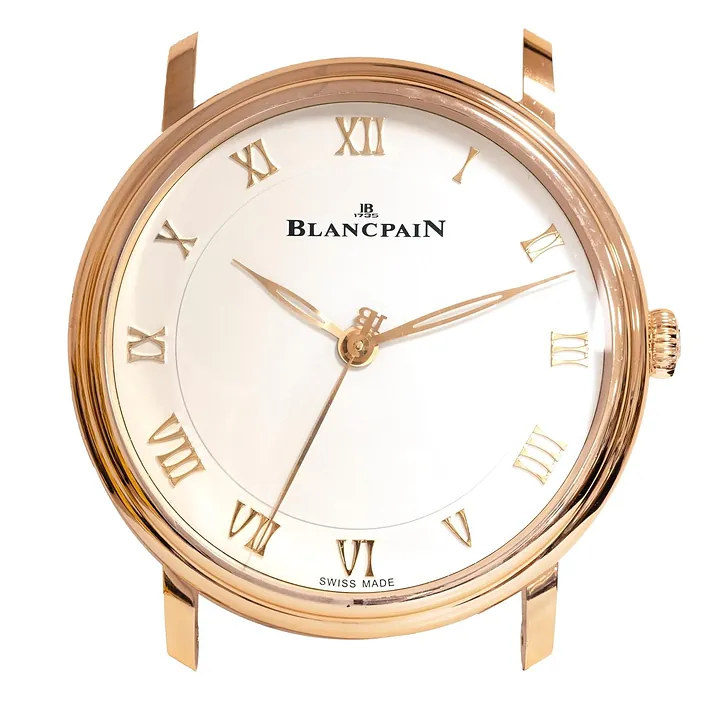
Clocks · c. 2010
Blancpain clock, c. 2010
Antiquorum auction archive, Geneva
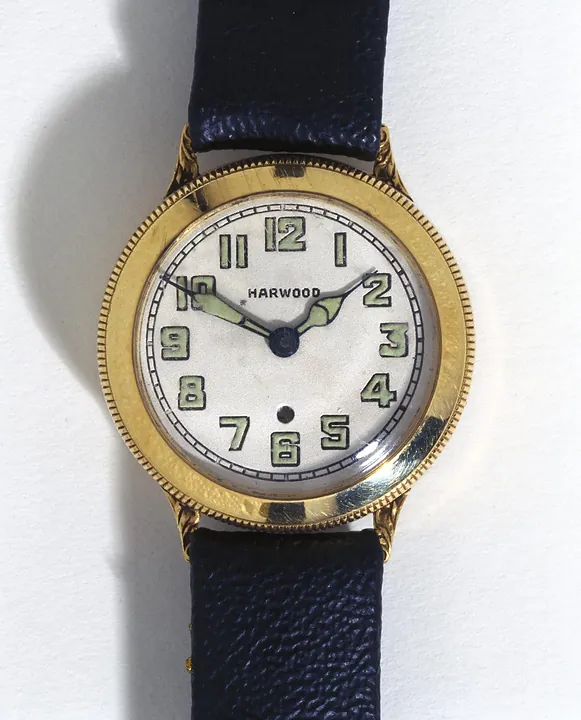
Wristwatches · c. 1930
Wristwatch by J. Harwood and Son and Blancpain, Switzerland, c. 1930
Science Museum Group, London
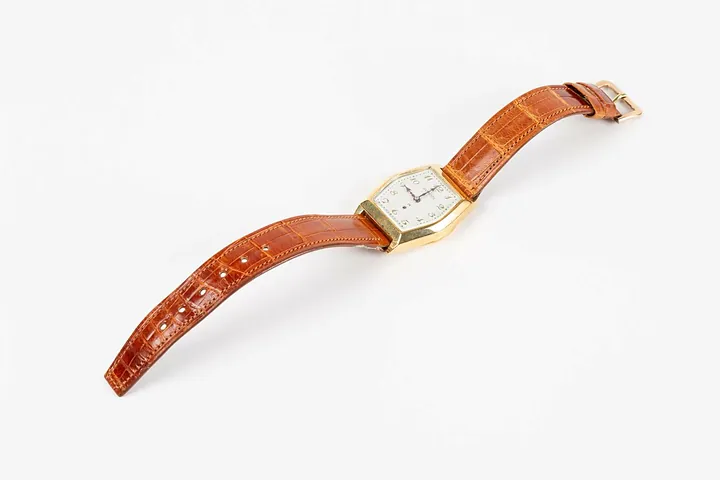
Wristwatches · c. 1930
Wristwatch by Harwood (Société Centrale de la Montre Sans Remontoir), Switzerland, c. 1930 (no. 58042)
German Clock Museum
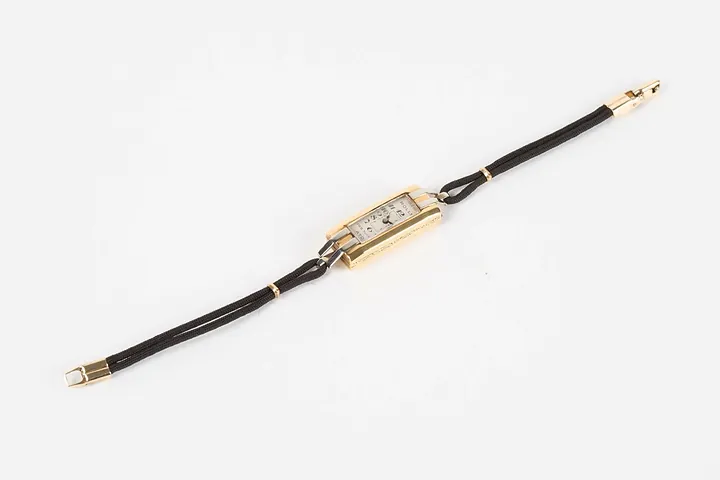
Wristwatches · c. 1932
Wristwatch by Blancpain, Switzerland, c. 1932
German Clock Museum

Wristwatches · c. 2010s
Breguet Type XXI, ref. 3810, c. 2010s (Antiquorum Lot 381-24)
Antiquorum auction archive, Geneva

Wristwatches · c. 2010s
Breguet Type XXI, ref. 3810, c. 2010s (Antiquorum Lot 386-229)
Antiquorum auction archive, Geneva

Wristwatches · Sold in September 2010
Breitling Cosmonaute, ref. A 22322, Sold in September 2010
Antiquorum auction archive, Geneva

Wristwatches · c. 2010
Corum Bubble Chrono, ref. 396.150.20, c. 2010
Antiquorum auction archive, Geneva