
Wristwatches · Wristwatch
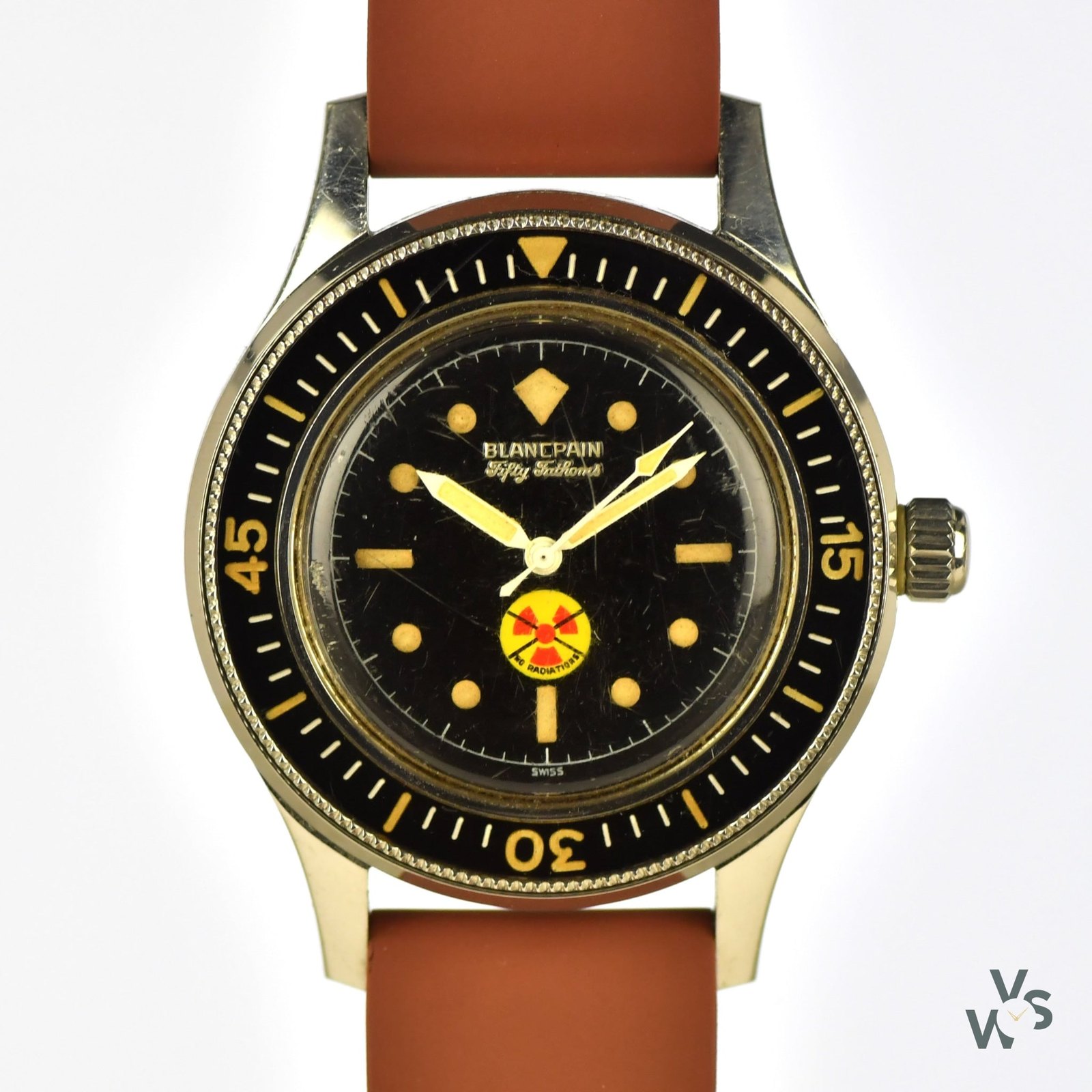
Blancpain Fifty Fathoms, Divers Wristwatch, No Radiations Dial, circa 1955
- Maker / attribution
- Blancpain (maker)
- Date
- c. 1955
- Historical period
- Modern Mechanical Horology (1945 – 1969)
- Country of origin
- Switzerland
- Object type
- Wristwatch
- Dimensions
- Case 41 mm
- Stock no.
- vws1847
- Credit line
- Dealer listing, Vintage Watch Specialist (vws1847)
- Catalogue title (original)
- Blancpain Fifty Fathoms - Vintage Divers Wristwatch - Rare No Radiations Dial - c.1955***NOW SOLD*** (English)
View the source record (dealer listing) ↗ (opens another website in a new tab)Suggest a correction
Record summary
Catalogued by Vintage Watch Specialist (dealer), United Kingdom (stock number vws1847), this is a wristwatch by Blancpain, made in Switzerland, dated c. 1955. The Atlas places it in the Modern Mechanical Horology period (1945 – 1969) of its Wristwatches collection. Recorded dimensions: Case 41 mm. The record is illustrated with 6 photographs.
Assembled from the source record's structured fields. Dates and attributions are given as the source states them; where a field is missing the Atlas leaves it blank rather than estimating.
Catalogue description
Dealer description — Vintage Watch Specialist
We Are Sorry But This Watch Is Now Sold - If However, You Are Looking To Buy Or Sell Something Similar Then Please Email Sales@Vintagewatchspecialist.Com Or Whatsapp/Call +44 7831 454658. Thanks A Very Rare Blancpain, the Iconic Fifty Fathoms Deep Sea Divers Watch from c.1955, in Remarkable Condition with the Famous 'No Rad' Emblem and Beautiful Bakelite Bezel. Serial No: 300XXX. Adjusted to three positions. The world looked very different in the early fifties than it did during the war with the rebuilding of Europe well underway. The military now tasked themselves with the exploration of new forms of combat which included underwater missions. The French Forces Elite Diving Corps was established by the French government in 1952 and was led by Captain Robert “Bob” Maloubier whose job was to source the scuba equipment needed for such missions. After an unsuccessful dalliance with another manufacturer, Maloubier eventually crossed paths with Blancpain’s then Co-CEO Jean-Jacques Fiechter who was himself a keen diver. Fiechter developed and patented a double-sealed crown that would maintain the watch’s water resistance even if the crown was accidentally pulled out during a dive. Fiechter also obtained a patent that addressed a common flaw with screw-down case backs at that time. Basically, when the caseback was screwed into place the “O” ring seal beneath it that sealed the caseback was unreliable. His solution involved placing the “O” ring in a channel with a metallic ring on top to hold it in position, this ensured a strong seal when the caseback was screwed down, which was simple but so effective. Fiechter delivered 20 watches for rigorous testing, having performed exceptionally well, they went on to become the official watch of the French combat diving corps with other militaries following suit fairly quickly. And that, in short, is the story of the iconic Fifty Fathoms. Side Note: The “Fifty Fathoms” name came from the watch's depth rating, which at the time, was considered to be the maximum depth (just over 90 meters) that a diver could safely reach while using a single-use oxygen source. What’s On Offer An incredibly beautiful example of the iconic dive watch from Blancpain. A most sought-after watch boasting the famous 'No Radiations' emblem at 6 o'clock, this is a real collector's piece in remarkable condition. The dial is in cracking condition with nicely aged and fully intact lume plots that have taken on a tasty caramel tone. The white pencil hands with sweeping spearhead seconds hand really stand proud against the black dial and also have beautiful lume which has aged to a fabulous shade of flaxen. The Bakelite bezel is in excellent shape with no blemishes to speak of and certainly no cracks which are critical when looking for one of these rare watches. The case is also looking good and in excellent condition. The meaty proportions make this a really contemporary wearing watch in size terms as well as aesthetics. You will struggle to find a nicer example of this iconic reference, we will be sad to see this watch leave us. The watch will also come with an appraisal from Blancpain in Switzerland so please buy with confidence, this is a very original and honest watch that has been in the same family for over 40 years! Additional information Made from Case: Stainless Steel Dial: Black Crystal: Plexiglass Bracelet: Chocolate Rubber on Pin Buckle Technical specifications Winding: Automatic Movement Type: Mechanical Calibre: R.310 Jewels: 53j Waterproof: When New Power reserve: Purchase details Condition: Superb - 9/10 Model Reference: Fifty Fathoms Date of issue: c.1955 Guarantee: 12 Months by VWS Dimensions Width (without crown): 41mm Lug width: 19.8mm Lug height: (lug to lug) 51mm Wrist size: Adjustable
Historical context
Modern Mechanical Horology (1945 – 1969)
Tool watches for divers, pilots and astronauts; electric watches anticipate the electronic age.
The classic era of the mechanical wristwatch: dive watches, chronographs for motor racing and space flight, GMT watches for jet travel, slim dress watches, automatic calendars, and the rise of Japanese manufacturers alongside Swiss, American, German and Soviet industries.
Read the period in the timelineMore wristwatches from this periodEarlier: Golden Age of Mechanical Watchmaking
Atlas type guide
Dive and water-resistant watches
Keeping water and dust out of a wristwatch was a long-standing challenge. Rolex's screw-down Oyster case (1926) and Omega's Marine (1932) were landmarks; in the early 1950s Blancpain's Fifty Fathoms and Rolex's Submariner defined the professional dive watch with rotating bezels for timing dives, luminous dials and high water resistance. The ISO 6425 standard (1982) later codified what a 'diver's watch' must do.
Dive watches became icons of post-war design and exploration, and their evolution — helium escape valves, ceramic bezels, saturation-diving depth ratings — records the history of underwater work.
What to look for
- Unidirectional or bidirectional rotating bezel with minute markings.
- Screw-down crown and case back; depth rating printed on the dial.
- Luminous hands and markers (radium before c. 1960, tritium c. 1960–1998, then Super-LumiNova).
- Reference numbers on the case between the lugs or inside the back.
Dating clues
- Screw-down Oyster cases: from 1926.
- Professional dive watches: from 1953.
- Tritium 'T' marks on dials: c. 1960–1998.
General guidance written by the Atlas editors about this kind of object. It is not a statement about this particular piece; for that, rely on the source record above and on physical examination.
Related records
Clocks · c. 2010
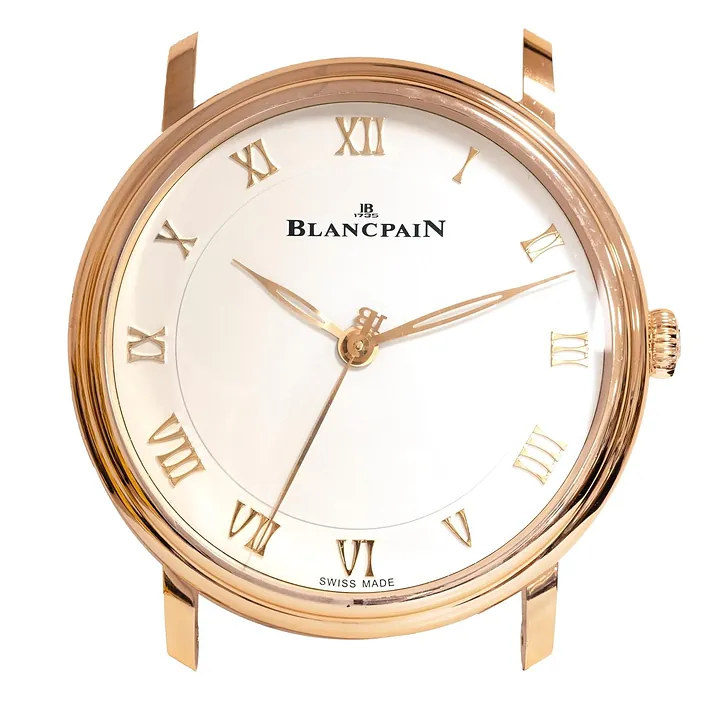
Blancpain clock, c. 2010
Antiquorum auction archive, Geneva
Wristwatches · c. 1930
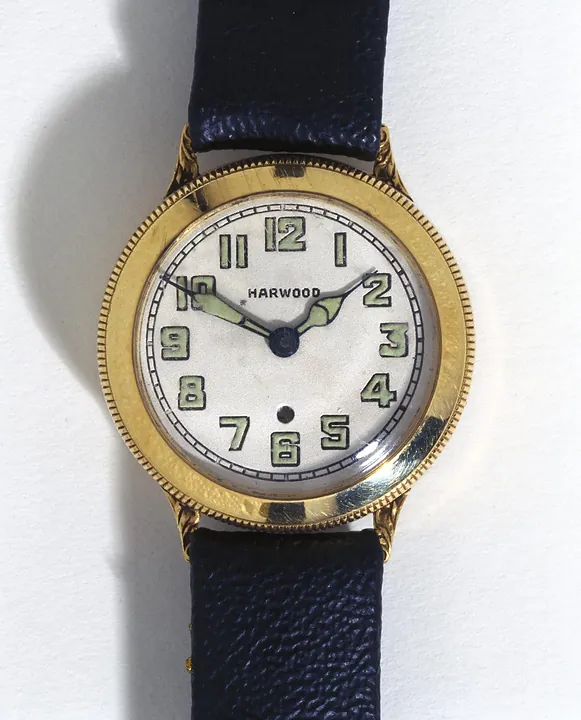
Wristwatch by J. Harwood and Son and Blancpain, Switzerland, c. 1930
Science Museum Group, London
Wristwatches · c. 1930
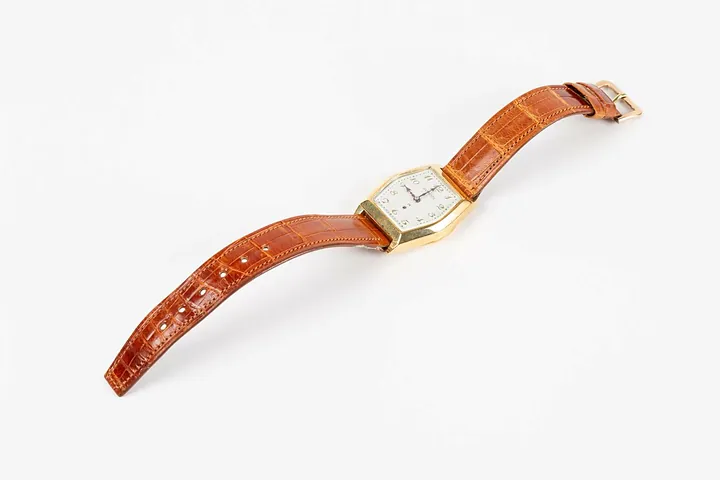
Wristwatch by Harwood (Société Centrale de la Montre Sans Remontoir), Switzerland, c. 1930 (no. 58042)
German Clock Museum
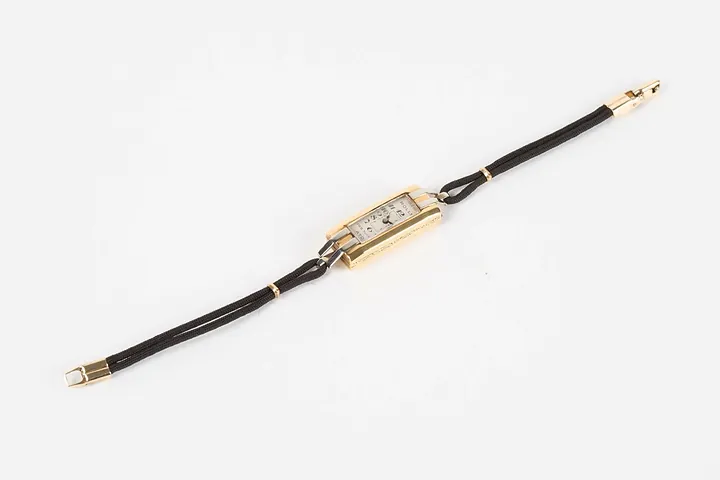
Wristwatches · c. 1932
Wristwatch by Blancpain, Switzerland, c. 1932
German Clock Museum

Wristwatches · 1945
Wristwatch by Eterna, 1945
Museum Rotterdam

Wristwatches · c. 1945
Breitling Premier, ref. 790, c. 1945
Antiquorum auction archive, Geneva

Wristwatches · c. 1945
Universal Genève Uni-Compax, ref. 22492, c. 1945
Antiquorum auction archive, Geneva

Wristwatches · c. 1950s
Baume & Mercier wristwatch, c. 1950s
Antiquorum auction archive, Geneva