
Wristwatches · Wristwatch
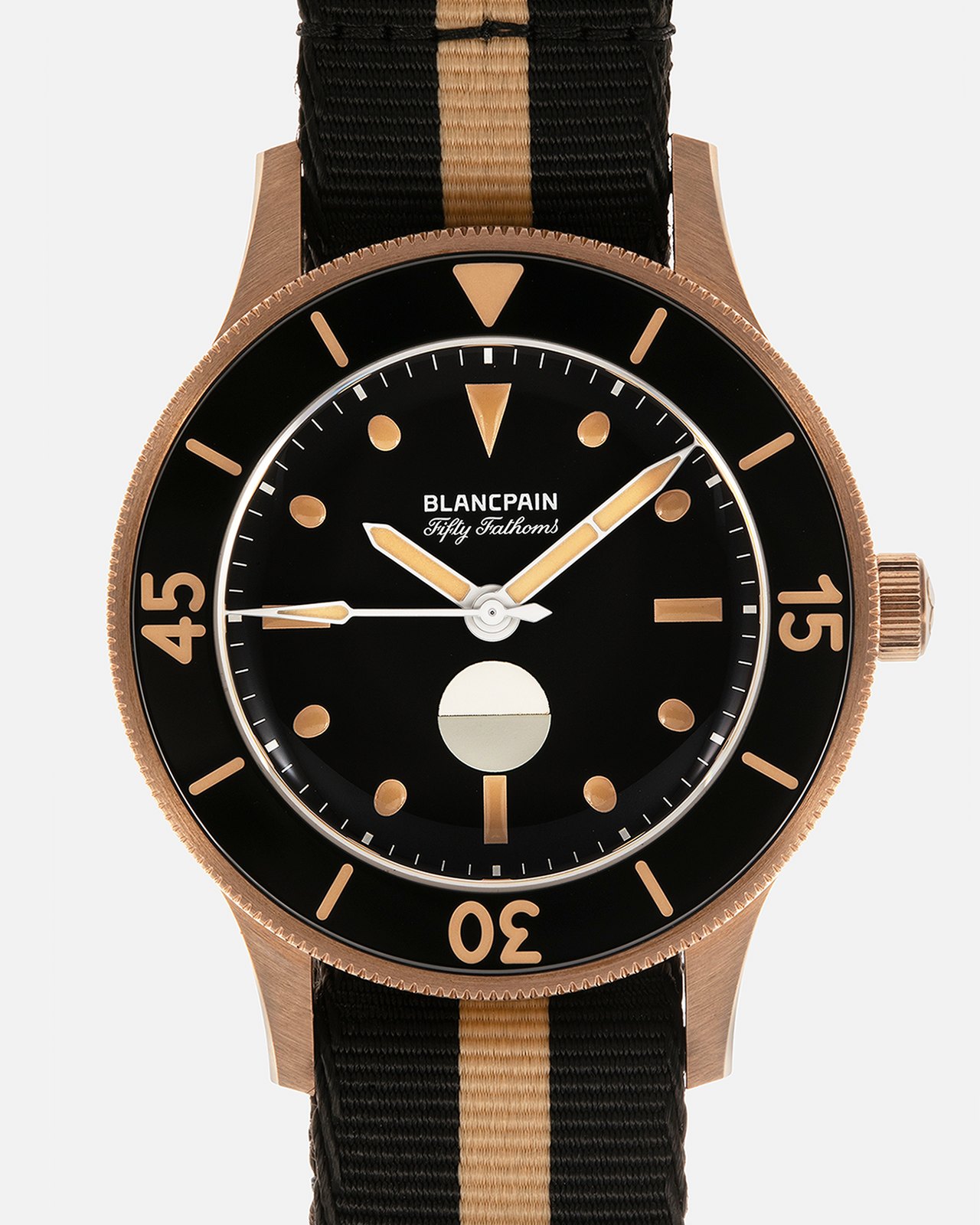
Blancpain Fifty Fathoms 70th Anniversary Act 3 5901-5630, 2024
- Maker / attribution
- Blancpain (maker)
- Date
- 2024
- Historical period
- Contemporary Horology (2010 – Present)
- Country of origin
- Switzerland
- Object type
- Wristwatch
- Dimensions
- Case 42 mm
- Stock no.
- Product 7497398681687
- Credit line
- Dealer listing, S.Song Watches (product 7497398681687)
- Catalogue title (original)
- Blancpain Fifty Fathoms 70th Anniversary Act 3 5901-5630 (English)
View the source record (dealer listing) ↗ (opens another website in a new tab)Suggest a correction
Record summary
Catalogued by S.Song Watches (dealer), Seattle (stock number Product 7497398681687), this is a wristwatch by Blancpain, made in Switzerland, dated 2024. The Atlas places it in the Contemporary Horology period (2010 – Present) of its Wristwatches collection. Recorded dimensions: Case 42 mm. The record is illustrated with 6 photographs.
Assembled from the source record's structured fields. Dates and attributions are given as the source states them; where a field is missing the Atlas leaves it blank rather than estimating.
Catalogue description
Dealer description — S.Song Watches
Launched in 1953, the Blancpain Fifty Fathoms is widely regarded as the first modern automatic dive watch with a rotating bezel. Originally commissioned for the French Frogmen, an elite group of naval combat divers, it was built to meet strict military requirements with survival at the core of its design. What we have here is a contemporary reinterpretation of the original Fifty Fathoms Mil-Spec: the Fifty Fathoms Act 3, released in 2023 to mark the model’s 70th anniversary. It completes the trilogy that began earlier that year with the 42 mm limited edition Act 1 and the Tech Gombessa Act 2. The Act 3 features a robust 41.3mm × 13.3mm case crafted from Blancpain’s patented 9-carat Bronze Gold alloy, with straight lugs and a brushed finish recalling the utilitarian aesthetic of early Mil-Spec models. Whereas the originals were made in steel and later in German silver to reduce magnetism and glare, this special alloy serves as a warm yet advanced successor—combining 37.5% gold, roughly 50% copper, and traces of silver, palladium, and gallium. It marries the visual richness of gold with the resilience of bronze, which means it will gradually develop a controlled patina that’s safe for skin contact and highly resistant to corrosion and verdigris compared to standard bronze. True to its Mil-Spec heritage, the Act 3 is defined by its clean, highly legible, matte black dial. It showcases large luminous hour markers and hands filled with aged-toned Super-LumiNova, anchored by the signature trapezoidal marker and a period-style Blancpain logo at 12:00. With a steadfast focus on safety, Jean-Jacques Fiechter, Blancpain’s CEO at the time, introduced a supplementary moisture indicator shortly after the Fifty Fathoms’ initial release in the late ‘50s. This innovation gave rise to the Mil-Spec 1 concept, which was a once-crucial technical advancement in an era before dive computers, allowing divers to effectively monitor the integrity of their watches during missions. Paying tribute to that very innovation, the Act 3 also incorporates a functional moisture indicator at 6:00: a horizontally split grey-and-white disc that signals if the watch’s 300-metre water resistance has been compromised. Beyond its utility, it also adds a measured contrast to the otherwise dark dial. Framing it all up is a ceramic bezel insert with matching lume and sharply defined knurling for enhanced grip, topped by a thick box-shaped sapphire crystal that enhances the watch’s visual depth for legibility. Powering this workhorse from within is Blancpain’s self-winding Cal. 1154.P2, which is essentially a no-date version of the Cal. 1151. Running at 3 Hz, it features a free-sprung balance, silicon balance spring, and 1,000-gauss magnetic resistance—a first for the Fifty Fathoms. Thanks to its double-barrel construction, this finely decorated calibre can hold a charge of up to 100 hours on a full wind. As you can see in the listing photos, capping off this no-frills movement is an 18-carat gold rotor engraved with a period-style Blancpain logotype, adding a subtle touch of vintage flair. Limited to 555 pieces worldwide, the Act 3 comes fitted with a two-tone matching NATO strap inspired by the original Mil-Spec colour scheme and is made from recycled fishing nets—a nod to Blancpain’s ongoing commitment to marine conservation efforts. All things considered, the Fifty Fathoms 70th Anniversary Act 3 is a handsome and beautifully resolved piece of watch design that honours its origins while moving forward. With historically rooted aesthetics, a technically refined movement, and thoughtful nods to sustainability, it stands as a worthy modern tribute of seventy years of the world’s first true dive watch. It also proves the Fifty Fathoms still have plenty of depth left to explore.
Historical context
Contemporary Horology (2010 – Present)
Silicon components, connected watches, optical-lattice research clocks and a thriving independent scene.
Smartwatches became the world's best-selling watches, while mechanical watchmaking focuses on craft, innovation (silicon components, new escapements) and independent makers.
Read the period in the timelineMore wristwatches from this periodEarlier: Mechanical Renaissance
Atlas type guide
Dive and water-resistant watches
Keeping water and dust out of a wristwatch was a long-standing challenge. Rolex's screw-down Oyster case (1926) and Omega's Marine (1932) were landmarks; in the early 1950s Blancpain's Fifty Fathoms and Rolex's Submariner defined the professional dive watch with rotating bezels for timing dives, luminous dials and high water resistance. The ISO 6425 standard (1982) later codified what a 'diver's watch' must do.
Dive watches became icons of post-war design and exploration, and their evolution — helium escape valves, ceramic bezels, saturation-diving depth ratings — records the history of underwater work.
What to look for
- Unidirectional or bidirectional rotating bezel with minute markings.
- Screw-down crown and case back; depth rating printed on the dial.
- Luminous hands and markers (radium before c. 1960, tritium c. 1960–1998, then Super-LumiNova).
- Reference numbers on the case between the lugs or inside the back.
Dating clues
- Screw-down Oyster cases: from 1926.
- Professional dive watches: from 1953.
- Tritium 'T' marks on dials: c. 1960–1998.
General guidance written by the Atlas editors about this kind of object. It is not a statement about this particular piece; for that, rely on the source record above and on physical examination.
Related records
Clocks · c. 2010
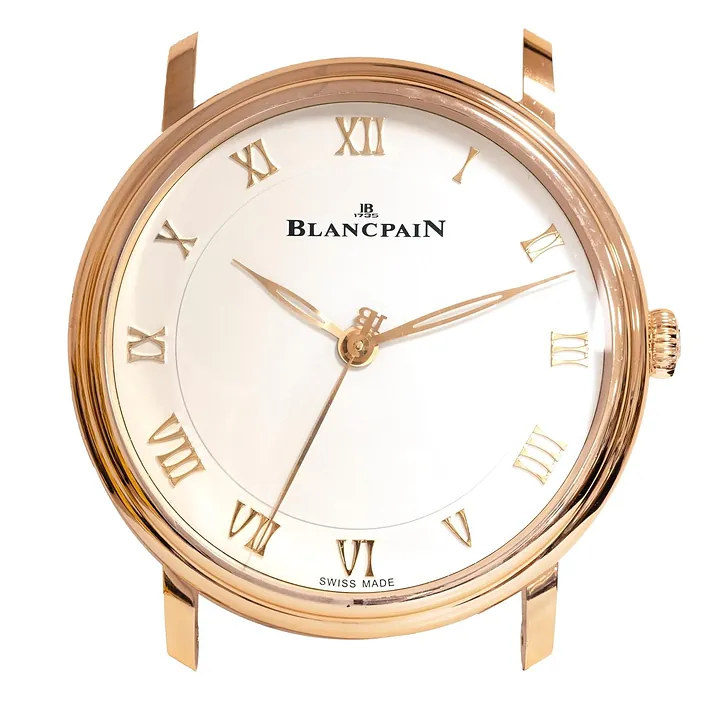
Blancpain clock, c. 2010
Antiquorum auction archive, Geneva
Wristwatches · c. 1930
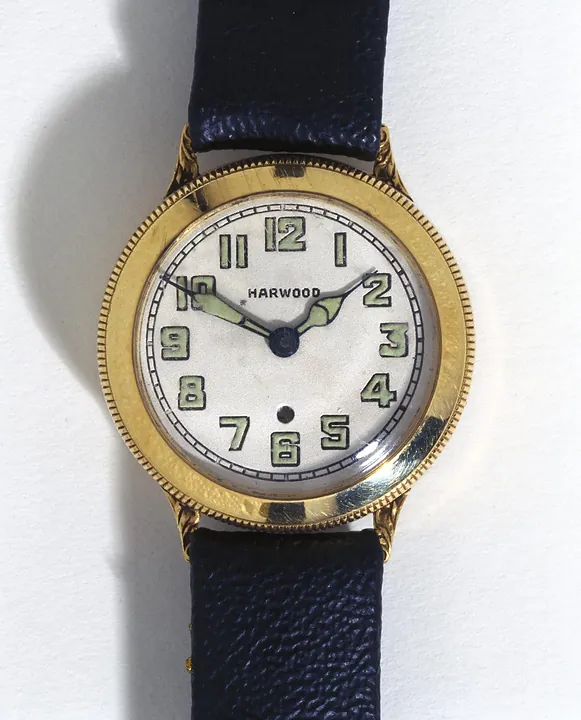
Wristwatch by J. Harwood and Son and Blancpain, Switzerland, c. 1930
Science Museum Group, London
Wristwatches · c. 1930
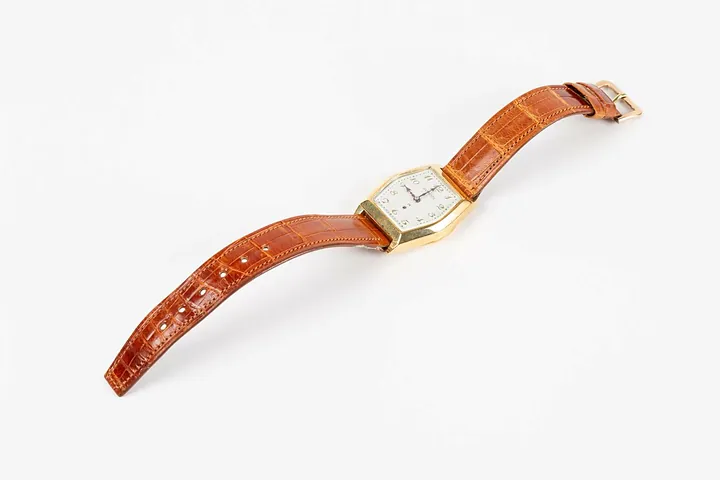
Wristwatch by Harwood (Société Centrale de la Montre Sans Remontoir), Switzerland, c. 1930 (no. 58042)
German Clock Museum
Wristwatches · c. 1932
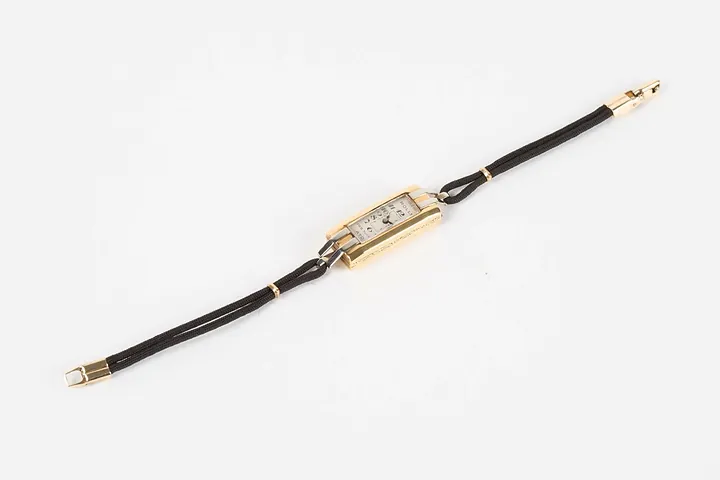
Wristwatch by Blancpain, Switzerland, c. 1932
German Clock Museum

Wristwatches · c. 2010s
Breguet Type XXI, ref. 3810, c. 2010s (Antiquorum Lot 381-24)
Antiquorum auction archive, Geneva

Wristwatches · c. 2010s
Breguet Type XXI, ref. 3810, c. 2010s (Antiquorum Lot 386-229)
Antiquorum auction archive, Geneva

Wristwatches · Sold in September 2010
Breitling Cosmonaute, ref. A 22322, Sold in September 2010
Antiquorum auction archive, Geneva

Wristwatches · c. 2010
Corum Bubble Chrono, ref. 396.150.20, c. 2010
Antiquorum auction archive, Geneva