
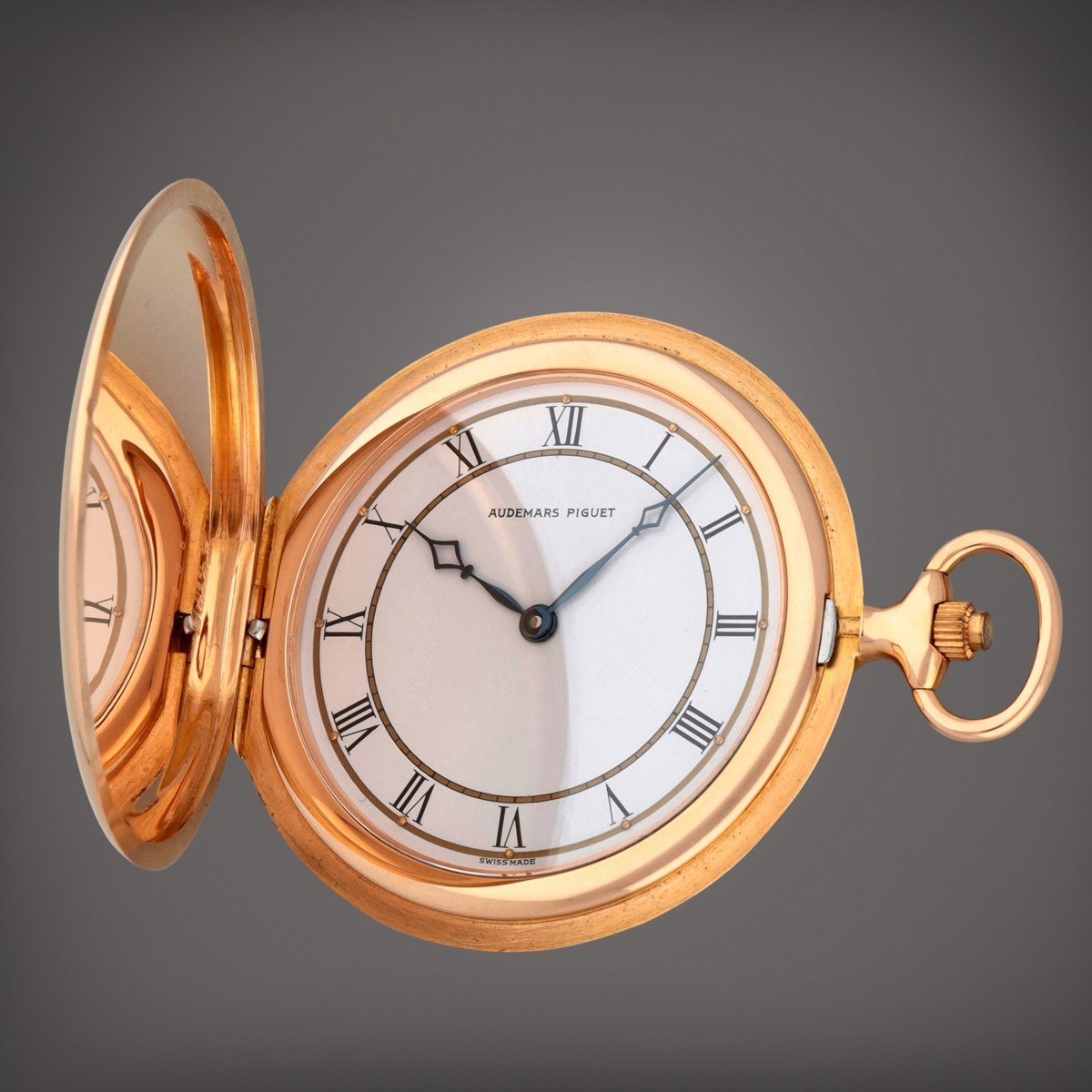
Pocket Watches · Hunter case pocket watch
Audemars Piguet Pink Gold Hunter Case Pocket Watch
- Maker / attribution
- Audemars Piguet (source attribution)
- Date
- c. 1990
- Historical period
- Mechanical Renaissance (1990 – 2010)
- Country of origin
- Switzerland
- Object type
- Hunter case pocket watch
- Materials / technique
- 18k pink gold
- Auction house
- Sotheby's
- Lot
- 378
- Credit line
- Sotheby's
- Catalogue title (original)
- Audemars Piguet | A pink gold hunter case pocket watch | Circa 1990 | (English)
View the source record (auction lot) ↗ (opens another website in a new tab)Suggest a correction
Record summary
Catalogued by Sotheby's (lot 378), this is a hunter case pocket watch attributed to Audemars Piguet, made in Switzerland, dated c. 1990. The Atlas places it in the Mechanical Renaissance period (1990 – 2010) of its Pocket Watches collection. Materials and techniques recorded by the source: 18k pink gold. The record is illustrated with 1 photograph.
Assembled from the source record's structured fields. Dates and attributions are given as the source states them; where a field is missing the Atlas leaves it blank rather than estimating.
Catalogue description
Original object description
Dating to circa 1990, this Audemars Piguet hunter case pocket watch is constructed from 18k pink gold and measures 47 mm in diameter, carrying case number D29'657. Its hinged front lid protects a white dial framed by an inner concentric minutes circle, bearing painted black Roman numerals and blued steel hands with hollow diamond or open-spade tips. The pendant winding crown and suspension bow are positioned at the 3 o'clock location relative to the dial. Dial markings include the "AUDEMARS PIGUET" signature situated below 12 o'clock and "SWISS MADE" at the 6 o'clock perimeter. Internally, it is driven by a signed, hand-wound jeweled caliber; however, the movement and the exterior finishing of the hinged lid are not documented in available photographs. The watch is without its original presentation box or documentation.
Inscriptions & marks
D29'657
Historical context
Mechanical Renaissance (1990 – 2010)
Mechanical watches return as cultural objects; independent watchmaking flourishes.
Collectors' interest in antique pocket watches grew, and a few houses made new pocket watches with grand complications as technical showpieces.
Read the period in the timelineMore pocket watches from this periodEarlier: Quartz Revolution
Atlas type guide
Hunter, half-hunter and open-face watches
In the nineteenth century the pocket watch case settled into a few standard forms. The hunter (French savonnette) has a hinged front lid protecting the crystal — reputedly for riders who could not risk broken glass — and is opened by pressing the crown or a push-piece. The half-hunter has a small window in the lid so the hands can be read when closed. The open-face (lépine) watch has no front cover, with the crown at 12; hunters normally carry the crown at 3.
Case types also changed with winding: key-wound watches gave way to keyless (stem-wound) mechanisms after Adrien Philippe's and others' designs of the 1840s, with pendant setting or lever setting.
What to look for
- Crown position relative to the seconds dial: at 3 for hunters, at 12 for open-face watches.
- Spring-loaded front cover with a push-piece in the pendant.
- Half-hunter chapter ring enamelled on the lid.
- Key holes in the inner dome (cuvette) versus keyless winding.
Dating clues
- Keyless winding spread after c. 1850 and became standard by c. 1890.
- English hallmarks inside gold and silver cases give the year of assay.
General guidance written by the Atlas editors about this kind of object. It is not a statement about this particular piece; for that, rely on the source record above and on physical examination.
Read next:Detached lever escapement
Related records
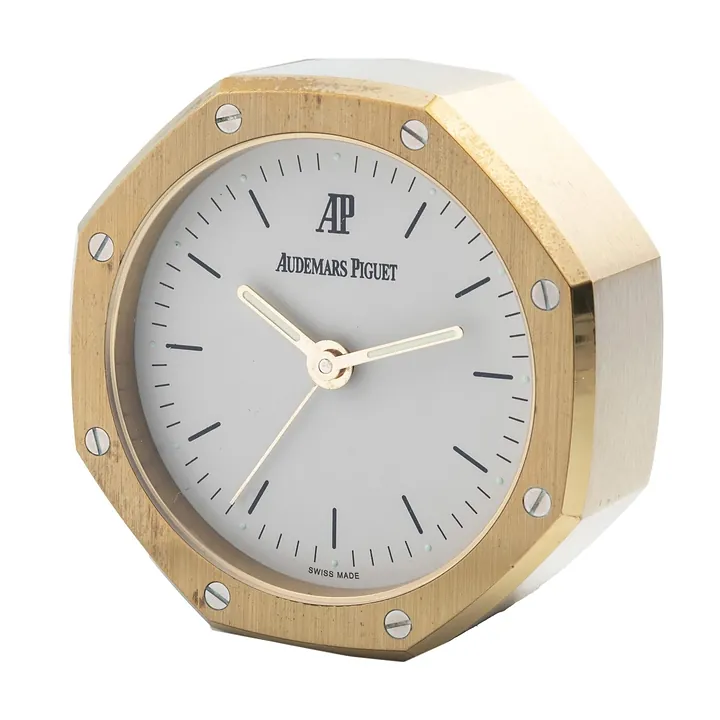
Clocks · c. 1990s
Audemars Piguet Royal Oak, c. 1990s
Antiquorum auction archive, Geneva
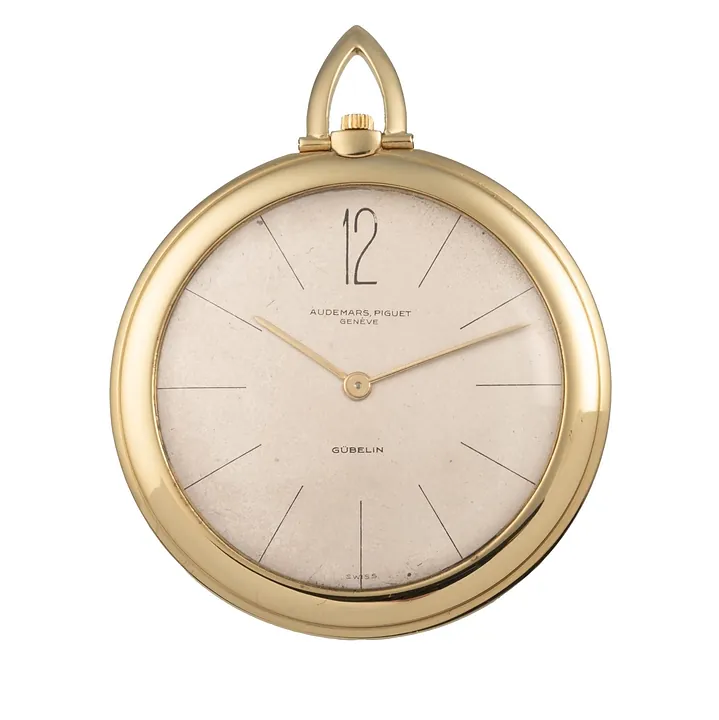
Pocket Watches · c. 1960
Audemars Piguet ''couteau'', c. 1960
Antiquorum auction archive, Geneva
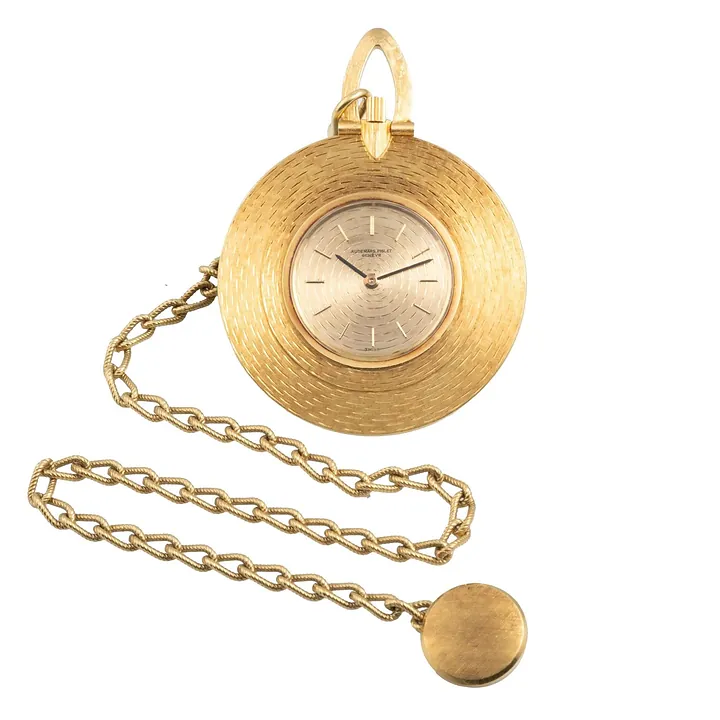
Pocket Watches · originally sold in November 1961 (per the lot record)
Audemars Piguet "extra Plate", ref. 5633 BA, originally sold in November 1961
Antiquorum auction archive, Geneva
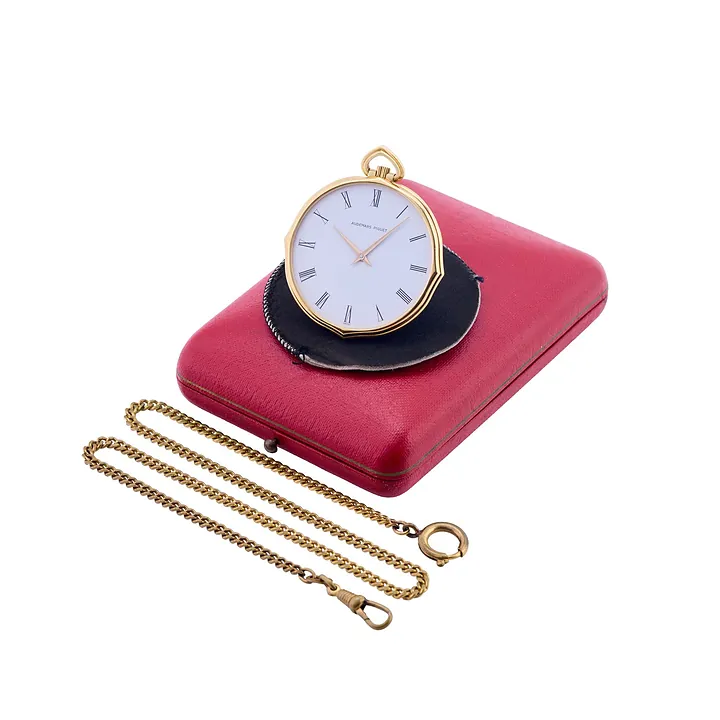
Pocket Watches · c. 1980
Audemars Piguet pocket watch, c. 1980
Antiquorum auction archive, Geneva
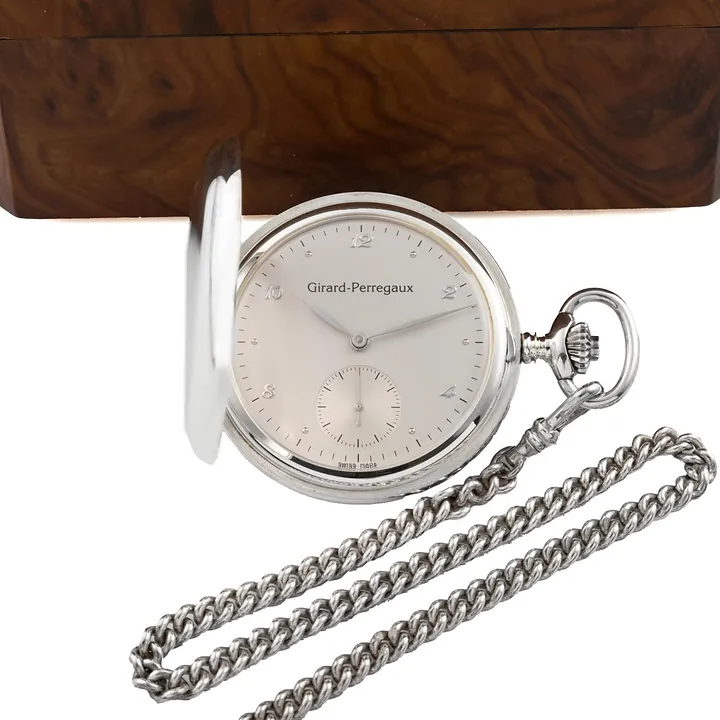
Pocket Watches · c. 1998
Girard Perregaux pocket watch, c. 1998
Antiquorum auction archive, Geneva
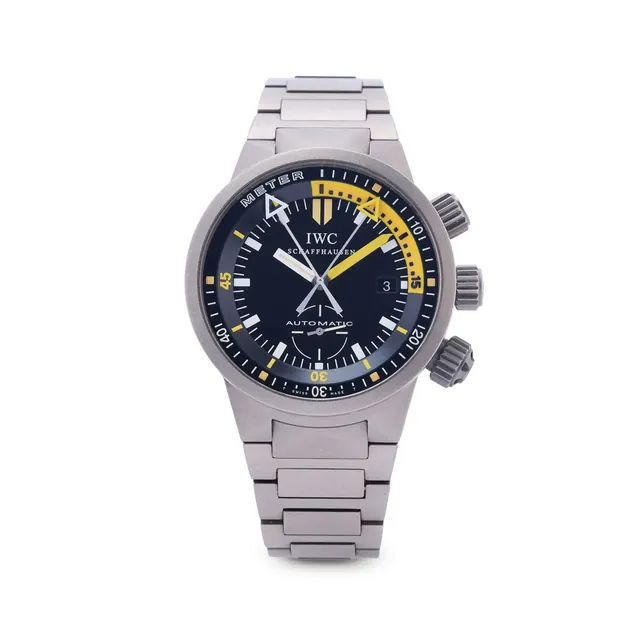
Pocket Watches · c. 2000s
IWC pocket watch, ref. 3527, Deep One Diver's Watch, circa 2000s
Antiquorum auction archive, Geneva
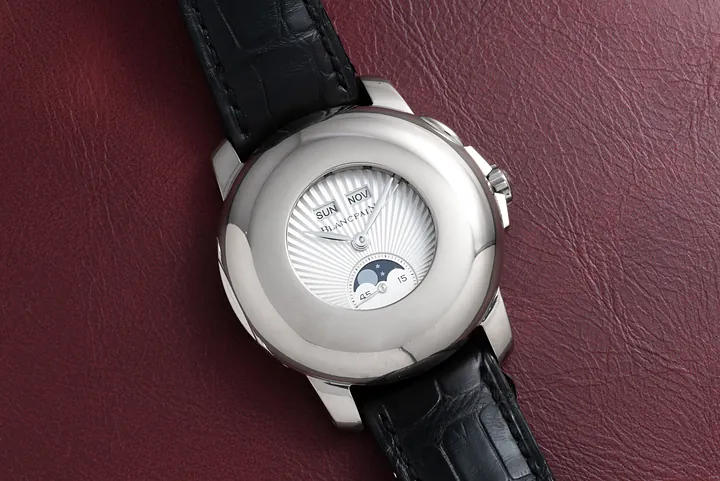
Pocket Watches · c. 1990
Blancpain Half Hunter Complete Calendar Moonphase LE, c. 1990
Analog/Shift (dealer), New York
Pocket Watches · 2007
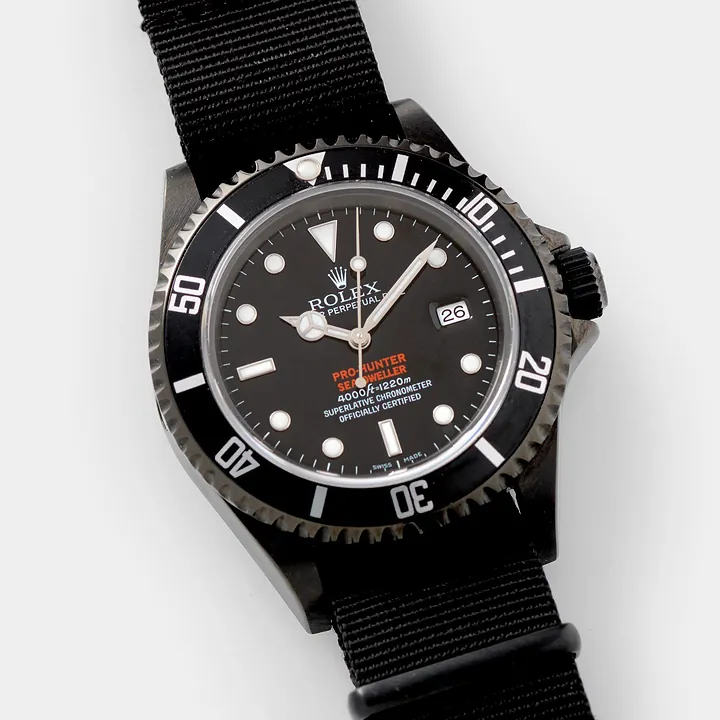
Rolex Pro Hunter Seadweller Reference 16600 Black DLC Coated, 2007
Bulang & Sons (dealer), Copenhagen