
Wristwatches · Wristwatch
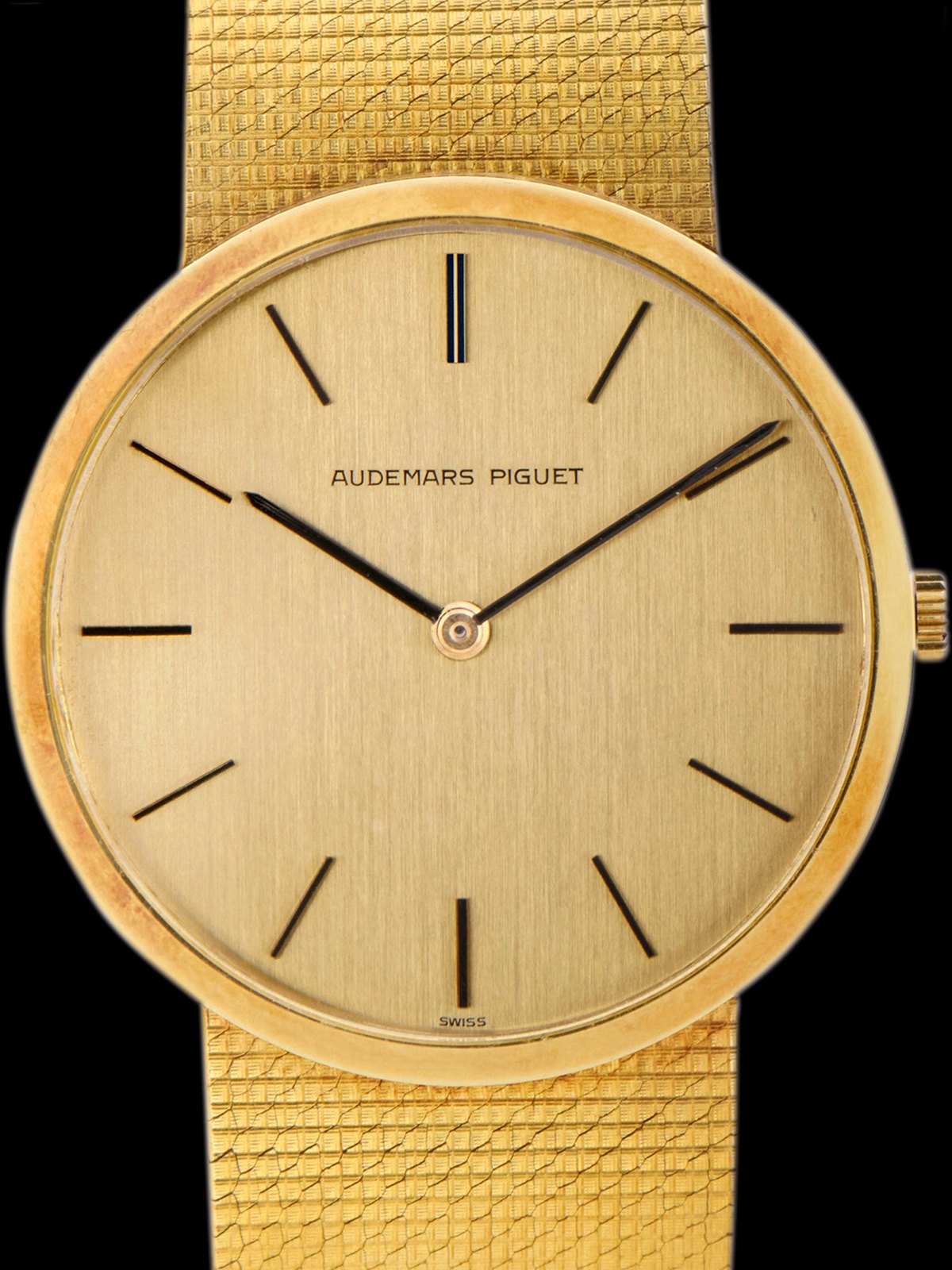
Audemars Piguet 18K YG "Ultra Thin" Integrated Bracelet Dress Watch 'Cal. 2090', 1970s
- Maker / attribution
- Audemars Piguet (maker)
- Date
- 1970s
- Historical period
- Quartz Revolution (1969 – 1990)
- Country of origin
- Switzerland
- Object type
- Wristwatch
- Stock no.
- AP18K2090
- Credit line
- Dealer listing, Craft & Tailored (AP18K2090)
- Catalogue title (original)
- 1970s Audemars Piguet 18K YG "Ultra Thin" Integrated Bracelet Dress Watch 'Cal. 2090' (English)
View the source record (dealer listing) ↗ (opens another website in a new tab)Suggest a correction
Record summary
Catalogued by Craft & Tailored (dealer), Los Angeles (stock number AP18K2090), this is a wristwatch by Audemars Piguet, made in Switzerland, dated 1970s. The Atlas places it in the Quartz Revolution period (1969 – 1990) of its Wristwatches collection. The record is illustrated with 6 photographs.
Assembled from the source record's structured fields. Dates and attributions are given as the source states them; where a field is missing the Atlas leaves it blank rather than estimating.
Catalogue description
Dealer description — Craft & Tailored
Although Audemars Piguet is now most closely associated with the Gérald Genta-designed Royal Oak, the manufacture had already established a rich legacy of refined and technically accomplished watchmaking long before its introduction. Its mid-century catalog was dominated by elegant dress watches, alongside highly collectible chronographs and complicated pieces, many distinguished by designs that were remarkably forward-thinking for their time. This sophisticated 1970s example embodies that lesser-seen side of Audemars Piguet. Crafted entirely in 18K yellow gold, it pairs a remarkably slim round case with an intricately textured integrated bracelet, creating a seamless and distinctly period design. The restrained gold-toned dial, slender baton markers, and simple two-hand configuration allow the sculptural case and bracelet to take center stage. Powered by the manually wound caliber 2090, the watch measures just 7mm thick, including its crystal, remaining exceptionally thin even by contemporary standards. Elegant without appearing ostentatious, it is a beautifully cohesive expression of understated luxury and the refined craftsmanship that defined Audemars Piguet’s dress watches of the era. SPECS Stock # AP18K2090 Brand Audemars Piguet Style "Ultra Thin" Bracelet Dress Watch Model N/A Serial B6XXX / 179XXX Size Men's / Unisex Material 18K Yellow Gold Dial Gold "Brushed" Millimeters 33.5 Bracelet Integrated 18K Yellow Gold Bracelet CASE & BRACELET The ultra-thin 18K yellow gold case is in exceptionally well-preserved condition, showing only minimal evidence of previous polishing and gentle signs of use. The unsigned crown is believed to be original to the watch. The case back retains all of its factory markings in crisp condition. The integrated 18K yellow gold bracelet is a true work of art and remains in exceptional condition, showing no notable stretch. The size of the bracelet is adjustable within the clasp from 7 to 7.25 inches. DIAL & HANDS The original brushed gold dial features black enamel-topped markers and hands for a distinguished contrast and improved visibility throughout. Both the dial and hands remain in virtually perfect vintage condition, showing no damage or age of note. ACCESSORIES The watch is keeping time, but the service history is unknown. A movement service can be purchased upon request.
Historical context
Quartz Revolution (1969 – 1990)
Seiko's Astron begins mass quartz timekeeping; traditional industries contract sharply.
Quartz and digital watches transformed the market after 1969. Swiss employment collapsed, Japanese and Hong Kong production soared, and the Swatch (1983) helped the Swiss industry recover; mechanical watches survived as luxury goods.
Read the period in the timelineMore wristwatches from this periodEarlier: Modern Mechanical Horology
Atlas type guide
Wristwatches
Bracelet watches were worn by women from the early nineteenth century — Breguet made one for Caroline Murat, Queen of Naples, in 1810–12 — but the wristwatch only became a man's instrument with military use and aviation in the early twentieth century. Between the World Wars it overtook the pocket watch; the 1920s and 1930s brought rectangular Art Deco cases, water-resistant cases and the first automatic winding systems.
After 1945 the wristwatch became a carrier of identity — dress watches, sports and dive watches, chronographs, calendars — produced by Swiss, American, Japanese, German, Soviet and Chinese industries. The quartz revolution after 1969 and the mechanical renaissance since the 1990s, including the rise of independent watchmakers, complete the story.
What to look for
- The reference number (between the lugs or inside the case back) and serial number, the starting point for dating.
- The calibre: its maker and number are often stamped under the dial or on the bridge.
- Originality of dial, hands and crown — refinished ('redial') dials are common.
- Case material marks: 18K/750, 14K/585, stainless steel, gold-filled, plated.
Dating clues
- Wire-lug cases: before c. 1925.
- Water-resistant screw-down cases: from 1926.
- Quartz movements: from 1969; sapphire crystals widespread after c. 1980.
General guidance written by the Atlas editors about this kind of object. It is not a statement about this particular piece; for that, rely on the source record above and on physical examination.
Related records
Clocks · c. 1990s
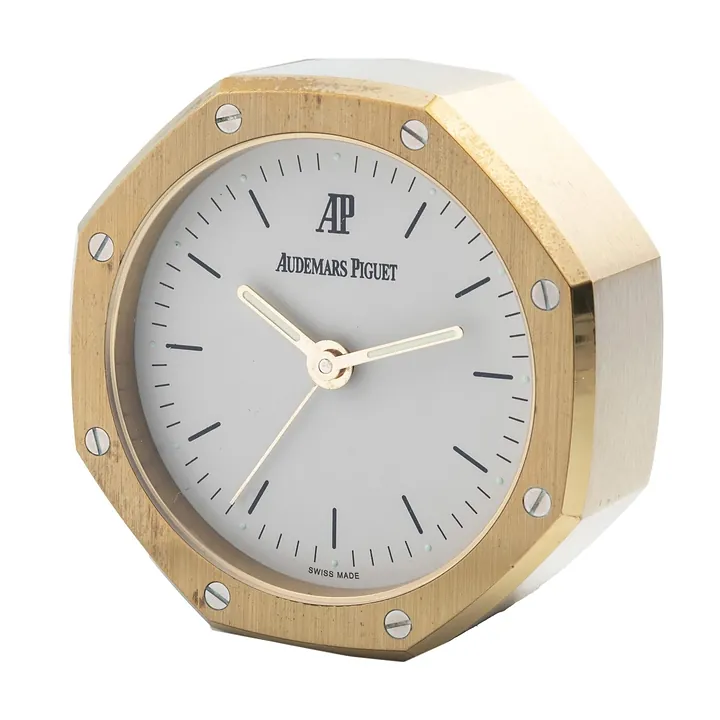
Audemars Piguet Royal Oak, c. 1990s
Antiquorum auction archive, Geneva
Pocket Watches · c. 1960
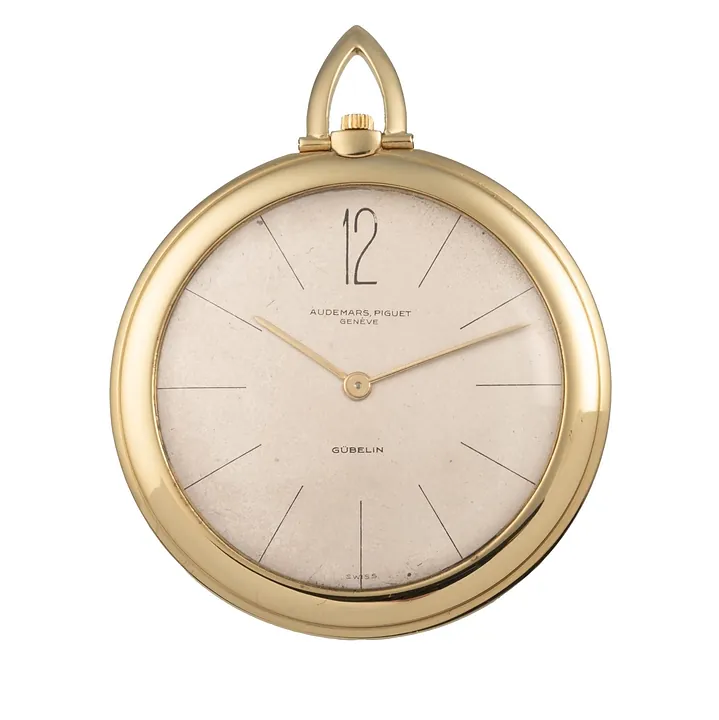
Audemars Piguet ''couteau'', c. 1960
Antiquorum auction archive, Geneva
Pocket Watches · originally sold in November 1961 (per the lot record)
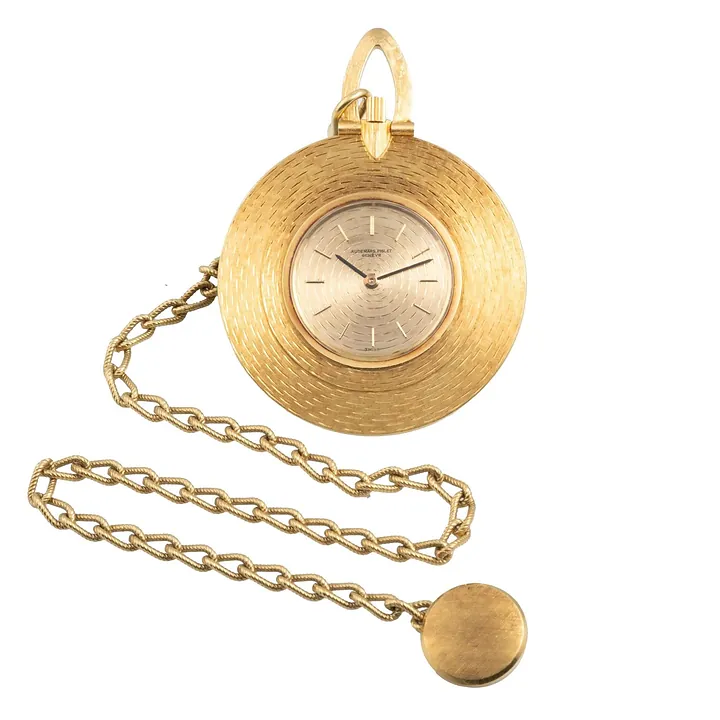
Audemars Piguet "extra Plate", ref. 5633 BA, originally sold in November 1961
Antiquorum auction archive, Geneva
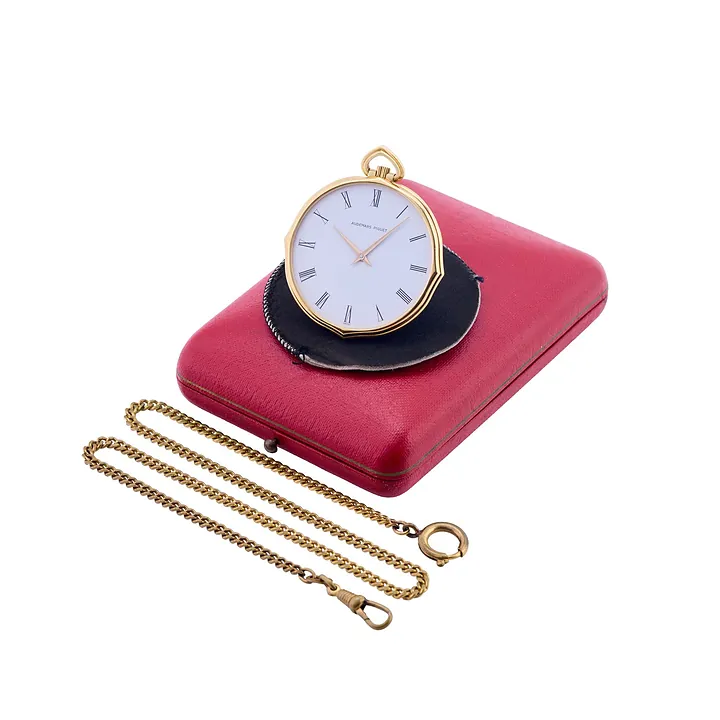
Pocket Watches · c. 1980
Audemars Piguet pocket watch, c. 1980
Antiquorum auction archive, Geneva

Wristwatches · 1970
Wristwatch by Heno, Switzerland, 1970
Museum Rotterdam

Wristwatches · 1960–1986
'Tri-Compax' calendar chronograph wristwatch in gold case, by Universal, Geneva, Switzerland, 1960–1986.
Science Museum Group, London

Wristwatches · 1969–1970
Beta 21 Quartz wristwatch movement, made in Switzerland, 1970.
Science Museum Group, London

Wristwatches · c. 1969
Omega Speedmaster Moonwatch, ref. 145022-69st, c. 1969
Antiquorum auction archive, Geneva