
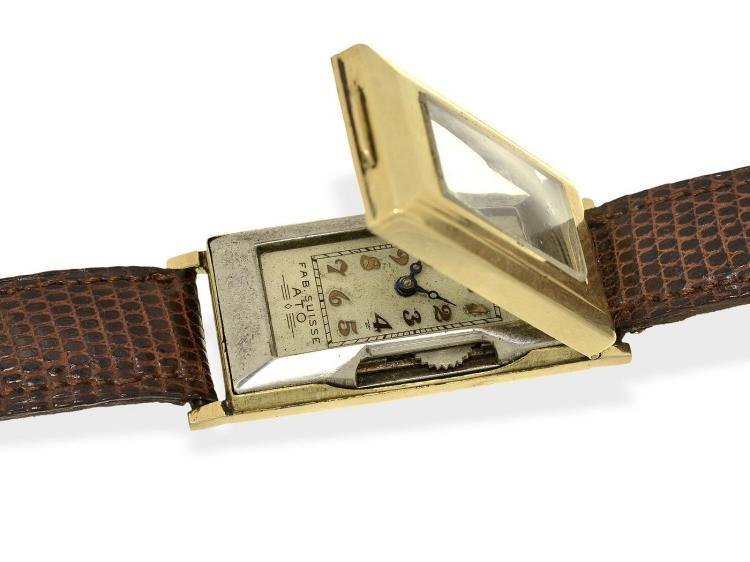
Wristwatches · Rectangular automatic wristwatch
ATO Rolls Hatots Patents 18K gold automatic wristwatch
- Maker / attribution
- ATO (source attribution)
- Date
- c. 1930
- Historical period
- Golden Age of Mechanical Watchmaking (1900 – 1945)
- Country of origin
- Switzerland
- Object type
- Rectangular automatic wristwatch
- Materials / technique
- 18 K gold
- Auction house
- Cortrie Spezial Auktionen
- Lot
- 4059
- Credit line
- Cortrie Spezial Auktionen
- Catalogue title (original)
- Sold at Auction: Wristwatch: very rare and early automatic watch ATO ROLLS HATOTS PATENTS 18 K gold, ca. 1930 (NO LIVE FEE) (English)
View the source record (auction lot) ↗ (opens another website in a new tab)Suggest a correction
Record summary
Catalogued by Cortrie Spezial Auktionen (lot 4059), this is a rectangular automatic wristwatch attributed to ATO, made in Switzerland, dated c. 1930. The Atlas places it in the Golden Age of Mechanical Watchmaking period (1900 – 1945) of its Wristwatches collection. Materials and techniques recorded by the source: 18 K gold. The record is illustrated with 1 photograph.
Assembled from the source record's structured fields. Dates and attributions are given as the source states them; where a field is missing the Atlas leaves it blank rather than estimating.
Catalogue description
Original object description
Dating to circa 1930, this early self-winding wristwatch features a rectangular 18K gold case measuring roughly 17 by 37 mm with an upper bezel assembly that pivots upward. Built under Hatots Patents, winding is achieved as the entire mechanical movement shifts vertically within the frame. The watch retains an original dial marked 'FAB. SUISSE ATO', original blued steel hands, a recessed winding crown, and an attached leather strap.
Original object description
Described in auction records as an early 18K gold ATO ROLLS HATOTS PATENTS automatic wristwatch from approximately 1930, the caliber winds via the vertical back-and-forth transit of the complete mechanism inside the housing. The cataloguing provides no supplementary documentation concerning internal guidance tracks or specific patent registration records.
Original object description
Fabricated from 18K gold, the rectangular case spans approximately 17 x 37 mm and incorporates an upward-swinging outer bezel that allows access to the inner movement container. A knurled winding crown is partially recessed into the lateral flank of the interior carrier, and the watch is fitted with a brown leather strap finished in a reptile grain.
Original object description
Retaining its original hands and dial without further recorded history, the light-colored rectangular display is appointed with Arabic numerals, blued hands, and the printed signature 'FAB. SUISSE ATO'.
Historical context
Golden Age of Mechanical Watchmaking (1900 – 1945)
The wristwatch displaces the pocket watch; waterproof cases, self-winding and grand complications.
The wristwatch overtook the pocket watch. Military use in the First World War, aviation, water-resistant cases (1926), automatic winding (1923–31), rectangular Art Deco designs and early chronographs and calendars defined the period.
Read the period in the timelineMore wristwatches from this periodEarlier: Industrial Revolution
Atlas type guide
Automatic (self-winding) watches
Self-winding watches use the wearer's motion to wind the mainspring. Abraham-Louis Perrelet and Breguet made 'perpétuelle' pocket watches with oscillating weights in the late eighteenth century, but the principle only became practical in the wristwatch. John Harwood patented a bumper automatic in 1923; Rolex's Perpetual rotor (1931) winding in one direction, and later bidirectional rotors (Eterna, Felsa Bidynator), established the modern form. Micro-rotors (Universal Genève, Buren) and peripheral rotors made automatic watches thinner.
What to look for
- A semicircular rotor turning 360° over the movement, or a 'bumper' weight that rebounds between springs.
- 'Automatic', 'Perpetual' or 'Self-winding' on the dial.
- A sealed screw-back case, since automatic watches are wound less often by the crown.
Dating clues
- Bumper automatics: 1923–c. 1955.
- Full rotors: from 1931 (Rolex); widespread after c. 1950.
- Micro-rotors: from 1954–1958.
General guidance written by the Atlas editors about this kind of object. It is not a statement about this particular piece; for that, rely on the source record above and on physical examination.
Related records
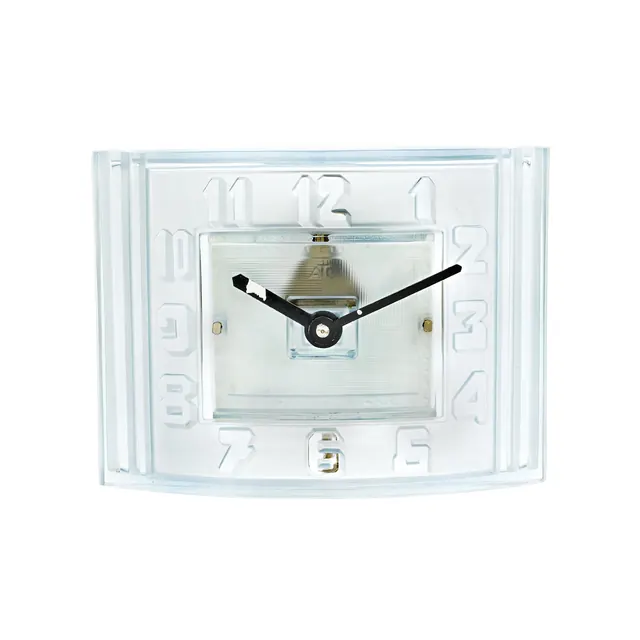
Clocks · c. 1930s
Ato table clock, France Glass, circa 1930's
Antiquorum auction archive, Geneva
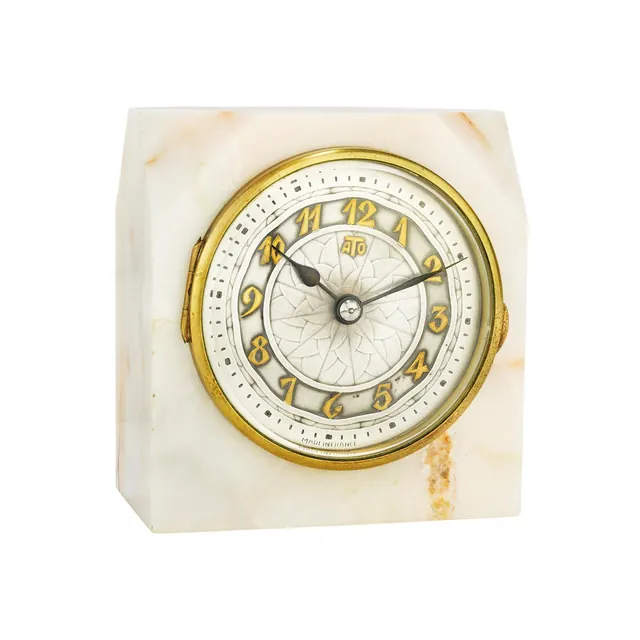
Clocks · c. 1927
Ato clock, France Marble and Gilt Brass, circa 1927
Antiquorum auction archive, Geneva
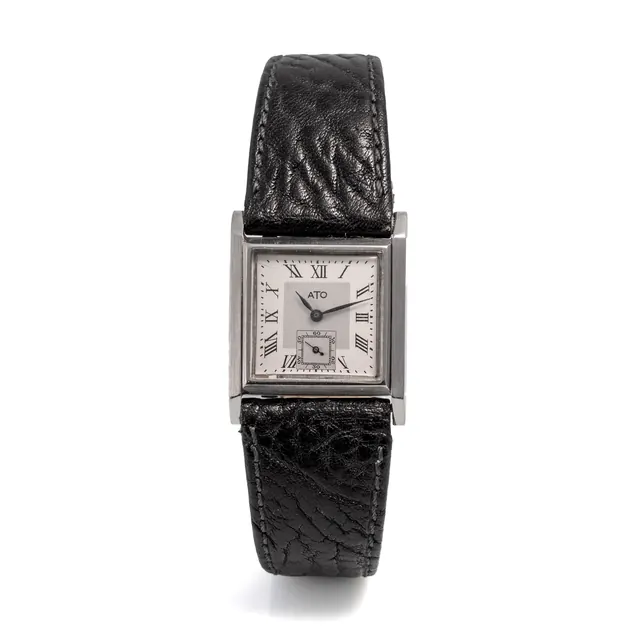
Wristwatches · c. 1930s
Ato wristwatch, France Back Wind, circa 1930's
Antiquorum auction archive, Geneva
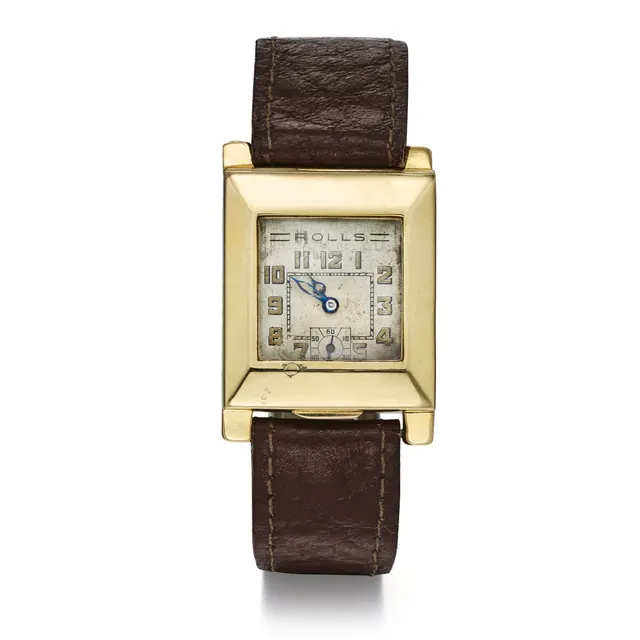
Wristwatches · c. 1930-1935
Ato wristwatch, circa 1930-1935
Antiquorum auction archive, Geneva

Wristwatches · 1931
Rolex 'Oyster Perpetual' rotor self-winding wrist-watch, lever escapement, in steel case with glass in back, Montres Rolex SA, Geneva, Switzerland, 1931
Science Museum Group, London

Wristwatches · 1900–1999
Wristwatch by Certina, Switzerland, 1900–1999
Nordic Museum Foundation
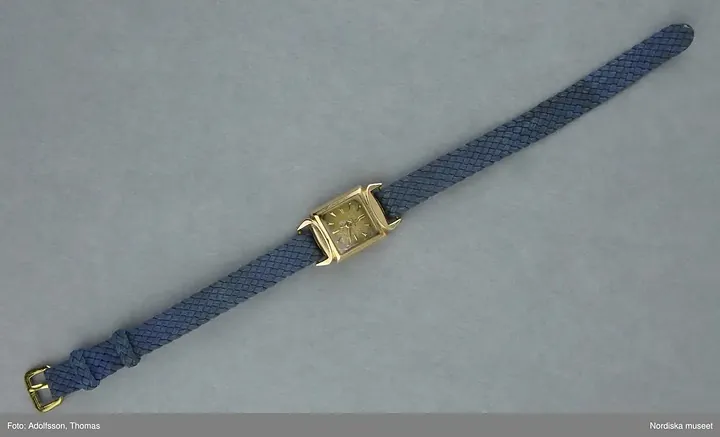
Wristwatches · 1900–1999
Wristwatch by Omega, Västerås, 1900–1999
Nordic Museum Foundation
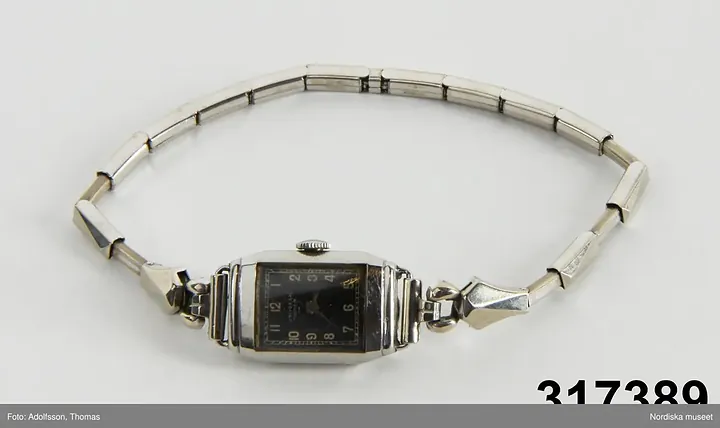
Wristwatches · 1900–1999
Wristwatch by Universal, Switzerland, 1900–1999
Nordic Museum Foundation