
Instruments · Astronomical compendium
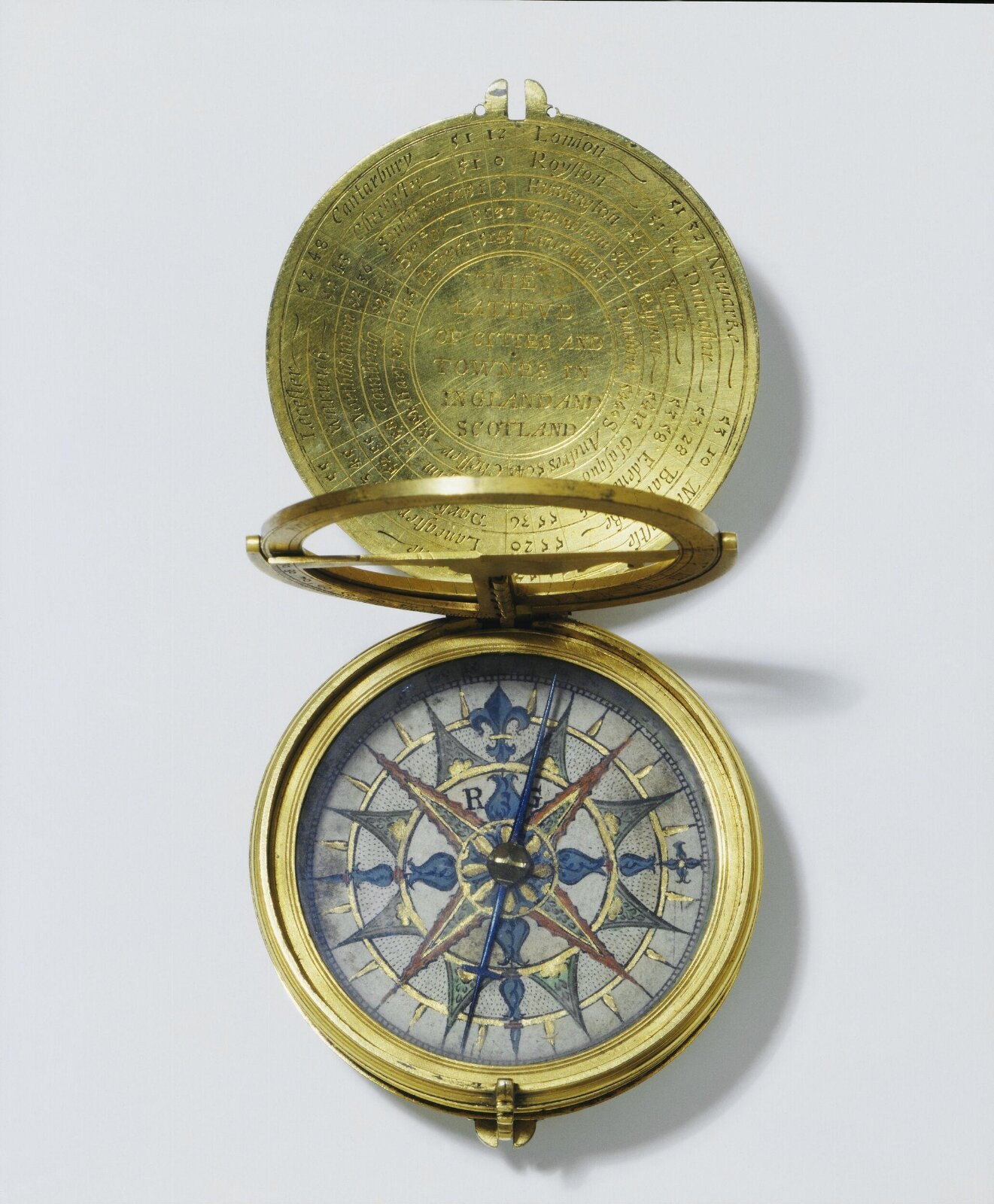
Astronomical compendium by Elias Allen, England, 1617
- Maker / attribution
- Elias Allen (designer)
- Date
- 1617
- Historical period
- Early Modern Horology (1600 – 1750)
- Country of origin
- England
- Place
- London
- Object type
- Astronomical compendium
- Materials / technique
- Brass, engraved
- Dimensions
- Height: 2.5 cm (closed); Diameter: 6.4 cm
- Holding institution
- Victoria and Albert Museum, London
- Accession / object no.
- M.51-1963
- Credit line
- Given by the Council of the Royal United Service Institution
View the source record ↗ (opens another website in a new tab)Suggest a correction
Record summary
Held and catalogued by Victoria and Albert Museum, London (object number M.51-1963), this is an astronomical compendium by Elias Allen, made in London, England, dated 1617. The Atlas places it in the Early Modern Horology period (1600 – 1750) of its Instruments collection. Materials and techniques recorded by the source: Brass, engraved. Recorded dimensions: Height: 2.5 cm (closed); Diameter: 6.4 cm. The record is illustrated with 6 photographs.
Assembled from the source record's structured fields. Dates and attributions are given as the source states them; where a field is missing the Atlas leaves it blank rather than estimating.
Catalogue description
Summary — Victoria and Albert Museum
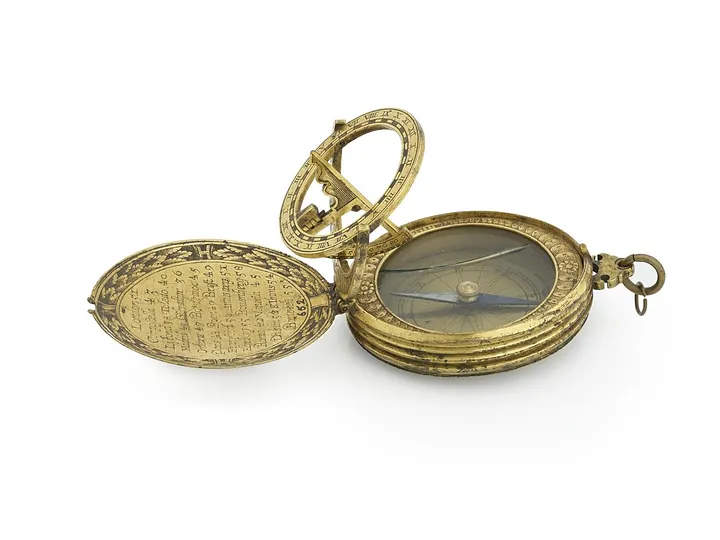
Object Type This compass-dial was used to tell the time during the day and also at night. In daytime, the hours are indicated by a sundial. The scale on the quadrant attached to the sundial's gnomon, or pointer, is first set to the correct latitude. The whole dial is then turned until the compass needle points to north on the compass card. In sunlight, the shadow of the gnomon will then indicate the hour on the ring. At night, the pointer on the larger and lower of the two discs is set to the current date engraved on a scale on the back cover. The compass-dial is held up to the eye and the smaller disc rotated until the slot cut in it is aligned with the two 'pointer' stars in the Great Bear. A pointer on this disc will then indicate the hour on the large disc. The age of the moon, measured in days, and the position of the sun and moon in the zodiac are indicated by rotating discs and a pointer on the back of the case. Historical Associations This sophisticated astronomical instrument was made for James I (ruled 1603-1625) and is also thought to have been used by his son, later Charles I, when he was Prince of Wales. People The compendium is signed by Elias Allen who was the most distinguished instrument maker of his day. He made the first slide rule and supplied mathematical instruments to the Stuart royal family.
Provenance
Designed and made in the London workshop of Elias Allen (born in Ashurst, Kent, about 1588, died in London, 1653); probably made for James I of England. In 1839 it was presented to the United Services Museum by Captain (later Admiral) William Henry Smyth, R.N., FRS., FSA. (1785-1865). At the time of presentation, the compendium was said to have been made for Charles I when Prince of Wales, but the reason for this theory is unrecorded, and the full royal arms engraved on the cover suggest it may instead have been commissioned for his father James.
Historical context
Early Modern Horology (1600 – 1750)
Huygens' pendulum and balance spring transform accuracy; English makers develop the anchor and deadbeat escapements.
Pocket sundials, Butterfield dials and sandglasses remained essential companions to imperfect clocks; navigators used sandglasses and the log line; observatories began to combine telescopes with pendulum clocks.
Read the period in the timelineMore instruments from this periodEarlier: Renaissance Horology
Atlas type guide
Astrolabes, quadrants and astronomical compendia
The planispheric astrolabe is a two-dimensional model of the sky. A pierced rotating star map (the rete) turns over a plate engraved for a particular latitude; by aligning a star or the sun with its observed altitude, the user can read the time of day or night, the time of sunrise and sunset, and solve many other astronomical problems. Developed in the Hellenistic world and refined by astronomers in the Islamic world from the eighth century, it reached Latin Europe through al-Andalus.
Quadrants, compendia, armillary spheres and later orreries belong to the same family of instruments that model the heavens. They were teaching tools, status objects and practical time-finders. Many surviving examples are signed and dated, which makes them important evidence for the history of instrument-making workshops in Baghdad, Isfahan, Lahore, Toledo, Louvain, Nuremberg, London and elsewhere.
What to look for
- The latitudes engraved on the plates — they show which cities the instrument was made for.
- The script and calendar used: Arabic or Persian inscriptions, abjad numerals, Hebrew or Latin text indicate tradition and region.
- The design of the rete: the number of named stars and the style of the star pointers changes by region and period.
- Shadow squares, unequal-hour lines and zodiac scales on the back (dorsum).
- Signatures, dedications and dates, often hidden on the throne (kursi) or the back.
Dating clues
- Signed and dated astrolabes allow precise dating; undated ones are attributed by star positions on the rete, which shift slowly through precession.
- Gothic-style retes with tracery are typical of European instruments of the fourteenth and fifteenth centuries.
- Printed paper astrolabes and planispheres became common from the sixteenth century onward.
General guidance written by the Atlas editors about this kind of object. It is not a statement about this particular piece; for that, rely on the source record above and on physical examination.
Related records
Instruments · 1607–1653
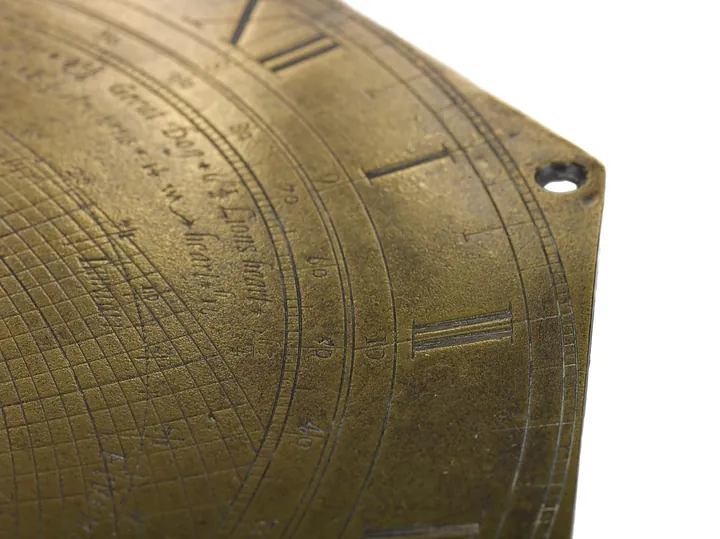
Sundial by Elias Allen, England, 1607–1653
Science Museum Group, London
Instruments · 1625–1635
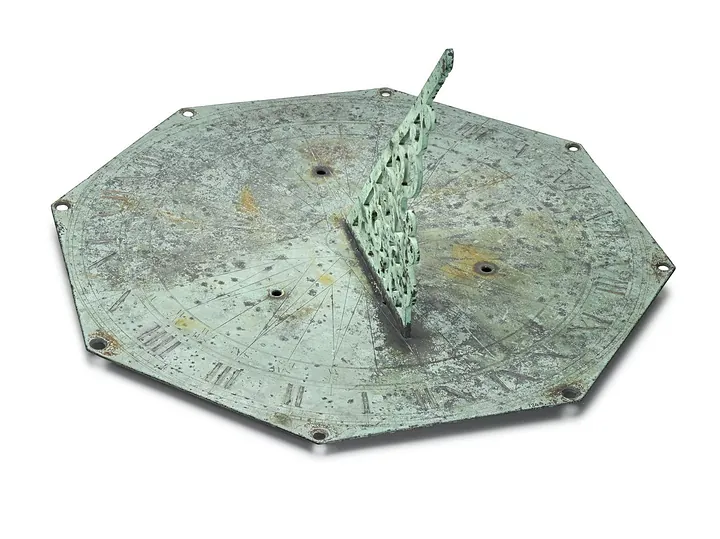
A very high quality horizontal sundial, set out to show individual minutes and signed ‘Elias Allen fecit’. London, c.1630
Science Museum Group, London
Instruments · 1630–1653
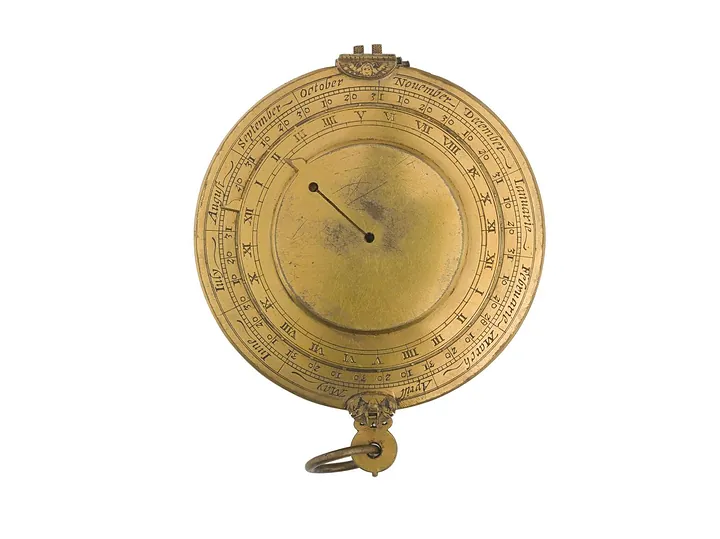
Sundial by Elias Allen, England, 1630–1653
Science Museum Group, London
Instruments · 1600
Sundial by T W, England, 1600
Science Museum Group, London
Instruments · 1623–1700
Armillary / astronomical instrument, England, 1623–1700
Science Museum Group, London
Instruments · 1631
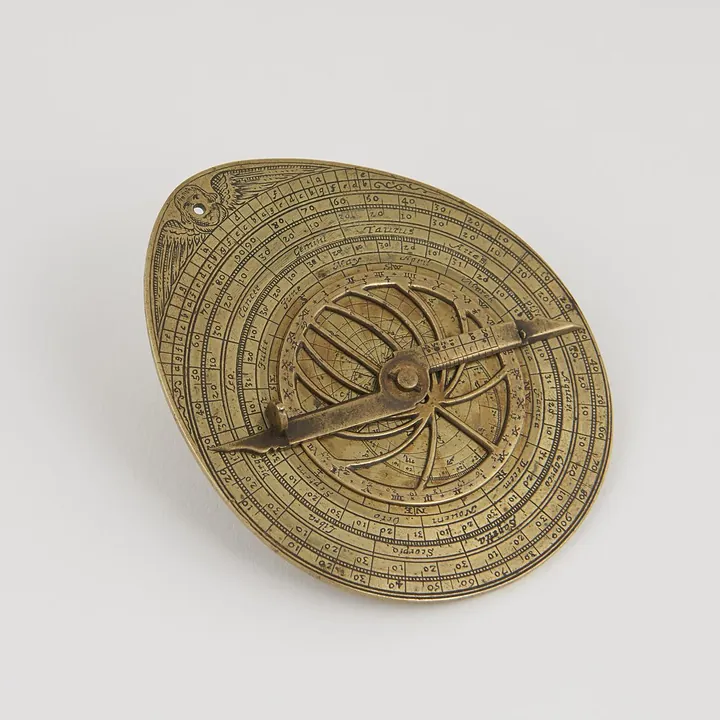
Small planispheric astrolabe, by Richard Melbourne dated 1631 with no suspension wing and without one alidade sighting vane, IC 438 [International Checklist].
Science Museum Group, London
Instruments · 1636–1700
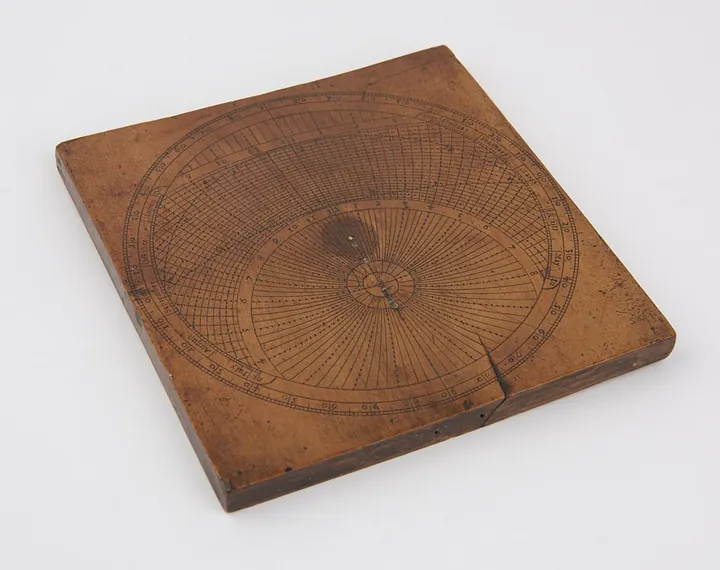
Sundial incomplete: gnomon missing: wood, 5" square, 1636–1700
Science Museum Group, London
Instruments · 1650–1665
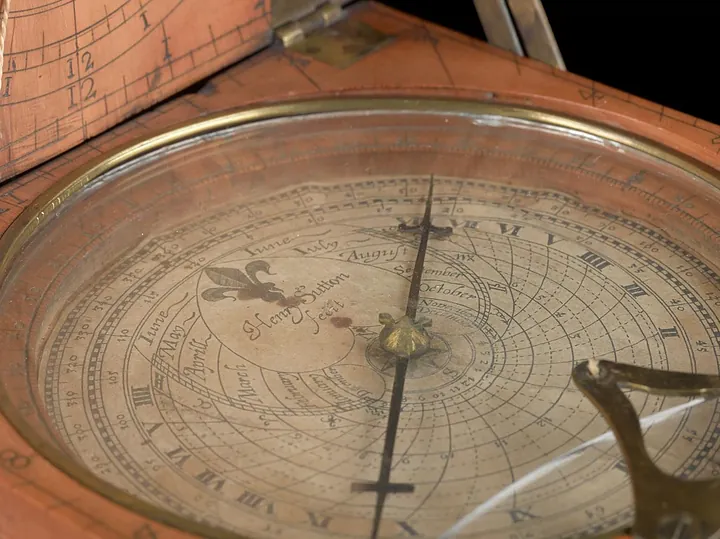
Folding pocket compass and sundial in boxwood case made by Henry Sutton, Threadneedle Street, London, 1650–1665.
Science Museum Group, London