
Clocks · Clock
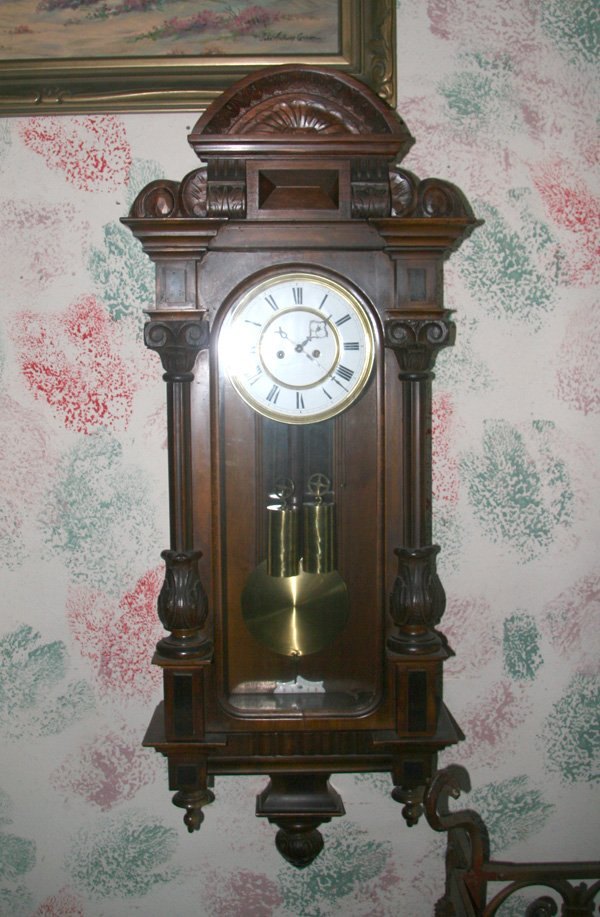
Antique Vienna 2 Weight Regulator Clock - circa 1900
- Maker / attribution
- Unrecorded in source
- Date
- c. 1900
- Historical period
- Golden Age of Mechanical Watchmaking (1900 – 1945)
- Country of origin
- Austria
- Object type
- Clock
- Auction house
- LiveAuctioneers auction archive
- Lot
- Item 7219990
- Credit line
- Auction lot record: lot 438, Historic Gov Auction Just Released $1 Start, GovernmentAuction (2010), via LiveAuctioneers
- Catalogue title (original)
- Antique Vienna 2 Weight Regulator Clock - Circa 1900 (English)
View the source record (auction lot) ↗ (opens another website in a new tab)Suggest a correction
Record summary
Catalogued by LiveAuctioneers auction archive (lot Item 7219990), this is a clock, made in Austria, dated c. 1900. The Atlas places it in the Golden Age of Mechanical Watchmaking period (1900 – 1945) of its Clocks collection. The record is illustrated with 2 photographs.
Assembled from the source record's structured fields. Dates and attributions are given as the source states them; where a field is missing the Atlas leaves it blank rather than estimating.
Catalogue description
Lot description — GovernmentAuction
Antique Vienna 2 Weight Regulator Clock - Circa 1900 - Thank you for viewing this Item. We hope that you are successful in your bidding. For over 30 years we have given the best possible customer service to our 1000's of repeat buyers. Antique Vienna 2 Weight Regulator Clock - Circa 1900 GovernmentAssetAuction.com is proud to present a rare Collectable Investment Opportunity. This is truly a remarkable piece. Please keep in mind the long term investment opportunity. It's a very good strategy to invest your money in different commodities such as Fine Collectables. Bid with confidence with GovernmentAssetAuction.com. We are the Internet's largest Liquidator of Real Estate, Jewelry, Rare Coins, Gold Plated Records, and Fine Artwork. Item Profile: GOV FILE # M-00816 Asset Type: Collectable Shipping and Fees This auction requires that the winning bidder pay a Buyer's Premium of ten percent (10%). Shipping charge will be determined at end of auction depending on where shipped to and carrier used for more accurate charge. Please call if you are the winning bidder for shipping price. The Fees mentioned above are non-refundable if the item is returned, except if the error is ours. Contact and Payment Information Email info@governmentassetauction.com Phone (661) 823-1543 Payment Options We accept all major credit cards , personal checks, cashier checks, money orders, and Bank Wire Transfers for the payment of your winning bid. If you're the Winning Bidder, please make a payment within 5 days after this auction has closed otherwise a Non paying bidder report will be filed against the winning bidder. Non Performing Bidder Reports lead to suspension from all online auctions. IMPORTANT Notices & Disclaimers - Please Read Items are sold "as-is" with no guarantee as to resale value. All information contained in this listing page has come from reliable sources and is accurate to the best of our knowledge. We make no guarantee expressed or implied as to the condition of the item(s) or information contained in this listing. Appraisals are done by a third party gemologist and are included with all those that are appraised. Please allow 14-21 days for delivery. Bid and invest with confidence from America’s number one auctioneer; GovernmentAssetAuction.com Copyright 2010 GovernmentAssetAuction.com
Historical context
Golden Age of Mechanical Watchmaking (1900 – 1945)
The wristwatch displaces the pocket watch; waterproof cases, self-winding and grand complications.
Between 1900 and 1945 clocks were electrified: master-clock systems ran factories and offices, synchronous mains clocks entered homes, and the Shortt free-pendulum clock set new standards of accuracy before the first quartz clocks (1927). Art Deco design reshaped mantel and table clocks.
Read the period in the timelineMore clocks from this periodEarlier: Industrial Revolution
Atlas type guide
Regulators, wall and Vienna clocks
A regulator is a precision pendulum clock used as a time standard in observatories, workshops and railway offices. Typical features are a deadbeat or Graham escapement, a temperature-compensated pendulum (mercury jar, gridiron or later invar), maintaining power and a regulator dial that separates hours, minutes and seconds. George Graham's deadbeat escapement (c. 1715) and his mercury pendulum, together with Harrison's gridiron, set the pattern for two centuries.
Wall clocks span a much wider range: the elegant Viennese Laterndluhr and Dachluhr of the Biedermeier period, the Dutch stoelklok and staartklok, English 'dial' clocks used in schools, offices and railway stations, and mass-produced spring and weight wall clocks from Germany (Gustav Becker, Junghans, Kienzle) and America.
What to look for
- Deadbeat escapement and compensated pendulum (gridiron rods, mercury jar or wood rod).
- A regulator dial with a large central minute hand and separate hour and seconds dials.
- Vienna regulators: glazed cases, slender pendulum, small weights, enamel two-piece dials.
- German factory trademarks stamped on the backplate (e.g. Gustav Becker anchor and crown, Junghans star).
Dating clues
- Graham-type deadbeat regulators: from c. 1720.
- Viennese Laterndluhr: c. 1800–1850.
- German factory 'Vienna-style' regulators: c. 1870–1930; Gustav Becker serial numbers allow close dating.
General guidance written by the Atlas editors about this kind of object. It is not a statement about this particular piece; for that, rely on the source record above and on physical examination.
Read next:Deadbeat escapementAnchor (recoil) escapementGrasshopper escapement
Related records
Clocks · 1909–1910
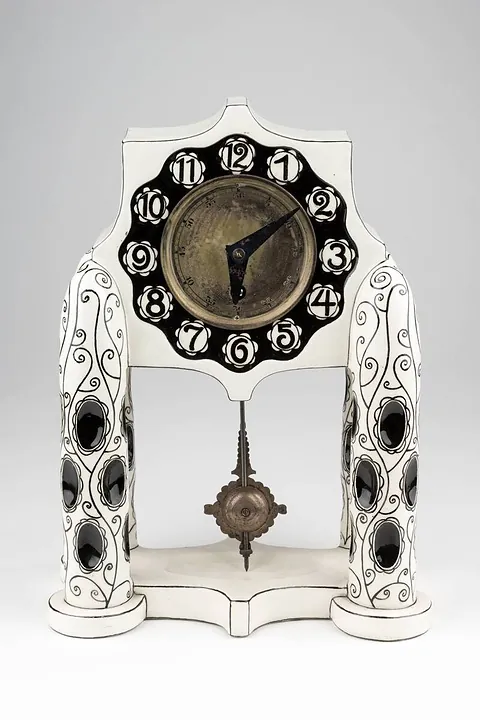
Table clock, Austria, 1909–1910
MAK – Museum of Applied Arts
Clocks · 1901–1933
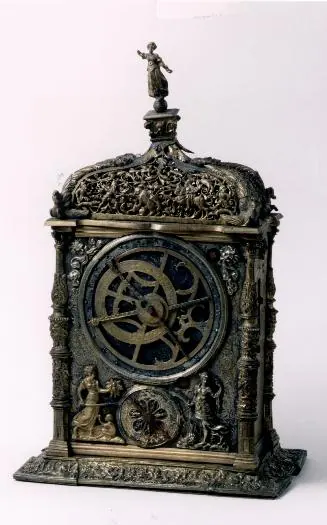
Clock, Austria, 1901–1933
Lázaro Galdiano Museum
Clocks · c. 1900
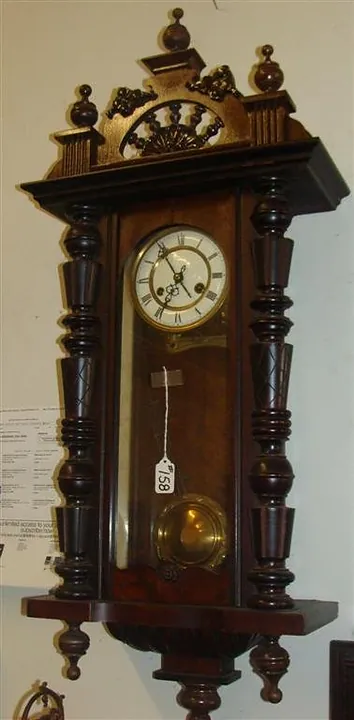
Vienna Regulator Wall Clock, Spring Driven, Time &, c. 1900
LiveAuctioneers auction archive
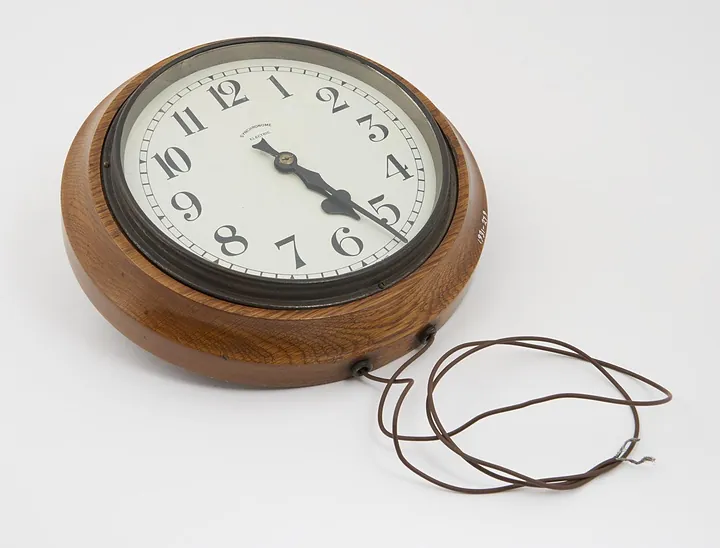
Clocks · 1890–1930
Clock with 8-inch impulse dial, by the Synchronome Company Limited, England, 1890–1930.
Science Museum Group, London
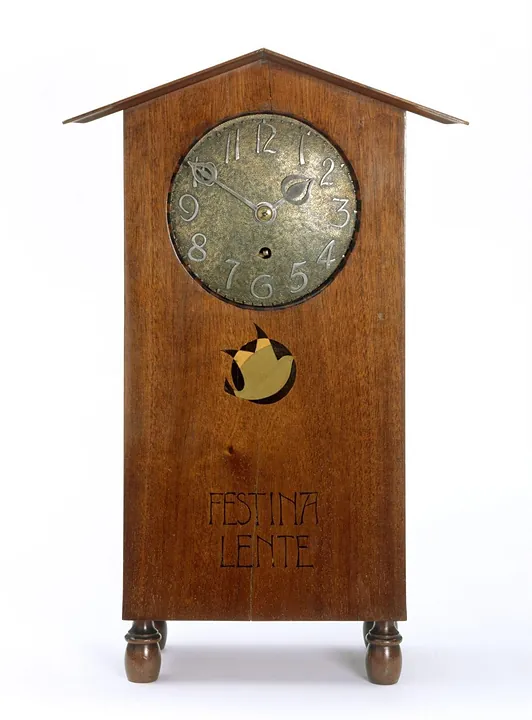
Clocks · c.1900
Clock by Mackay Hugh Baillie Scott, Bedfordshire, c.1900
Victoria and Albert Museum, London
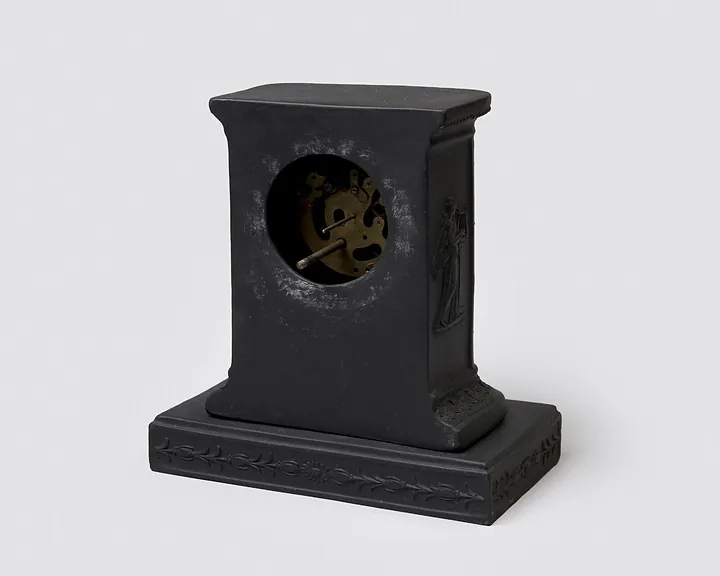
Clocks · c. 1900
Clock, black basalt, brass, Josiah Wedgwood and Sons, Etruria, c. 1900
Victoria and Albert Museum, London
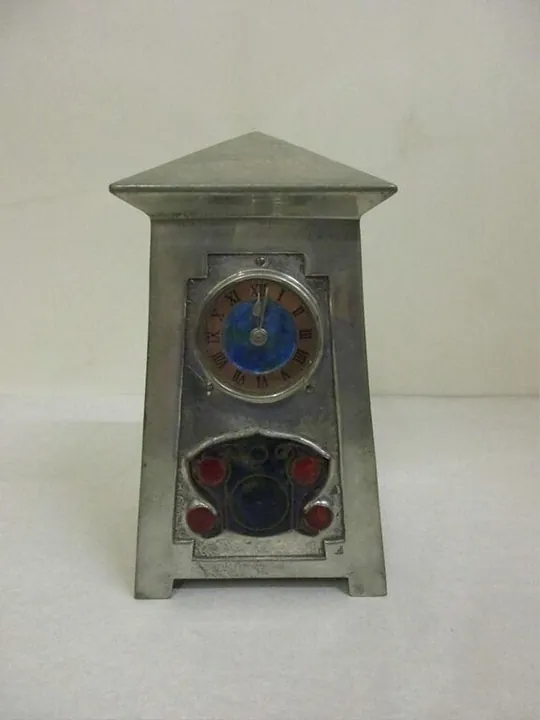
Clocks · c.1903-1904
Clock, pewter, made for Liberty& Co., England. 1903-4.
Victoria and Albert Museum, London
Clocks · c. 1900
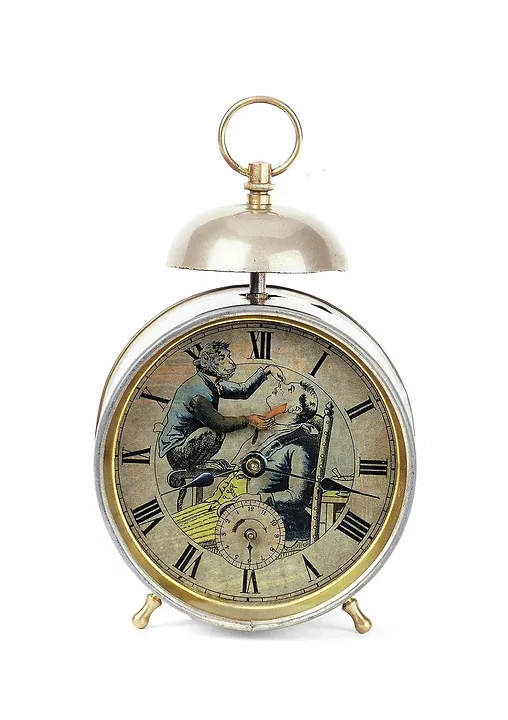
Alarm clock by Union Clock Company, Germany, c. 1900
German Clock Museum