
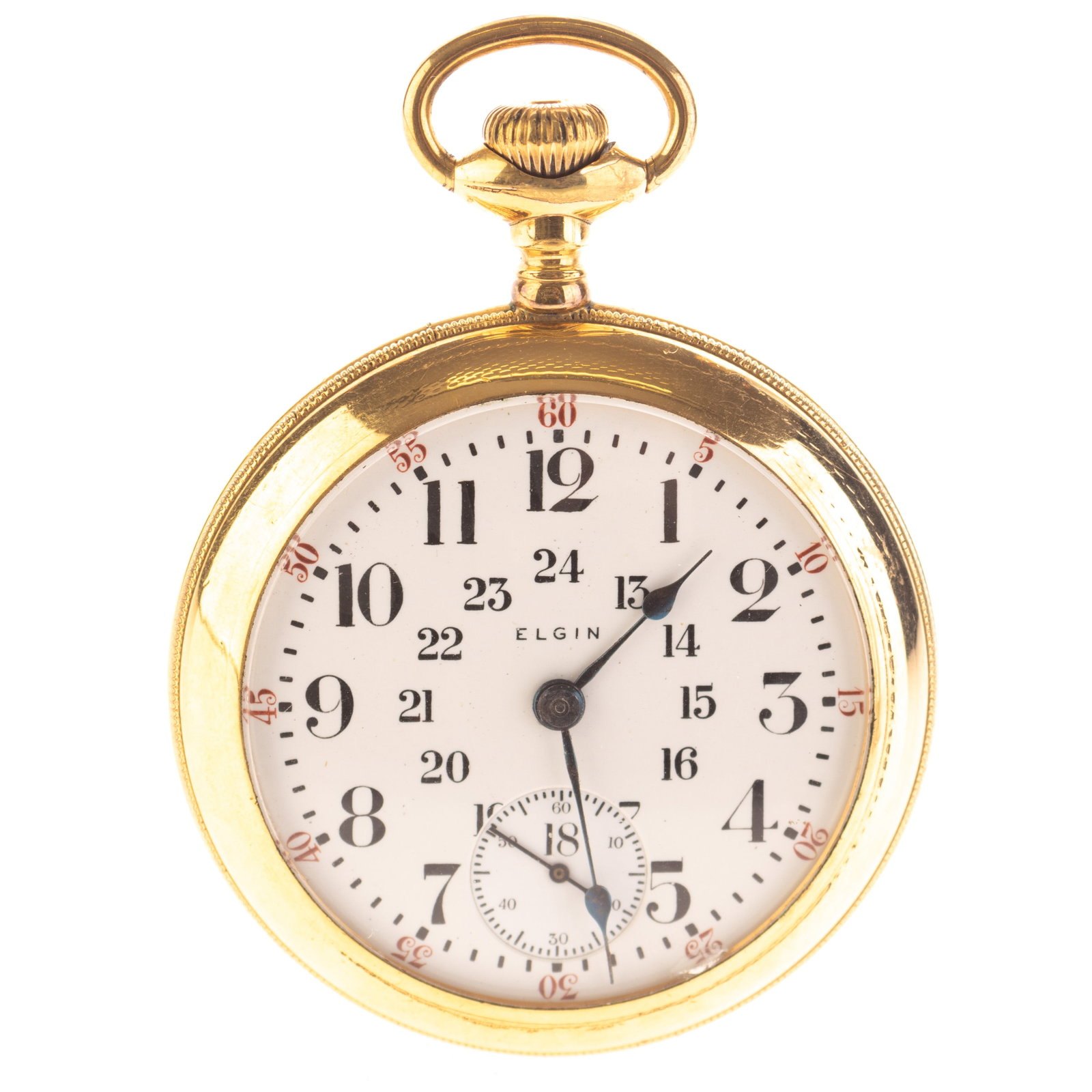
Pocket Watches · Pocket watch
Antique gold Plated Elgin Railroad pocket watch circa 1911
- Maker / attribution
- ELGIN (maker)
- Date
- c. 1911
- Historical period
- Golden Age of Mechanical Watchmaking (1900 – 1945)
- Country of origin
- Unrecorded in source
- Object type
- Pocket watch
- Materials / technique
- gold
- Auction house
- LiveAuctioneers auction archive
- Lot
- Item 194852055
- Credit line
- Auction lot record: lot 130, ANTIQUES, COLLECTIBLES & GENERAL HUGE SALE, CAMPBELL’S ANTIQUES & COLLECTIBLES AUCTIONS (2025), via LiveAuctioneers
- Catalogue title (original)
- ANTIQUE GOLD PLATED ELGIN RAILROAD POCKET WATCH CIRCA 1911 (English)
View the source record (auction lot) ↗ (opens another website in a new tab)Suggest a correction
Record summary
Catalogued by LiveAuctioneers auction archive (lot Item 194852055), this is a pocket watch by ELGIN, dated c. 1911. The Atlas places it in the Golden Age of Mechanical Watchmaking period (1900 – 1945) of its Pocket Watches collection. Materials and techniques recorded by the source: gold. The record is illustrated with 3 photographs.
Assembled from the source record's structured fields. Dates and attributions are given as the source states them; where a field is missing the Atlas leaves it blank rather than estimating.
Catalogue description
Lot description — CAMPBELL’S ANTIQUES & COLLECTIBLES AUCTIONS
Kindly examine all photographs provided in this listing or ask for a condition report. All items offered are in generally good, pre-owned condition, unless otherwise specifically described. The item is being shipped from the United Kingdom. We charge a packing fee of 17 USD per lot (this amount will be included on your post-sale invoice). Shipping will also be added onto your invoice separately. Please ensure your email is up-to-date so that you may receive this invoice, along with payment instructions. Shipping - items are shipped in house through USPS or similar fast-expedition courier, depending on size, weight, destination, or fragility. Once invoice is paid, lots are gathered in preperation for shipment. We try to ship immediately upon receipt of payment, however allow 7-14 BUSINESS days for shipment. Watch email for tracking numbers. WE DO NOT CONTROL WHEN USPS PICKS UP OR WHEN THEY UPDATE THE TRACKING SYSTEM. Please refrain from emailing or calling the day after you get your tracking number.
Historical context
Golden Age of Mechanical Watchmaking (1900 – 1945)
The wristwatch displaces the pocket watch; waterproof cases, self-winding and grand complications.
The pocket watch reached technical maturity and then began to give way to the wristwatch after the First World War. Complicated watches for collectors such as Henry Graves Jr. and James Ward Packard, railroad watches, and slim Art Deco dress watches are characteristic.
Read the period in the timelineMore pocket watches from this periodEarlier: Industrial Revolution
Atlas type guide
Railroad and railway watches
Timetables made accurate timekeeping a matter of safety. After a fatal collision at Kipton, Ohio, in 1891, American railroads adopted strict standards: open-face watches, lever setting, at least 17 jewels, adjustment to temperature and five positions, and a performance within 30 seconds a week, inspected regularly by approved watch inspectors. Waltham, Elgin, Hamilton, Illinois and Ball made railroad-grade watches in large numbers.
European railways issued service watches to guards, drivers and station staff, often engraved with the railway's initials and a staff number. Such watches link industrial timekeeping with the standardisation of time zones (Greenwich Mean Time adopted by British railways in 1847; North American standard time in 1883).
What to look for
- Open-face cases with the crown at 12 and lever setting under the bezel.
- Montgomery dials with every minute numbered, or bold Arabic numerals.
- 'Railroad grade', '21 Jewels', 'Adjusted 5 positions' on the movement.
- Railway initials and issue numbers engraved on the case back.
Dating clues
- American railroad standards: from 1891–93, revised c. 1908.
- Serial numbers of American makers allow dating to within a year.
General guidance written by the Atlas editors about this kind of object. It is not a statement about this particular piece; for that, rely on the source record above and on physical examination.
Read next:Detached lever escapement
Related records
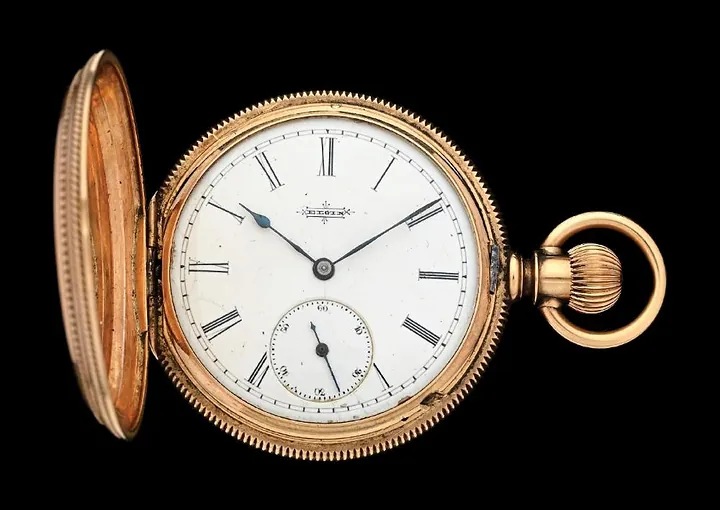
Pocket Watches · c. 1884
14K yellow gold Elgin H/C pocket watch c. 1884
Invaluable auction listings
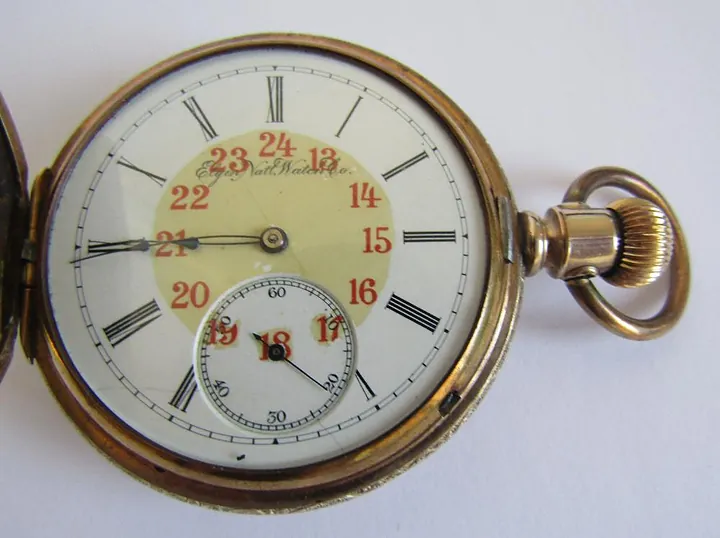
Pocket Watches · 1893
1893 Elgin pocket watch gold Filled hunting case
Invaluable auction listings
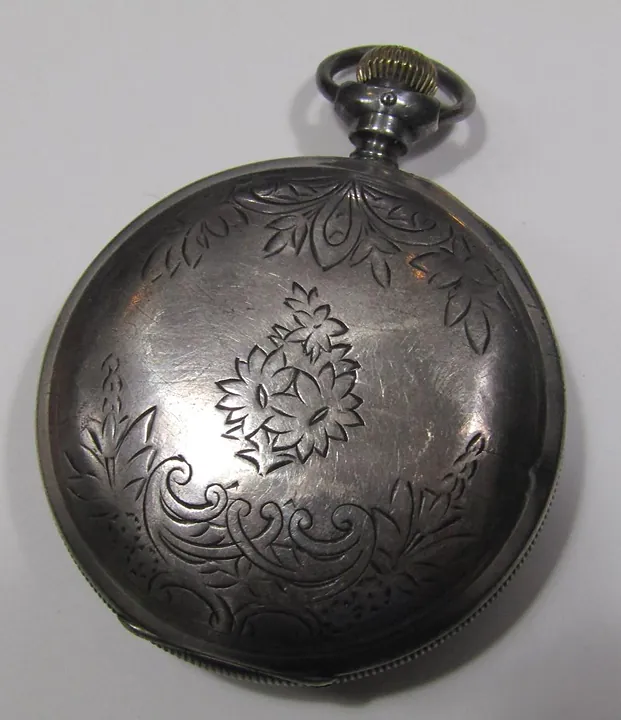
Pocket Watches · c. 1900
1900 Sterling silver Elgin pocket watch 18 size
Invaluable auction listings
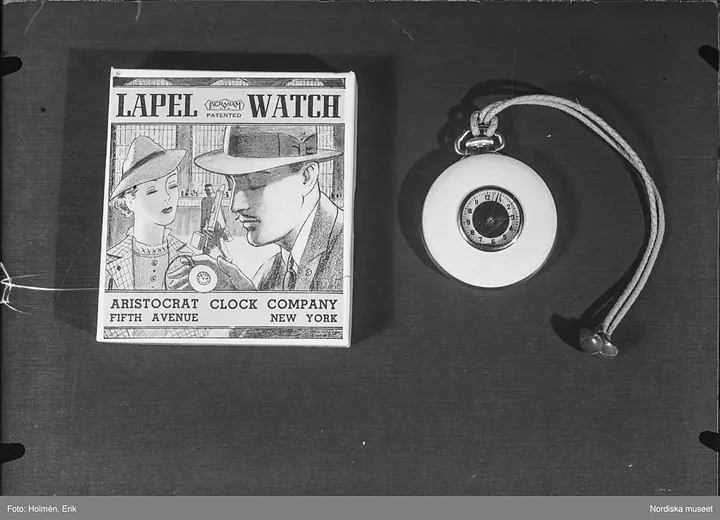
Pocket Watches · 1900–1999
Lapel watch by Erik Holmén, 1900–1999
Nordic Museum Foundation
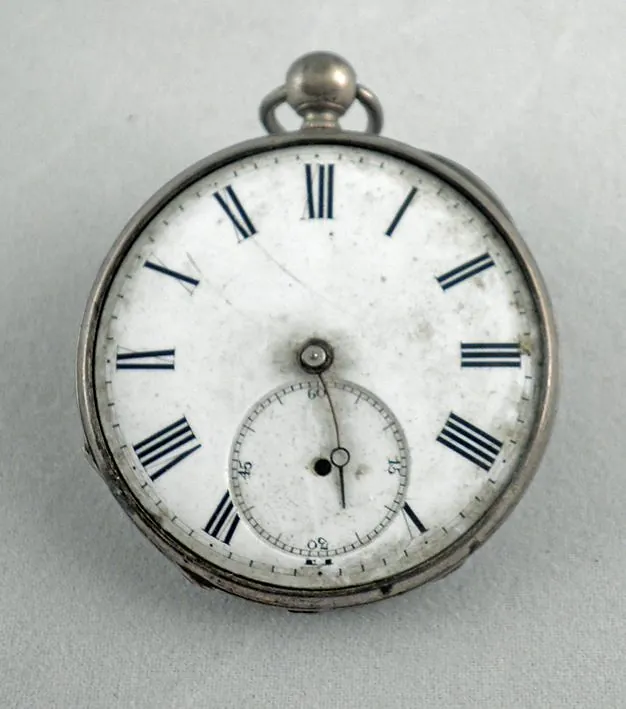
Pocket Watches · 1873–1930
Pocket watch, Lilla Malma socken, 1873–1930
Sörmland Museum
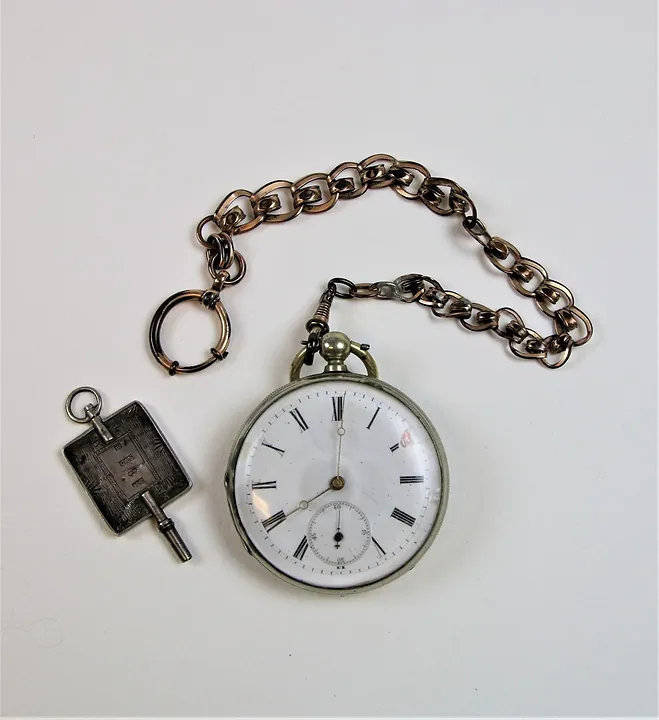
Pocket Watches · 1880–1920
Pocket watch, Sweden, 1880–1920
Sörmland Museum
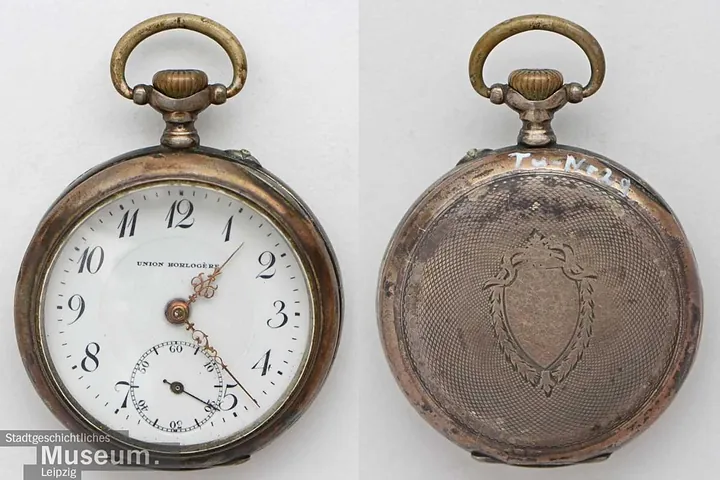
Pocket Watches · 1890–1910
Pocket watch by Union Horlogère, France, 1890–1910
Museum of City History Leipzig
Pocket Watches · 1891–1945
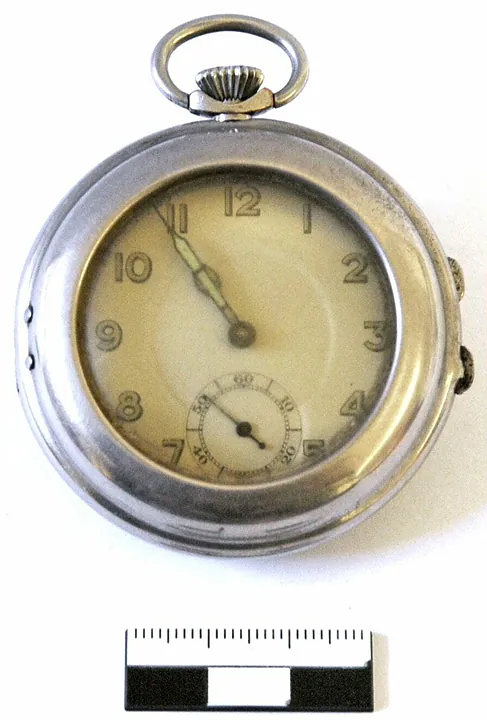
Pocket watch, Germany, 1891–1945
Montanhistorisches Dokumentationszentrum