
Pocket Watches · Pendant watch
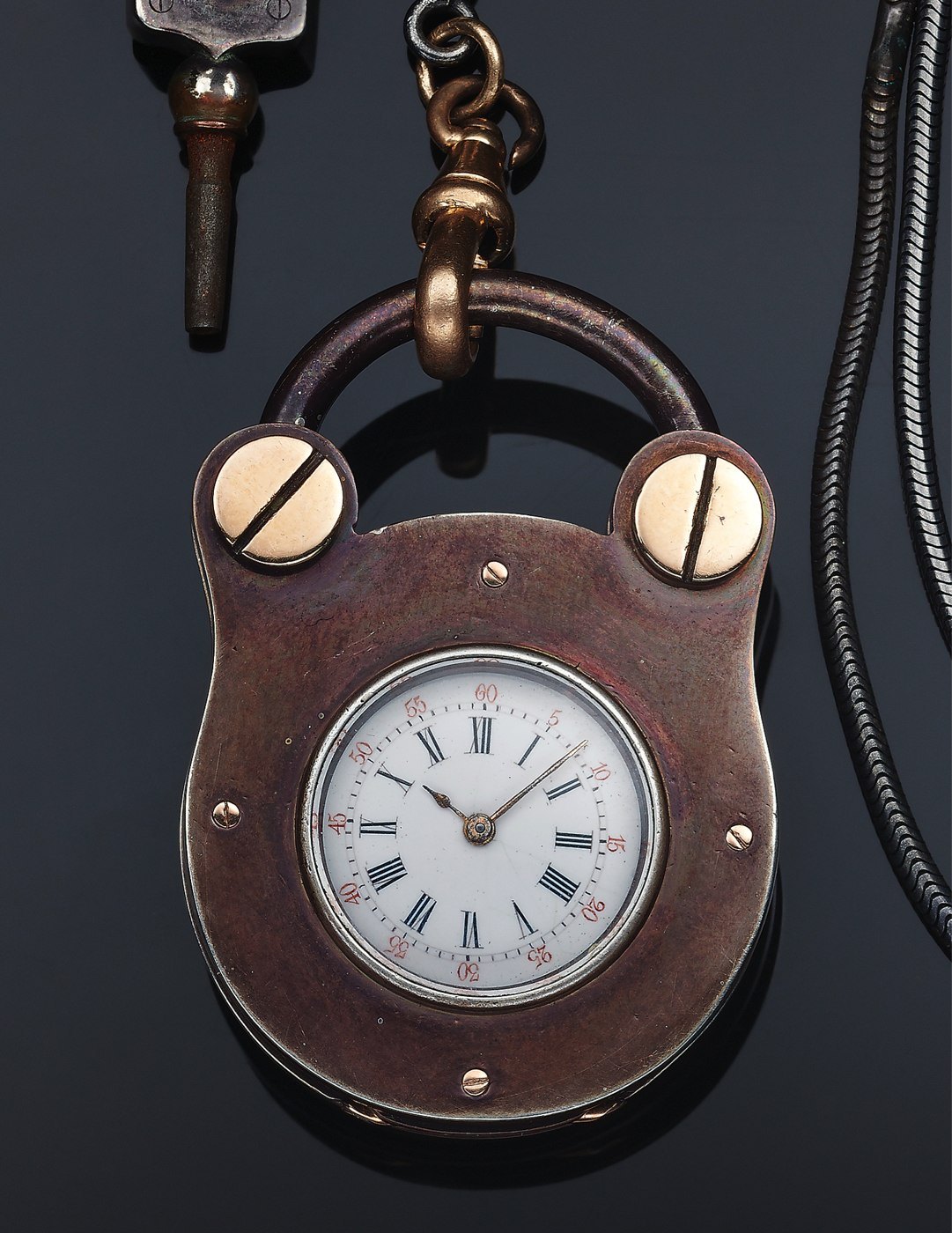
Anonymous Padlock-Shaped Pendant Watch
- Maker / attribution
- Unrecorded in source
- Date
- c. 1880
- Historical period
- Industrial Revolution (1850 – 1900)
- Country of origin
- Switzerland
- Object type
- Pendant watch
- Dimensions
- 33 x 49 mm
- Holding institution
- Antiquorum
- Accession / object no.
- 197
- Credit line
- Antiquorum
- Catalogue title (original)
- ANONYMOUS SWISS SILVER, GOLD & ENAMEL \nAnonymous, Swiss. Made circa 1880. \nFine and very unusual, pad lock shaped, sterling silver, gold \nand painted enamel key-wound pocket / pendant watch with \n (English)
View the source record ↗ (opens another website in a new tab)Suggest a correction
Record summary
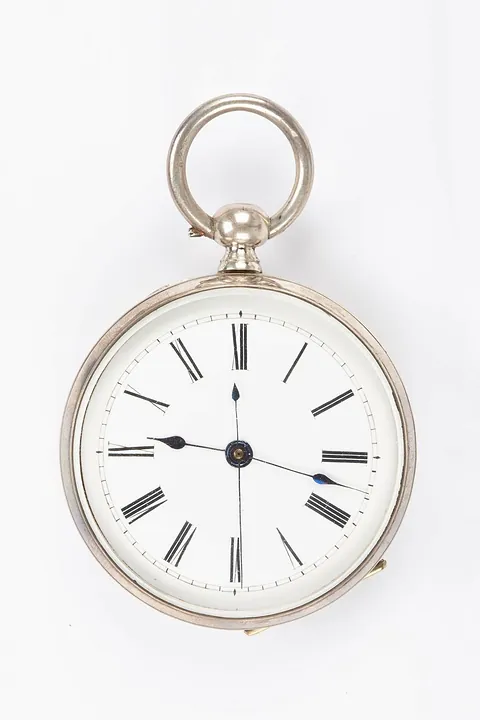
Held and catalogued by Antiquorum (object number 197), this is a pendant watch, made in Switzerland, dated c. 1880. The Atlas places it in the Industrial Revolution period (1850 – 1900) of its Pocket Watches collection. Recorded dimensions: 33 x 49 mm. The record is illustrated with 1 photograph.
Assembled from the source record's structured fields. Dates and attributions are given as the source states them; where a field is missing the Atlas leaves it blank rather than estimating.
Catalogue description
Original object description
Dating from circa 1880 Switzerland, this key-operated pendant watch is styled after a padlock, measuring 33 by 49 mm and assembled from sterling silver, gold, and brown painted enamel. Two prominent gold screws hold the top shackle in place, while the broad enameled bezel is anchored to the inner silver structure with four smaller gold screws. A transparent rear crystal allows observation of an interior plate perforated with two apertures for winding and hands-setting. It comes housed in its original fitted timber case, suspended from a 140 cm silver snake-link chain featuring a serpent-head terminal and a gold swivel clasp. The white enamel dial is appointed with black radial Roman numerals, yellow gold spade hands, and red Arabic numerals at five-minute intervals on the outer track; cataloguers note fine hairline fissures on the dial and some replaced hand components. Its 36 mm frosted gilt bridged movement features a cylinder escapement, flat balance spring, three-armed brass balance, and an index regulator, classified under condition code 3 to denote a requirement for mechanical service.
Historical context
Industrial Revolution (1850 – 1900)
American interchangeable-parts manufacture; railroad time standards; Swiss and German factory systems.
Machine production with interchangeable parts, pioneered by Waltham (1850s) and adopted by Elgin, Longines, Omega and others, made reliable lever watches widely affordable. Keyless winding became standard, railroad watch standards were introduced (1890s), and Swiss and American industries competed globally.
Read the period in the timelineMore pocket watches from this periodEarlier: Precision & Scientific Horology
Atlas type guide
Early spring-driven watches
Portable spring-driven timepieces appeared in southern Germany, France and Italy in the early sixteenth century; Peter Henlein of Nuremberg is traditionally credited, although the historical record is complex. These early watches were worn as pendants or carried, had iron or brass movements with a verge escapement and a foliot or small balance, and used a stackfreed or fusee to equalise spring force. They indicated hours only and were notoriously inaccurate.
From the later sixteenth century watches were made in Blois, Paris, Geneva, London and Augsburg in oval, octagonal, cruciform, skull and other 'form' cases of rock crystal, gilt brass, silver and enamel. They were jewellery and status objects as much as timekeepers.
What to look for
- A single hour hand and often a touch-pin hour ring for feeling the time.
- Stackfreed (a cam and spring) instead of a fusee on German watches.
- Pierced and engraved cocks over the balance, fine gut fusee lines.
- Rock-crystal, enamelled or engraved form cases.
Dating clues
- Drum-shaped German watches: c. 1530–1580.
- Oval and form watches: c. 1580–1650.
- Before c. 1675 there is no balance spring; watches can vary by many minutes a day.
General guidance written by the Atlas editors about this kind of object. It is not a statement about this particular piece; for that, rely on the source record above and on physical examination.
Related records
Pocket Watches · c. 1850
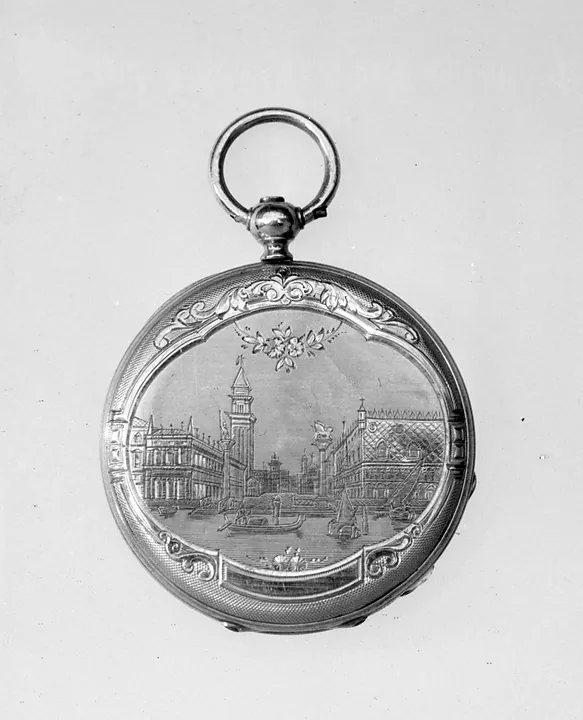
Watch by Eugène Bornand, Switzerland, c. 1850
The Metropolitan Museum of Art, New York
Pocket Watches · probably c. 1850–55
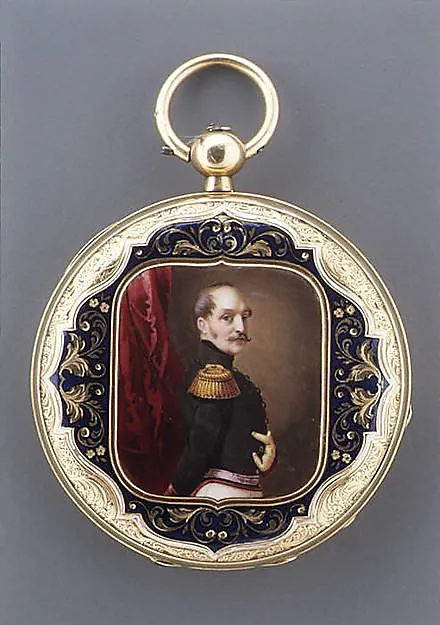
Watch by Firm of Perret & Cie, Switzerland, probably c. 1850–55
The Metropolitan Museum of Art, New York
Pocket Watches · c. 1850–55
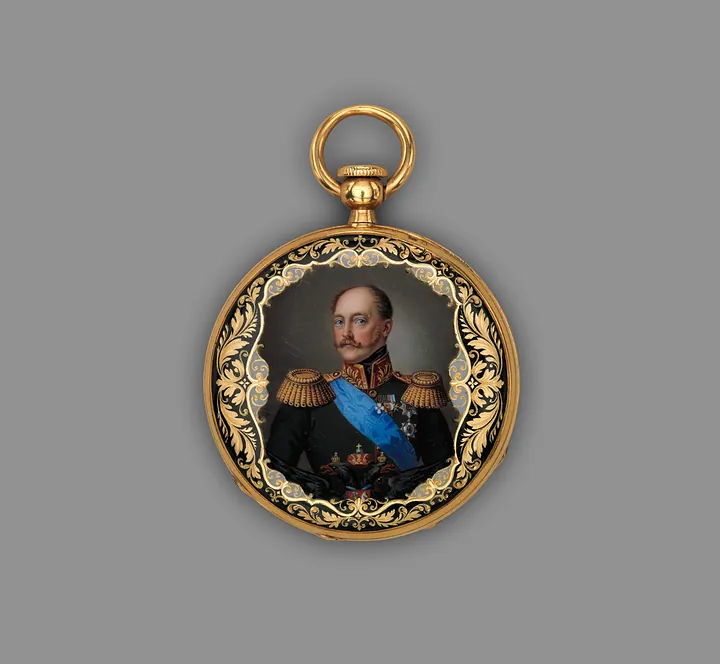
Watch by François Czapek, c. 1850–55
The Metropolitan Museum of Art, New York
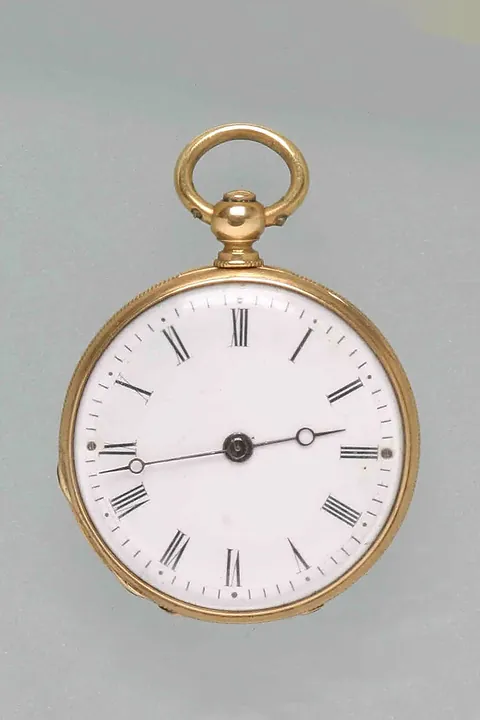
Pocket Watches · c. 1850
Pocket watch by D Bachelard et Fils, Switzerland, c. 1850
German Clock Museum
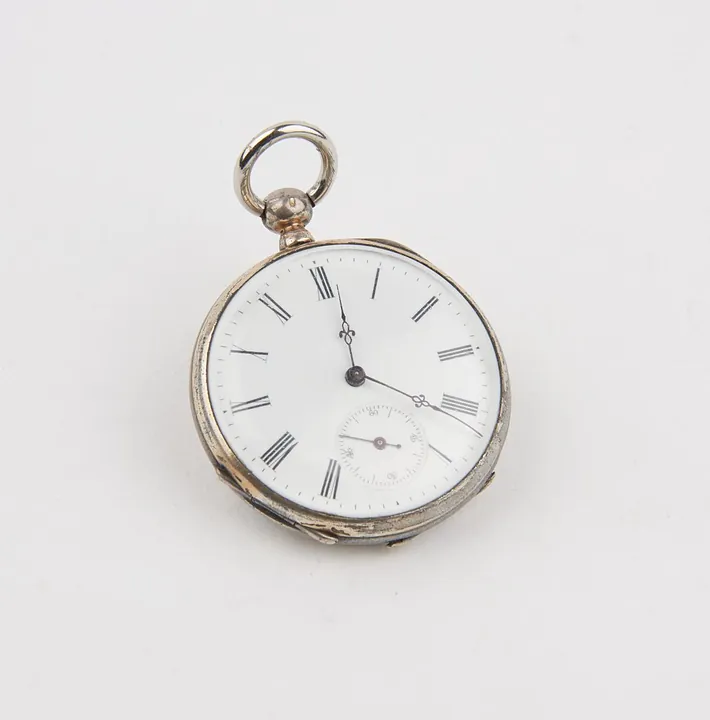
Pocket Watches · 1850–1899
Pocket watch by GT, Switzerland, 1850–1899
Science Museum Group, London
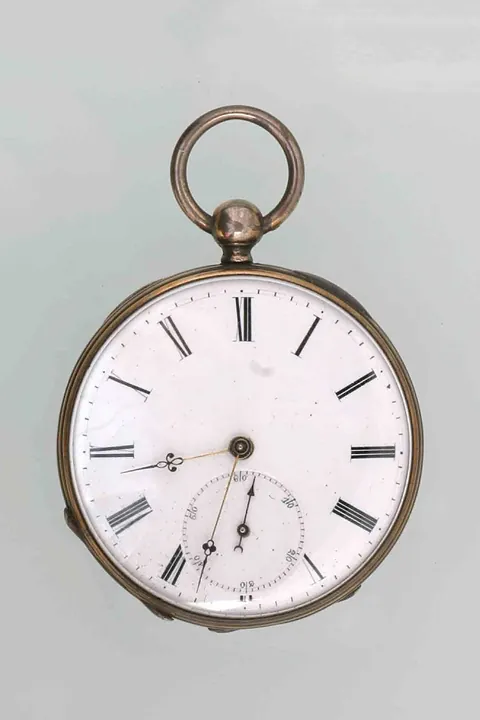
Pocket Watches · c. 1850
Pocket watch by Perret et Cie., Switzerland, c. 1850
German Clock Museum
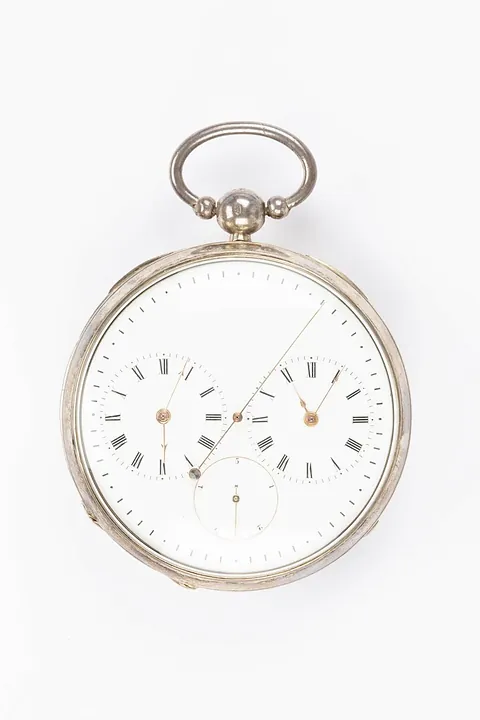
Pocket Watches · c. 1850
Pocket watch, probably Switzerland, c. 1850 (no. 58079)
German Clock Museum
Pocket Watches · c. 1850
Pocket watch, Switzerland, c. 1850 (no. 58081)
German Clock Museum