
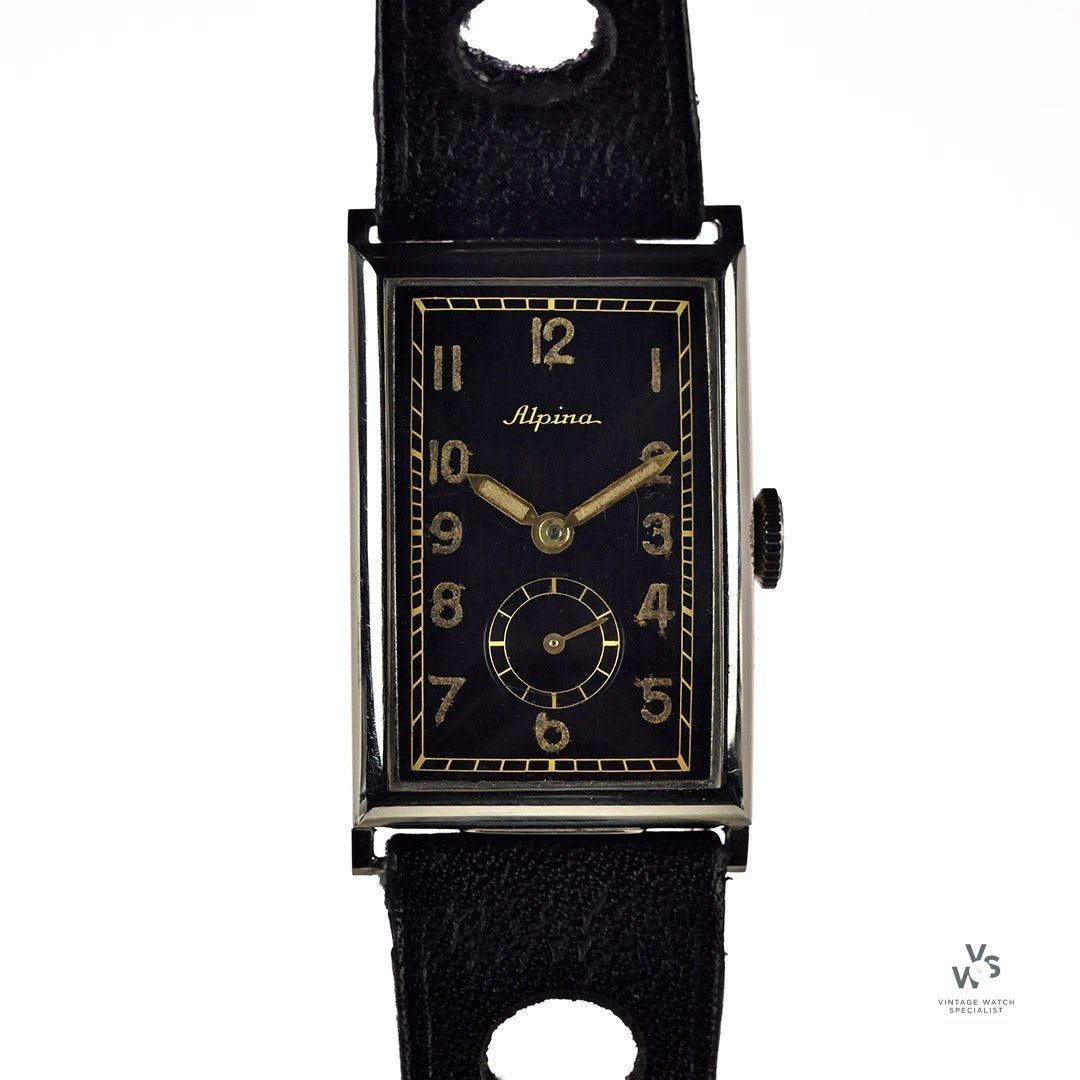
Wristwatches · Wristwatch
Alpina Art Deco Tank Case, Black Gilt Dial, circa 1938
- Maker / attribution
- Black (maker)
- Date
- c. 1938
- Historical period
- Golden Age of Mechanical Watchmaking (1900 – 1945)
- Country of origin
- Unrecorded in source
- Object type
- Wristwatch
- Stock no.
- vws3037
- Credit line
- Dealer listing, Vintage Watch Specialist (vws3037)
- Catalogue title (original)
- Alpina Art Deco Tank Case - Black Gilt Dial - c.1938 (English)
View the source record (dealer listing) ↗ (opens another website in a new tab)Suggest a correction
Record summary
Catalogued by Vintage Watch Specialist (dealer), United Kingdom (stock number vws3037), this is a wristwatch by Black, dated c. 1938. The Atlas places it in the Golden Age of Mechanical Watchmaking period (1900 – 1945) of its Wristwatches collection. The record is illustrated with 6 photographs.
Assembled from the source record's structured fields. Dates and attributions are given as the source states them; where a field is missing the Atlas leaves it blank rather than estimating.
Catalogue description
Dealer description — Vintage Watch Specialist
A Stunning Vintage Alpina Art Deco Tank Case with a Beautiful Black Gilt Dial and Lumed Hands, in Remarkable Condition, c.1938 Alpina Watches, renowned for their precision and durability, has a rich history that dates back to 1883. The brand was founded by Gottlieb Hauser, a Swiss watchmaker based in Geneva. Alpina quickly gained recognition for producing high-quality timepieces specifically designed for sports and adventure enthusiasts. In the early 20th century, Alpina introduced innovative features like anti-magnetic cases and shock-resistant mechanisms, setting new standards in watchmaking. What's on Offer This watch is stunning - even more so in reality than in our pictures! The rich black dial boasts gilt Arabic numerals and a seconds counter at 6 o'clock framed by an Art Deco style detail around the outer perimeter. The hands still retain their original lume which has aged to a nice colour and corresponds with the rest of the dial. The tank case has been well-preserved and presents on fixed lug bars. Inside, the watch is powered by the 490, a great example of watchmaking in 1938 and provides a reliable performance. The rectangular shape was much more popular in the 1930s thanks to the Art Deco movement's fidelity to symmetry, and the dustproofing idea that Alpina incorporated into the crown remains revolutionary.
Historical context
Golden Age of Mechanical Watchmaking (1900 – 1945)
The wristwatch displaces the pocket watch; waterproof cases, self-winding and grand complications.
The wristwatch overtook the pocket watch. Military use in the First World War, aviation, water-resistant cases (1926), automatic winding (1923–31), rectangular Art Deco designs and early chronographs and calendars defined the period.
Read the period in the timelineMore wristwatches from this periodEarlier: Industrial Revolution
Atlas type guide
Wristwatches
Bracelet watches were worn by women from the early nineteenth century — Breguet made one for Caroline Murat, Queen of Naples, in 1810–12 — but the wristwatch only became a man's instrument with military use and aviation in the early twentieth century. Between the World Wars it overtook the pocket watch; the 1920s and 1930s brought rectangular Art Deco cases, water-resistant cases and the first automatic winding systems.
After 1945 the wristwatch became a carrier of identity — dress watches, sports and dive watches, chronographs, calendars — produced by Swiss, American, Japanese, German, Soviet and Chinese industries. The quartz revolution after 1969 and the mechanical renaissance since the 1990s, including the rise of independent watchmakers, complete the story.
What to look for
- The reference number (between the lugs or inside the case back) and serial number, the starting point for dating.
- The calibre: its maker and number are often stamped under the dial or on the bridge.
- Originality of dial, hands and crown — refinished ('redial') dials are common.
- Case material marks: 18K/750, 14K/585, stainless steel, gold-filled, plated.
Dating clues
- Wire-lug cases: before c. 1925.
- Water-resistant screw-down cases: from 1926.
- Quartz movements: from 1969; sapphire crystals widespread after c. 1980.
General guidance written by the Atlas editors about this kind of object. It is not a statement about this particular piece; for that, rely on the source record above and on physical examination.
Related records
Pocket Watches · 1960s
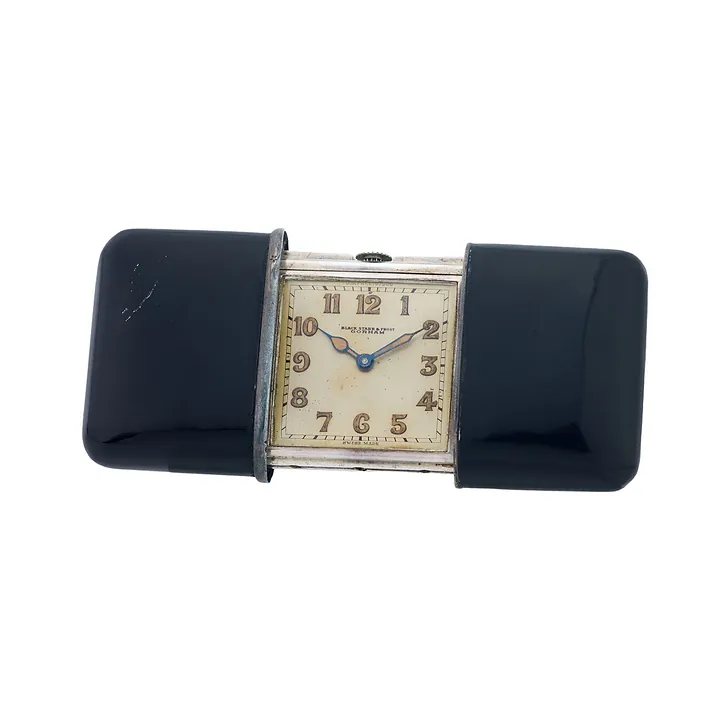
Black Purse Watch, 1960s
Antiquorum auction archive, Geneva
Clocks · c. 1810
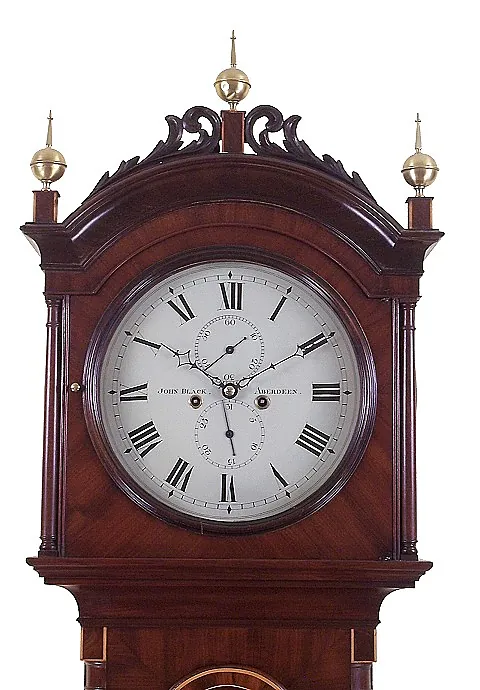
Round dial grandfather clock by Black, Aberdeen, c. 1810
P A Oxley (dealer), Wiltshire
Wristwatches · 1970s
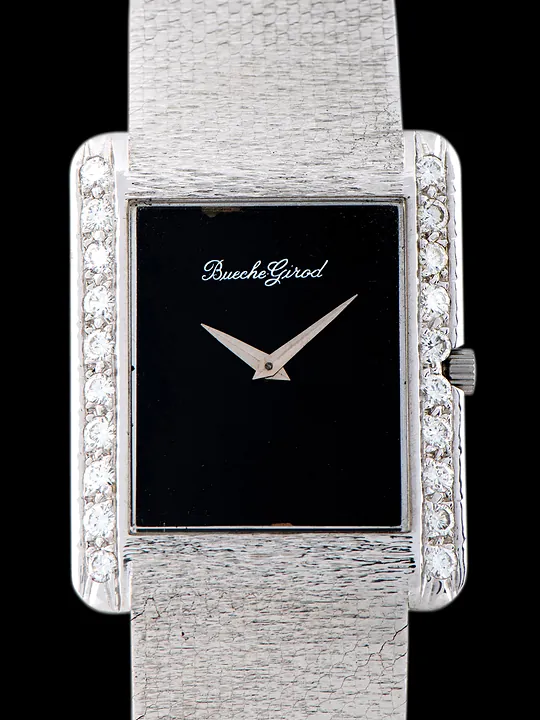
Bueche Girod Dress Watch 18K WG & Factory Diamonds (Ref. Y9810) Black Dial, 1970s
Craft & Tailored (dealer), Los Angeles
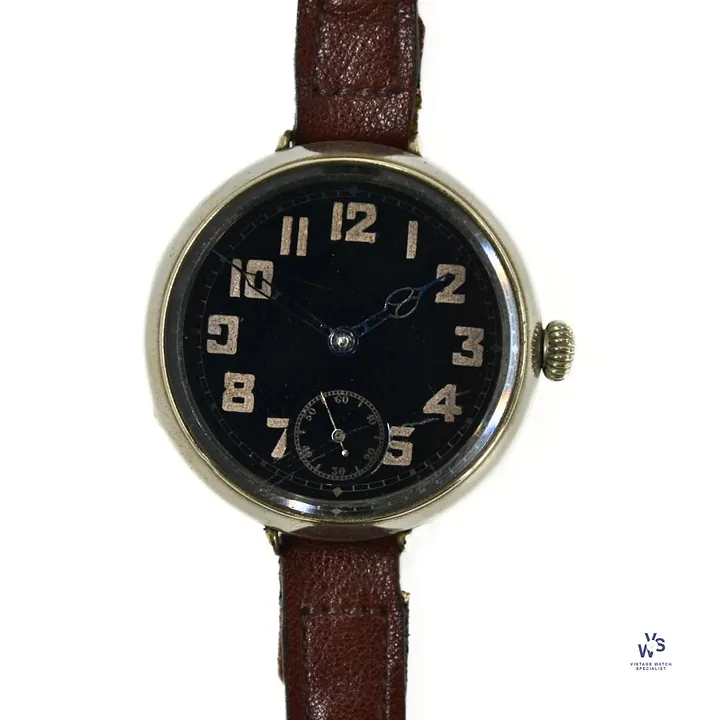
Wristwatches · c. 1917
Anonymous Dial, Military Engravings, Trench Watch, Black Dial, circa 1917
Vintage Watch Specialist (dealer), United Kingdom
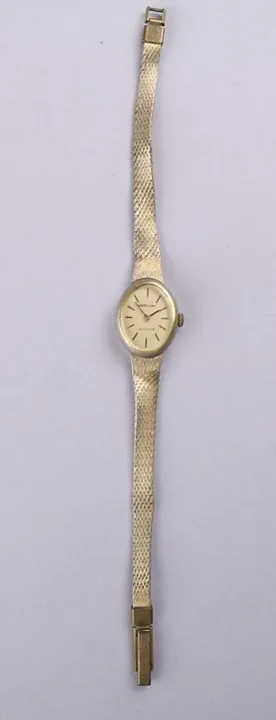
Wristwatches · 1900–1999
Wristwatch by Mercury, 1900–1999
Modemuseum Hasselt
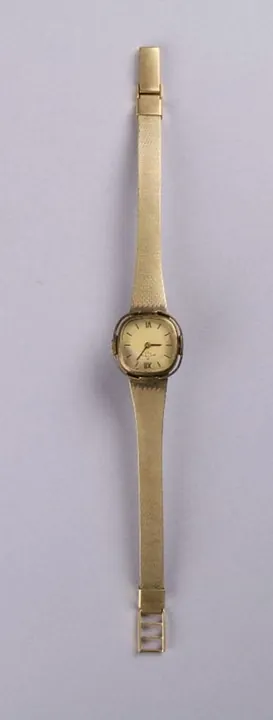
Wristwatches · 1900–1999
Wristwatch by Nutrix, 1900–1999
Modemuseum Hasselt

Wristwatches · 1920
Wristwatch, 1920
Modemuseum Hasselt

Wristwatches · 1931
Rolex 'Oyster Perpetual' rotor self-winding wrist-watch, lever escapement, in steel case with glass in back, Montres Rolex SA, Geneva, Switzerland, 1931
Science Museum Group, London