
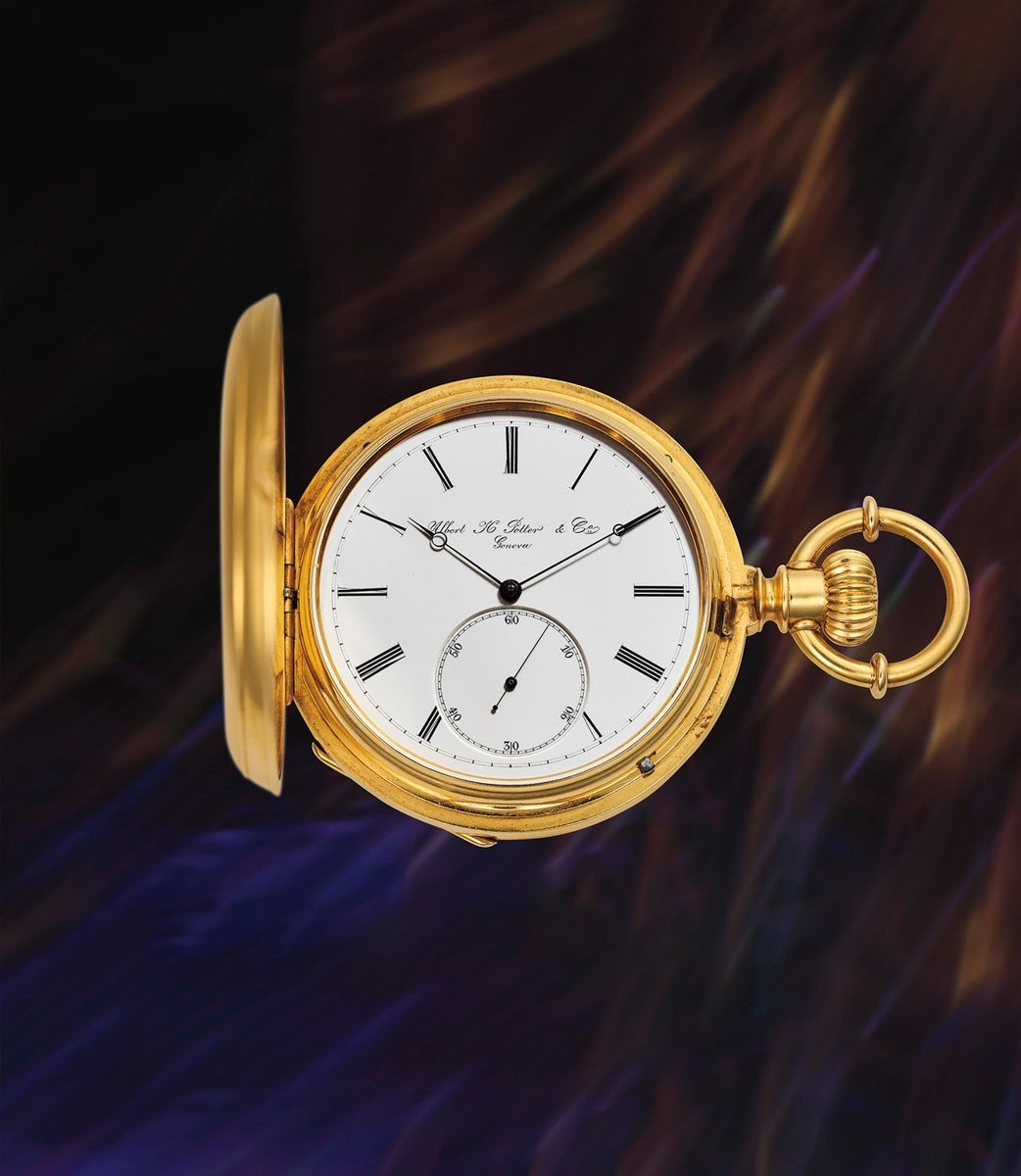
Pocket Watches · Hunter cased pocket chronometer
Albert H. Potter Pivoted Detent Chronometer pocket watch
- Maker / attribution
- Albert H. Potter (source attribution)
- Date
- c. 1877
- Historical period
- Industrial Revolution (1850 – 1900)
- Country of origin
- Switzerland
- Object type
- Hunter cased pocket chronometer
- Materials / technique
- 18K yellow gold
- Dimensions
- 56mm Diameter
- Holding institution
- Phillips
- Accession / object no.
- 86
- Credit line
- Phillips
- Catalogue title (original)
- Albert H. Potter The New York Watch Auction: XII (English)
View the source record ↗ (opens another website in a new tab)Suggest a correction
Record summary
Held and catalogued by Phillips (object number 86), this is a hunter cased pocket chronometer attributed to Albert H. Potter, made in Switzerland, dated c. 1877. The Atlas places it in the Industrial Revolution period (1850 – 1900) of its Pocket Watches collection. Materials and techniques recorded by the source: 18K yellow gold. Recorded dimensions: 56mm Diameter. The record is illustrated with 1 photograph.
Assembled from the source record's structured fields. Dates and attributions are given as the source states them; where a field is missing the Atlas leaves it blank rather than estimating.
Catalogue description
Original object description
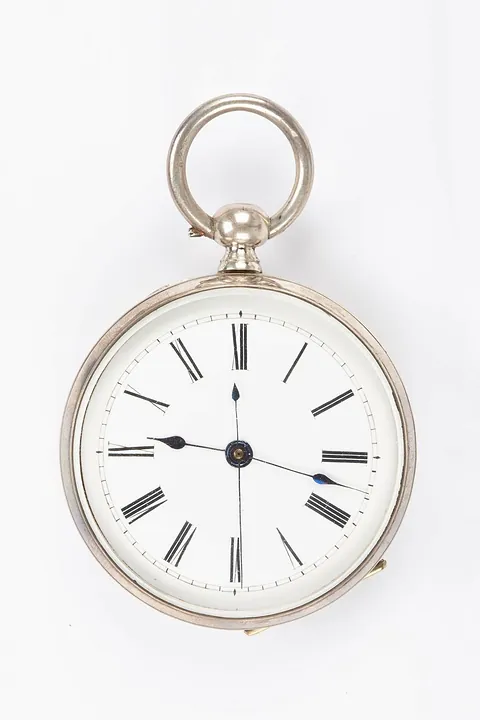
Dating to approximately 1877 from Albert H. Potter's working period in Geneva, Switzerland, this 56 mm hunter cased pocket chronometer is executed in 18K yellow gold. Potter's trademark punch is stamped inside the case, which positions the winding bow, fluted crown, and pendant at the 3 o'clock mark. Roman numeral hour markers, blued hands, and a 6 o'clock subsidiary seconds dial are arranged across the white enamel dial, which is inscribed with the maker's signature referencing "Albert H. Potter &" Co. Geneva. Inside, the manually wound nickel movement, designated as No. 86, is equipped with a bimetallic compensation balance, a free-sprung helical-form hairspring, and a pivoted detent escapement mechanism. Patent markings stamped upon the bridges note patent dates including "escapement Pat. Oct. 11." 75 alongside an entry reading "plate den. Pat. Jan." 4.76; the caliber itself was omitted from photographic documentation in the source record.
Inscriptions & marks
86
Historical context
Industrial Revolution (1850 – 1900)
American interchangeable-parts manufacture; railroad time standards; Swiss and German factory systems.
Machine production with interchangeable parts, pioneered by Waltham (1850s) and adopted by Elgin, Longines, Omega and others, made reliable lever watches widely affordable. Keyless winding became standard, railroad watch standards were introduced (1890s), and Swiss and American industries competed globally.
Read the period in the timelineMore pocket watches from this periodEarlier: Precision & Scientific Horology
Atlas type guide
Pocket chronometers and precision watches
A pocket chronometer is a watch built to observatory standards, traditionally with a detent escapement like a marine chronometer. English makers such as John Arnold and Thomas Earnshaw made the first pocket chronometers in the 1780s. In the nineteenth century the term increasingly referred to any watch that had passed official rating trials at observatories in Kew, Neuchâtel, Geneva or Besançon, and the Swiss lever chronometer became dominant.
Tourbillon and karrusel watches belong to the same world of precision. Breguet patented the tourbillon in 1801 to average out positional errors; Bahne Bonniksen's karrusel (1892) was a cheaper English alternative. Rating certificates (bulletins de marche) that accompany such watches are historical documents in their own right.
What to look for
- Detent escapement (no pallets; a fine spring detent locks the escape wheel).
- Observatory certificates, competition results or 'Chronometer' marking on the dial.
- Tourbillon carriage visible through an aperture or on the movement.
- Fine finishing: jewelled holes in gold chatons, diamond endstones.
Dating clues
- English pocket chronometers: c. 1780–1900.
- Observatory trials at Neuchâtel from 1866, Geneva from 1873, Kew from 1884.
- Karrusels: 1892–c. 1915.
General guidance written by the Atlas editors about this kind of object. It is not a statement about this particular piece; for that, rely on the source record above and on physical examination.
Read next:TourbillonDetached lever escapement
Related records
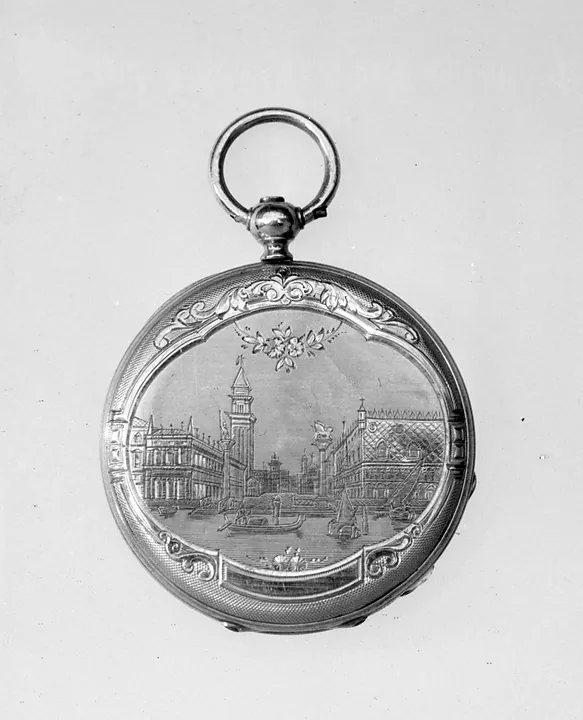
Pocket Watches · c. 1850
Watch by Eugène Bornand, Switzerland, c. 1850
The Metropolitan Museum of Art, New York
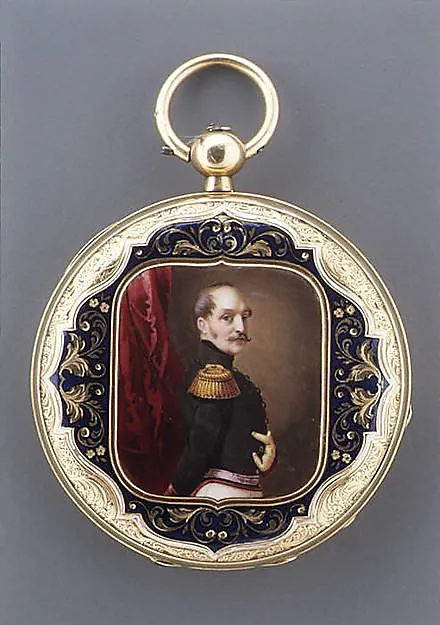
Pocket Watches · probably c. 1850–55
Watch by Firm of Perret & Cie, Switzerland, probably c. 1850–55
The Metropolitan Museum of Art, New York
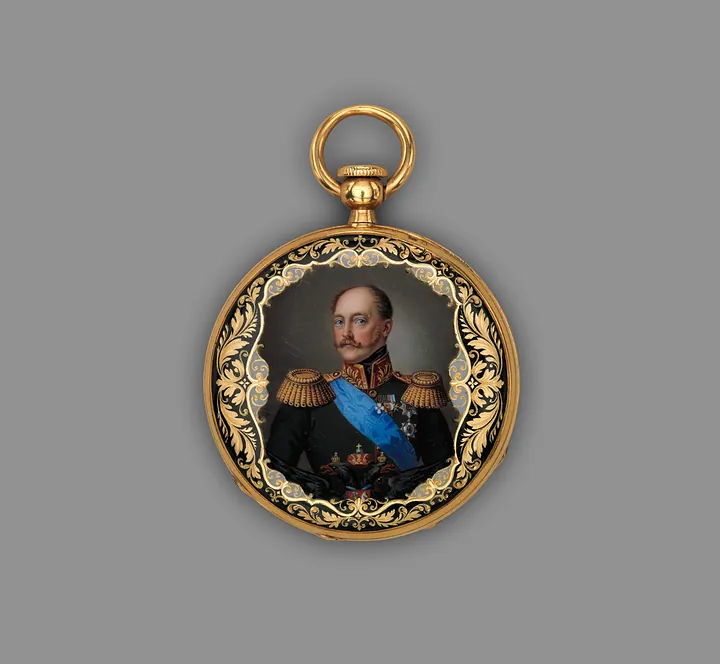
Pocket Watches · c. 1850–55
Watch by François Czapek, c. 1850–55
The Metropolitan Museum of Art, New York
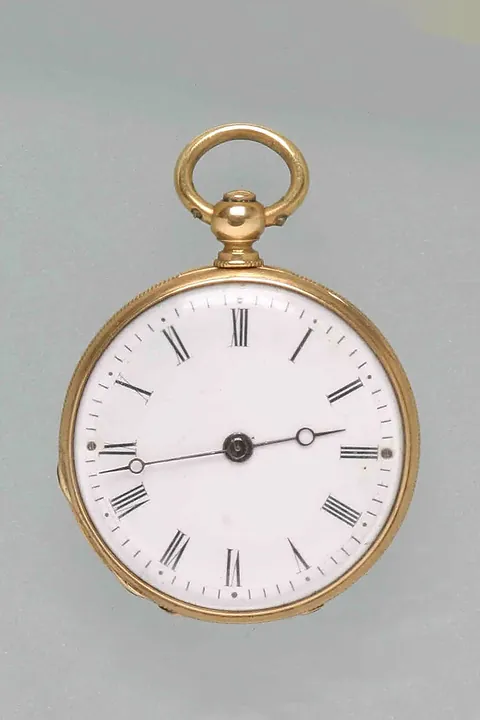
Pocket Watches · c. 1850
Pocket watch by D Bachelard et Fils, Switzerland, c. 1850
German Clock Museum
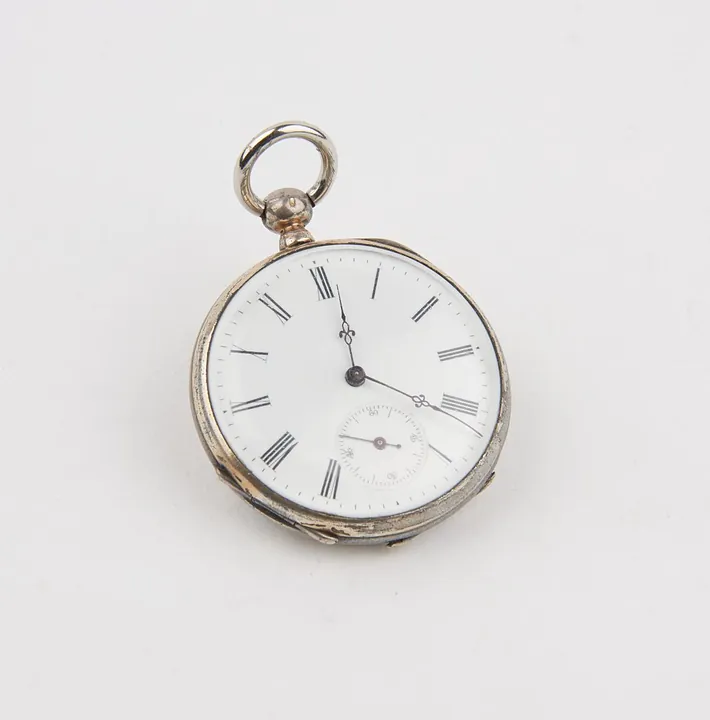
Pocket Watches · 1850–1899
Pocket watch by GT, Switzerland, 1850–1899
Science Museum Group, London
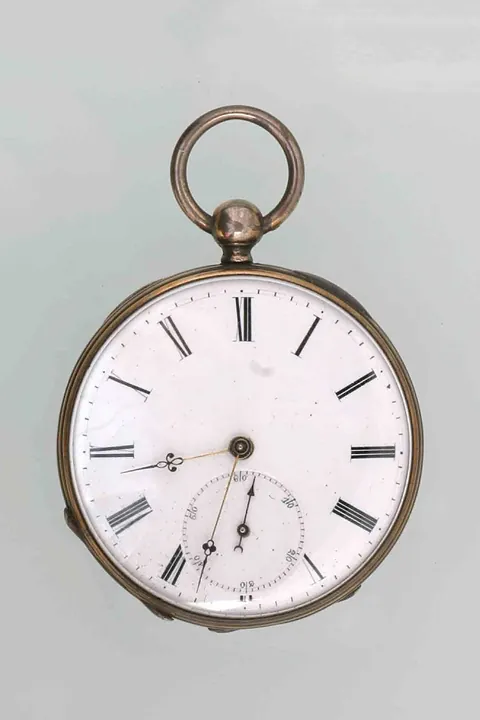
Pocket Watches · c. 1850
Pocket watch by Perret et Cie., Switzerland, c. 1850
German Clock Museum
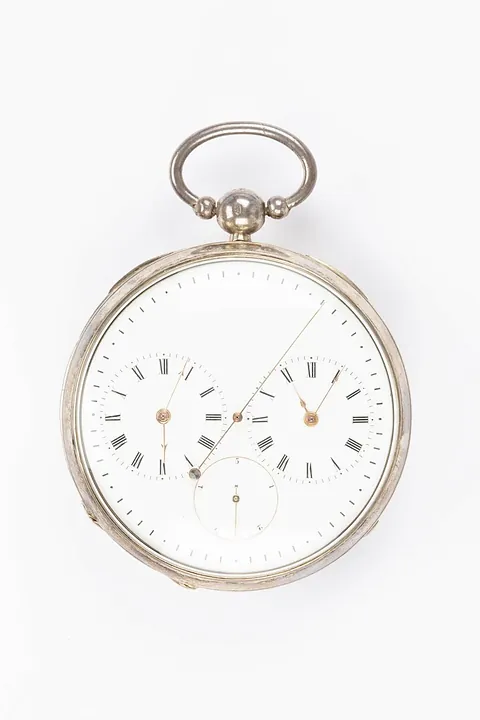
Pocket Watches · c. 1850
Pocket watch, probably Switzerland, c. 1850 (no. 58079)
German Clock Museum
Pocket Watches · c. 1850
Pocket watch, Switzerland, c. 1850 (no. 58081)
German Clock Museum