
Clocks · Alarm clock
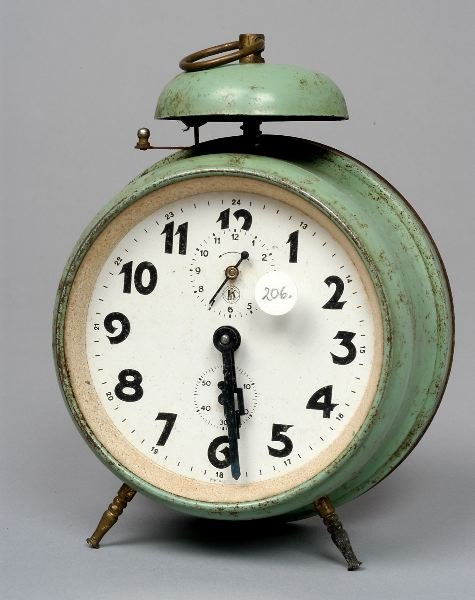
Alarm clock, Sweden, 1996
- Maker / attribution
- Unrecorded in source
- Date
- 1996
- Historical period
- Mechanical Renaissance (1990 – 2010)
- Country of origin
- Sweden
- Place
- Sverige Everlöv
- Object type
- Alarm clock
- Materials / technique
- glas bleckplåt mässing
- Dimensions
- Höjd 16 cm
- Holding institution
- Kulturen
- Accession / object no.
- KM 84617
- Credit line
- Kulturen
- Catalogue title (original)
- väckarklocka (Swedish)
View the source record ↗ (opens another website in a new tab)Suggest a correction
Record summary
Held and catalogued by Kulturen (object number KM 84617), this is an alarm clock, made in Sverige Everlöv, Sweden, dated 1996. The Atlas places it in the Mechanical Renaissance period (1990 – 2010) of its Clocks collection. Materials and techniques recorded by the source: glas bleckplåt mässing. Recorded dimensions: Höjd 16 cm. The record is illustrated with 1 photograph.
Assembled from the source record's structured fields. Dates and attributions are given as the source states them; where a field is missing the Atlas leaves it blank rather than estimating.
Catalogue description
Catalogue description from Kulturen
Rund med mekanisk ringanordning upptill. Arabiska siffror. Separata urtavlor för timme resp. minutinställning vid väckning. KM 84617 Väckarklocka, ljusgrön. Rund med mekanisk ringanordning upptill. Arabiska siffror. Separata urtavlor för timme resp. minutinställning vid väckning. Signering på urtavlan: JK. Höjd 16 diam 12,5 cm. Tillverkat ca 1920 - 1940 av JK, "Foreign". Baksidan av mässingsfärgad bleckplåt. Skruvar av mässing. Från köket. Köp av systerdottern Ingrid Larsson, Dörröd 20, Veberöd för 100.000 (KM 83331 - 83361, 83542 - 83744, 84522 - 84757). Samtidiga förvärv: KM 83542-83744 (katalogisering av matsalen och föremål som har anknytning till den) 83331-83361 (jordbruksredskap) 84522-84757 (kontor, kök, norra salen, kammare/undantag/gavelrum, källare, vind och övrigt, ej inrammade fotografi) JK [på urtavlan] Från köket. Inköpt vid förvärvet av Östarp 2. Säljaren är systerdotter till Alrik Jönsson, siste brukaren av gården. 83331-83361, 83542-83744, 84522-84757, 85930-85958, 86482-86523, 87220-87221 köp
Shown in the original language of the source catalogue. An editor-reviewed English translation has not yet been published; we do not publish machine translations as authoritative text.
Historical context
Mechanical Renaissance (1990 – 2010)
Mechanical watches return as cultural objects; independent watchmaking flourishes.
Mechanical clocks returned as luxury and craft objects, alongside radio-controlled and designer quartz clocks. Independent makers and restorers revived traditional techniques, and museums increasingly documented industrial and electric clocks as heritage.
Read the period in the timelineMore clocks from this periodEarlier: Quartz Revolution
Atlas type guide
Alarm clocks
Alarm work is among the oldest clock functions: monastic clocks woke monks for night prayers, and Renaissance table clocks often carried an alarm disc set by a pin. A separate spring or weight is released at the set time and drives a hammer against a bell. Some early alarms also lit a candle by striking a flint — the 'tinder pistol' alarm.
The cheap, mass-produced alarm clock arrived in the second half of the nineteenth century. American firms such as Seth Thomas and Westclox (the 'Big Ben' of 1910) and German makers such as Junghans and Kienzle made millions of drum-shaped alarms with pin-pallet escapements. Electric, quartz and digital alarm clocks followed in the twentieth century.
What to look for
- A separate alarm-setting dial or disc and an extra winding key.
- Twin bells on top (common after c. 1920) or a bell enclosed in the base.
- Pin-pallet escapements in inexpensive factory alarms.
- Trademarks and patent dates on dial or back.
Dating clues
- Renaissance alarm table clocks: sixteenth to seventeenth centuries.
- Drum alarm clocks: from the 1870s.
- Luminous dials with radium paint: c. 1910–1960.
General guidance written by the Atlas editors about this kind of object. It is not a statement about this particular piece; for that, rely on the source record above and on physical examination.
Related records
Clocks · 1992
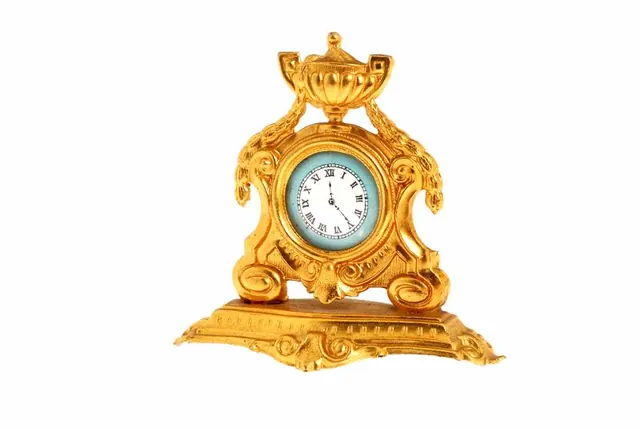
Table clock, Sweden, 1992
Kulturen
Clocks · 2003
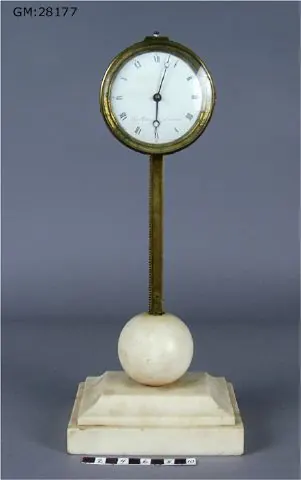
Table clock by Johan Gabriel Pettersson, Sweden, 2003
Museum of Gothenburg
Clocks · 1999 - 1999 1999 - 1999
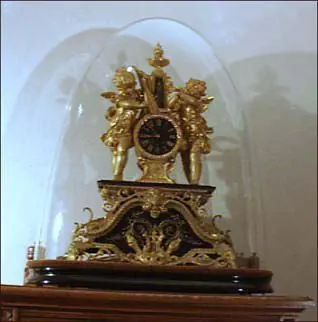
Clock by Ronny Ilvemo, Sweden, 1999 - 1999 1999 - 1999
Museum of Gothenburg
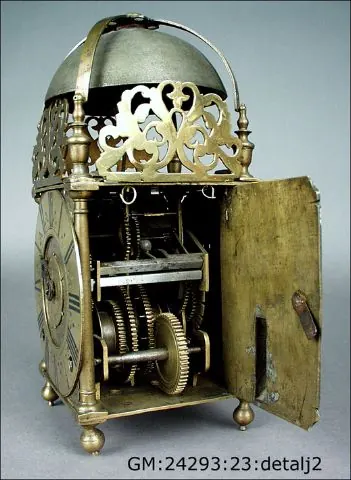
Clocks · 2003 - 2003 2003 - 2003
Table clock by J. Windmills, Sweden, 2003 - 2003 2003 - 2003
Museum of Gothenburg
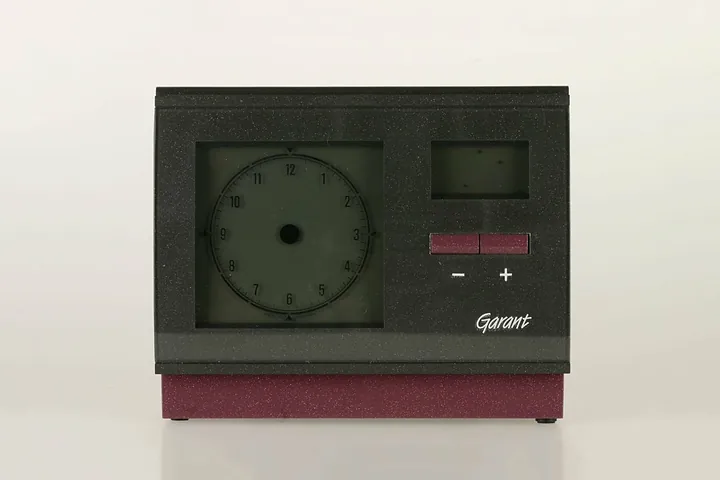
Clocks · c. 1990
Alarm clock by Andreas GmbH und Co. Haller, Germany, c. 1990
German Clock Museum

Clocks · c. 1990s
Audemars Piguet Royal Oak, c. 1990s
Antiquorum auction archive, Geneva
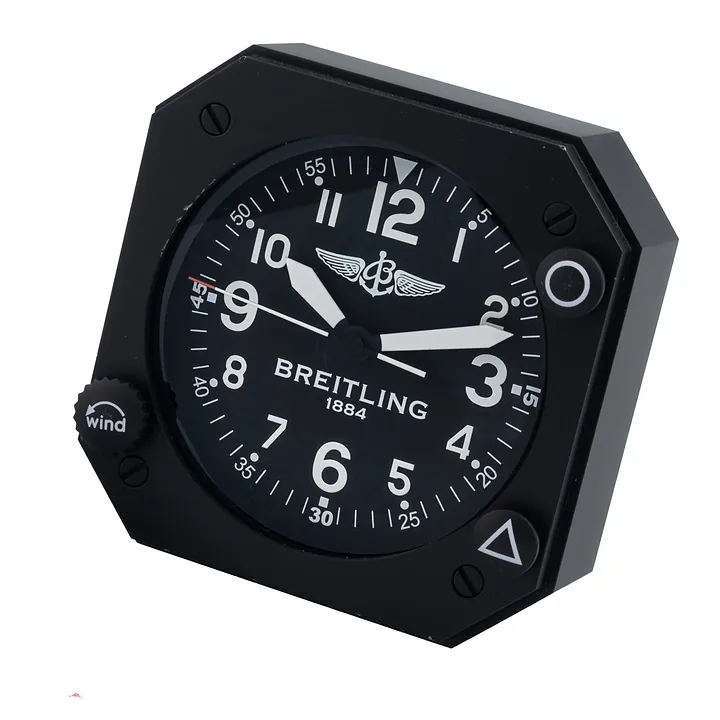
Clocks · c. 1990s
Breitling clock, c. 1990s (Antiquorum Lot 389-18)
Antiquorum auction archive, Geneva
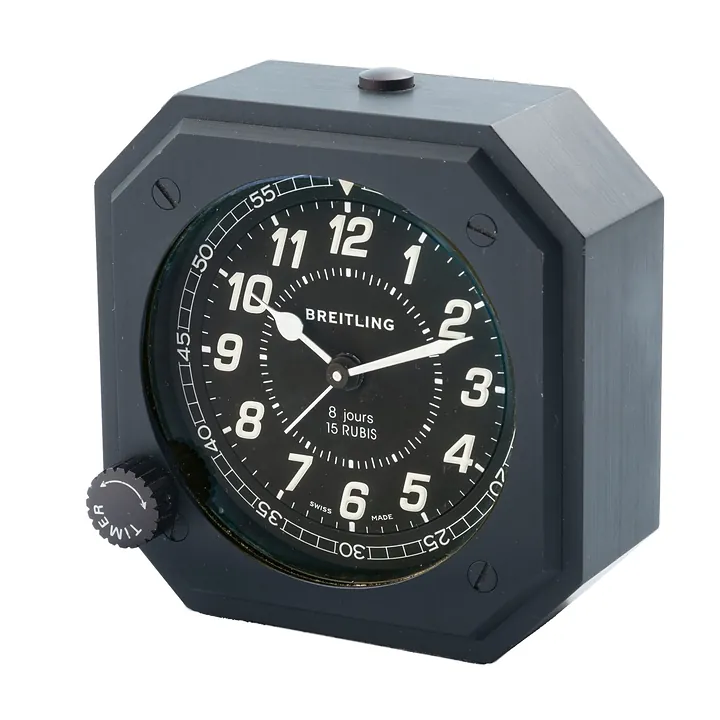
Clocks · c. 1990s
Breitling clock, c. 1990s (Antiquorum Lot 389-20)
Antiquorum auction archive, Geneva