
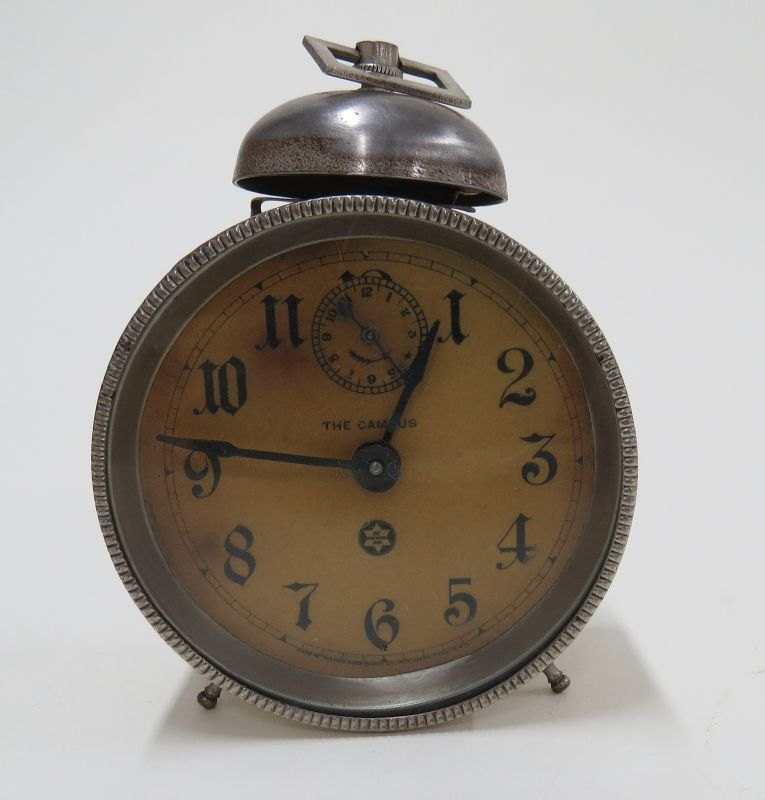
Clocks · Alarm clock
Alarm clock by New Haven Clock Company, United States, 1920–1925
- Maker / attribution
- New Haven Clock Company (maker)
- Date
- 1920–1925
- Historical period
- Golden Age of Mechanical Watchmaking (1900 – 1945)
- Country of origin
- United States
- Place
- United States
- Object type
- Alarm clock
- Materials / technique
- glass, metal, sheet metal, lasilevy
- Dimensions
- length: -
- Holding institution
- Museokeskus Vapriikki
- Accession / object no.
- TTM 15002
- Credit line
- Museokeskus Vapriikki (via Finna)
- Catalogue title (original)
- Kello; The Campus -merkkinen herätyskello; Herätyskello (Finnish)
View the source record ↗ (opens another website in a new tab)Suggest a correction
Record summary
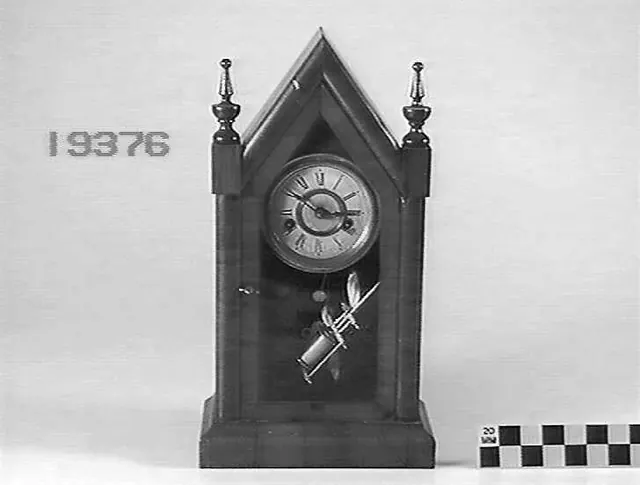
Held and catalogued by Museokeskus Vapriikki (object number TTM 15002), this is an alarm clock by New Haven Clock Company, made in United States, dated 1920–1925. The Atlas places it in the Golden Age of Mechanical Watchmaking period (1900 – 1945) of its Clocks collection. Materials and techniques recorded by the source: glass, metal, sheet metal, lasilevy. Recorded dimensions: length: -. The record is illustrated with 1 photograph.
Assembled from the source record's structured fields. Dates and attributions are given as the source states them; where a field is missing the Atlas leaves it blank rather than estimating.
Catalogue description
The source record does not include a narrative description. The structured fields above are reproduced from it.
Historical context
Golden Age of Mechanical Watchmaking (1900 – 1945)
The wristwatch displaces the pocket watch; waterproof cases, self-winding and grand complications.
Between 1900 and 1945 clocks were electrified: master-clock systems ran factories and offices, synchronous mains clocks entered homes, and the Shortt free-pendulum clock set new standards of accuracy before the first quartz clocks (1927). Art Deco design reshaped mantel and table clocks.
Read the period in the timelineMore clocks from this periodEarlier: Industrial Revolution
Atlas type guide
Alarm clocks
Alarm work is among the oldest clock functions: monastic clocks woke monks for night prayers, and Renaissance table clocks often carried an alarm disc set by a pin. A separate spring or weight is released at the set time and drives a hammer against a bell. Some early alarms also lit a candle by striking a flint — the 'tinder pistol' alarm.
The cheap, mass-produced alarm clock arrived in the second half of the nineteenth century. American firms such as Seth Thomas and Westclox (the 'Big Ben' of 1910) and German makers such as Junghans and Kienzle made millions of drum-shaped alarms with pin-pallet escapements. Electric, quartz and digital alarm clocks followed in the twentieth century.
What to look for
- A separate alarm-setting dial or disc and an extra winding key.
- Twin bells on top (common after c. 1920) or a bell enclosed in the base.
- Pin-pallet escapements in inexpensive factory alarms.
- Trademarks and patent dates on dial or back.
Dating clues
- Renaissance alarm table clocks: sixteenth to seventeenth centuries.
- Drum alarm clocks: from the 1870s.
- Luminous dials with radium paint: c. 1910–1960.
General guidance written by the Atlas editors about this kind of object. It is not a statement about this particular piece; for that, rely on the source record above and on physical examination.
Related records
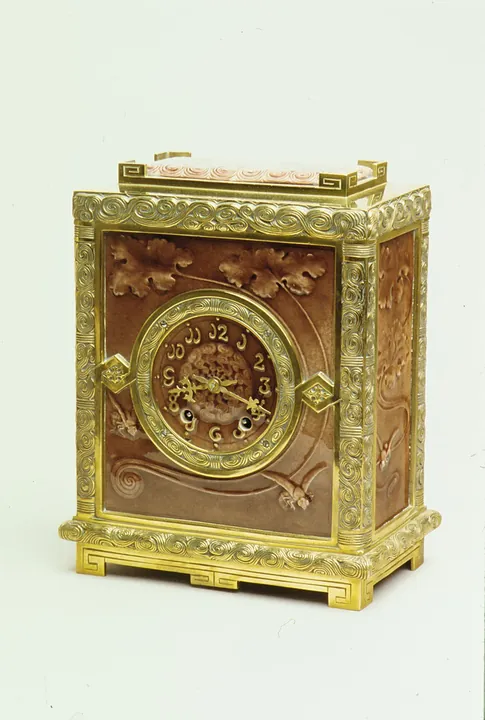
Clocks · c. 1882–85
Clock by J. and J. G. Low Art Tile Works, United States, c. 1882–85
The Metropolitan Museum of Art, New York
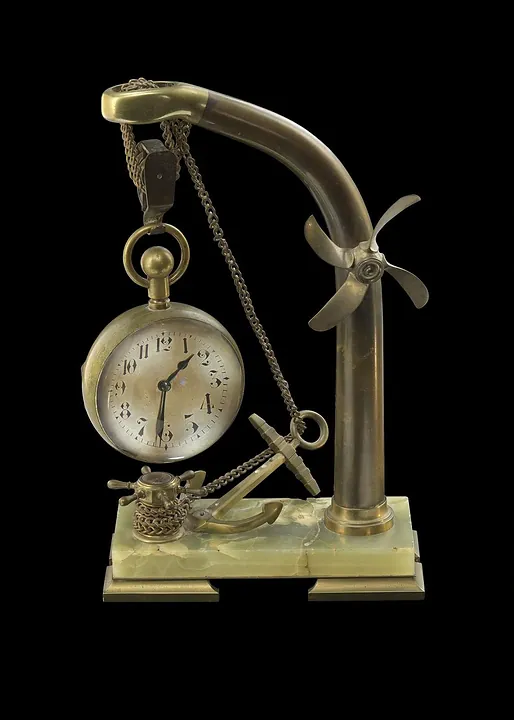
Clocks · 1905–1919
Mantel clock given by President Theodore Roosevelt to William L. Houston, United States, 1905–1919
National Museum of African American History and Culture, Smithsonian Institution, Washington DC
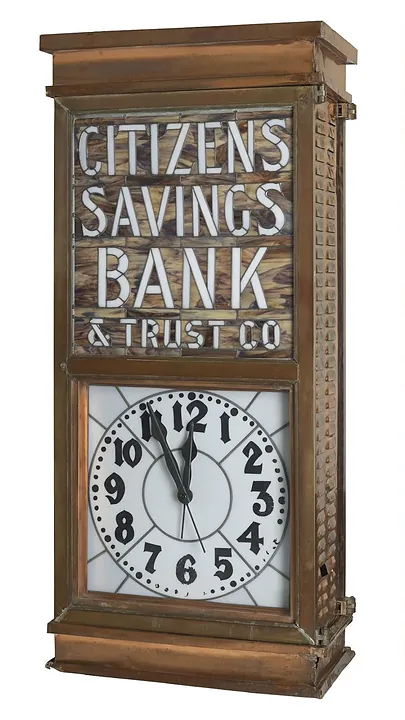
Clocks · 1920–2013
Bank clock and sign of the Citizens Savings Bank & Trust Co., Nashville, 1920–2013
National Museum of African American History and Culture, Smithsonian Institution, Washington DC
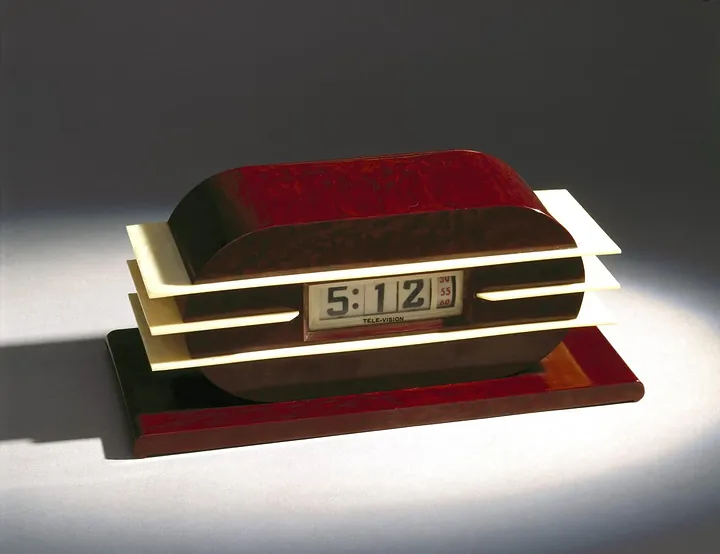
Clocks · 1925–1940
Brown phenolic electric digital clock with `TELE-VISION' on the face. Made by Penwood Numechron Co., U.S.A., c. 1930. Art Deco design.
Science Museum Group, London
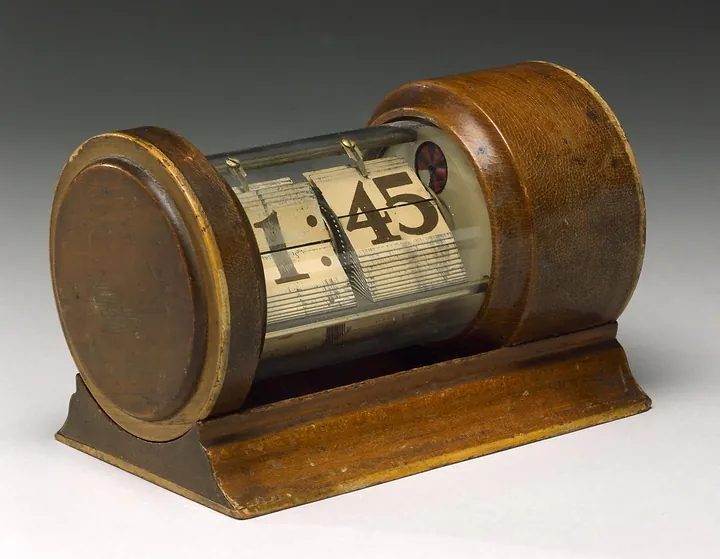
Clocks · 1934
Synchronous mains electric clock of the self-starting type, with digital display. Made by The Westinghouse Electric Supply Co. USA. Early c.1934's
Science Museum Group, London
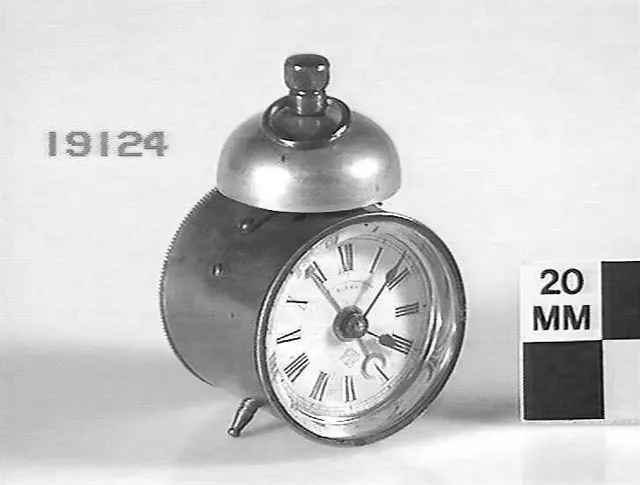
Clocks · c. 1900
Alarm Clock - Ansonia Clock Co, 'Bee', USA, c. 1900
Museums Victoria, Melbourne
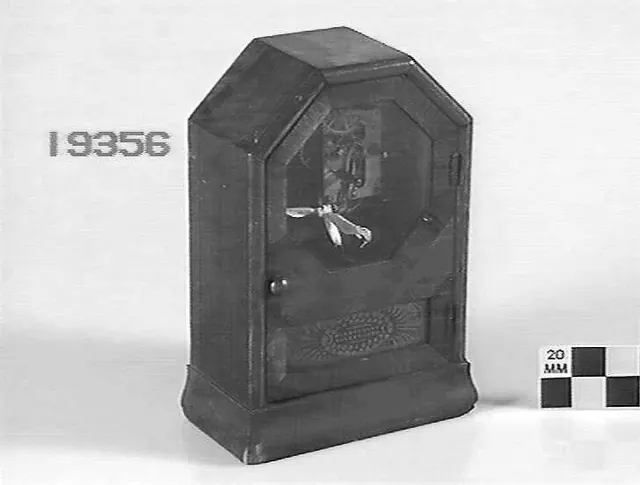
Clocks · c. 1900
Alarm Clock - Seth Thomas Clock Co, USA, c. 1900
Museums Victoria, Melbourne
Clocks · c. 1900
Mantel Clock - Ansonia Clock Co, New York, c. 1900
Museums Victoria, Melbourne