
Pocket Watches · Pocket watch
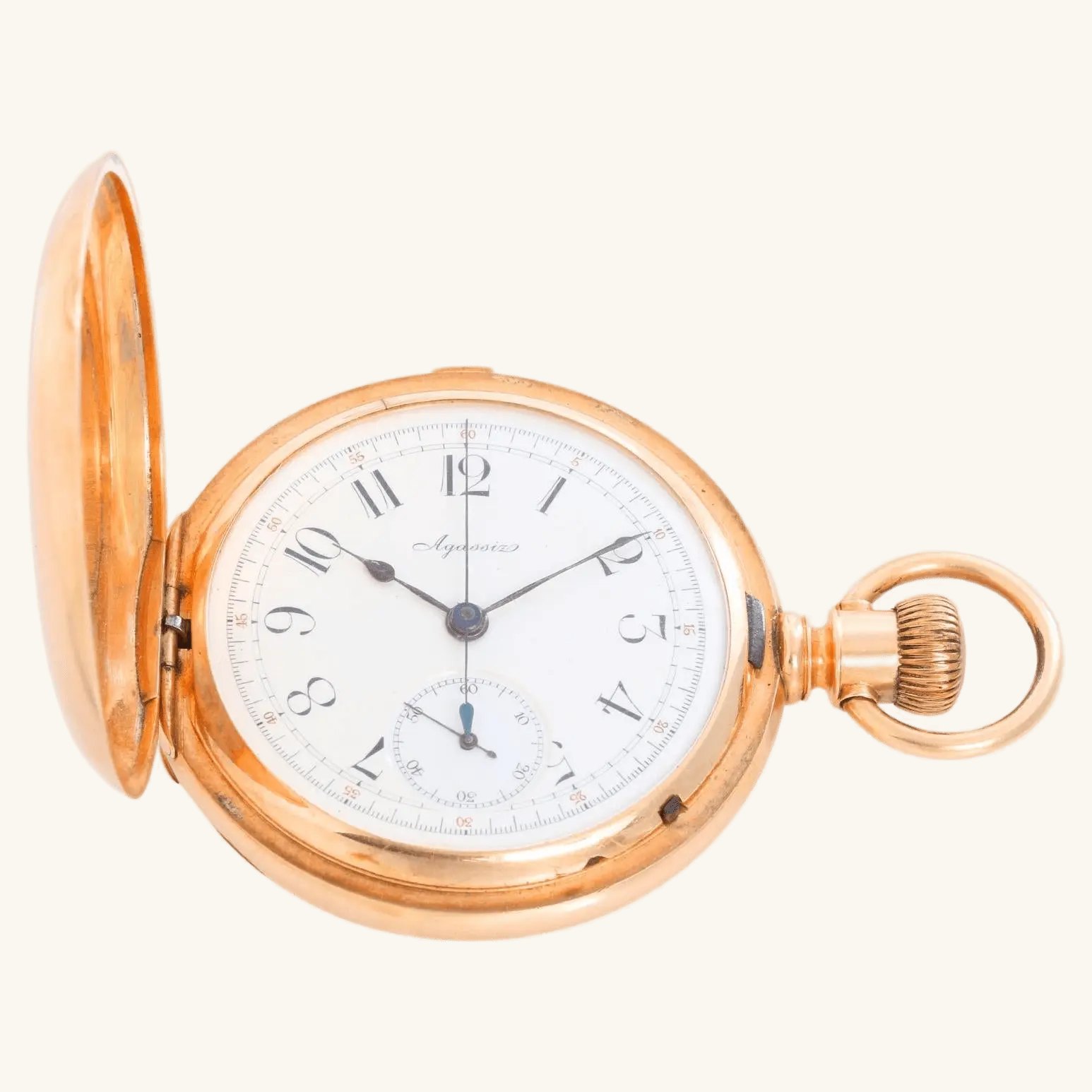
Agassiz Chronograph 14K Yellow Gold Pocket Watch
- Maker / attribution
- Unrecorded in source
- Date
- 20th century
- Historical period
- Golden Age of Mechanical Watchmaking (1900 – 1945)
- Country of origin
- Unrecorded in source
- Object type
- Pocket watch
- Materials / technique
- gold
- Dealer
- WatchMuseum.org shop
- Stock no.
- Product 3648
- Credit line
- Dealer listing, WatchMuseum.org shop (product 3648)
- Catalogue title (original)
- Agassiz Chronograph 14K Yellow Gold Pocket Watch (English)
View the source record (dealer listing) ↗ (opens another website in a new tab)Suggest a correction
Record summary
Catalogued by WatchMuseum.org shop (stock number Product 3648), this is a pocket watch, dated 20th century. The Atlas places it in the Golden Age of Mechanical Watchmaking period (1900 – 1945) of its Pocket Watches collection. Materials and techniques recorded by the source: gold. The record is illustrated with 6 photographs.
Assembled from the source record's structured fields. Dates and attributions are given as the source states them; where a field is missing the Atlas leaves it blank rather than estimating.
Catalogue description
Dealer description — WatchMuseum.org shop
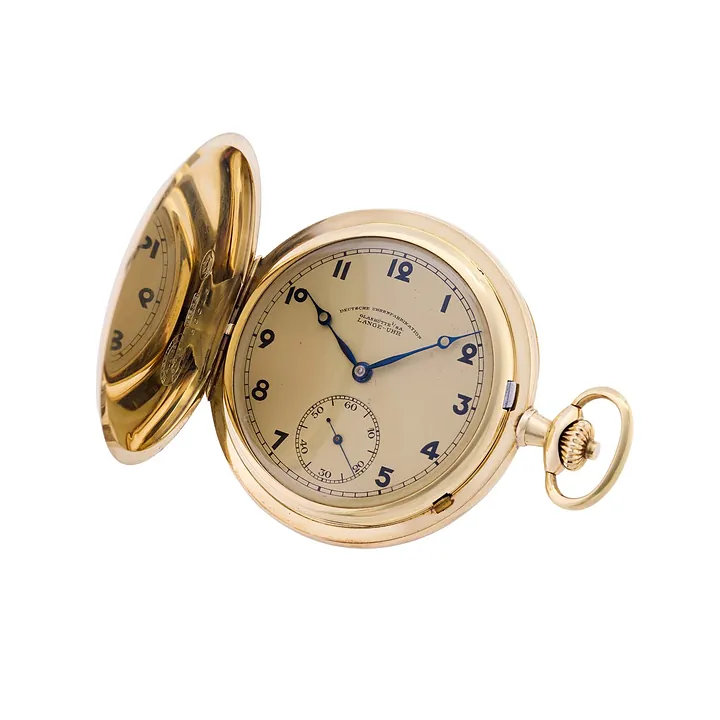
The Agassiz Chronograph 14K Yellow Gold Pocket Watch is a masterpiece of horological craftsmanship, exuding the timeless elegance and refined sophistication that collectors and enthusiasts covet. Crafted in the 20th century, this exquisite timepiece hails from Switzerland, a country renowned for its watchmaking excellence. The watch features a manual wind movement, a hallmark of traditional watchmaking, housed within a luxurious 14K yellow gold case that measures an impressive 52mm. Its classic white dial, adorned with Arabic numerals and complemented by a sub-dial at the 6 o’clock position, embodies a design that is both elegant and functional. Adding a personal touch, the case is engraved with initials, making it not just a timekeeping device but a piece of personal history. The Agassiz Chronograph is in good condition, a testament to its enduring quality and the meticulous care it has received over the years. Presented in a custom box, this pre-owned pocket watch is more than just a functional accessory; it is a statement of luxury and a perfect gift for those who appreciate the finer things in life. Whether for a seasoned collector or someone new to the world of luxury timepieces, the Agassiz Chronograph 14K Yellow Gold Pocket Watch offers an unparalleled blend of history, craftsmanship, and elegance. Introducing the Agassiz Chronograph 14K Yellow Gold Pocket Watch – a stunning timepiece with manual winding and a 14K yellow gold case measuring 52mm. This pocket watch is made even more special with the addition of engraved initials on the case. The white dial features Arabic numerals and a sub-dial at 6 o’clock, adding to the watch’s classic and sophisticated design. This pre-owned timepiece comes with a custom box, making it a great addition to any watch collection or a special gift for someone who appreciates luxury. Indulge in the timeless elegance of the Agassiz Chronograph 14K Yellow Gold Pocket Watch. Creator: Aggasiz Movement: Manual Wind Place of Origin: Switzerland Period: 20th Century Date of Manufacture: Unknown Condition: Good
Historical context
Golden Age of Mechanical Watchmaking (1900 – 1945)
The wristwatch displaces the pocket watch; waterproof cases, self-winding and grand complications.
The pocket watch reached technical maturity and then began to give way to the wristwatch after the First World War. Complicated watches for collectors such as Henry Graves Jr. and James Ward Packard, railroad watches, and slim Art Deco dress watches are characteristic.
Read the period in the timelineMore pocket watches from this periodEarlier: Industrial Revolution
Atlas type guide
Chronographs and split-seconds watches
A chronograph is a watch with an additional seconds hand that can be started, stopped and returned to zero independently of the timekeeping. Louis Moinet built an early example in 1816 and Nicolas Rieussec a recording 'chronographe' in 1821; Adolphe Nicole's heart-shaped reset cam (patented 1862) made the modern return-to-zero possible. Split-seconds (rattrapante) chronographs add a second hand that can be stopped for intermediate times; flyback chronographs restart instantly.
Chronographs were essential tools for doctors (pulsometer scales), artillery (telemeter), engineers and sport. In wristwatches, Valjoux, Venus, Lemania and later the automatic chronographs of 1969 (Zenith El Primero, the Chronomatic Calibre 11 group and Seiko 6139) are milestones.
What to look for
- Push-pieces on the case band or a single button in the crown (monopusher).
- Subsidiary registers for minutes and hours; tachymeter, telemeter or pulsometer scales.
- Column wheel versus cam control visible in the movement.
- Calibre markings of specialist makers (Valjoux, Lemania, Venus, Landeron).
Dating clues
- Pocket chronographs with heart cam reset: after 1862.
- Wrist chronographs: from c. 1910; two-button designs from the 1930s.
- Automatic chronographs: from 1969.
General guidance written by the Atlas editors about this kind of object. It is not a statement about this particular piece; for that, rely on the source record above and on physical examination.
Read next:Flyback chronographChronograph
Related records
Pocket Watches · 1900–1999
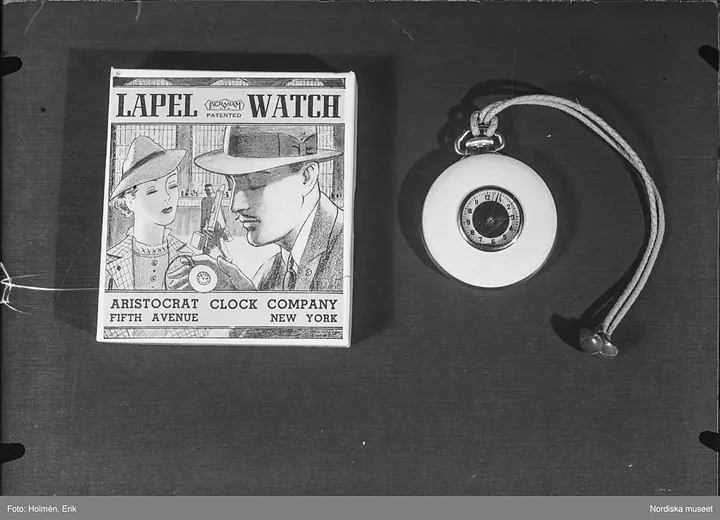
Lapel watch by Erik Holmén, 1900–1999
Nordic Museum Foundation
Pocket Watches · 1873–1930
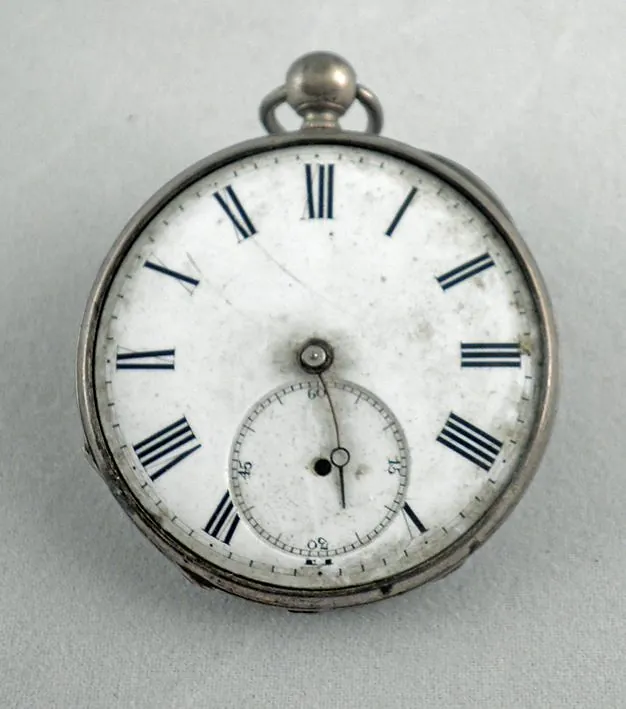
Pocket watch, Lilla Malma socken, 1873–1930
Sörmland Museum
Pocket Watches · 1880–1920
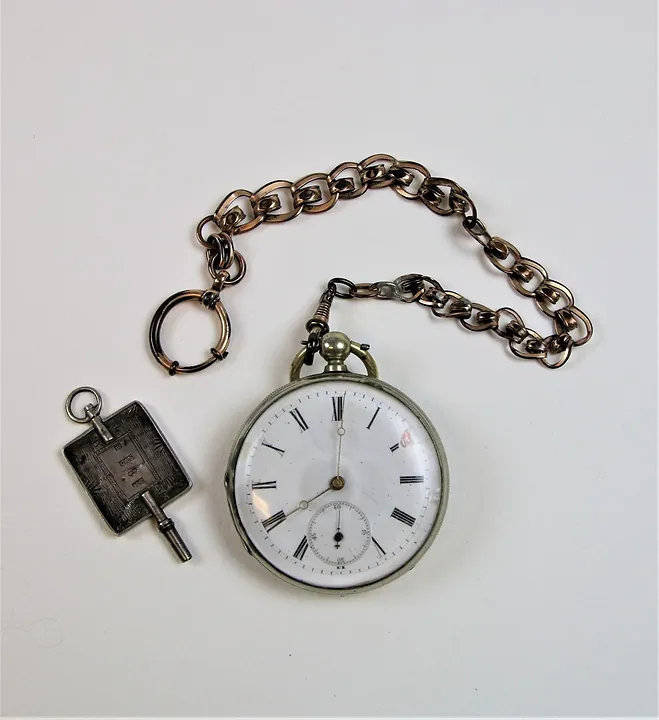
Pocket watch, Sweden, 1880–1920
Sörmland Museum
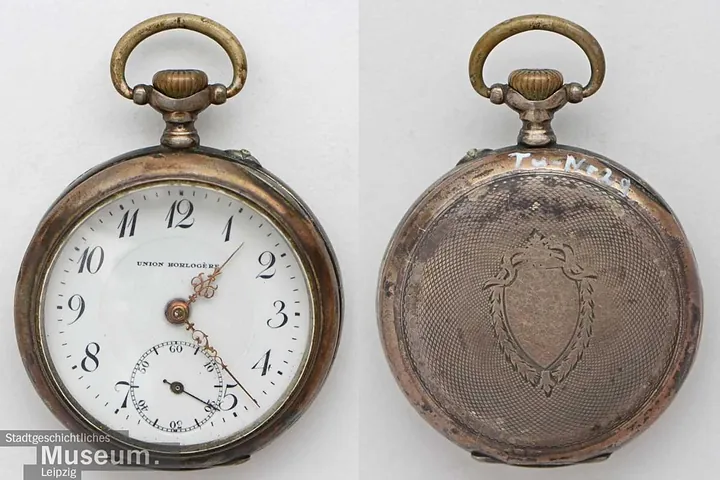
Pocket Watches · 1890–1910
Pocket watch by Union Horlogère, France, 1890–1910
Museum of City History Leipzig
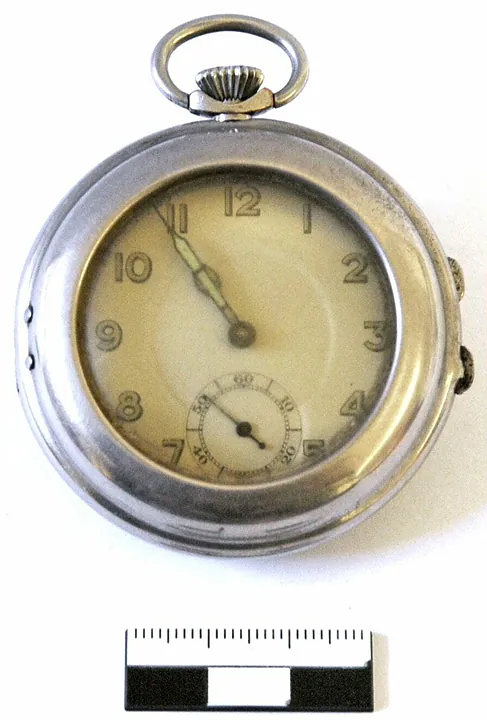
Pocket Watches · 1891–1945
Pocket watch, Germany, 1891–1945
Montanhistorisches Dokumentationszentrum
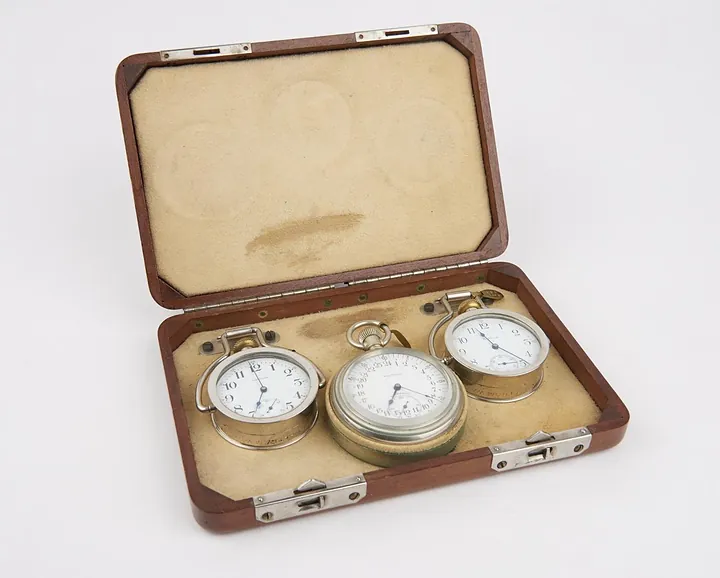
Pocket Watches · c. 1900
Pocket watch by American Waltham Watch Company, United States, c. 1900
Science Museum Group, London
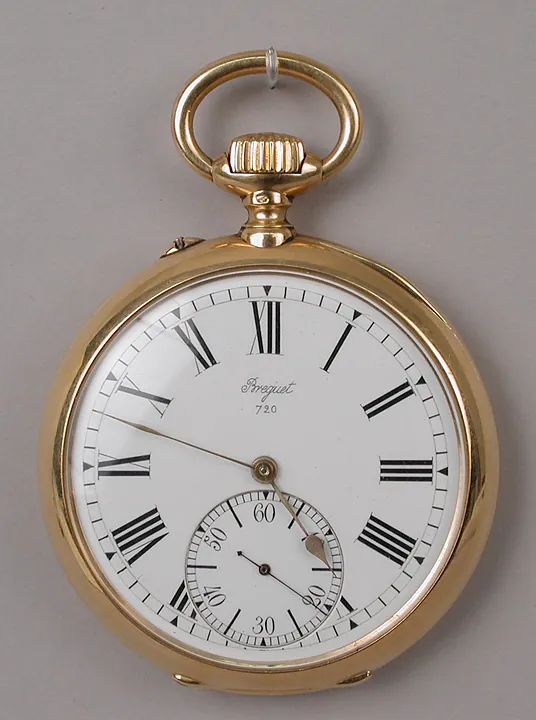
Pocket Watches · c. 1900
Pocket watch by Firm of Breguet et Fils, France, c. 1900
The Metropolitan Museum of Art, New York
Pocket Watches · c. 1900
A.Lange & Söhne pocket watch, c. 1900
Antiquorum auction archive, Geneva