
Wristwatches · Wristwatch
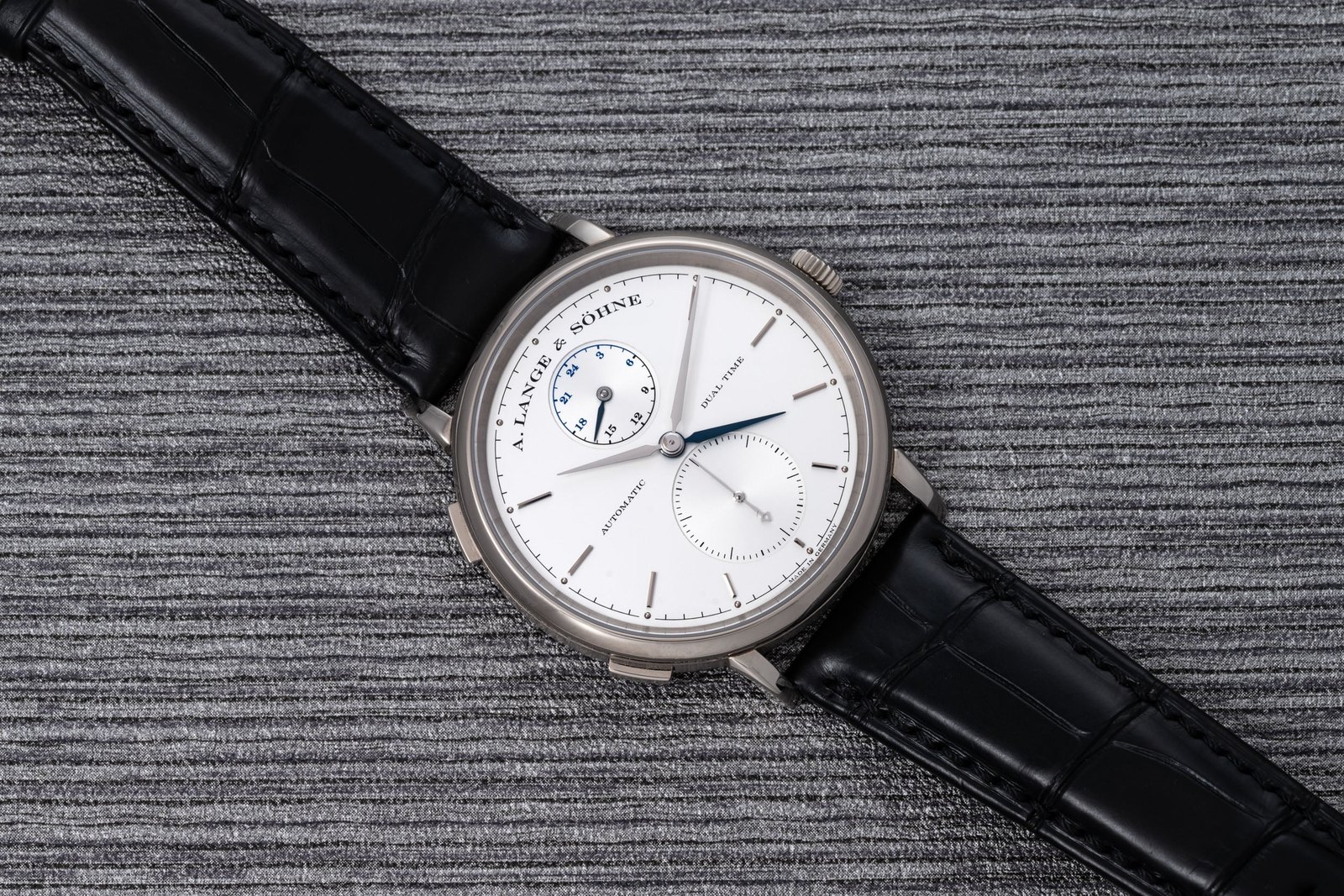
A. Lange & Söhne Saxonia Dual Time, c. 2015
- Maker / attribution
- A. Lange & Söhne (maker)
- Date
- c. 2015
- Historical period
- Contemporary Horology (2010 – Present)
- Country of origin
- Germany
- Object type
- Wristwatch
- Dimensions
- Case 40 mm
- Stock no.
- 40990629
- Credit line
- Dealer listing, Analog/Shift (40990629)
- Catalogue title (original)
- A. Lange & Söhne Saxonia Dual Time (English)
View the source record (dealer listing) ↗ (opens another website in a new tab)Suggest a correction
Record summary
Catalogued by Analog/Shift (dealer), New York (stock number 40990629), this is a wristwatch by A. Lange & Söhne, made in Germany, dated c. 2015. The Atlas places it in the Contemporary Horology period (2010 – Present) of its Wristwatches collection. Recorded dimensions: Case 40 mm. The record is illustrated with 6 photographs.
Assembled from the source record's structured fields. Dates and attributions are given as the source states them; where a field is missing the Atlas leaves it blank rather than estimating.
Catalogue description
Dealer description — Analog/Shift
Where does one turn when the typical, minimalist dress watch fails to inspire? To A. Lange & Söhne, of course. The Glashütte-based manufacture is world-famous for its absurdly beautiful, complicated timepieces, but their simpler watches are similarly the pinnacle of elegance. This Saxonia Moon Phase, with its large case, distinctly Saxon, oversized date complication, and moon phase, sits somewhere in the middle. Executed in a modern 40mm pink gold case and dating to circa 2015, this example features satin silver dial with applied pink gold indices and a beautiful moon phase/subsidiary seconds at 6 o’clock, plus a matching pink gold alpha handset. Of course, what makes this particular model stand out is the oversized “digital” date complication below the 12 o’clock marker, controlled via a pusher at 10 o’clock — a holdover from the simply unbeatable Lange 1, which debuted in 1994. With its sapphire crystal and display case back, 18k pink gold signed crown and polished matching bezel, and matching brown alligator leather strap with signed 18k pink gold pin buckle, this Saxonia is the type of watch that — at least aesthetically — pairs well with everything from a t-shirt to a tuxedo. (Though, to be fair, we might opt for something less precious while wearing a t-shirt!) The beautifully finished, in-house Caliber L086.5 ain’t bad to look at, either. There’s nothing wrong with a classic dress watch from a member of the “Holy Trinity.” But for a modern stunner in beautiful, nearly new-old-stock condition, this Saxonia is simply unbeatable.
Historical context
Contemporary Horology (2010 – Present)
Silicon components, connected watches, optical-lattice research clocks and a thriving independent scene.
Smartwatches became the world's best-selling watches, while mechanical watchmaking focuses on craft, innovation (silicon components, new escapements) and independent makers.
Read the period in the timelineMore wristwatches from this periodEarlier: Mechanical Renaissance
Atlas type guide
Military, pilot and travel watches
The wristwatch owes much of its adoption by men to warfare and aviation. Wristlets — small pocket watches soldered with lugs and worn on a strap — were used in colonial campaigns and became standard equipment in the First World War, with protective grilles over the crystal ('shrapnel guards'). Louis Cartier's Santos (1904), designed for the aviator Alberto Santos-Dumont, is often cited as an early purpose-made pilot's watch.
In the Second World War governments specified watches in detail: the German B-Uhr observation watches, the American A-11, and the British 'W.W.W.' (the 'Dirty Dozen' set of 1945). After the war, jet travel brought GMT and world-time watches, which show two or more time zones at once — Louis Cottier's world-time mechanism and the Rolex GMT-Master (1955) are examples.
What to look for
- Military markings on the case back: broad arrow, issue numbers, 'W.W.W.', 'A.T.P.'
- High-legibility black dials with luminous Arabic numerals; oversized crowns for gloved hands.
- 24-hour hands and rotating 24-hour bezels or city rings on GMT/world-time watches.
- Wire lugs on early wristlets converted from pocket watches.
Dating clues
- Wire-lug wristlets: c. 1900–1925.
- Military specifications of the Second World War: 1939–1945.
- GMT and world-time wristwatches: mainly after 1950.
General guidance written by the Atlas editors about this kind of object. It is not a statement about this particular piece; for that, rely on the source record above and on physical examination.
Related records
Movements & Components · 1900
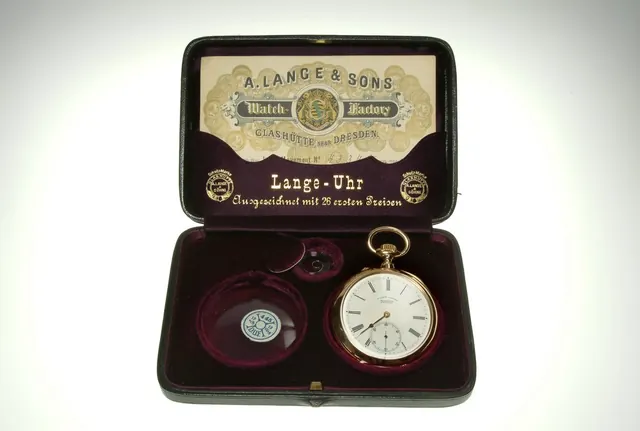
Pocket watch by A. Lange & Söhne, Germany, 1900
Kulturstiftung Sachsen-Anhalt - Museum Schloss Neuenburg
Pocket Watches · c. 1941
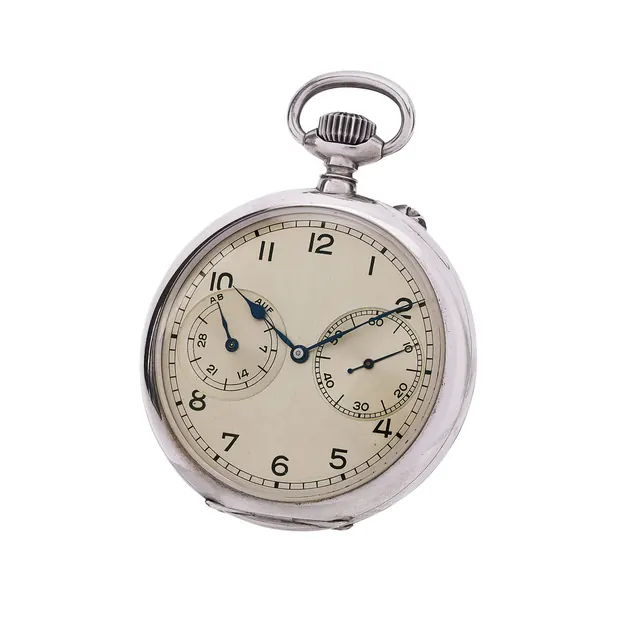
A. Lange & Söhne pocket watch, Observation Pocket Watch, circa 1941
Antiquorum auction archive, Geneva
Pocket Watches · c. 1946
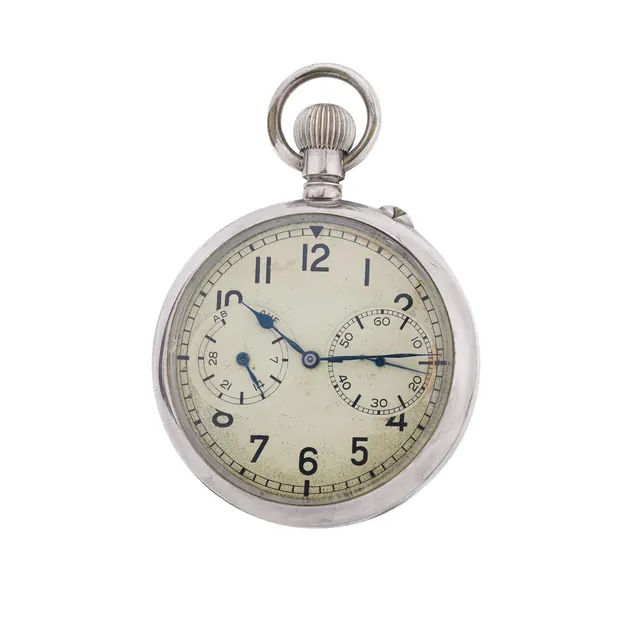
A. Lange & Söhne pocket watch, Military Observation Pocket Watch, circa 1946
Antiquorum auction archive, Geneva
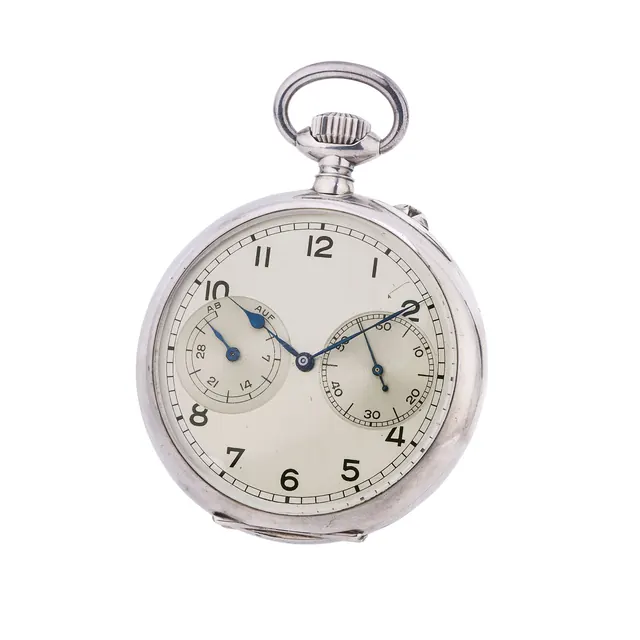
Pocket Watches · c. 1942
A. Lange & Söhne pocket watch, Military Observation Pocket Watch, circa 1942
Antiquorum auction archive, Geneva
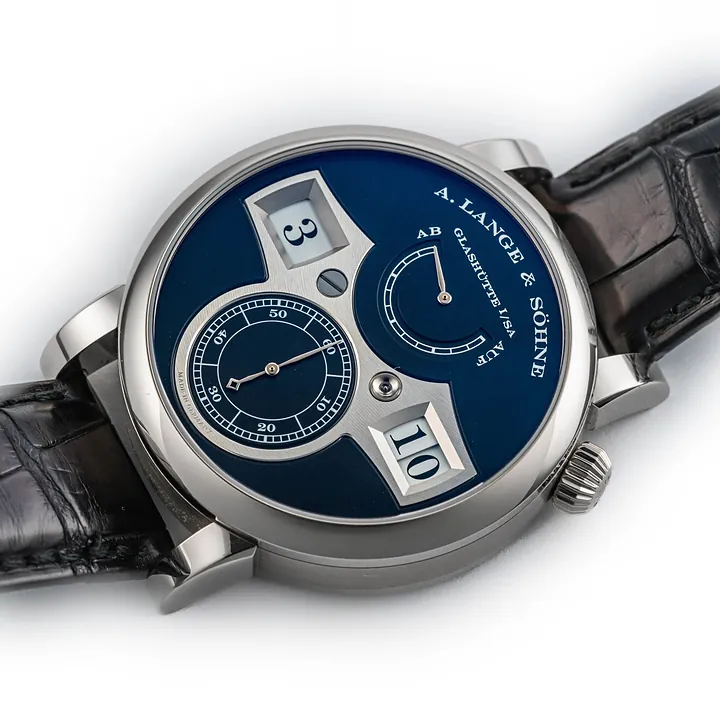
Wristwatches · c. 2018
A.Lange & Söhne Zeitwerk, ref. 140.029, c. 2018
Antiquorum auction archive, Geneva
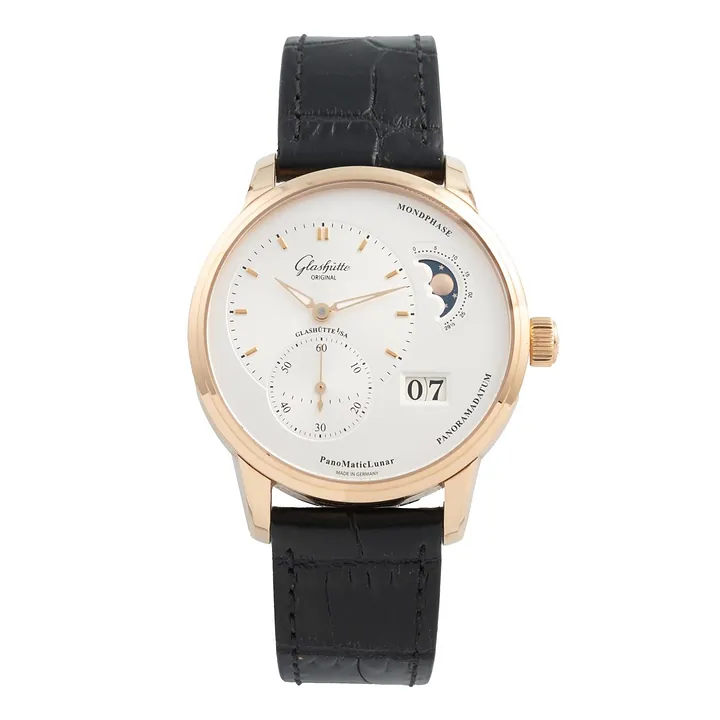
Wristwatches · originally sold in April 2022 (per the lot record)
Glashã¼tte Original Panomaticlunar, ref. 1-90-02-45-35-04, originally sold in April 2022
Antiquorum auction archive, Geneva
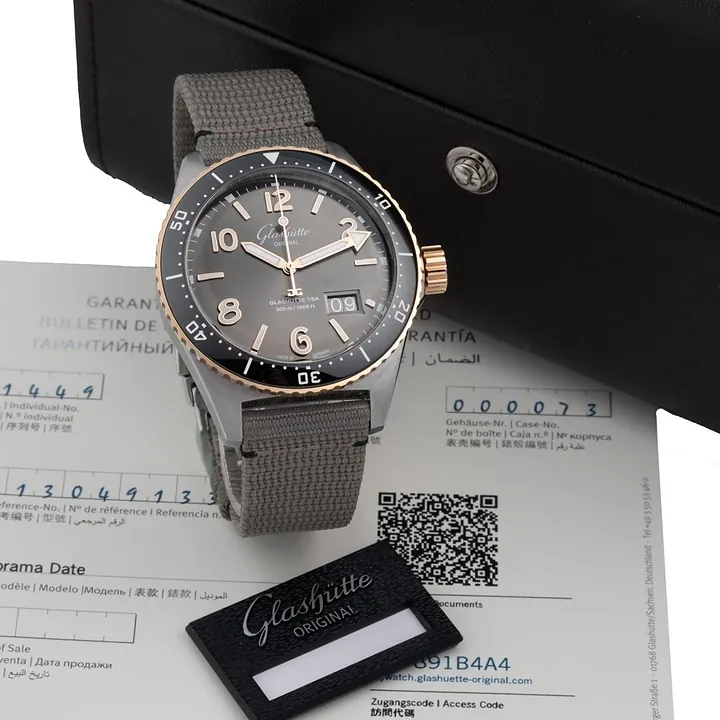
Wristwatches · c. 2022
Glashütte Original Seaq Panorama Date, ref. 1-36-13-04-91-33, c. 2022
Antiquorum auction archive, Geneva
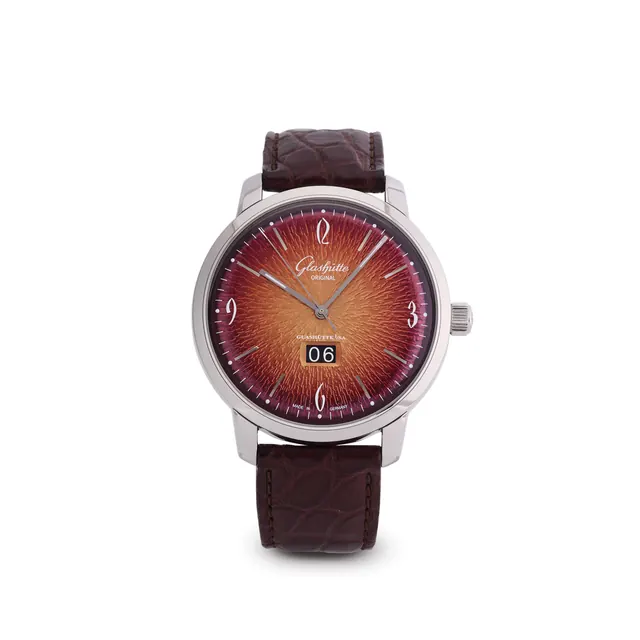
Wristwatches · originally sold in December 2021 (per the lot record)
Glashütte Original wristwatch, ref. W23947090204, Sixities Panorama Date Annual Edition, originally sold in December 2021 (per the lot record)
Antiquorum auction archive, Geneva