
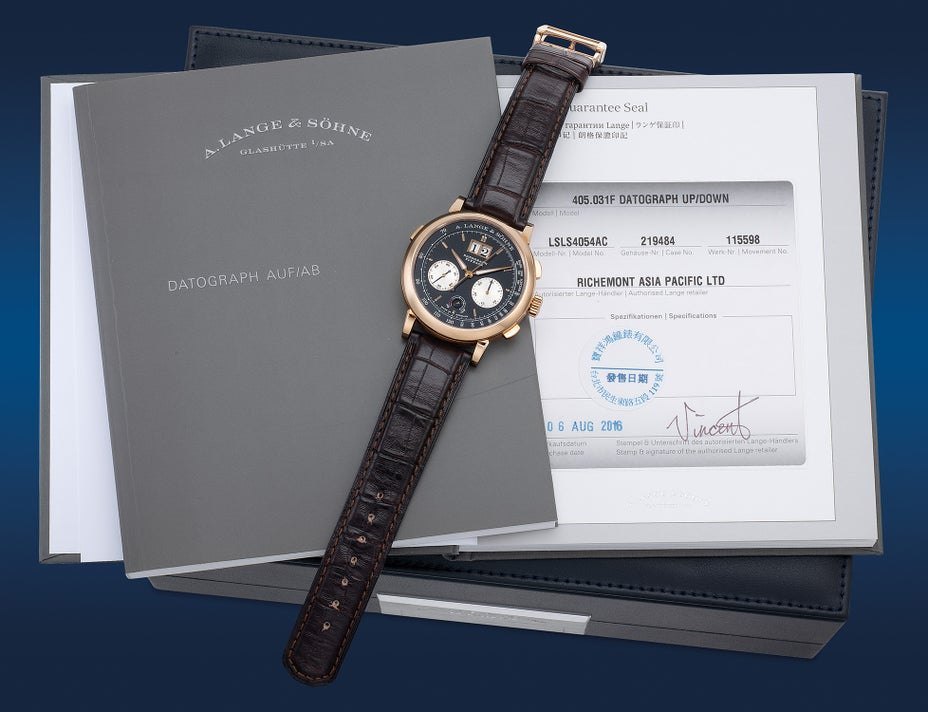
Wristwatches · Flyback chronograph wristwatch
A. Lange & Söhne Ref. 405.031 Datograph Up/Down Wristwatch
- Maker / attribution
- A. Lange & Söhne (source attribution)
- Date
- c. 2016
- Historical period
- Contemporary Horology (2010 – Present)
- Country of origin
- Germany
- Object type
- Flyback chronograph wristwatch
- Materials / technique
- 18K pink gold
- Dimensions
- 41mm diameter
- Holding institution
- Phillips
- Accession / object no.
- 956
- Credit line
- Phillips
- Catalogue title (original)
- A. Lange & Söhne The Hong Kong Watch Auction: XV (English)
View the source record ↗ (opens another website in a new tab)Suggest a correction
Record summary
Held and catalogued by Phillips (object number 956), this is a flyback chronograph wristwatch attributed to A. Lange & Söhne, made in Germany, dated c. 2016. The Atlas places it in the Contemporary Horology period (2010 – Present) of its Wristwatches collection. Materials and techniques recorded by the source: 18K pink gold. Recorded dimensions: 41mm diameter. The record is illustrated with 1 photograph.
Assembled from the source record's structured fields. Dates and attributions are given as the source states them; where a field is missing the Atlas leaves it blank rather than estimating.
Catalogue description
Original object description
Originating in Germany around 2016, this flyback chronograph wristwatch is an 18K pink gold A. Lange & Söhne Datograph Up/Down, designated by reference number 405.031. Its 41 mm case, marked with serial number 219’484, came directly from its first owner and bears maker hallmarks across the case, dial, movement, and matching pink gold deployant clasp. The timepiece is worn on a brown crocodile strap. Its black dial features applied baton indexes, twin-aperture outsize date windows situated below 12 o'clock, and pale sub-dials that monitor continuous seconds as well as thirty elapsed chronograph minutes. Positioned at 6 o'clock is an Up/Down power reserve scale inscribed "AB" and "AUF". Built with a flyback function that restarts timing immediately with one pusher press, the watch is driven by the manually wound, 46-jewel calibre L.951.6, numbered 115’598. An exhibition sapphire crystal back is noted in catalogue records though not captured in the frontal photograph. Accompanying the piece are its leather folio, instruction manual, product paperwork, original presentation box with outer cardboard packaging, and a guarantee endorsed on 6 August 2016 by Pro Hopetime Watch Co. in Taiwan.
Inscriptions & marks
219’484
Historical context
Contemporary Horology (2010 – Present)
Silicon components, connected watches, optical-lattice research clocks and a thriving independent scene.
Smartwatches became the world's best-selling watches, while mechanical watchmaking focuses on craft, innovation (silicon components, new escapements) and independent makers.
Read the period in the timelineMore wristwatches from this periodEarlier: Mechanical Renaissance
Atlas type guide
Chronographs and split-seconds watches
A chronograph is a watch with an additional seconds hand that can be started, stopped and returned to zero independently of the timekeeping. Louis Moinet built an early example in 1816 and Nicolas Rieussec a recording 'chronographe' in 1821; Adolphe Nicole's heart-shaped reset cam (patented 1862) made the modern return-to-zero possible. Split-seconds (rattrapante) chronographs add a second hand that can be stopped for intermediate times; flyback chronographs restart instantly.
Chronographs were essential tools for doctors (pulsometer scales), artillery (telemeter), engineers and sport. In wristwatches, Valjoux, Venus, Lemania and later the automatic chronographs of 1969 (Zenith El Primero, the Chronomatic Calibre 11 group and Seiko 6139) are milestones.
What to look for
- Push-pieces on the case band or a single button in the crown (monopusher).
- Subsidiary registers for minutes and hours; tachymeter, telemeter or pulsometer scales.
- Column wheel versus cam control visible in the movement.
- Calibre markings of specialist makers (Valjoux, Lemania, Venus, Landeron).
Dating clues
- Pocket chronographs with heart cam reset: after 1862.
- Wrist chronographs: from c. 1910; two-button designs from the 1930s.
- Automatic chronographs: from 1969.
General guidance written by the Atlas editors about this kind of object. It is not a statement about this particular piece; for that, rely on the source record above and on physical examination.
Read next:Chronograph
Related records
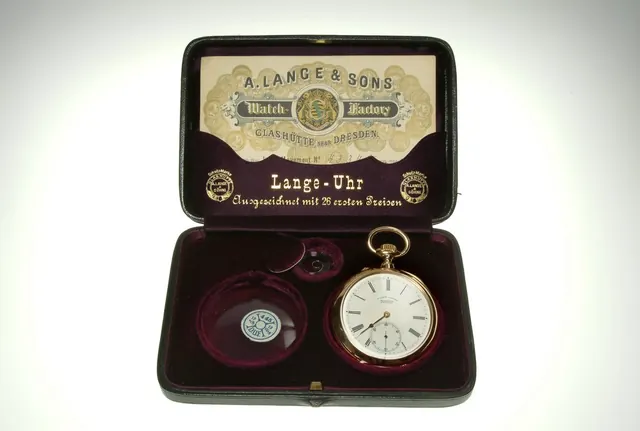
Movements & Components · 1900
Pocket watch by A. Lange & Söhne, Germany, 1900
Kulturstiftung Sachsen-Anhalt - Museum Schloss Neuenburg
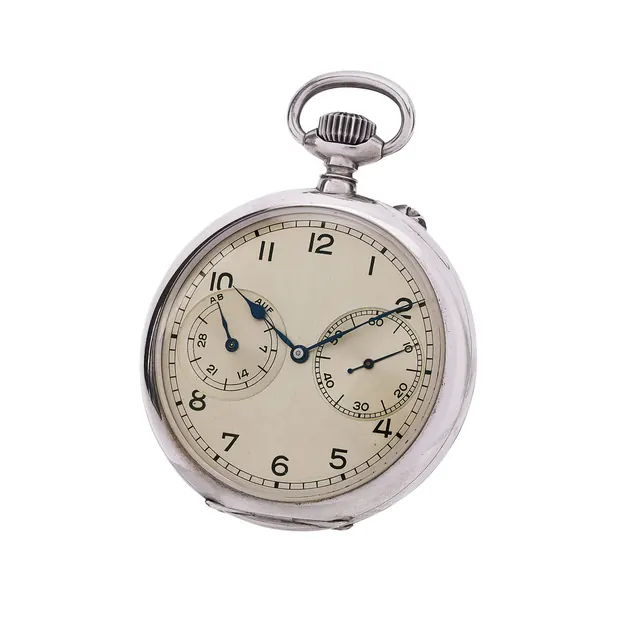
Pocket Watches · c. 1941
A. Lange & Söhne pocket watch, Observation Pocket Watch, circa 1941
Antiquorum auction archive, Geneva
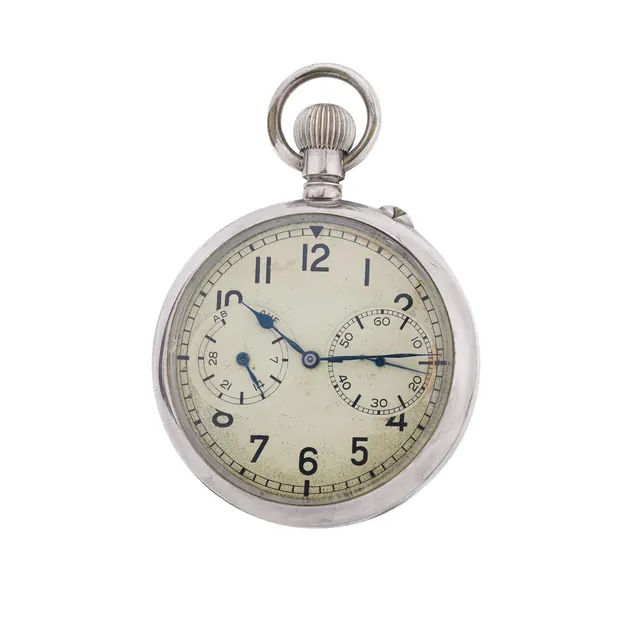
Pocket Watches · c. 1946
A. Lange & Söhne pocket watch, Military Observation Pocket Watch, circa 1946
Antiquorum auction archive, Geneva
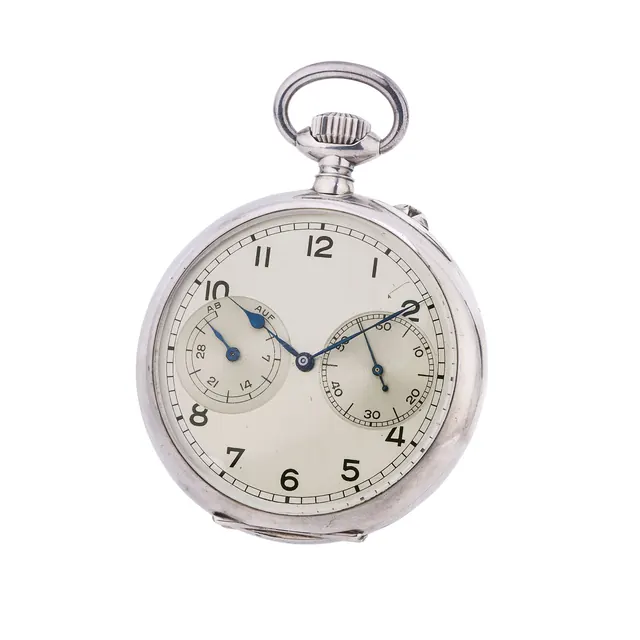
Pocket Watches · c. 1942
A. Lange & Söhne pocket watch, Military Observation Pocket Watch, circa 1942
Antiquorum auction archive, Geneva
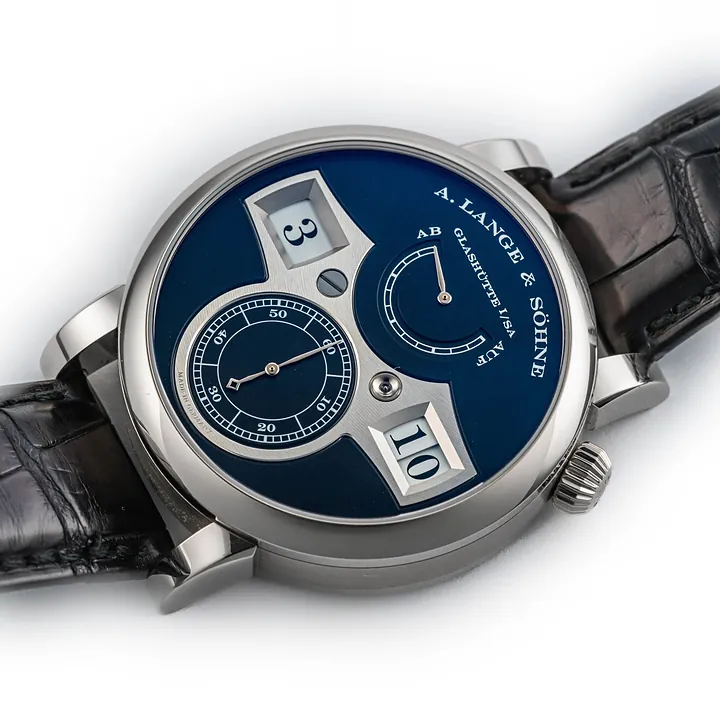
Wristwatches · c. 2018
A.Lange & Söhne Zeitwerk, ref. 140.029, c. 2018
Antiquorum auction archive, Geneva
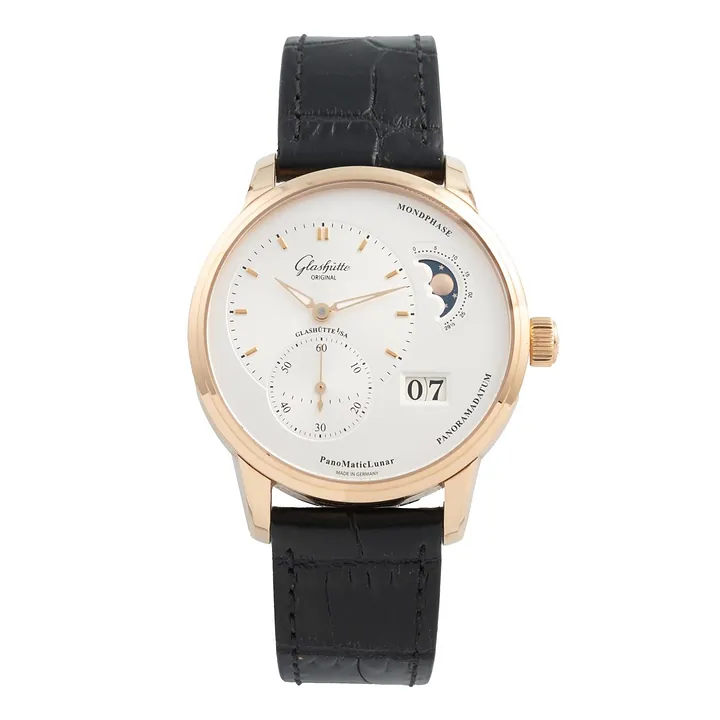
Wristwatches · originally sold in April 2022 (per the lot record)
Glashã¼tte Original Panomaticlunar, ref. 1-90-02-45-35-04, originally sold in April 2022
Antiquorum auction archive, Geneva
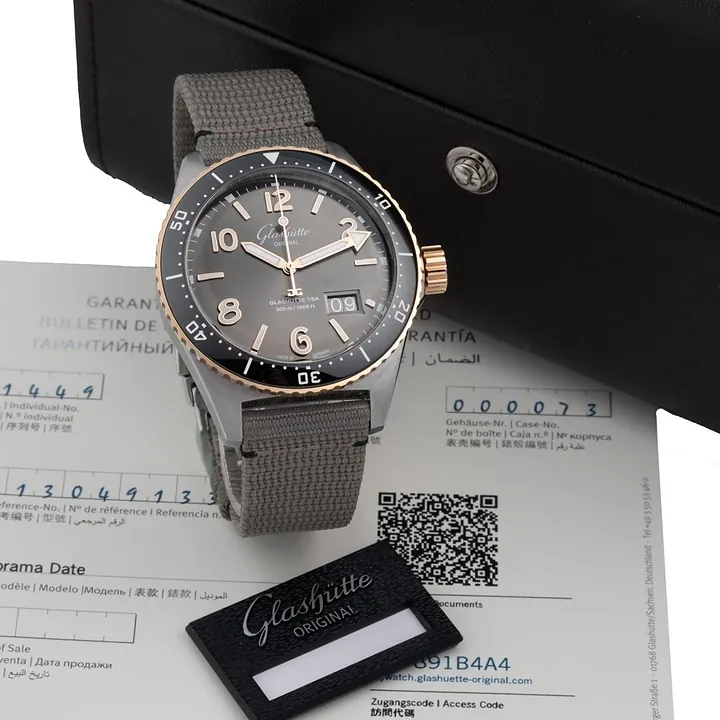
Wristwatches · c. 2022
Glashütte Original Seaq Panorama Date, ref. 1-36-13-04-91-33, c. 2022
Antiquorum auction archive, Geneva
Wristwatches · originally sold in December 2021 (per the lot record)
Glashütte Original wristwatch, ref. W23947090204, Sixities Panorama Date Annual Edition, originally sold in December 2021 (per the lot record)
Antiquorum auction archive, Geneva