
Wristwatches · Wristwatch
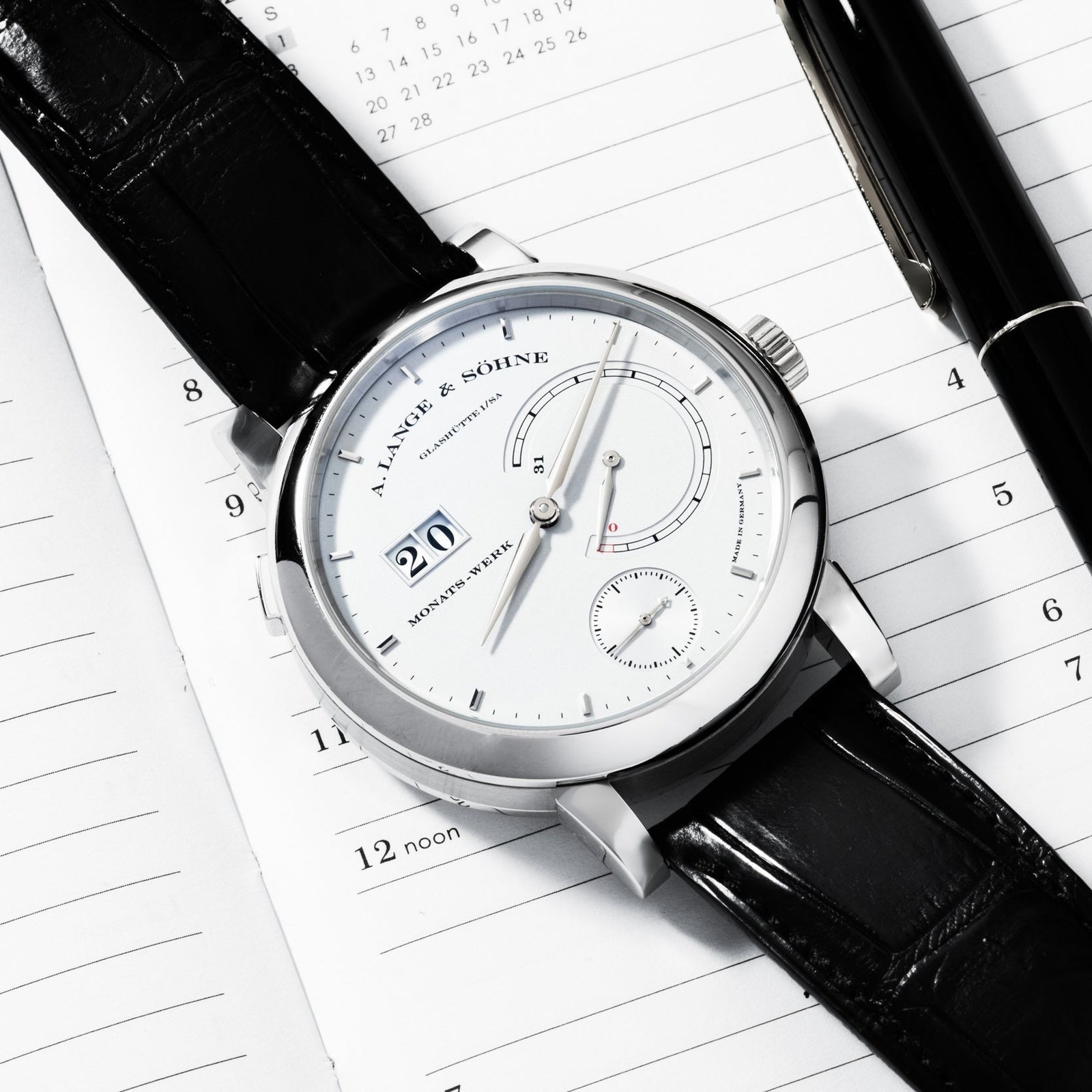
A. Lange & Söhne Lange 31
- Maker / attribution
- A. Lange & Söhne (maker)
- Date
- c. 2000s
- Historical period
- Mechanical Renaissance (1990 – 2010)
- Country of origin
- Germany
- Object type
- Wristwatch
- Dimensions
- Case 45.9 mm
- Stock no.
- 40991367
- Credit line
- Dealer listing, Analog/Shift (40991367)
- Catalogue title (original)
- A. Lange & Söhne Lange 31 (English)
View the source record (dealer listing) ↗ (opens another website in a new tab)Suggest a correction
Record summary
Catalogued by Analog/Shift (dealer), New York (stock number 40991367), this is a wristwatch by A. Lange & Söhne, made in Germany, dated c. 2000s. The Atlas places it in the Mechanical Renaissance period (1990 – 2010) of its Wristwatches collection. Recorded dimensions: Case 45.9 mm. The record is illustrated with 6 photographs.
Assembled from the source record's structured fields. Dates and attributions are given as the source states them; where a field is missing the Atlas leaves it blank rather than estimating.
Catalogue description
Dealer description — Analog/Shift
Re-established in 1990 after a long dormancy, A. Lange & Söhne has been producing some of the world’s finest timepieces for over 30 years. While the famed Lange 1 is perhaps most emblematic of the innovatie Saxon brand’s savoir faire , there are other, equally impressive watches that deserve the attention of collectors the world over — one of which is the Lange 31. This unique timepiece is so called due to its power reserve, which lasts a mind-blowing 31 days — a full month — via the use of two massive mainspring barrels. Dating to circa the 2000s, this particular Lange 31 is housed in a 45.9mm platinum case with a sapphire crystal, a signed crown, a square date pusher at 10 o’clock, and a polished bezel. It features a satin silver dial with applied indices, a 31-day power reserve indicator at 3 o’clock, a ‘digital’ date display at 10 o’clock, a running seconds display above 6 o’clock, and a matching ‘lance’ handset. Powered by the A. Lange & Söhne Calibre L034.1 movement — an exquisite calibre visible via a sapphire caseback — the watch is wound via a key, much like certain vintage pocket watches and clocks. It comes paired to a signed, black alligator leather strap with a signed, platinum push-button deployant clasp. Oversized and available in precious metals this is a funny watch.... The Germans, known for their forward thinking engineering and problem solving, took it upon themselves to create what is essentially a re-interpretation of a pocket watch for the wrist , yet is distinctly “Lange” in aesthetics and design codes. This striking timepiece flies under the radar and is a beautiful oxymoron.
Historical context
Mechanical Renaissance (1990 – 2010)
Mechanical watches return as cultural objects; independent watchmaking flourishes.
Mechanical watches returned as cultural and luxury objects. Complications, tourbillons and new materials proliferated; independent watchmakers such as George Daniels, F.P. Journe and Philippe Dufour revived artisanal watchmaking; collecting vintage watches became a major field.
Read the period in the timelineMore wristwatches from this periodEarlier: Quartz Revolution
Atlas type guide
Wristwatches
Bracelet watches were worn by women from the early nineteenth century — Breguet made one for Caroline Murat, Queen of Naples, in 1810–12 — but the wristwatch only became a man's instrument with military use and aviation in the early twentieth century. Between the World Wars it overtook the pocket watch; the 1920s and 1930s brought rectangular Art Deco cases, water-resistant cases and the first automatic winding systems.
After 1945 the wristwatch became a carrier of identity — dress watches, sports and dive watches, chronographs, calendars — produced by Swiss, American, Japanese, German, Soviet and Chinese industries. The quartz revolution after 1969 and the mechanical renaissance since the 1990s, including the rise of independent watchmakers, complete the story.
What to look for
- The reference number (between the lugs or inside the case back) and serial number, the starting point for dating.
- The calibre: its maker and number are often stamped under the dial or on the bridge.
- Originality of dial, hands and crown — refinished ('redial') dials are common.
- Case material marks: 18K/750, 14K/585, stainless steel, gold-filled, plated.
Dating clues
- Wire-lug cases: before c. 1925.
- Water-resistant screw-down cases: from 1926.
- Quartz movements: from 1969; sapphire crystals widespread after c. 1980.
General guidance written by the Atlas editors about this kind of object. It is not a statement about this particular piece; for that, rely on the source record above and on physical examination.
Related records
Movements & Components · 1900
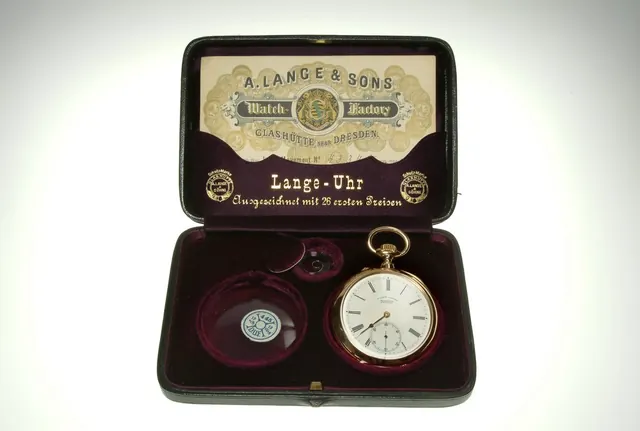
Pocket watch by A. Lange & Söhne, Germany, 1900
Kulturstiftung Sachsen-Anhalt - Museum Schloss Neuenburg
Pocket Watches · c. 1941
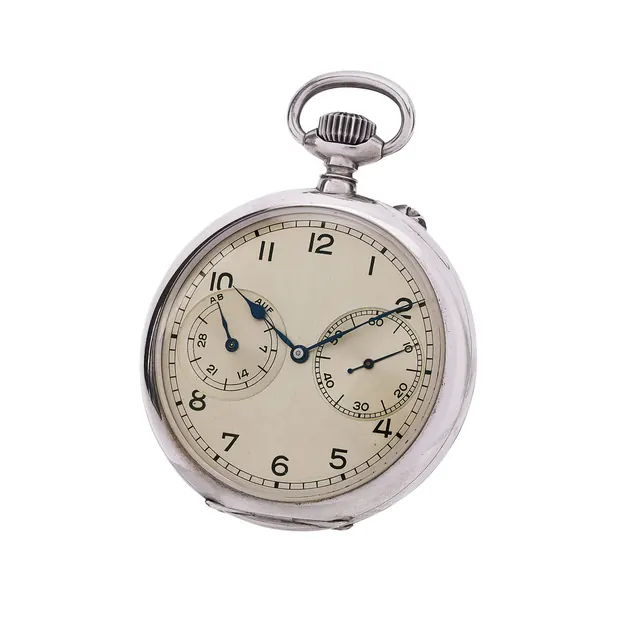
A. Lange & Söhne pocket watch, Observation Pocket Watch, circa 1941
Antiquorum auction archive, Geneva
Pocket Watches · c. 1946
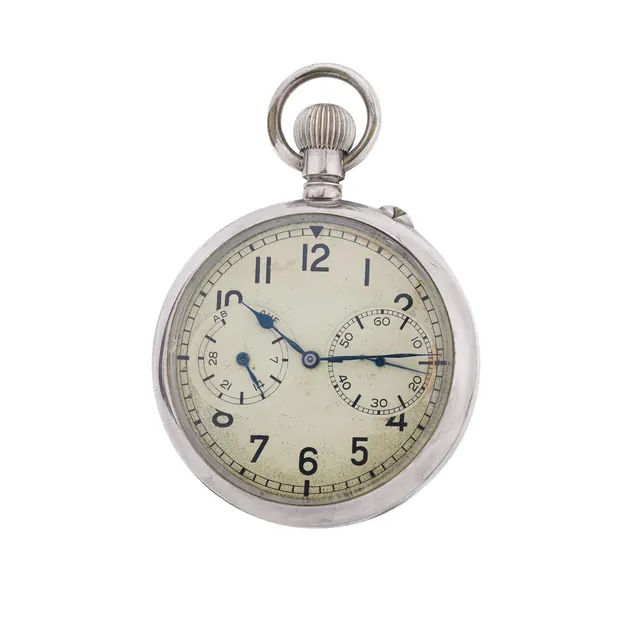
A. Lange & Söhne pocket watch, Military Observation Pocket Watch, circa 1946
Antiquorum auction archive, Geneva
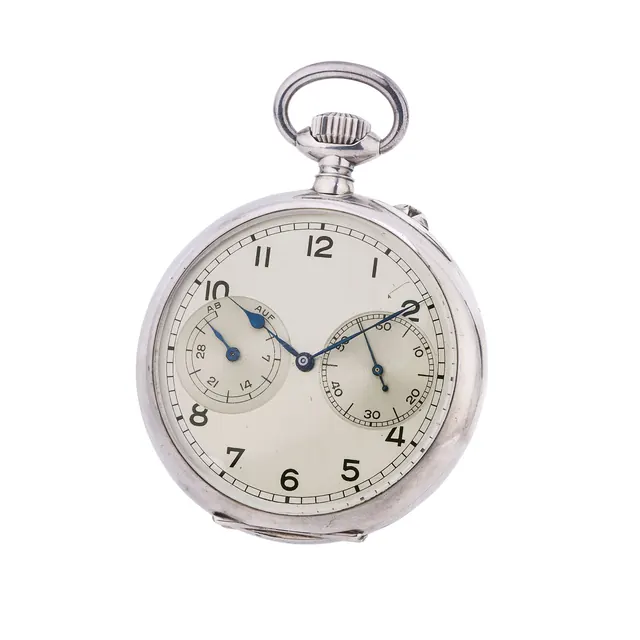
Pocket Watches · c. 1942
A. Lange & Söhne pocket watch, Military Observation Pocket Watch, circa 1942
Antiquorum auction archive, Geneva
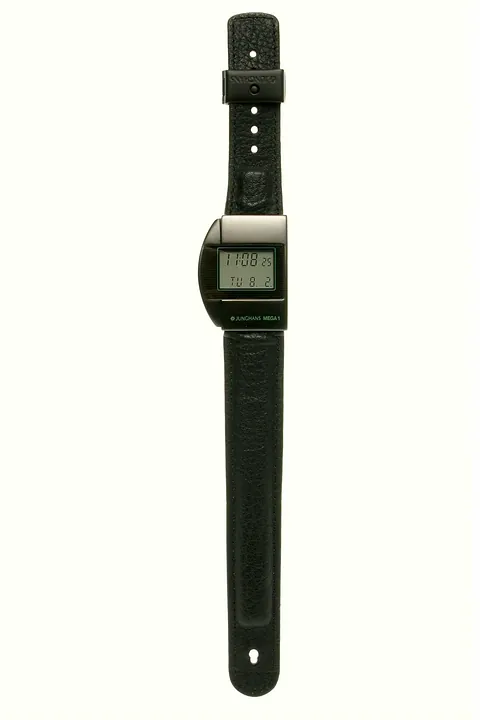
Wristwatches · c. 1990
Wristwatch, Germany, c. 1990 (no. 29875)
German Clock Museum
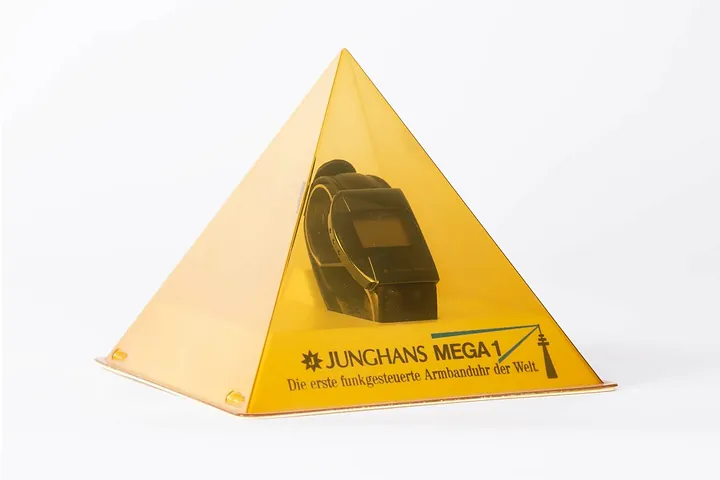
Wristwatches · 1990
Wristwatch, Germany, 1990 (no. 59620)
German Clock Museum
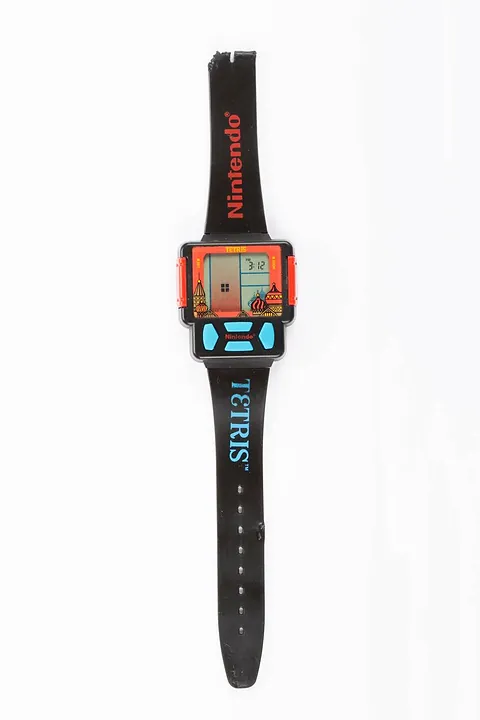
Wristwatches · c. 1991
Wristwatch by EM-Entertainment München, Merchandising, Film und Fernseh GmbH, Germany, c. 1991
German Clock Museum
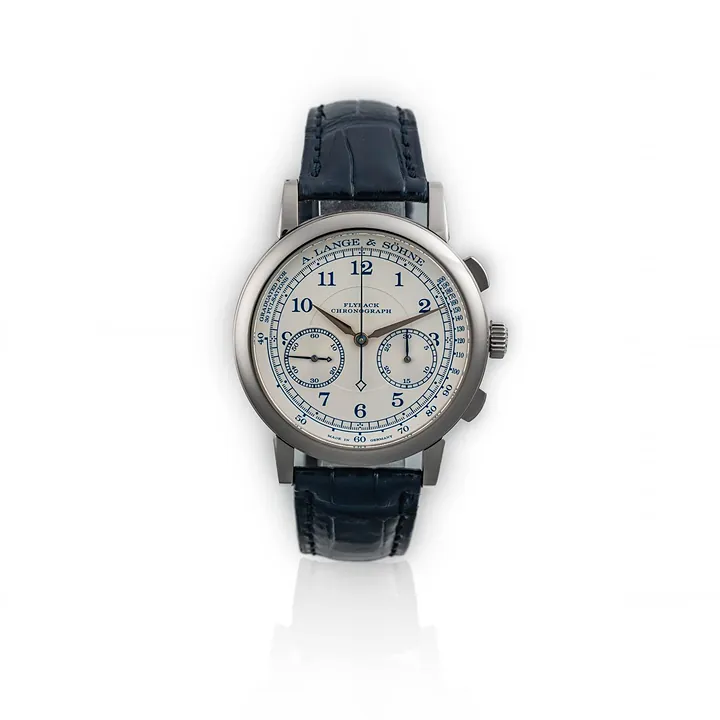
Wristwatches · c. 2000
A.Lange & Söhne 1815 Chronograph, ref. 414.026, c. 2000
Antiquorum auction archive, Geneva