
Wristwatches · Wristwatch
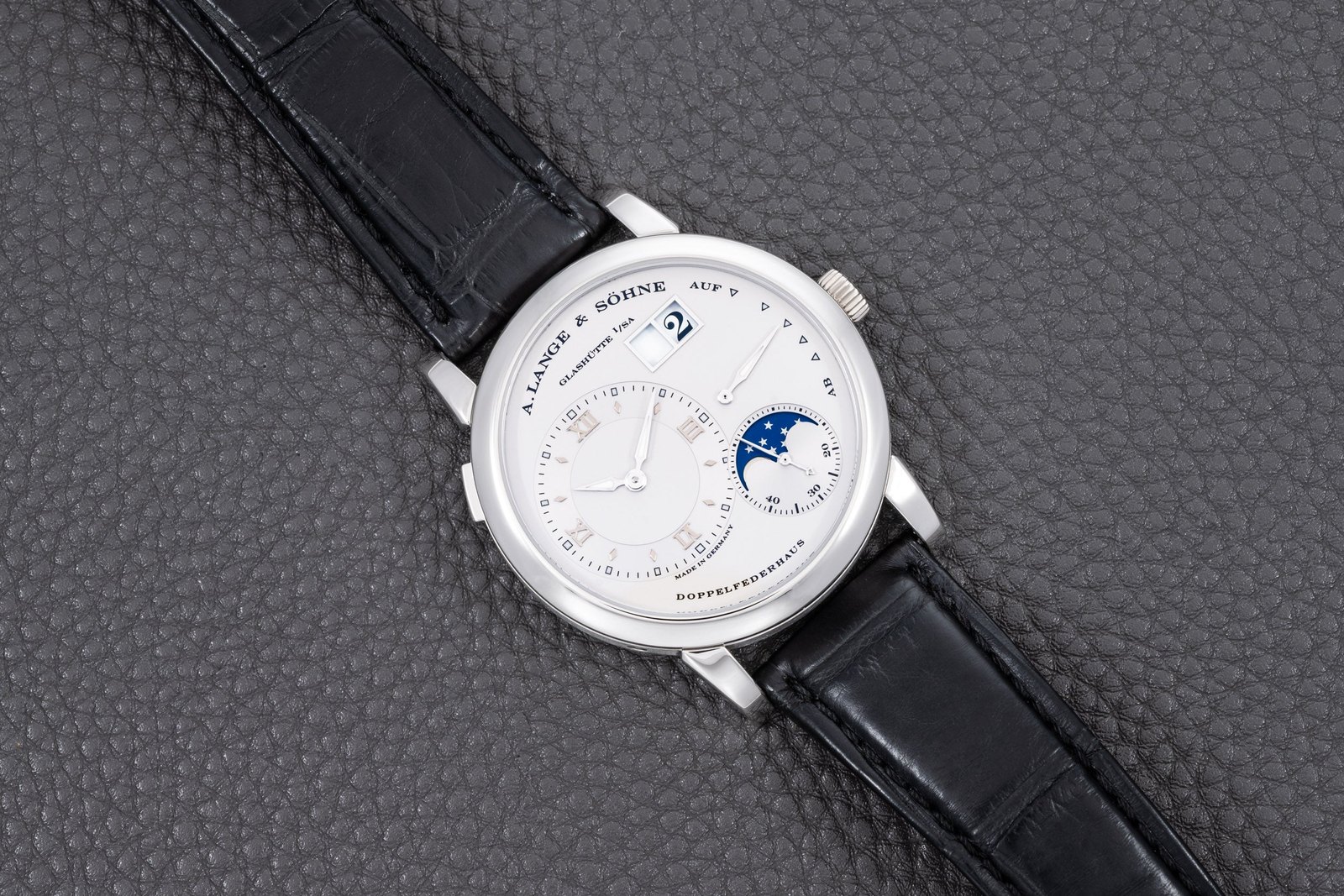
A. Lange & Söhne Lange 1 Moonphase, c. 2000s
- Maker / attribution
- A. Lange & Söhne (maker)
- Date
- c. 2000s
- Historical period
- Mechanical Renaissance (1990 – 2010)
- Country of origin
- Germany
- Object type
- Wristwatch
- Stock no.
- 40990973
- Credit line
- Dealer listing, Analog/Shift (40990973)
- Catalogue title (original)
- A. Lange & Söhne Lange 1 Moonphase (English)
View the source record (dealer listing) ↗ (opens another website in a new tab)Suggest a correction
Record summary
Catalogued by Analog/Shift (dealer), New York (stock number 40990973), this is a wristwatch by A. Lange & Söhne, made in Germany, dated c. 2000s. The Atlas places it in the Mechanical Renaissance period (1990 – 2010) of its Wristwatches collection. The record is illustrated with 6 photographs.
Assembled from the source record's structured fields. Dates and attributions are given as the source states them; where a field is missing the Atlas leaves it blank rather than estimating.
Catalogue description
Dealer description — Analog/Shift
What you’re looking at is an example of the most important wristwatches of the last 30 years. The Lange 1 is without question the manufacturer’s flagship model, and the big date function is its hallmark. Though found in watches like the Zeitwerk or the Langematik Sax-O-Mat, it’s in the Lange 1 that it’s shown to the greatest effect. Alongside other details such as asymmetrical sub-dials depicting the hours and sub-seconds, and the A. Lange & Söhne signature with its famous ampersand, it shows a clarity of vision that is wholly Lange. And while the Lange 1 has seen many versions, from a tourbillon to the Timezone, it’s the original that has become the symbol of the maison — and perhaps even the symbol of modern watchmaking itself. This particular example from circa the 2000s, housed in a 38.5 platinum case with a sapphire crystal and sapphire case back, features a polished platinum bezel, a silver dial with subsidiary hours and minutes at 9:00; a seconds register at 4:00; a power reserve indicator at 3:00; a framed date window at 2:00; and applied indices with a matching handset. In outstanding, lightly worn condition throughout, it’s fitted to a black alligator leather strap with a signed platinum pin buckle. Powering this masterpiece is the Lange & Söhne Caliber L901.5, a manual-winding movement that’s stunning to behold — and which can thankfully easily be viewed via the exhibition case back. There are complicated watches, and then there are works of art. This is the latter.
Historical context
Mechanical Renaissance (1990 – 2010)
Mechanical watches return as cultural objects; independent watchmaking flourishes.
Mechanical watches returned as cultural and luxury objects. Complications, tourbillons and new materials proliferated; independent watchmakers such as George Daniels, F.P. Journe and Philippe Dufour revived artisanal watchmaking; collecting vintage watches became a major field.
Read the period in the timelineMore wristwatches from this periodEarlier: Quartz Revolution
Atlas type guide
Calendar, moon-phase and perpetual calendar watches
Calendar complications range from a simple date to the perpetual calendar, which automatically allows for months of different lengths and leap years until 2100. Pocket watches with perpetual calendars were made in the eighteenth and nineteenth centuries; Patek Philippe made the first perpetual calendar wristwatch in 1925, and series production followed in 1941. The annual calendar (Patek Philippe, 1996) needs correction only once a year.
Moon-phase displays use a disc with two moons and 59 teeth advanced daily, approximating the 29.5-day lunation; more precise trains reduce the error to one day in over a century.
What to look for
- Apertures or subsidiary dials for day, date, month and leap year.
- Moon disc under a 'bosom' shaped aperture.
- Recessed correctors on the case band for setting the calendar.
Dating clues
- Triple-date wristwatches: popular c. 1940–1955.
- Perpetual calendar wristwatches: from 1925 (unique) and 1941 (series).
General guidance written by the Atlas editors about this kind of object. It is not a statement about this particular piece; for that, rely on the source record above and on physical examination.
Related records
Movements & Components · 1900
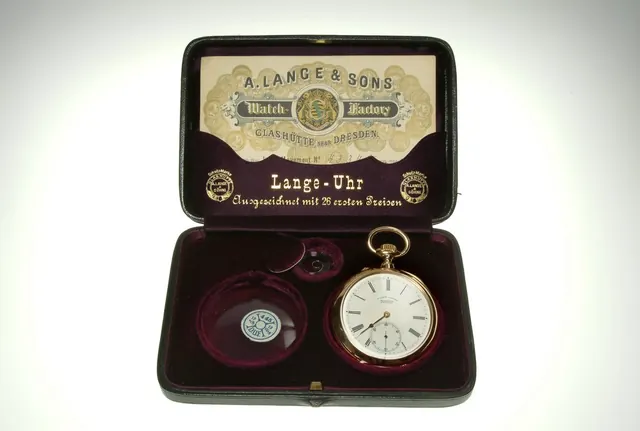
Pocket watch by A. Lange & Söhne, Germany, 1900
Kulturstiftung Sachsen-Anhalt - Museum Schloss Neuenburg
Pocket Watches · c. 1941
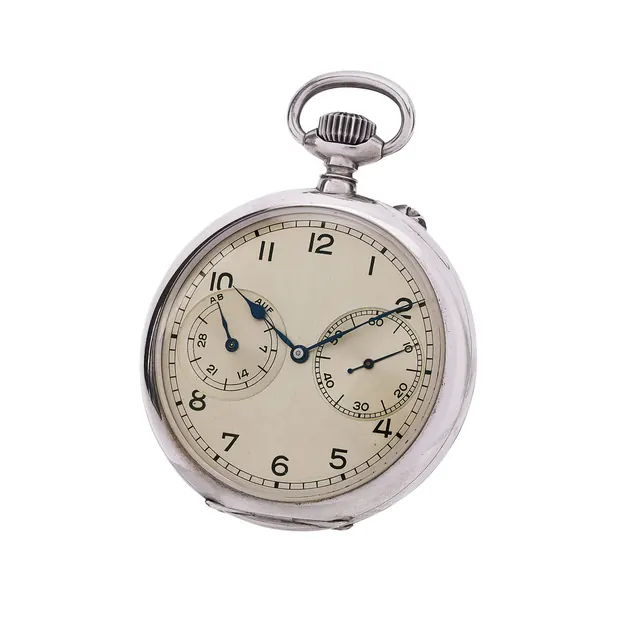
A. Lange & Söhne pocket watch, Observation Pocket Watch, circa 1941
Antiquorum auction archive, Geneva
Pocket Watches · c. 1946
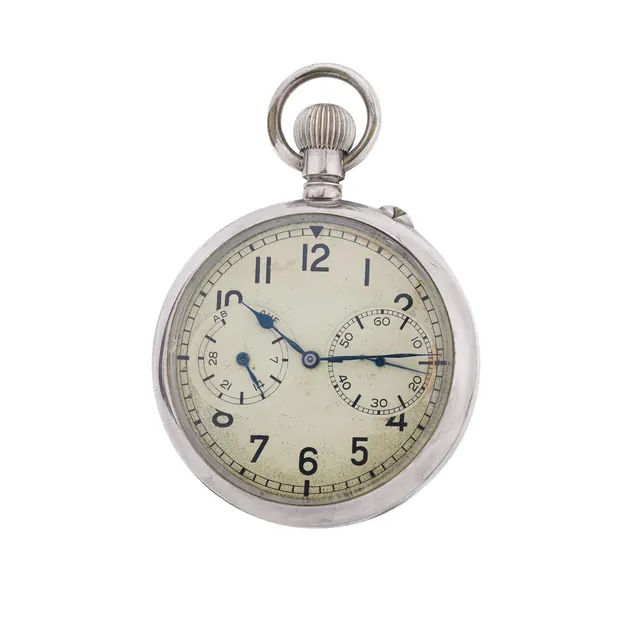
A. Lange & Söhne pocket watch, Military Observation Pocket Watch, circa 1946
Antiquorum auction archive, Geneva
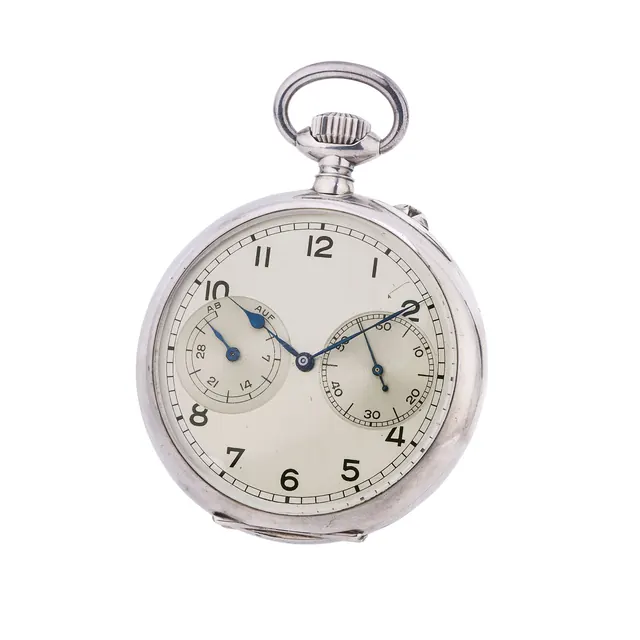
Pocket Watches · c. 1942
A. Lange & Söhne pocket watch, Military Observation Pocket Watch, circa 1942
Antiquorum auction archive, Geneva
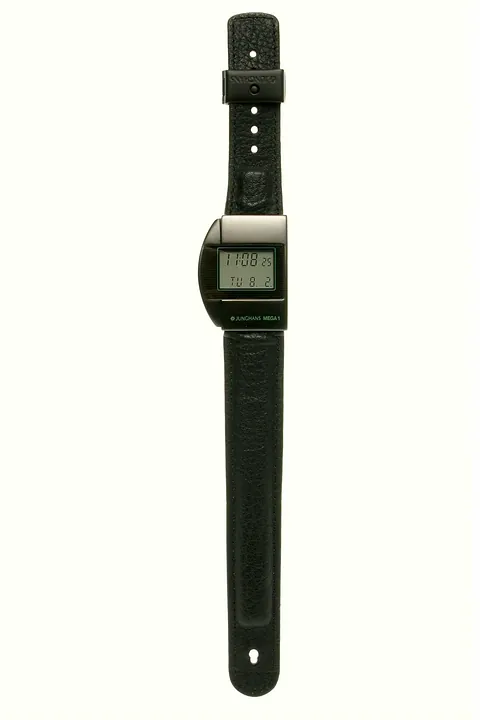
Wristwatches · c. 1990
Wristwatch, Germany, c. 1990 (no. 29875)
German Clock Museum
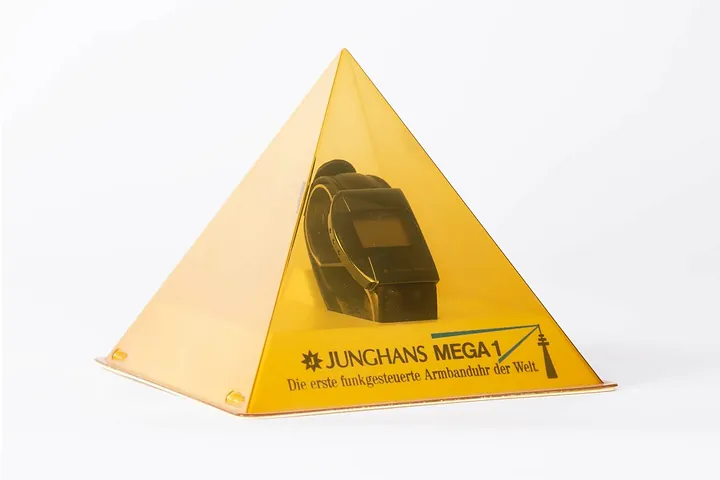
Wristwatches · 1990
Wristwatch, Germany, 1990 (no. 59620)
German Clock Museum
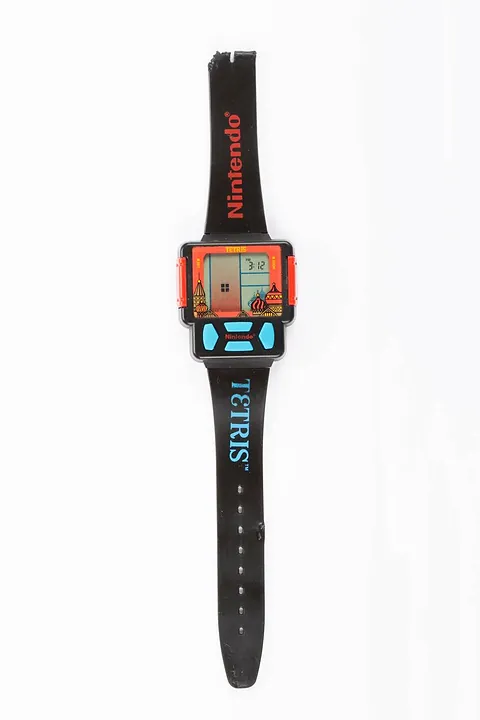
Wristwatches · c. 1991
Wristwatch by EM-Entertainment München, Merchandising, Film und Fernseh GmbH, Germany, c. 1991
German Clock Museum
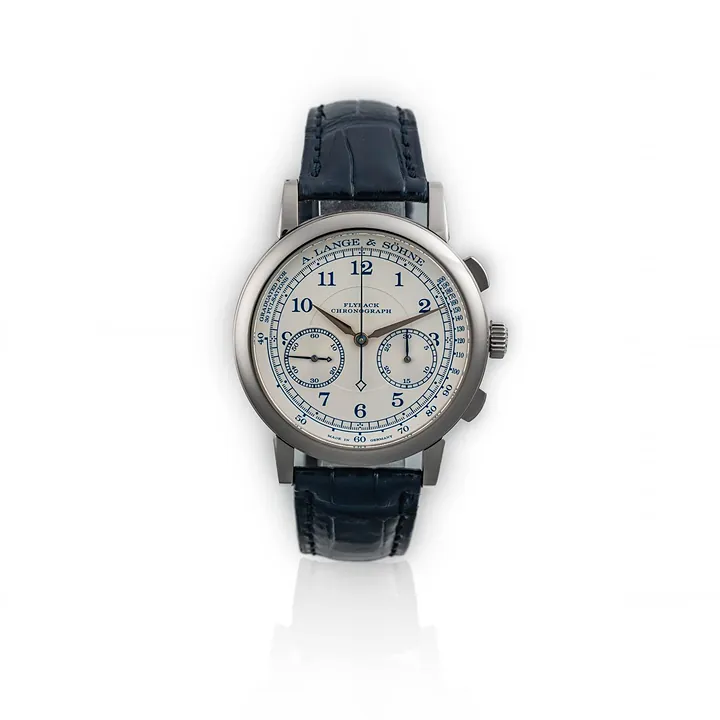
Wristwatches · c. 2000
A.Lange & Söhne 1815 Chronograph, ref. 414.026, c. 2000
Antiquorum auction archive, Geneva