
Wristwatches · Wristwatch
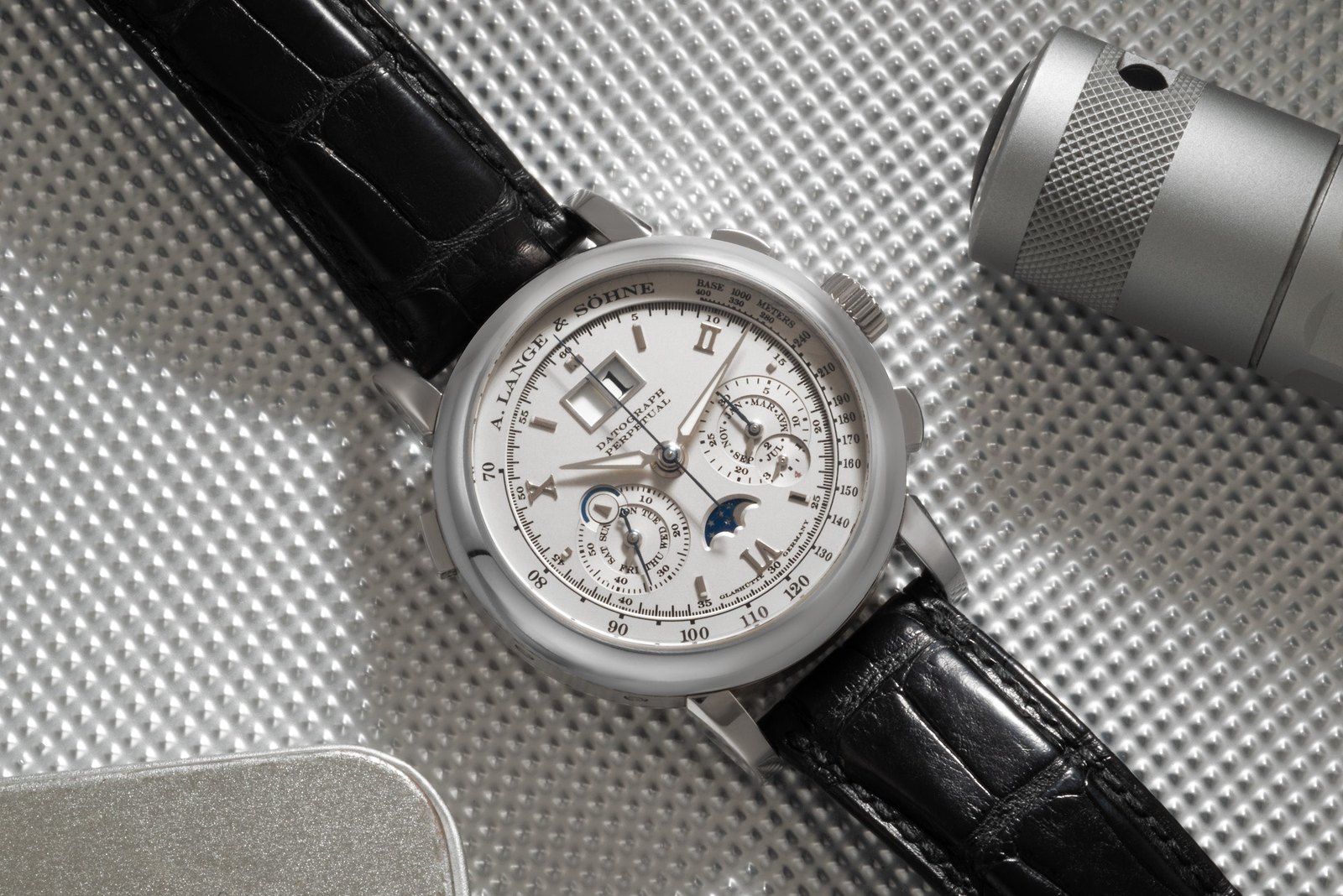
A. Lange & Söhne Datograph Perpetual Calendar Moonphase, c. 2010s
- Maker / attribution
- A. Lange & Söhne (maker)
- Date
- c. 2010s
- Historical period
- Contemporary Horology (2010 – Present)
- Country of origin
- Germany
- Object type
- Wristwatch
- Dimensions
- Case 40.5 mm
- Stock no.
- 40991594
- Credit line
- Dealer listing, Analog/Shift (40991594)
- Catalogue title (original)
- A. Lange & Söhne Datograph Perpetual Calendar Moonphase (English)
View the source record (dealer listing) ↗ (opens another website in a new tab)Suggest a correction
Record summary
Catalogued by Analog/Shift (dealer), New York (stock number 40991594), this is a wristwatch by A. Lange & Söhne, made in Germany, dated c. 2010s. The Atlas places it in the Contemporary Horology period (2010 – Present) of its Wristwatches collection. Recorded dimensions: Case 40.5 mm. The record is illustrated with 6 photographs.
Assembled from the source record's structured fields. Dates and attributions are given as the source states them; where a field is missing the Atlas leaves it blank rather than estimating.
Catalogue description
Dealer description — Analog/Shift
We'll just come right out and say it: The A. Lange & Söhne Datograph might just be the most important watch of the modern era. With its combination of avant-garde and teutonic design languages, mind-blowing mechanical architecture, function-heavy use, and luxury materials, the Datograph has not only won the hearts and minds of collectors and enthusiasts the world over, it created and set the bar for modern high-horology. And it came from Germany, not Switzerland. We are yet to meet a horological virtuoso who doesn't consider the Datograph to be anything other than a triumph of design and mechanical engineering. Indeed, even the maestro himself - Philippe Dufour - can regularly be spotted wearing his rose gold example from the first series! From its hefty wrist presence to the depth and intricacy of its 'miniature city-like' movement, the snap of its Flyback chronograph mechanism and the ever-rewarding outsize date function, the Datograph is a triumph, pure and simple. This particular example dating to circa the 2010s takes the standard Datograph to a new level - adding a perpetual calendar complication to the ALS Calibre L951.1 to create the hand-cranking Calibre L952.1 perpetual calendar flyback chronograph movement. It features a 40.5mm case fashioned out of platinum with a polished platinum bezel, a signed crown, square pushers, and a satin silver dial with applied indices and a matching luminous 'lance' handset. Thankfully, as with most Langes - a sapphire display caseback reveals the Calibre L952.1 movement. Something truly impressive and even seductive to behold. Far be it from us to equate (or conflate) watches with traditional ‘investments’ — but if you’re looking to park your money on a horological work of art, a technical marvel, or an ultra-functional machine, then you’ve come to the right place. In any of its guises, it simply doesn’t get much better than a Datograph. Full stop.
Historical context
Contemporary Horology (2010 – Present)
Silicon components, connected watches, optical-lattice research clocks and a thriving independent scene.
Smartwatches became the world's best-selling watches, while mechanical watchmaking focuses on craft, innovation (silicon components, new escapements) and independent makers.
Read the period in the timelineMore wristwatches from this periodEarlier: Mechanical Renaissance
Atlas type guide
Calendar, moon-phase and perpetual calendar watches
Calendar complications range from a simple date to the perpetual calendar, which automatically allows for months of different lengths and leap years until 2100. Pocket watches with perpetual calendars were made in the eighteenth and nineteenth centuries; Patek Philippe made the first perpetual calendar wristwatch in 1925, and series production followed in 1941. The annual calendar (Patek Philippe, 1996) needs correction only once a year.
Moon-phase displays use a disc with two moons and 59 teeth advanced daily, approximating the 29.5-day lunation; more precise trains reduce the error to one day in over a century.
What to look for
- Apertures or subsidiary dials for day, date, month and leap year.
- Moon disc under a 'bosom' shaped aperture.
- Recessed correctors on the case band for setting the calendar.
Dating clues
- Triple-date wristwatches: popular c. 1940–1955.
- Perpetual calendar wristwatches: from 1925 (unique) and 1941 (series).
General guidance written by the Atlas editors about this kind of object. It is not a statement about this particular piece; for that, rely on the source record above and on physical examination.
Related records
Movements & Components · 1900
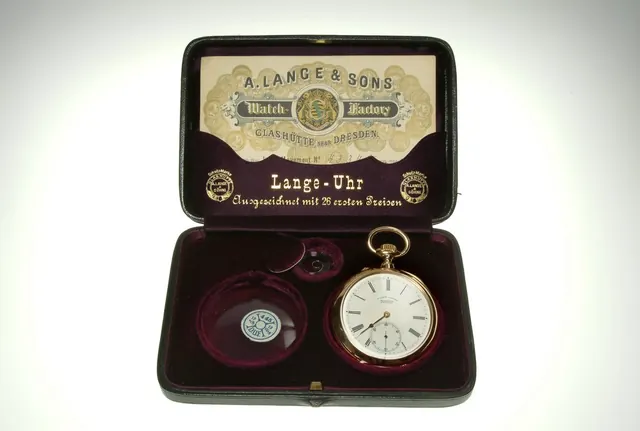
Pocket watch by A. Lange & Söhne, Germany, 1900
Kulturstiftung Sachsen-Anhalt - Museum Schloss Neuenburg
Pocket Watches · c. 1941
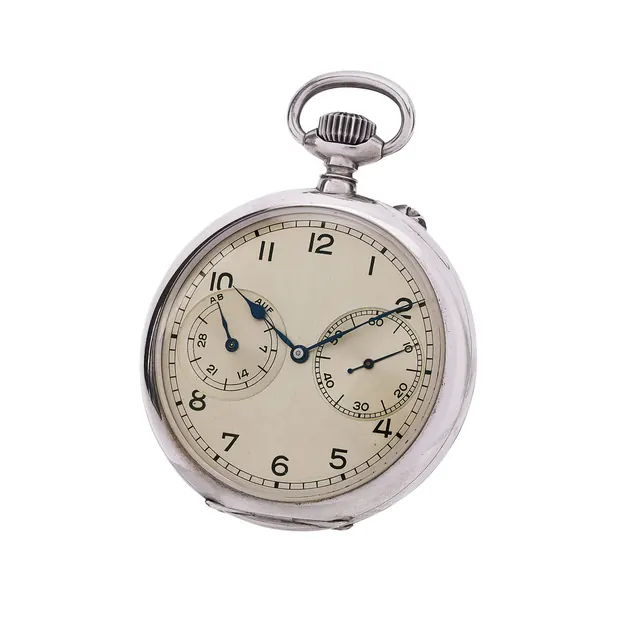
A. Lange & Söhne pocket watch, Observation Pocket Watch, circa 1941
Antiquorum auction archive, Geneva
Pocket Watches · c. 1946
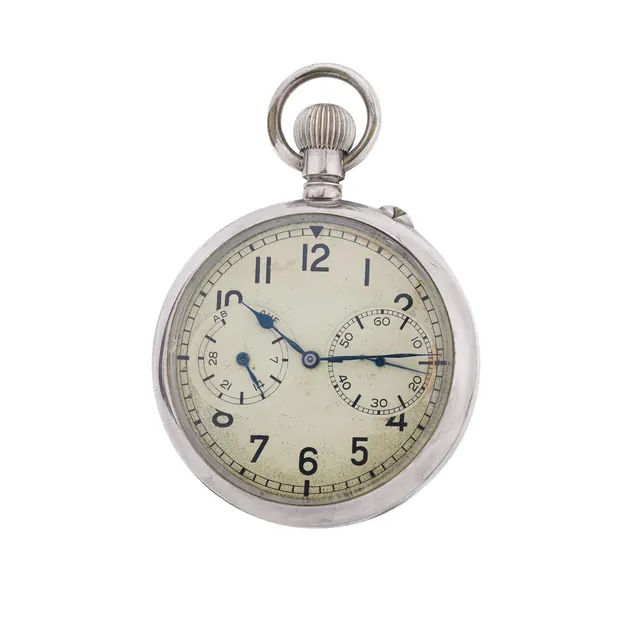
A. Lange & Söhne pocket watch, Military Observation Pocket Watch, circa 1946
Antiquorum auction archive, Geneva
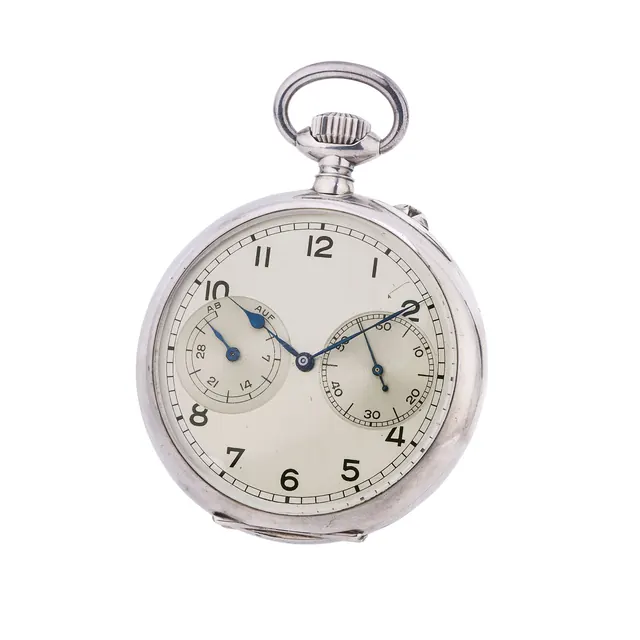
Pocket Watches · c. 1942
A. Lange & Söhne pocket watch, Military Observation Pocket Watch, circa 1942
Antiquorum auction archive, Geneva
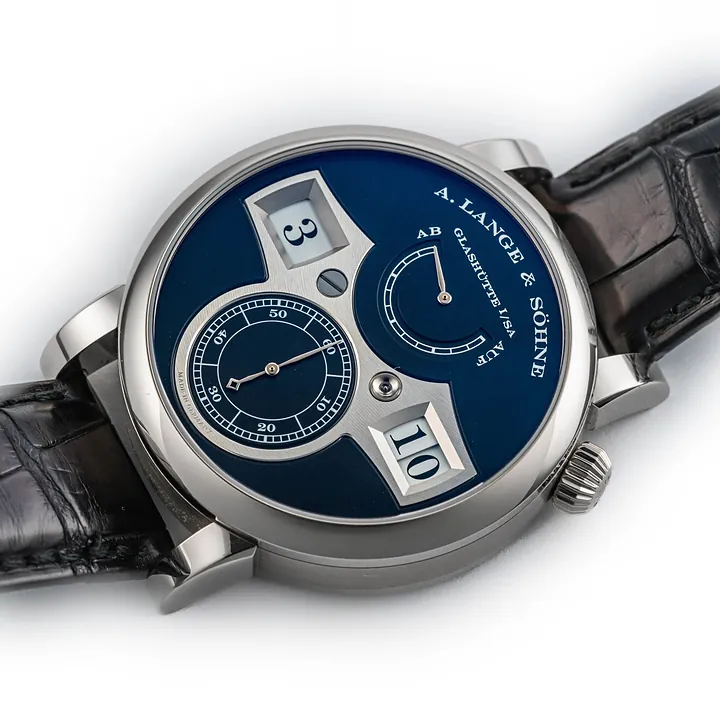
Wristwatches · c. 2018
A.Lange & Söhne Zeitwerk, ref. 140.029, c. 2018
Antiquorum auction archive, Geneva
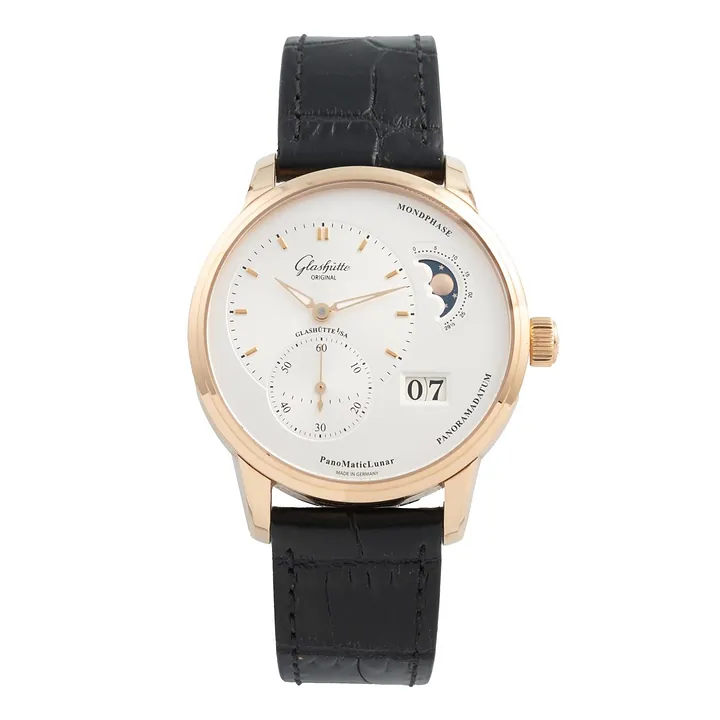
Wristwatches · originally sold in April 2022 (per the lot record)
Glashã¼tte Original Panomaticlunar, ref. 1-90-02-45-35-04, originally sold in April 2022
Antiquorum auction archive, Geneva
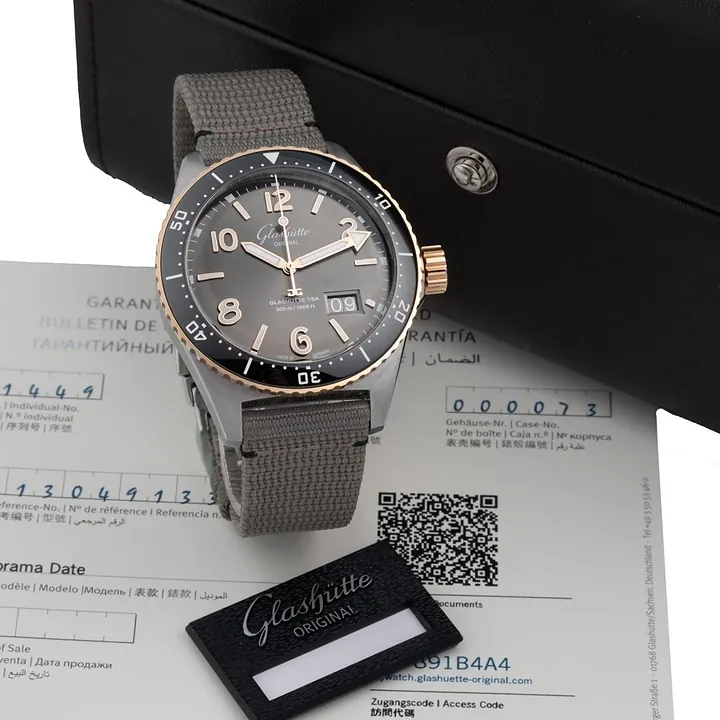
Wristwatches · c. 2022
Glashütte Original Seaq Panorama Date, ref. 1-36-13-04-91-33, c. 2022
Antiquorum auction archive, Geneva
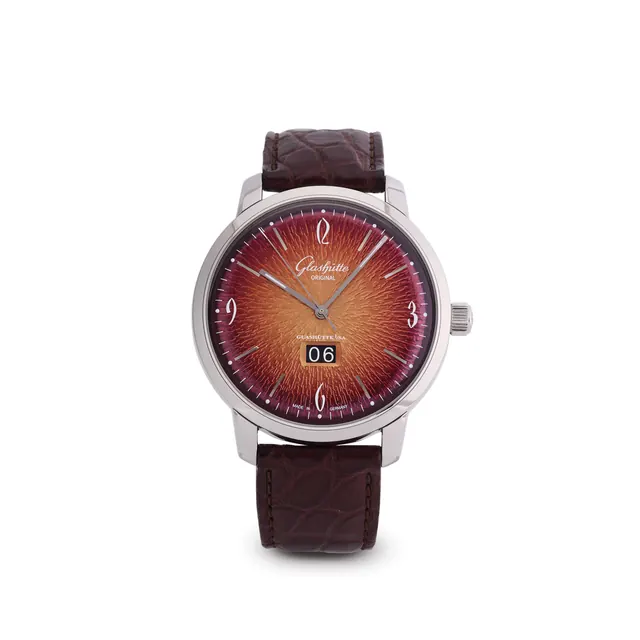
Wristwatches · originally sold in December 2021 (per the lot record)
Glashütte Original wristwatch, ref. W23947090204, Sixities Panorama Date Annual Edition, originally sold in December 2021 (per the lot record)
Antiquorum auction archive, Geneva