
Wristwatches · Wristwatch
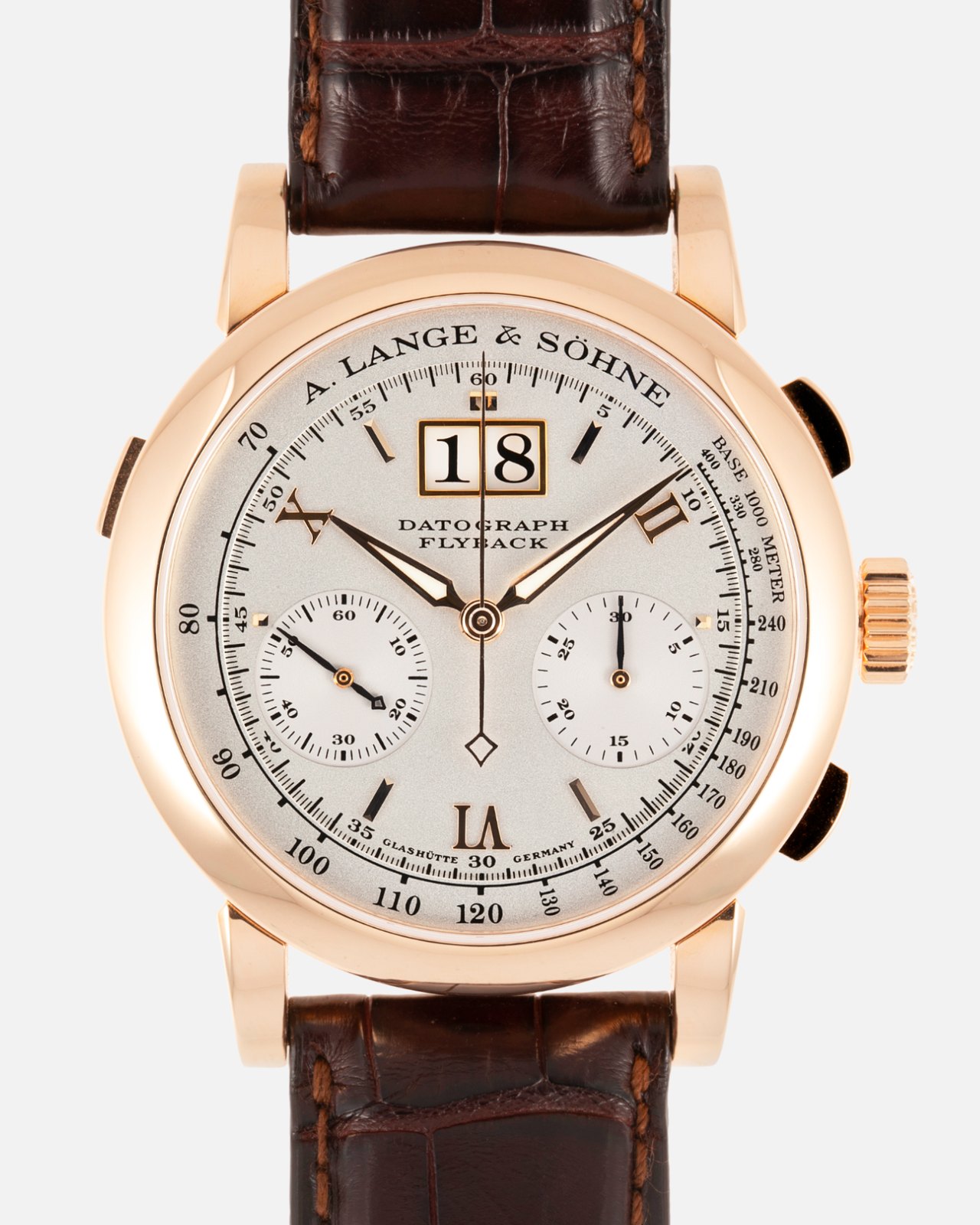
A. Lange & Sohne Datograph 403.032, 2000s
- Maker / attribution
- A. Lange & Sohne (maker)
- Date
- 2000s
- Historical period
- Mechanical Renaissance (1990 – 2010)
- Country of origin
- Germany
- Object type
- Wristwatch
- Dimensions
- Case 39 mm
- Stock no.
- Product 6738592170071
- Credit line
- Dealer listing, S.Song Watches (product 6738592170071)
- Catalogue title (original)
- A. Lange & Sohne Datograph 403.032 (English)
View the source record (dealer listing) ↗ (opens another website in a new tab)Suggest a correction
Record summary
Catalogued by S.Song Watches (dealer), Seattle (stock number Product 6738592170071), this is a wristwatch by A. Lange & Sohne, made in Germany, dated 2000s. The Atlas places it in the Mechanical Renaissance period (1990 – 2010) of its Wristwatches collection. Recorded dimensions: Case 39 mm. The record is illustrated with 6 photographs.
Assembled from the source record's structured fields. Dates and attributions are given as the source states them; where a field is missing the Atlas leaves it blank rather than estimating.
Catalogue description
Dealer description — S.Song Watches
Released in 1999, the Lange & Söhne Datograph is rightfully heralded as one of the most influential chronograph wristwatches to have ever been brought to market. Launched five years after Lange was re-established by Walter Lange, the Datograph culminated in years of laborious research and development. Bearing in mind, this was a period when brands like Rolex, Patek, Audemars Piguet, Vacheron Constantin, and so many other famous watchmakers were still using third-party chronograph movements from brands like Zenith and Lemania. The A. Lange & Sohne Datograph is the watch that sparked the in-house revolution that is still ongoing to this day. A notoriously tricky movement to design and manufacture, the Datograph's chronograph cal. L951.1 movement symbolized the German watchmaker's triumphant return to the apex of horology. Featuring an innovative fly-back feature and a patented jumping minutes counter, the manual-wind cal. L951.1 was as impressive as a chronograph movement could be. Comprised of 405 hand-finished and polished parts, the cal. L951.1 proudly announced both Lange's intent to challenge the predominantly Swiss horological status quo and their belief in the Datograph as a watch that would perform commercially. A movement as finely finished and complicated as the cal. L951.1 was not cheap to produce. Hailed by many as the greatest chronograph movement of all time, including the likes of Philippe Dufour who owns one personally, what makes this movement so crazy is just how beautiful it looks. Architecturally, it has an amazing three-dimensionality to it that other chronograph movements lack. With its bridges and plates made out of German silver, the overall tone achieved is much warmer and nicer to look at compared to the often sterile-looking silver-colored Swiss movements. Making a movement is not just about technicality but also about design and proportionality. Topping it off with incredible hand-finished anglage and the classic engraved balance cock, it doesn’t get any better than this. While the Datograph's movement is certainly iconic, its design has become legendary, and for a good reason. Featuring Lange's signature oversized quick-set date apertures, two chronograph subdials found at 4 and 8 o'clock, and a stacked tachymeter scale along its periphery, the Datograph's dial has become deeply ingrained within its overall look. Furthermore, the round 39mm x 11.8mm case found on first-generation Datographs, like the example I have here, has become the quintessential design for this iconic watch. While there were a few iterations of the first generation Datograph, with the platinum and black dial model being the most iconic, this example is a lesser-seen but equally as beautiful rose gold version with an opaline dial. Compounded upon by the beautiful case and dial design, the Datograph's movement, finishing, overall build, and position as the watch that forced so many other high-end watchmakers to begin going in-house has enabled it to become a legendary timepiece. Offered as a complete full set, the first generation example I have here is a true collector’s piece thanks to the profound impact it has had on both horology and Germany’s best watchmaker.
Historical context
Mechanical Renaissance (1990 – 2010)
Mechanical watches return as cultural objects; independent watchmaking flourishes.
Mechanical watches returned as cultural and luxury objects. Complications, tourbillons and new materials proliferated; independent watchmakers such as George Daniels, F.P. Journe and Philippe Dufour revived artisanal watchmaking; collecting vintage watches became a major field.
Read the period in the timelineMore wristwatches from this periodEarlier: Quartz Revolution
Atlas type guide
Wristwatches
Bracelet watches were worn by women from the early nineteenth century — Breguet made one for Caroline Murat, Queen of Naples, in 1810–12 — but the wristwatch only became a man's instrument with military use and aviation in the early twentieth century. Between the World Wars it overtook the pocket watch; the 1920s and 1930s brought rectangular Art Deco cases, water-resistant cases and the first automatic winding systems.
After 1945 the wristwatch became a carrier of identity — dress watches, sports and dive watches, chronographs, calendars — produced by Swiss, American, Japanese, German, Soviet and Chinese industries. The quartz revolution after 1969 and the mechanical renaissance since the 1990s, including the rise of independent watchmakers, complete the story.
What to look for
- The reference number (between the lugs or inside the case back) and serial number, the starting point for dating.
- The calibre: its maker and number are often stamped under the dial or on the bridge.
- Originality of dial, hands and crown — refinished ('redial') dials are common.
- Case material marks: 18K/750, 14K/585, stainless steel, gold-filled, plated.
Dating clues
- Wire-lug cases: before c. 1925.
- Water-resistant screw-down cases: from 1926.
- Quartz movements: from 1969; sapphire crystals widespread after c. 1980.
General guidance written by the Atlas editors about this kind of object. It is not a statement about this particular piece; for that, rely on the source record above and on physical examination.
Related records
Wristwatches · originally sold on 16 December 2001 (per the lot record)
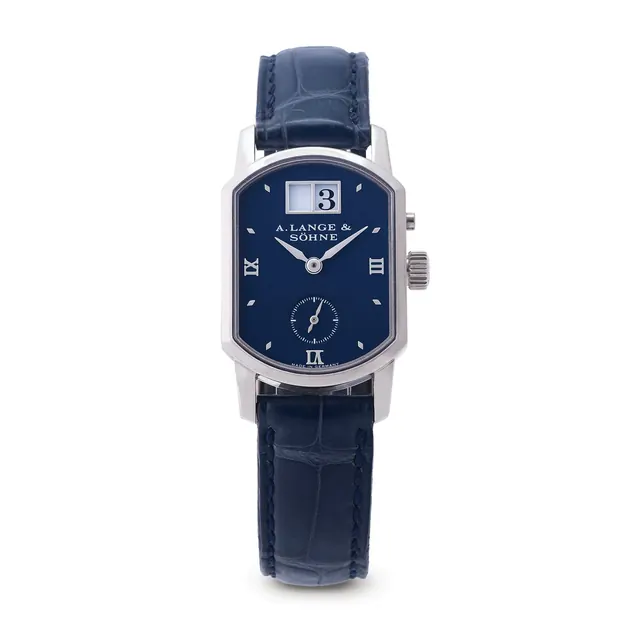
A. Lange & Sohne wristwatch, ref. 103.027, Arkade, originally sold on 16 December 2001
Antiquorum auction archive, Geneva
Instruments · c. 1942
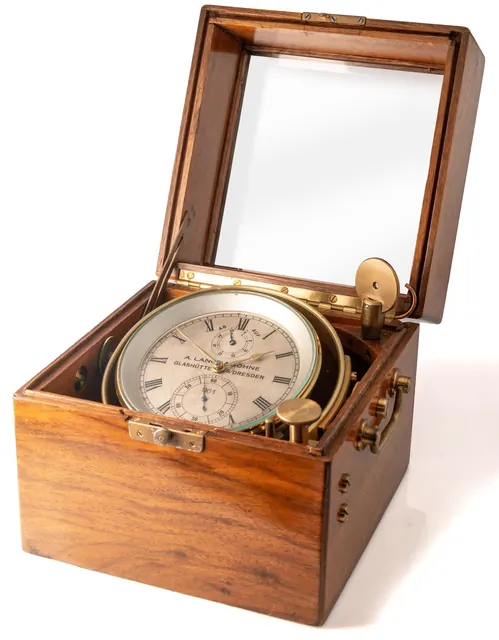
A. Lange & Sohne marine chronometer, Germany Wood, circa 1942
Antiquorum auction archive, Geneva
Wristwatches · 2004
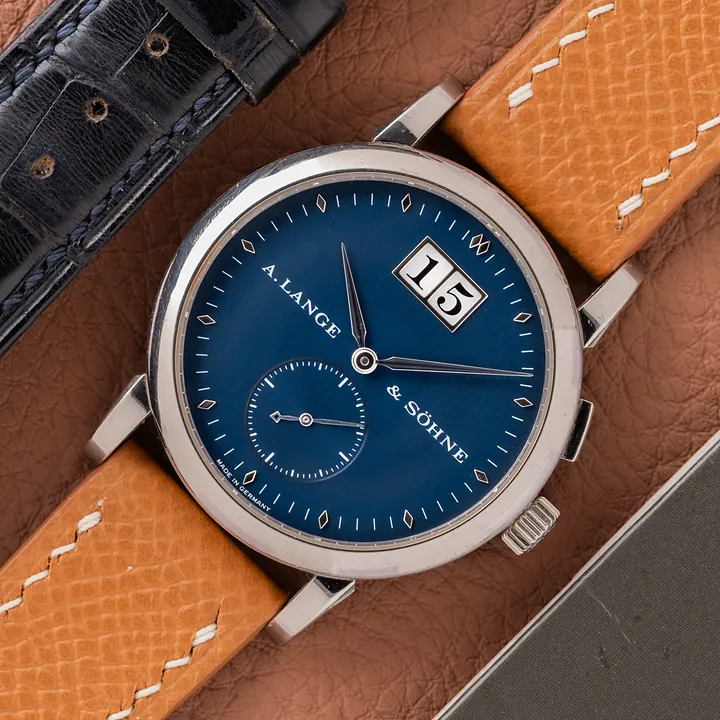
A. Lange & Söhne Saxonia Oversized Date Blue (Ref. 105.027), 2004
Huntington Company (dealer)
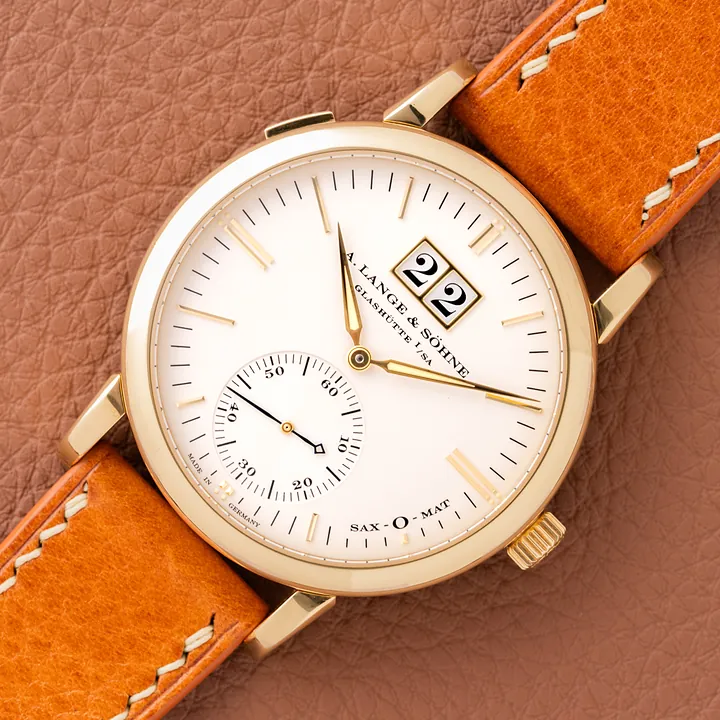
Wristwatches · 2000s
A. Lange & Söhne Langematik Oversized Date (Ref. 308.021), 2000s
Huntington Company (dealer)
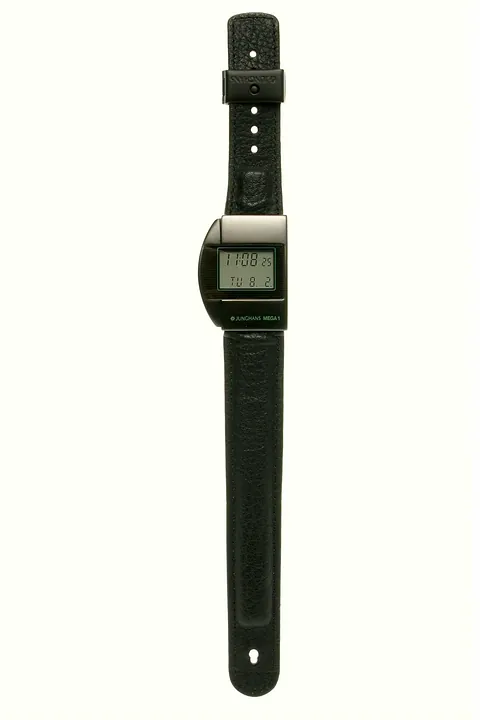
Wristwatches · c. 1990
Wristwatch, Germany, c. 1990 (no. 29875)
German Clock Museum
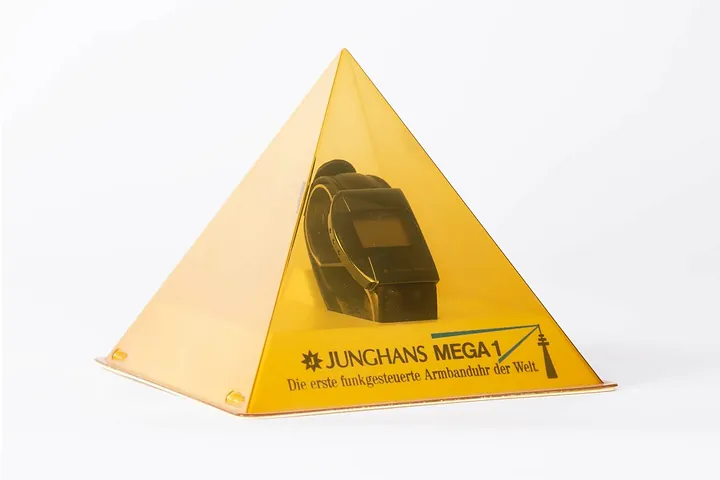
Wristwatches · 1990
Wristwatch, Germany, 1990 (no. 59620)
German Clock Museum
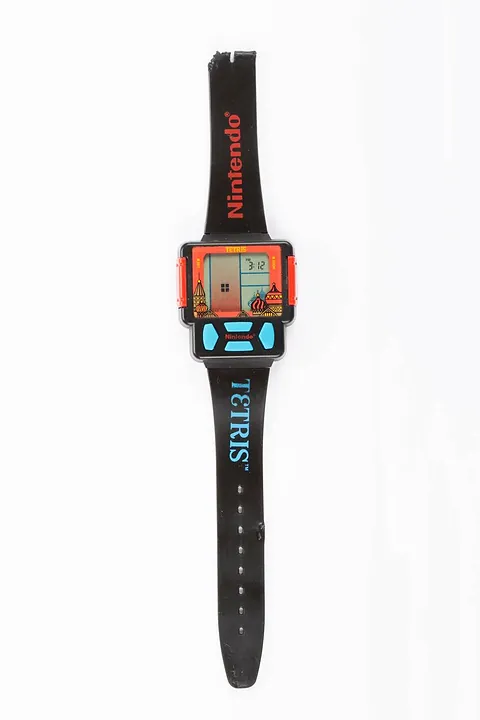
Wristwatches · c. 1991
Wristwatch by EM-Entertainment München, Merchandising, Film und Fernseh GmbH, Germany, c. 1991
German Clock Museum
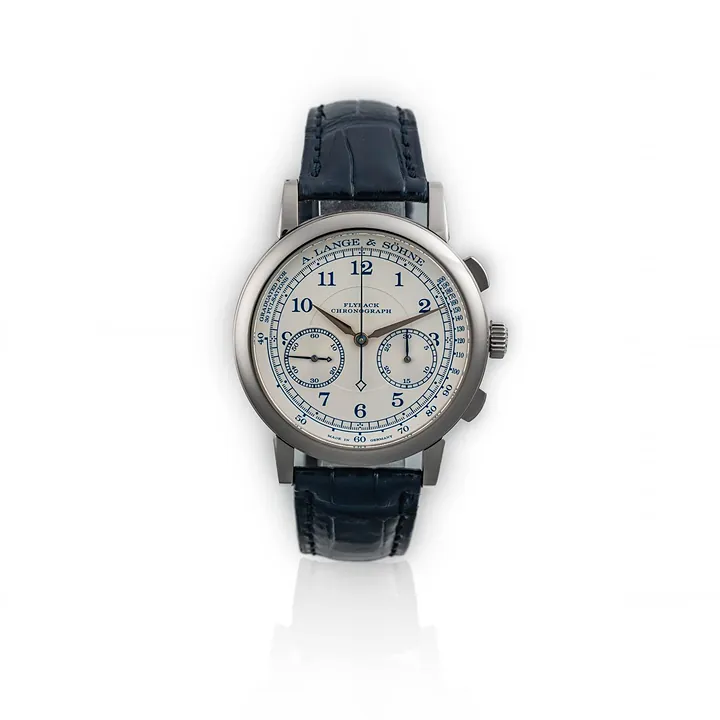
Wristwatches · c. 2000
A.Lange & Söhne 1815 Chronograph, ref. 414.026, c. 2000
Antiquorum auction archive, Geneva