
Clocks · Clock
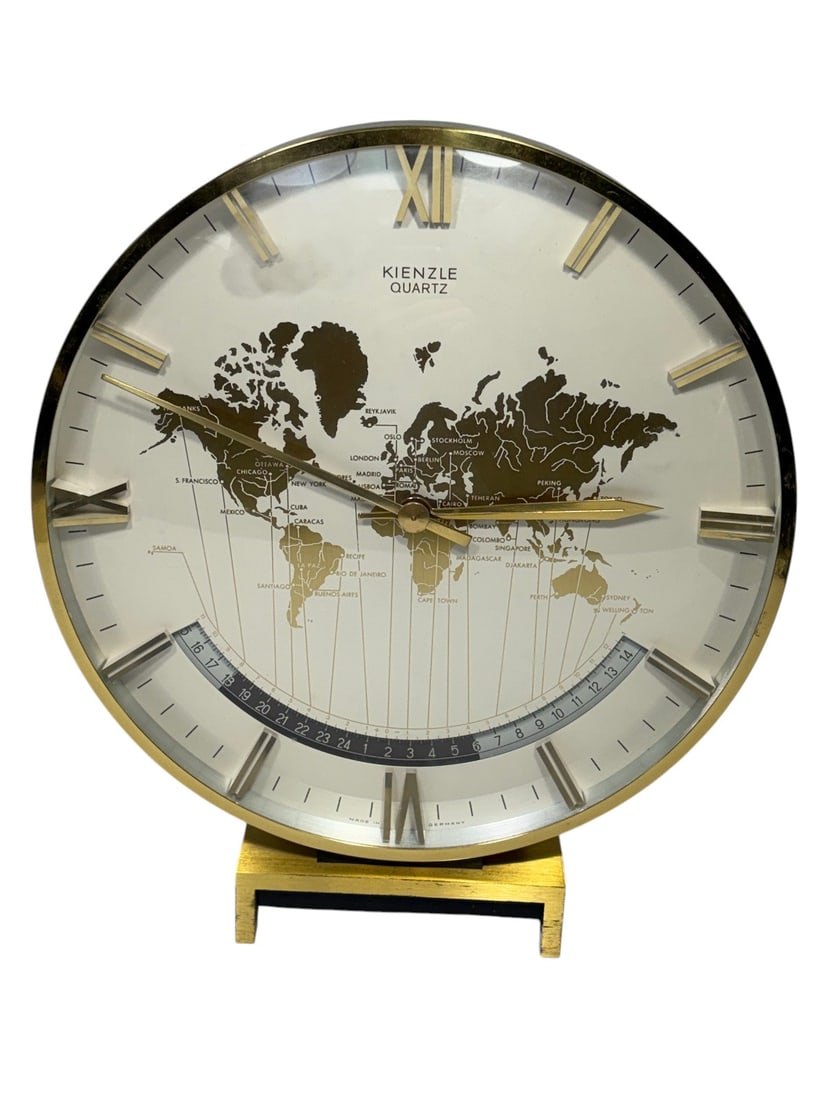
1960s Kienzle German Quartz World Time Clock
- Maker / attribution
- Kienzle (maker)
- Date
- 1960s
- Historical period
- Modern Mechanical Horology (1945 – 1969)
- Country of origin
- Germany
- Object type
- Clock
- Materials / technique
- quartz, gilt
- Auction house
- LiveAuctioneers auction archive
- Lot
- Item 239409685
- Credit line
- Auction lot record: lot 104, Lucky Finds, MiddleManBrokers Inc. (2026), via LiveAuctioneers
- Catalogue title (original)
- 1960s Kienzle German Quartz World Time Clock (English)
View the source record (auction lot) ↗ (opens another website in a new tab)Suggest a correction
Record summary
Catalogued by LiveAuctioneers auction archive (lot Item 239409685), this is a clock by Kienzle, made in Germany, dated 1960s. The Atlas places it in the Modern Mechanical Horology period (1945 – 1969) of its Clocks collection. Materials and techniques recorded by the source: quartz, gilt. The record is illustrated with 4 photographs.
Assembled from the source record's structured fields. Dates and attributions are given as the source states them; where a field is missing the Atlas leaves it blank rather than estimating.
Catalogue description
Lot description — MiddleManBrokers Inc.
Vintage German Kienzle quartz world time desk clock, circa 1960s. Features a circular brass-tone case and stand, mirrored dial with applied Roman numeral hour markers, gilt hands, world map decoration, and a curved 24-hour world time scale displaying international cities. Quartz movement marked Kienzle Quartz Germany to the reverse. Dimensions: 11.5 X 10.25 X 2.5 in. Condition: Good overall condition having normal surface wear. Untested. Note: This condition statement is provided as a courtesy and reflects an opinion, and not a statement of fact. Bidders are encouraged to inspect items in person or through an agent to assess condition. Estate fresh to the market. Shipping Information :MMB does not offer in-house packing or shipping services. As a courtesy, we are pleased to refer trusted third-party shipping providers for buyer convenience. Buyers are encouraged to contact shippers directly to obtain packing quotes, shipping rates, insurance options, and estimated transit times. Additional local, domestic, and international shipper referrals may be available upon request. Parcel Shipping Providers: First Class Shipping Center , 11700 NW 41st Street, Coral Springs, FL. Phone (754) 800-7674. Email 1shippingcenter@gmail.com. Mr. Ship Pro , 7838 NW 44th St, Sunrise, FL 33351. Phone (305) 783-9504. Email roberto@mrshippro.com. The UPS Store #2881 , 11110 W. Oakland Park Blvd., Sunrise, FL 33351. Phone (954) 572-4004. Email store2881@theupsstore.com. Freight & Large Item Shipping / Local Florida Delivery: Available through independent providers. Please contact info@hillauctiongallery.com for referrals based on item size, location, and delivery requirements.
Historical context
Modern Mechanical Horology (1945 – 1969)
Tool watches for divers, pilots and astronauts; electric watches anticipate the electronic age.
Post-war clocks combined new materials and industrial design: plastic and metal cases, battery-powered transistor movements from the late 1950s, and design classics by George Nelson, Max Bill and others. The first caesium atomic clock (1955) moved the definition of time from astronomy to physics.
Read the period in the timelineMore clocks from this periodEarlier: Golden Age of Mechanical Watchmaking
Atlas type guide
Timers, stopwatches, chronoscopes and time recorders
Instruments for measuring short intervals or recording when something happened form a large and practical branch of horology. Sports stopwatches and split-seconds timers, laboratory chronoscopes (such as Hipp's, which measured thousandths of a second for psychology and ballistics experiments), metronomes for music, watchmen's clocks that recorded patrol rounds, and the time recorders that clocked factory workers in and out all derive from clock and watch technology.
These objects matter historically because they show timekeeping leaving the observatory and the drawing room and entering industry, science and sport. Many were mass-produced, and their dials, scales and patents chart the rise of electrification and industrial management.
What to look for
- Scales graduated in fifths, tenths or hundredths of a second, or decimal minutes for industrial use.
- Start, stop and reset push-pieces; a second hand that can be stopped independently (split seconds).
- Recording devices: paper discs or tapes, printing mechanisms, keys or punches.
- Patent numbers and dates on the dial or case, which give a terminus post quem.
Dating clues
- Hipp chronoscopes were made from the 1840s into the twentieth century.
- Employee time recorders spread from the 1890s (Bundy, IBM, International Time Recording Co.).
- Quartz and electronic timers replaced mechanical stopwatches in sport from the 1970s.
General guidance written by the Atlas editors about this kind of object. It is not a statement about this particular piece; for that, rely on the source record above and on physical examination.
Read next:ChronographFlyback chronograph
Related records
Clocks · 1920s
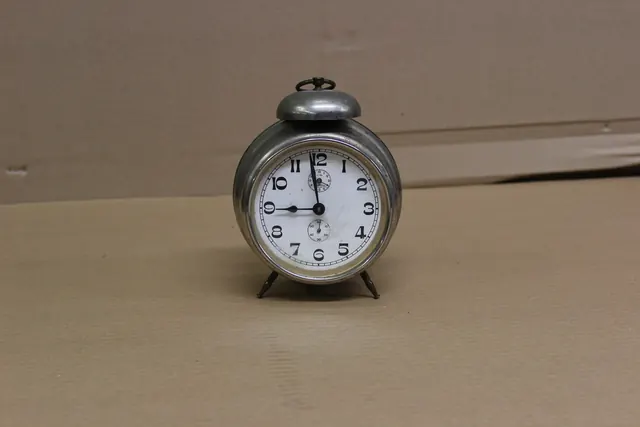
Alarm clock by Kienzle, 1920s
Työväenmuseo Werstas
Wristwatches · c. 1960s
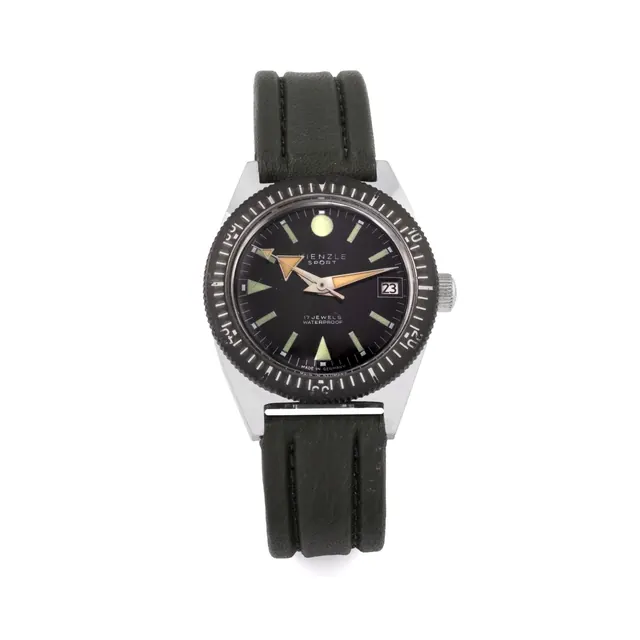
Kienzle wristwatch, Germany Sport, circa 1960's
Antiquorum auction archive, Geneva
Clocks · c. 1890
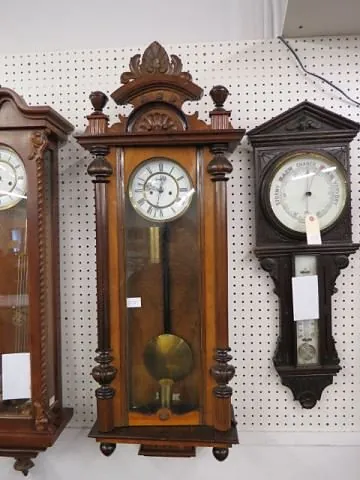
Kienzle German Wall Regulator Clock, c. 1890
LiveAuctioneers auction archive
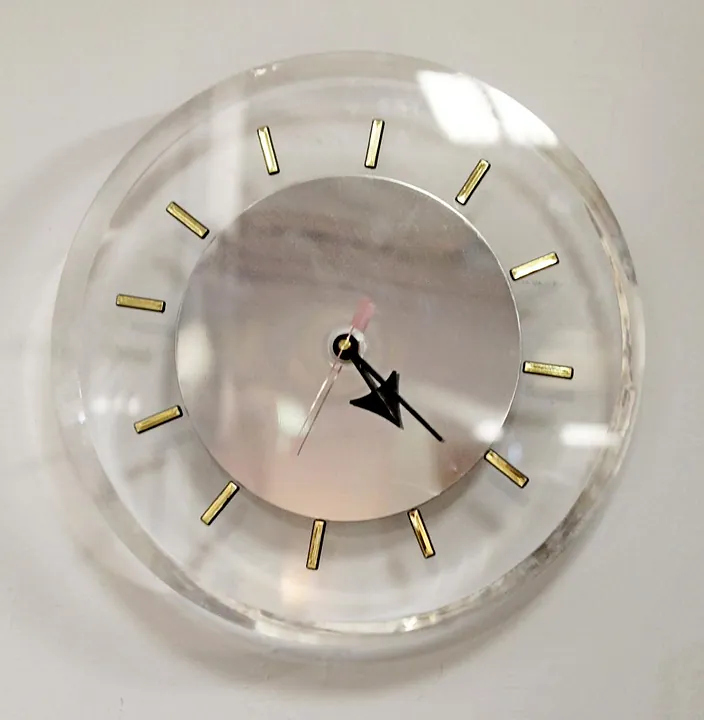
Clocks · 1970s
Lucite & Brass Kienzle Wall Clock Modern Art 1970s
LiveAuctioneers auction archive
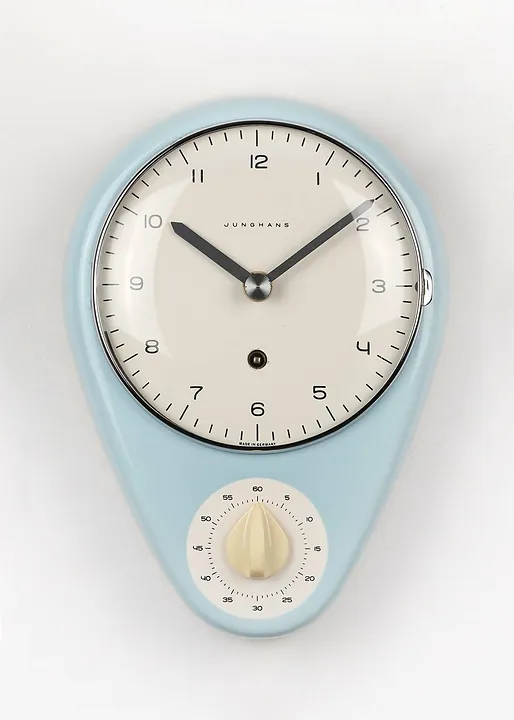
Clocks · c. 1960
Clock, Germany, c. 1960 (no. 58196)
German Clock Museum
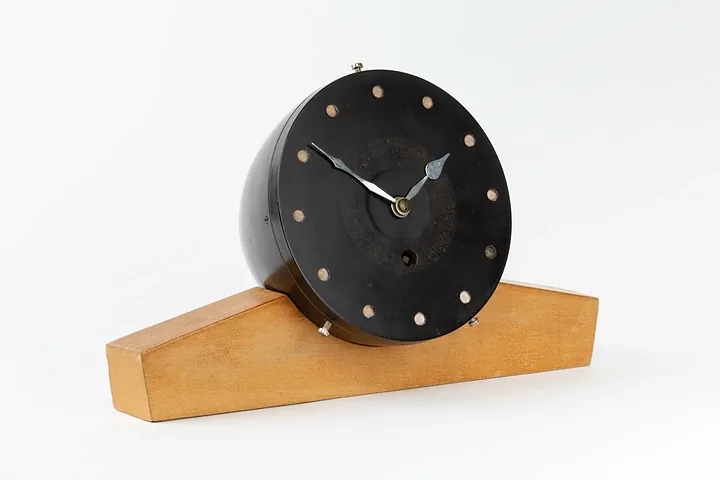
Clocks · 1945
Table clock, Germany, 1945
German Clock Museum
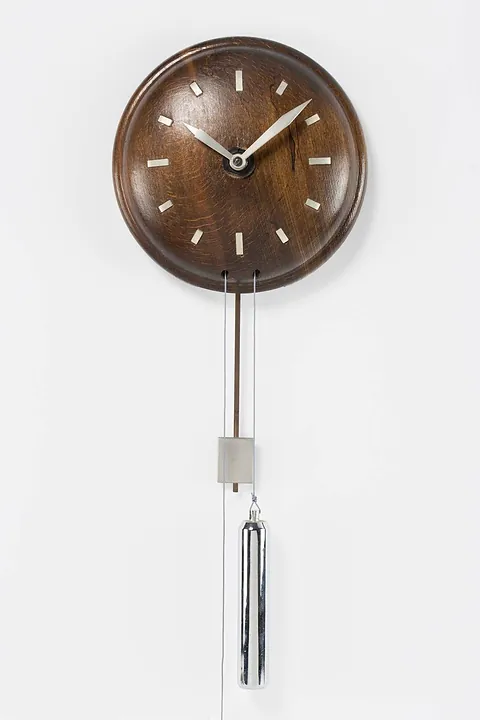
Clocks · c. 1945
Wall clock, Germany, c. 1945 (no. 59680)
German Clock Museum
Clocks · c. 1945
Wall clock, Germany, c. 1945 (no. 59700)
German Clock Museum