
Pocket Watches · Pocket watch
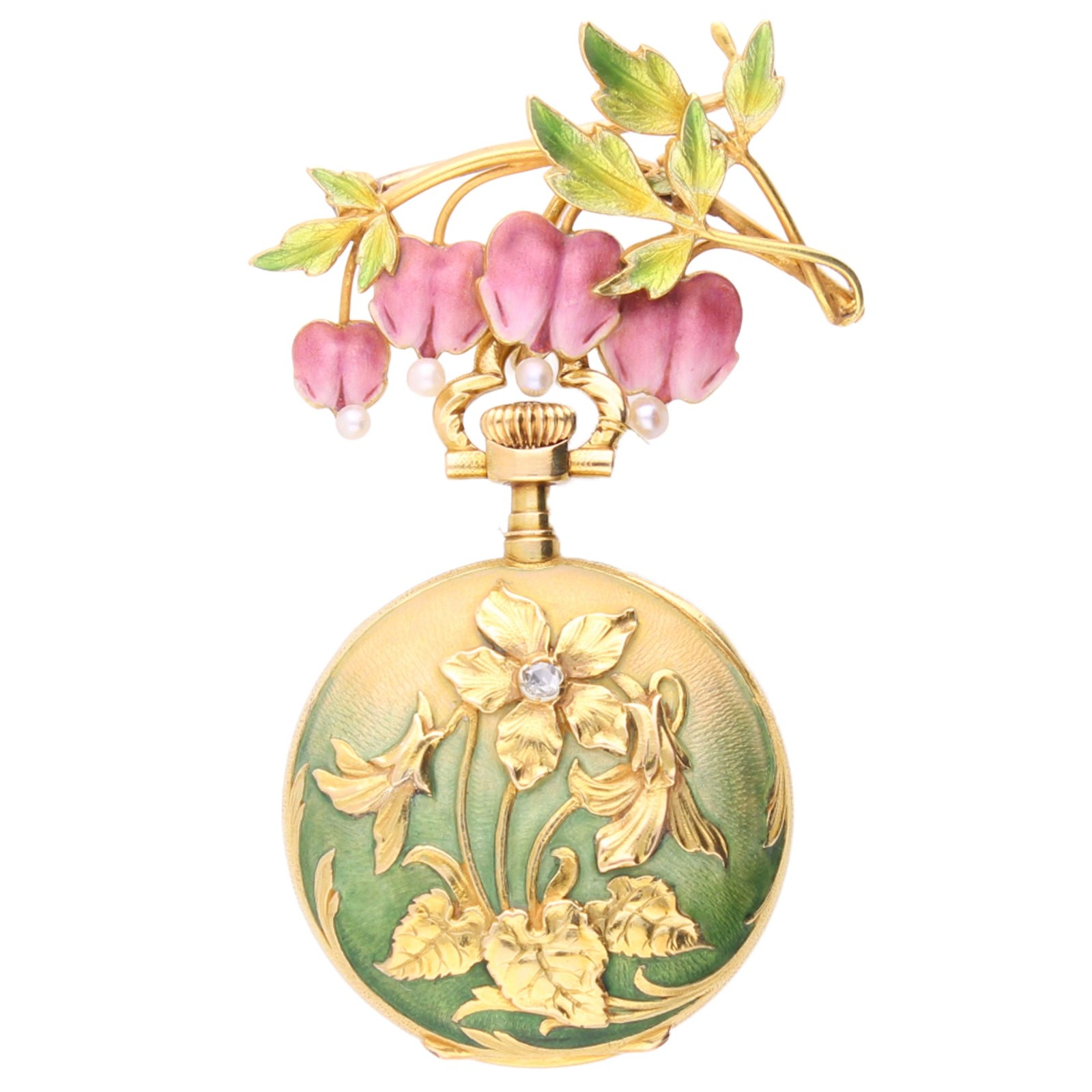
18ct yellow gold pendant watch with chiselled violets on green enamel with a rose cut diamond, 1902
- Maker / attribution
- Patek Philippe (maker)
- Date
- 1902
- Historical period
- Golden Age of Mechanical Watchmaking (1900 – 1945)
- Country of origin
- Switzerland
- Object type
- Pocket watch
- Materials / technique
- yellow gold
- Dimensions
- Case 32 mm
- Stock no.
- G3514
- Credit line
- Dealer listing, Somlo Antiques (G3514)
- Catalogue title (original)
- 18ct yellow gold pendant watch with chiselled violets on green enamel with a rose cut diamond. Made 1902 (English)
View the source record (dealer listing) ↗ (opens another website in a new tab)Suggest a correction
Record summary
Catalogued by Somlo Antiques (dealer), London (stock number G3514), this is a pocket watch by Patek Philippe, made in Switzerland, dated 1902. The Atlas places it in the Golden Age of Mechanical Watchmaking period (1900 – 1945) of its Pocket Watches collection. Materials and techniques recorded by the source: yellow gold. Recorded dimensions: Case 32 mm. The record is illustrated with 2 photographs.
Assembled from the source record's structured fields. Dates and attributions are given as the source states them; where a field is missing the Atlas leaves it blank rather than estimating.
Catalogue description
Dealer description — Somlo Antiques
For decades, pocket watches were the main stage on which Patek Philippe demonstrated its skills. Even though wristwatches have taken their place, they still delight connoisseurs of rare timepieces. As the guardian of high-end watchmaking artistry, the manufacture continues to craft pocket watches in small numbers. Their aesthetic finesse remains a source of fascination. These timepieces with manually wound movements are produced in compliance with the strict directives of the Patek Philippe Seal, as regards both artisan-ship and rate accuracy. Today, vintage Patek Philippe is a titan in the vintage luxury watch community. Their obsessive attention to detail combined with ground-breaking feats such as the first serially produced, perpetual calendar wristwatches as well as the first split-second chronograph wristwatch, have made Patek Philippe wristwatches and pocket watches some of the most sought after in the world. Brand: Patek Philippe Made: 1902 Model: Pendant watch Reference: - Calibre: 10''' Movement: Manual Material: 18ct yellow gold Features/complications: Green enameled case with chiselled yellow gold violet & a rose cut diamond Dial: White dial with outer minute track and Arabic numerals featuring Louis XVI hands Case dimensions: 32mm Bracelet/strap: N/A Accessories: - SKU: 3514
Historical context
Golden Age of Mechanical Watchmaking (1900 – 1945)
The wristwatch displaces the pocket watch; waterproof cases, self-winding and grand complications.
The pocket watch reached technical maturity and then began to give way to the wristwatch after the First World War. Complicated watches for collectors such as Henry Graves Jr. and James Ward Packard, railroad watches, and slim Art Deco dress watches are characteristic.
Read the period in the timelineMore pocket watches from this periodEarlier: Industrial Revolution
Atlas type guide
Early spring-driven watches
Portable spring-driven timepieces appeared in southern Germany, France and Italy in the early sixteenth century; Peter Henlein of Nuremberg is traditionally credited, although the historical record is complex. These early watches were worn as pendants or carried, had iron or brass movements with a verge escapement and a foliot or small balance, and used a stackfreed or fusee to equalise spring force. They indicated hours only and were notoriously inaccurate.
From the later sixteenth century watches were made in Blois, Paris, Geneva, London and Augsburg in oval, octagonal, cruciform, skull and other 'form' cases of rock crystal, gilt brass, silver and enamel. They were jewellery and status objects as much as timekeepers.
What to look for
- A single hour hand and often a touch-pin hour ring for feeling the time.
- Stackfreed (a cam and spring) instead of a fusee on German watches.
- Pierced and engraved cocks over the balance, fine gut fusee lines.
- Rock-crystal, enamelled or engraved form cases.
Dating clues
- Drum-shaped German watches: c. 1530–1580.
- Oval and form watches: c. 1580–1650.
- Before c. 1675 there is no balance spring; watches can vary by many minutes a day.
General guidance written by the Atlas editors about this kind of object. It is not a statement about this particular piece; for that, rely on the source record above and on physical examination.
Related records

Clocks · 1965–1975
Quartz master clock QM 1, with movement by Patek Phillippe, Switzerland, 1965–1975. Supplied by English Clock Systems.
Science Museum Group, London

Instruments · 1965–1984
Chronometer by Patek Philippe and Kelvin Hughes, England, 1965–1984
Science Museum Group, London

Pocket Watches · c. 1895
Patek Philippe pocket watch, c. 1895
Antiquorum auction archive, Geneva

Pocket Watches · c. 1900
Patek Philippe Chronometro Gondolo, c. 1900
Antiquorum auction archive, Geneva
Pocket Watches · c. 1900
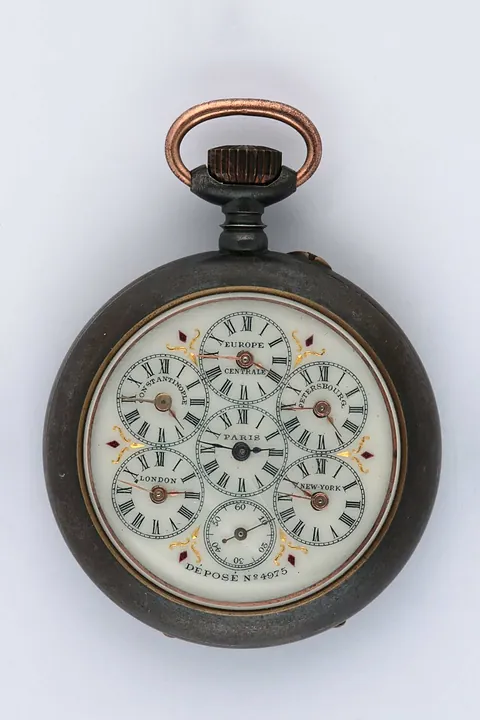
Pocket watch by A. Sandoz-Boucherin, Switzerland, c. 1900
German Clock Museum
Pocket Watches · 1900
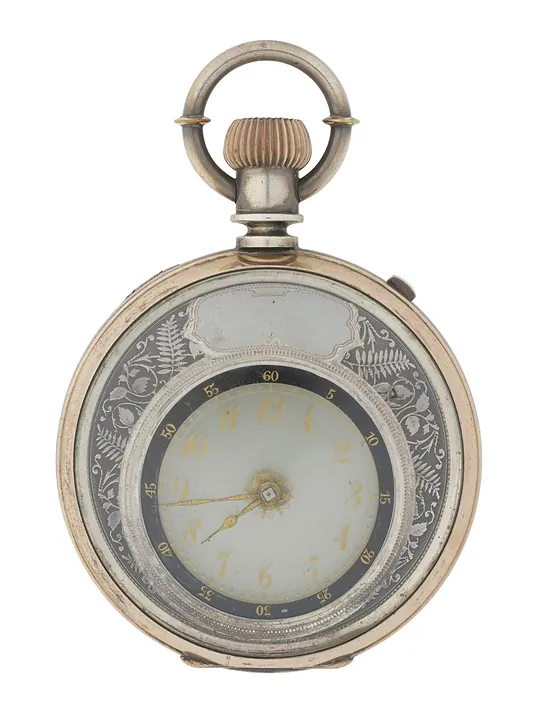
Pocket watch by Armand Schwob & Frère, Switzerland, 1900
Science Museum Group, London
Pocket Watches · c. 1900
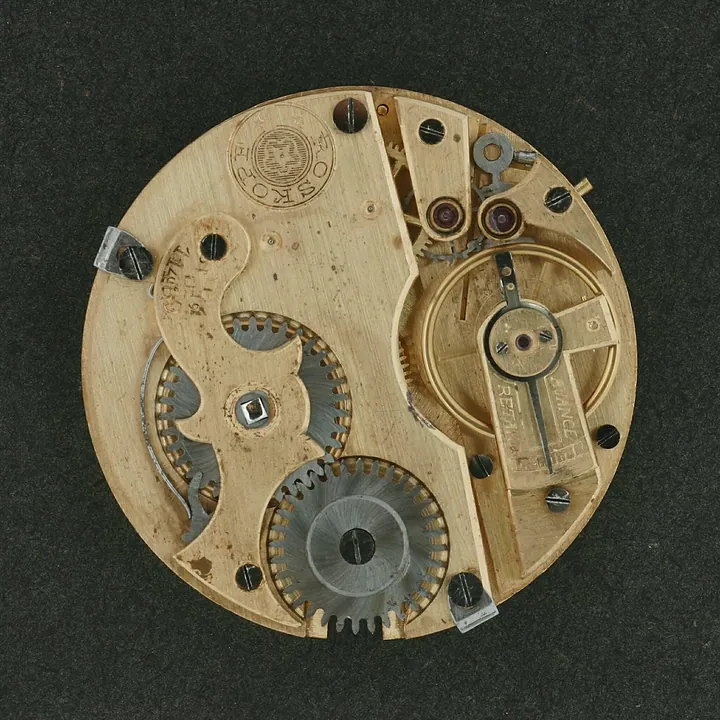
Pocket watch by Vve. Chs. Léon Schmid und Cie, Switzerland, c. 1900
German Clock Museum
Pocket Watches · 1900
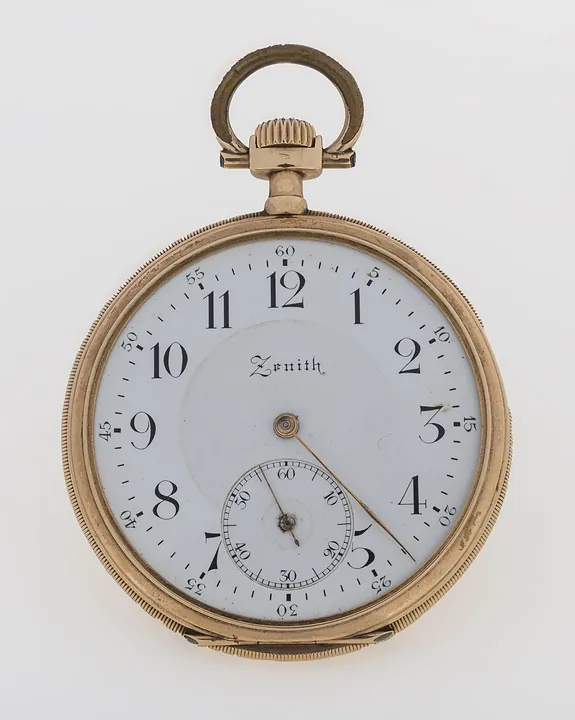
Pocket watch by Zenith, Switzerland, 1900
Museum Rotterdam