
Pocket Watches · Pocket watch
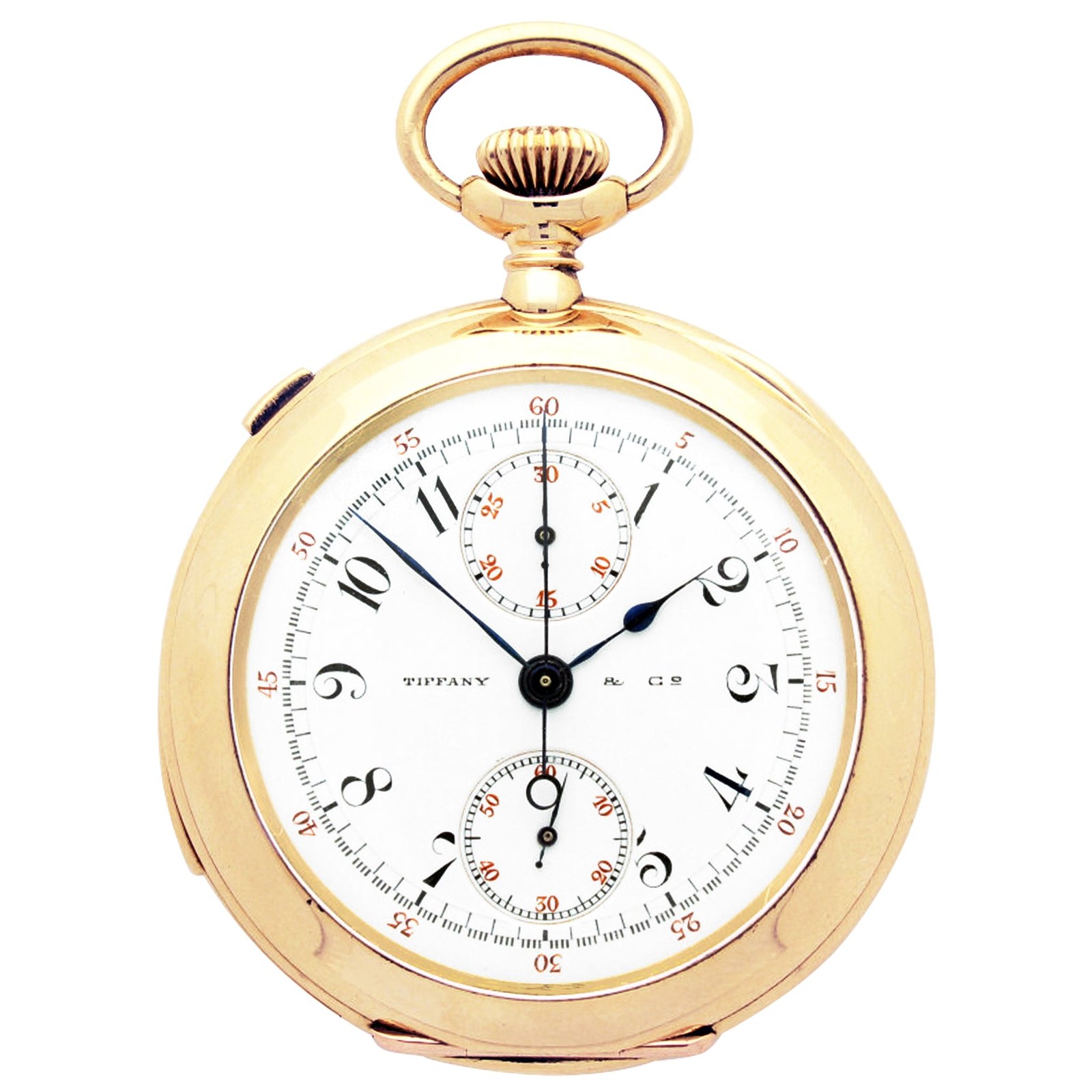
18ct yellow gold Patek Philippe open face split second minute repeating pocket watch, retailed by TIFFANY & Co, 1903
- Maker / attribution
- Patek Philippe (maker)
- Date
- 1903
- Historical period
- Golden Age of Mechanical Watchmaking (1900 – 1945)
- Country of origin
- Switzerland
- Object type
- Pocket watch
- Materials / technique
- yellow gold
- Dimensions
- Case 45 mm
- Stock no.
- G2922
- Credit line
- Dealer listing, Somlo Antiques (G2922)
- Catalogue title (original)
- 18ct yellow gold Patek Philippe open face split second minute repeating pocket watch, retailed by TIFFANY & Co. Made 1903 (English)
View the source record (dealer listing) ↗ (opens another website in a new tab)Suggest a correction
Record summary
Catalogued by Somlo Antiques (dealer), London (stock number G2922), this is a pocket watch by Patek Philippe, made in Switzerland, dated 1903. The Atlas places it in the Golden Age of Mechanical Watchmaking period (1900 – 1945) of its Pocket Watches collection. Materials and techniques recorded by the source: yellow gold. Recorded dimensions: Case 45 mm. The record is illustrated with 3 photographs.
Assembled from the source record's structured fields. Dates and attributions are given as the source states them; where a field is missing the Atlas leaves it blank rather than estimating.
Catalogue description
Dealer description — Somlo Antiques
The founding of Patek Philippe in 1839 can be traced back to the Polish insurrection of 1830. Taking part in the revolt against Russian rule was a young cavalry officer, Antoine Norbert de Patek who, like many of his compatriots was forced to flee Poland and eventually settle in Geneva. Straight away becoming involved in the city’s watchmaking industry, Patek Czapek & Co was founded with a fellow Pole, François Czapek in 1839. Then in 1844 Patek met the French watchmaker, Adrien Philippe in Paris where the latter presented his pioneering keyless winding and setting mechanism. Czapek decided to leave the company in 1845 and Adrien Philippe replaced Czapek as Patek’s partner. The company then changed its name to Patek & Cie.before changing once more in 1851 to Patek Philippe & Cie. In 1932, the company was purchased by two brothers Charles and Jean Stern and since then, Patek Philippe S.A. remains a family-owned firm, with the 4th generation at its head. Today, vintage Patek Philippe is a titan in the vintage luxury watch community. Their obsessive attention to detail combined with ground-breaking feats such as the first serially produced, perpetual calendar wristwatches as well as the first split-second chronograph wristwatch, have made Patek Philippe wristwatches and pocket watches some of the most sought after in the world. Brand: Patek Philippe Made: 1903 Model: Split second minute repeater Reference: Open face Calibre: 16"' Movement: Manual Material: 18ct yellow gold Features/complications: Split second minute repeater Dial: White enamel dial with red printed 0 - 60 outer minute track featuring black printed Arabic numeral hour markers with black Breguet hands and subsidiary seconds at 6 o'clock - signed 'TIFFANY & Co.' Case dimensions: 45 mm Bracelet/strap: N/A Accessories: Extract from the Archives SKU: 2922
Historical context
Golden Age of Mechanical Watchmaking (1900 – 1945)
The wristwatch displaces the pocket watch; waterproof cases, self-winding and grand complications.
The pocket watch reached technical maturity and then began to give way to the wristwatch after the First World War. Complicated watches for collectors such as Henry Graves Jr. and James Ward Packard, railroad watches, and slim Art Deco dress watches are characteristic.
Read the period in the timelineMore pocket watches from this periodEarlier: Industrial Revolution
Atlas type guide
Repeating watches
Before electric light, telling the time in the dark was a real problem. Repeating watches strike the time on demand when a slide or push-piece is operated: quarter repeaters sound hours and quarters, minute repeaters hours, quarters and minutes. Edward Barlow and Daniel Quare disputed the invention in London in the 1680s. Early repeaters struck on a bell inside the case; Abraham-Louis Breguet introduced the gong (a coiled steel wire) around 1780, allowing thinner watches.
Repeaters require a separate train with racks, snails and a governor to control the striking speed, and are among the most demanding complications to make and adjust. Swiss makers of the Vallée de Joux specialised in repeating ébauches in the nineteenth century.
What to look for
- A slide on the case band or a push-piece through the pendant.
- Gongs encircling the movement (after c. 1780) or a bell in the case (earlier); pierced case for sound.
- The racks, snails and governor visible under the dial or on the movement.
- Terms such as 'Minutes', 'Quarts' or 'Répétition' on the dial or cuvette.
Dating clues
- Bell-striking quarter repeaters: c. 1690–1800.
- Gong repeaters and dumb repeaters (striking on the case): after c. 1780.
- Minute repeaters became more common after c. 1830 with Vallée de Joux ébauches.
General guidance written by the Atlas editors about this kind of object. It is not a statement about this particular piece; for that, rely on the source record above and on physical examination.
Read next:Minute repeater
Related records
Clocks · 1965–1975
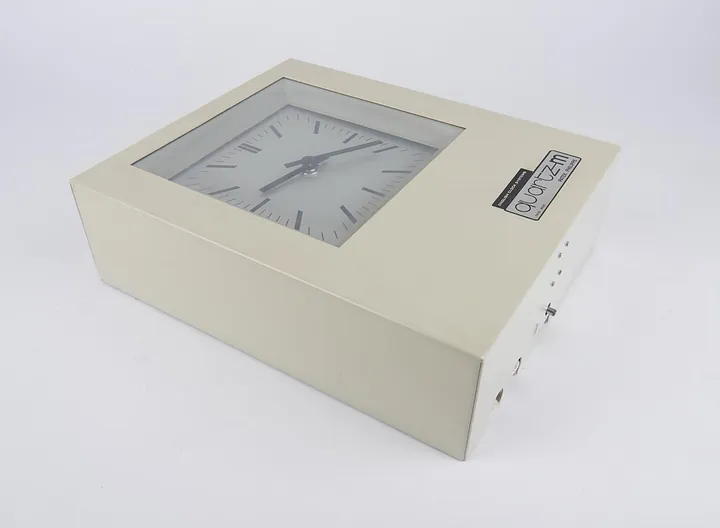
Quartz master clock QM 1, with movement by Patek Phillippe, Switzerland, 1965–1975. Supplied by English Clock Systems.
Science Museum Group, London
Instruments · 1965–1984
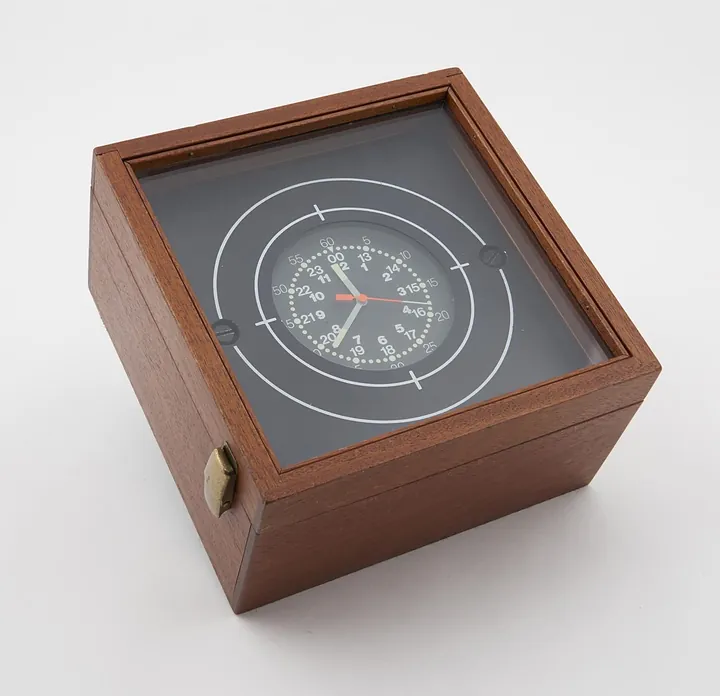
Chronometer by Patek Philippe and Kelvin Hughes, England, 1965–1984
Science Museum Group, London
Pocket Watches · c. 1895
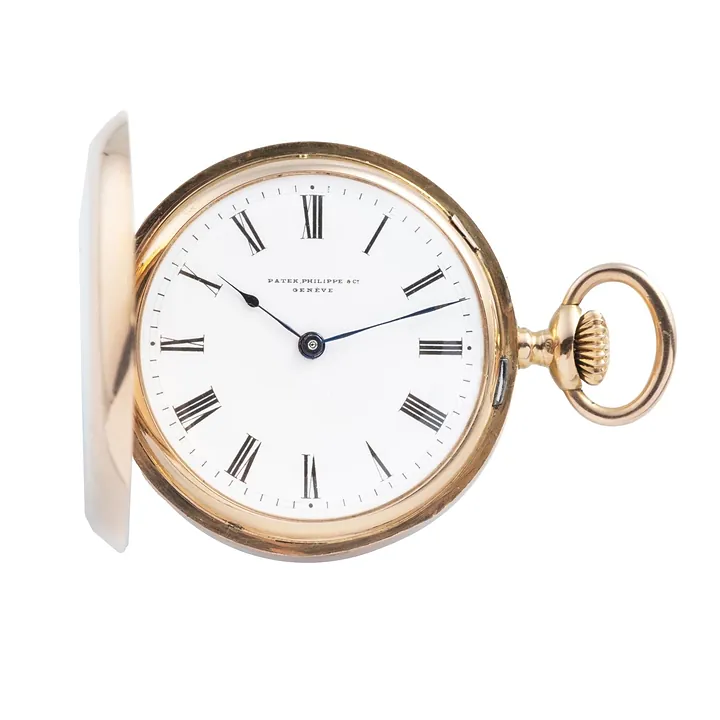
Patek Philippe pocket watch, c. 1895
Antiquorum auction archive, Geneva

Pocket Watches · c. 1900
Patek Philippe Chronometro Gondolo, c. 1900
Antiquorum auction archive, Geneva
Pocket Watches · c. 1900
Pocket watch by A. Sandoz-Boucherin, Switzerland, c. 1900
German Clock Museum
Pocket Watches · 1900
Pocket watch by Armand Schwob & Frère, Switzerland, 1900
Science Museum Group, London
Pocket Watches · c. 1900
Pocket watch by Vve. Chs. Léon Schmid und Cie, Switzerland, c. 1900
German Clock Museum
Pocket Watches · 1900
Pocket watch by Zenith, Switzerland, 1900
Museum Rotterdam