
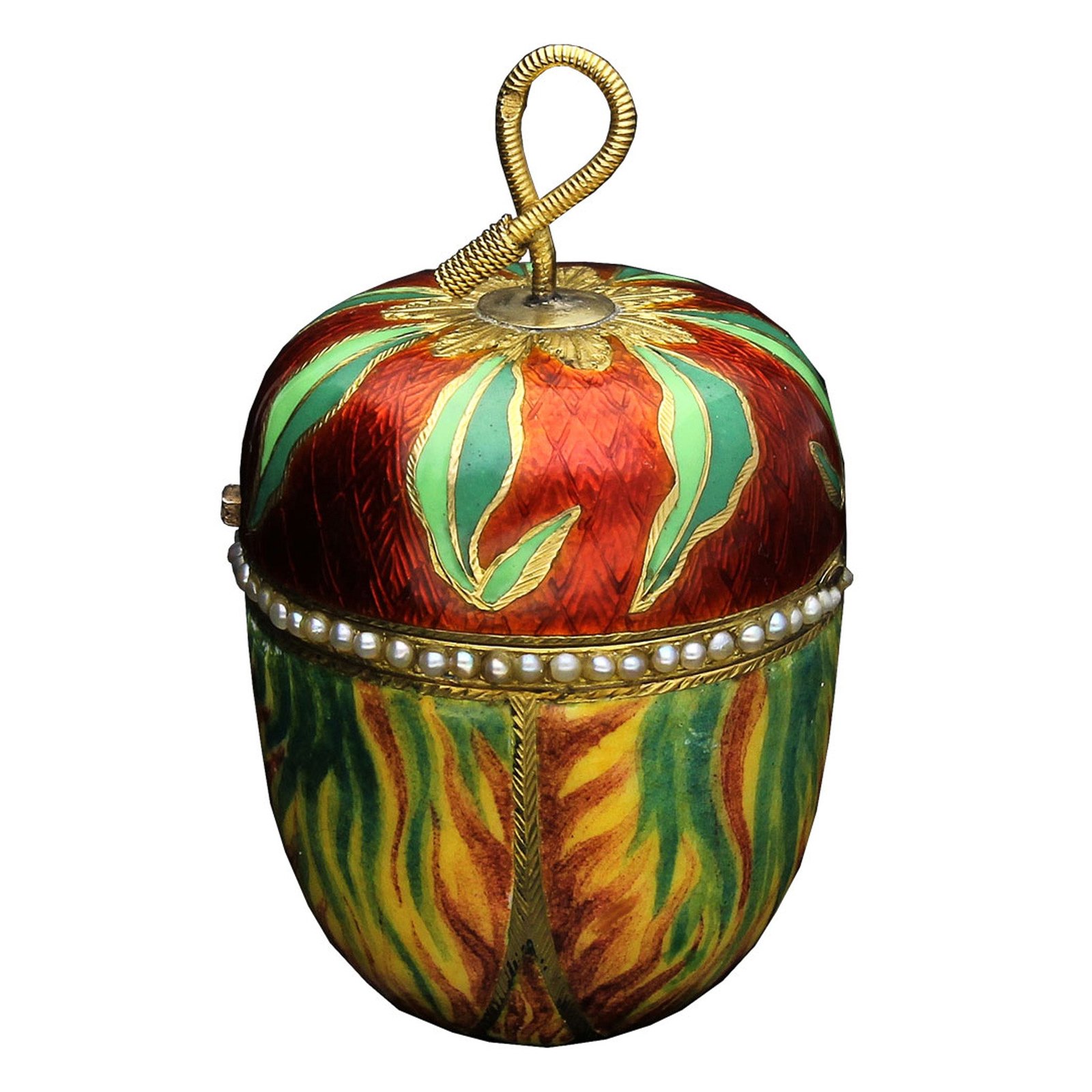
Pocket Watches · Pocket watch
18ct yellow gold and enamel set Swiss form watch watch, circa 1820
- Maker / attribution
- Unrecorded in source
- Date
- c. 1820
- Historical period
- Precision & Scientific Horology (1750 – 1850)
- Country of origin
- Switzerland
- Object type
- Pocket watch
- Materials / technique
- yellow gold
- Dimensions
- Case 24 mm
- Stock no.
- G1586
- Credit line
- Dealer listing, Somlo Antiques (G1586)
- Catalogue title (original)
- 18ct yellow gold and enamel set Swiss form watch watch. Circa 1820 (English)
View the source record (dealer listing) ↗ (opens another website in a new tab)Suggest a correction
Record summary
Catalogued by Somlo Antiques (dealer), London (stock number G1586), this is a pocket watch, made in Switzerland, dated c. 1820. The Atlas places it in the Precision & Scientific Horology period (1750 – 1850) of its Pocket Watches collection. Materials and techniques recorded by the source: yellow gold. Recorded dimensions: Case 24 mm. The record is illustrated with 3 photographs.
Assembled from the source record's structured fields. Dates and attributions are given as the source states them; where a field is missing the Atlas leaves it blank rather than estimating.
Catalogue description
Dealer description — Somlo Antiques
"Swiss" being a term officially adopted in the late 19th century, stands out, as most other countries use the phrase "Made in (Country Name).". It is most commonly seen on Swiss watches, in which the law only permits to be on watches manufactured in Switzerland. Brand: Swiss Made: c. 1820 Model: Open face Reference: Musical Calibre: N/A Movement: Manual Material: 18ct yellow gold Features/complications: Multi-coloured enamel and seed pearl set tulip bud shaped case with watch cover with verge movement Dial: White enamel dial with outer minute track featuring black Arabic numeral hour markers with 18ct yellow gold spade hands Case dimensions: 24mm Bracelet/strap: N/A Accessories: N/A SKU: 1586
Historical context
Precision & Scientific Horology (1750 – 1850)
Harrison solves longitude; Mudge invents the lever; Breguet's Paris workshop defines the modern watch.
From 1750 to 1850 the watch became a precision instrument. Mudge's lever escapement, the cylinder escapement, Lépine's thin bar calibre, Breguet's innovations (overcoil, tourbillon, perpétuelle) and the pocket chronometer of Arnold and Earnshaw all date from this period, while verge watches remained common in cheaper production.
Read the period in the timelineMore pocket watches from this periodEarlier: Early Modern Horology
Atlas type guide
Early spring-driven watches
Portable spring-driven timepieces appeared in southern Germany, France and Italy in the early sixteenth century; Peter Henlein of Nuremberg is traditionally credited, although the historical record is complex. These early watches were worn as pendants or carried, had iron or brass movements with a verge escapement and a foliot or small balance, and used a stackfreed or fusee to equalise spring force. They indicated hours only and were notoriously inaccurate.
From the later sixteenth century watches were made in Blois, Paris, Geneva, London and Augsburg in oval, octagonal, cruciform, skull and other 'form' cases of rock crystal, gilt brass, silver and enamel. They were jewellery and status objects as much as timekeepers.
What to look for
- A single hour hand and often a touch-pin hour ring for feeling the time.
- Stackfreed (a cam and spring) instead of a fusee on German watches.
- Pierced and engraved cocks over the balance, fine gut fusee lines.
- Rock-crystal, enamelled or engraved form cases.
Dating clues
- Drum-shaped German watches: c. 1530–1580.
- Oval and form watches: c. 1580–1650.
- Before c. 1675 there is no balance spring; watches can vary by many minutes a day.
General guidance written by the Atlas editors about this kind of object. It is not a statement about this particular piece; for that, rely on the source record above and on physical examination.
Read next:FuseeFoliotThe Melanchthon watch
Related records
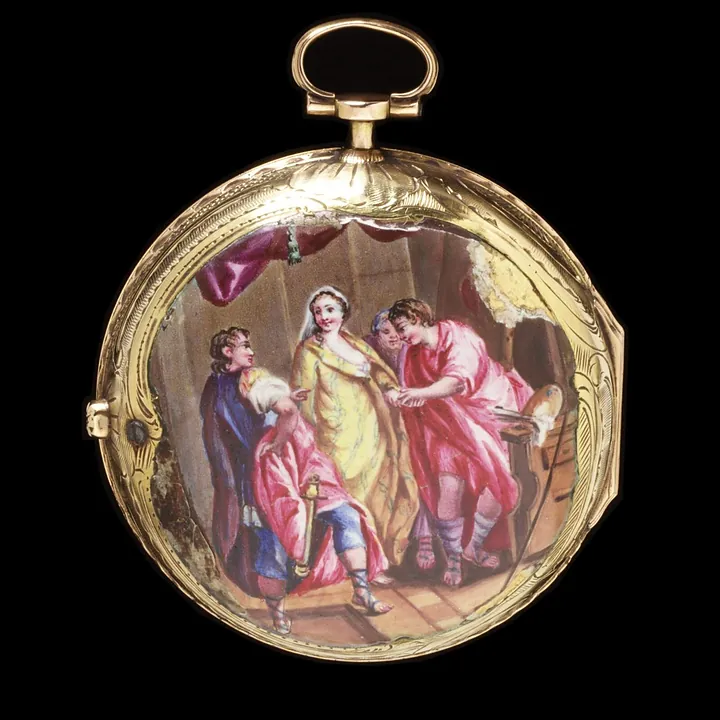
Pocket Watches · 1750-60
Watch by Noël Balthazard, Switzerland, 1750-60
Victoria and Albert Museum, London
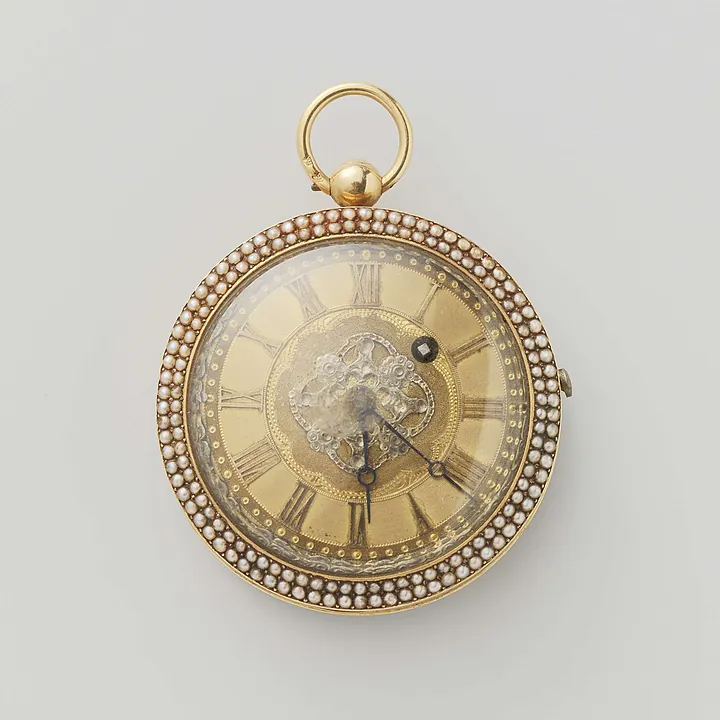
Pocket Watches · 1754
Pocket watch, Switzerland, 1754
Rijksmuseum
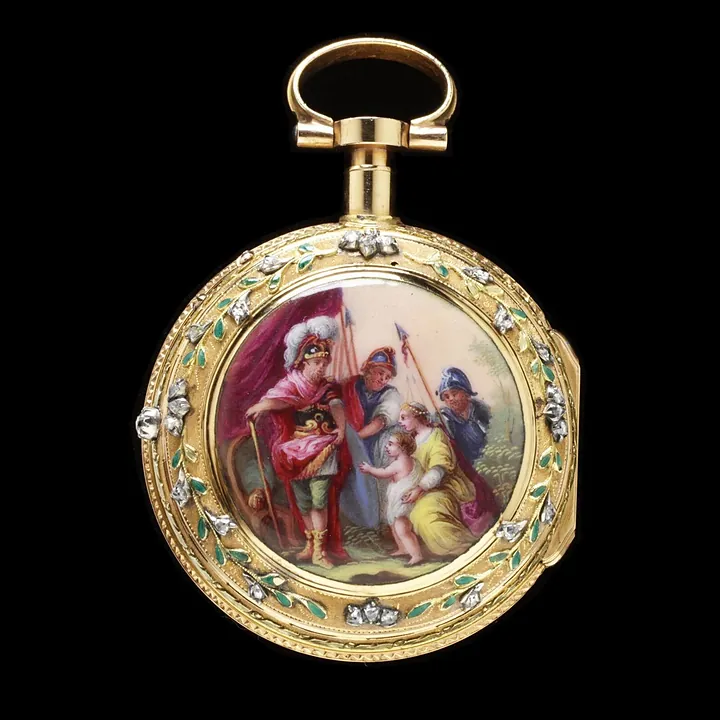
Pocket Watches · 1765-70
Watch and case by Jean Fazy, Switzerland, 1765-70
Victoria and Albert Museum, London
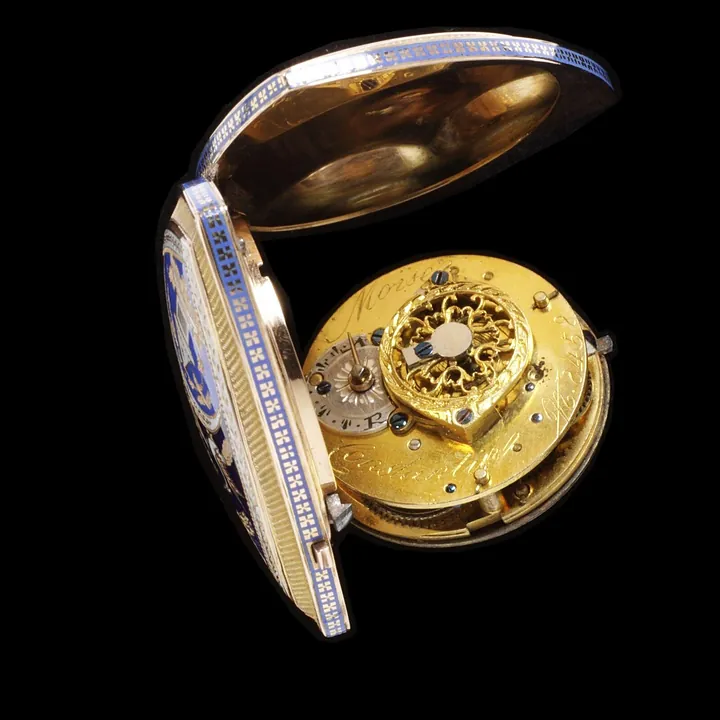
Pocket Watches · c.1790
Enamelled gold watch signed 'Moise Constantin', Geneva, c.1790
Victoria and Albert Museum, London
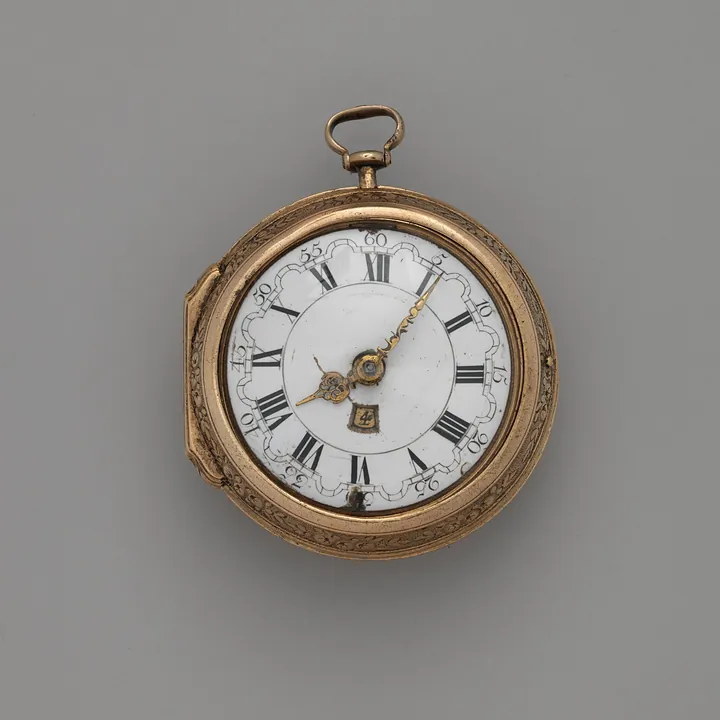
Pocket Watches · late 18th century
Watch by John Wilter, Switzerland, late 18th century
The Metropolitan Museum of Art, New York
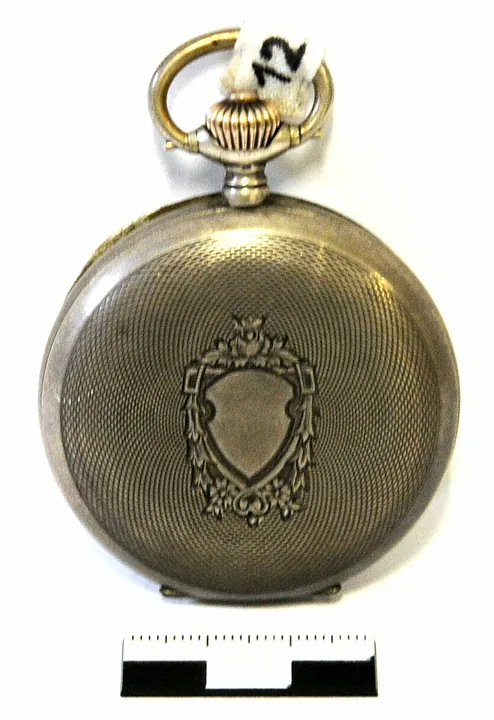
Pocket Watches · 1800–1899
Pocket watch, Switzerland, 1800–1899
Montanhistorisches Dokumentationszentrum
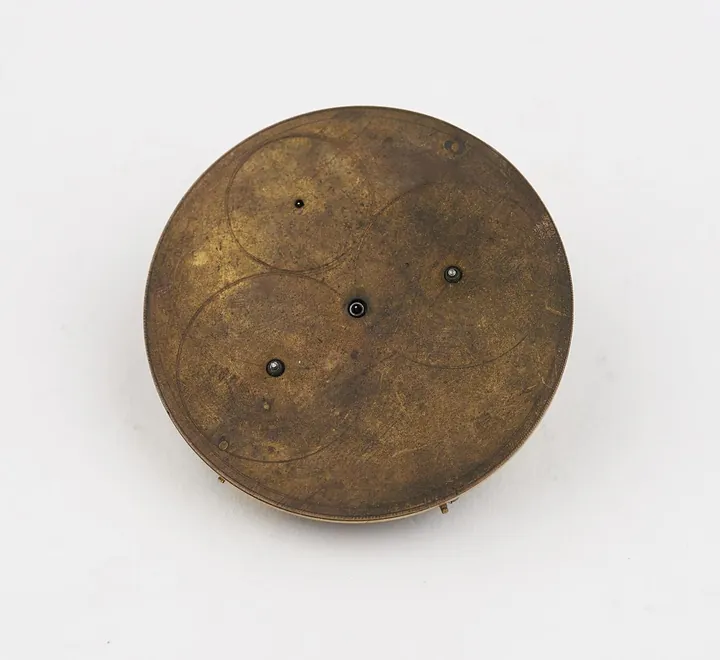
Pocket Watches · 1801–1900
Pocket watch, Switzerland, 1801–1900
Science Museum Group, London
Pocket Watches · 1801–1900
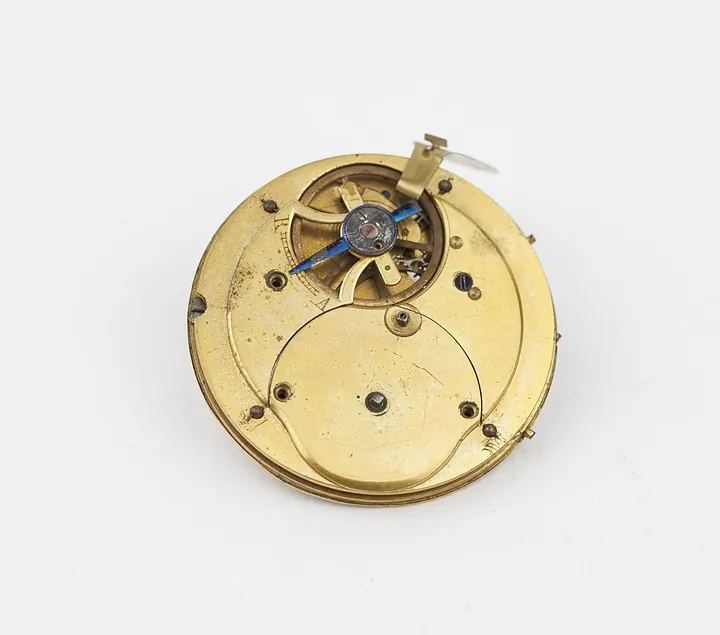
Swiss or French movement with horizontal escapement including "Jumper" mechanism, damaged (cylinder broken), incomplete (dial etc. missing) no.390, 1801–1900
Science Museum Group, London